
Where is the tree?
Tell us about proximity to structures and power lines.
Tree Risk in Fox Valley — What Wisconsin Homeowners Need to Know
Warning Signs Your Tree May Be in Trouble
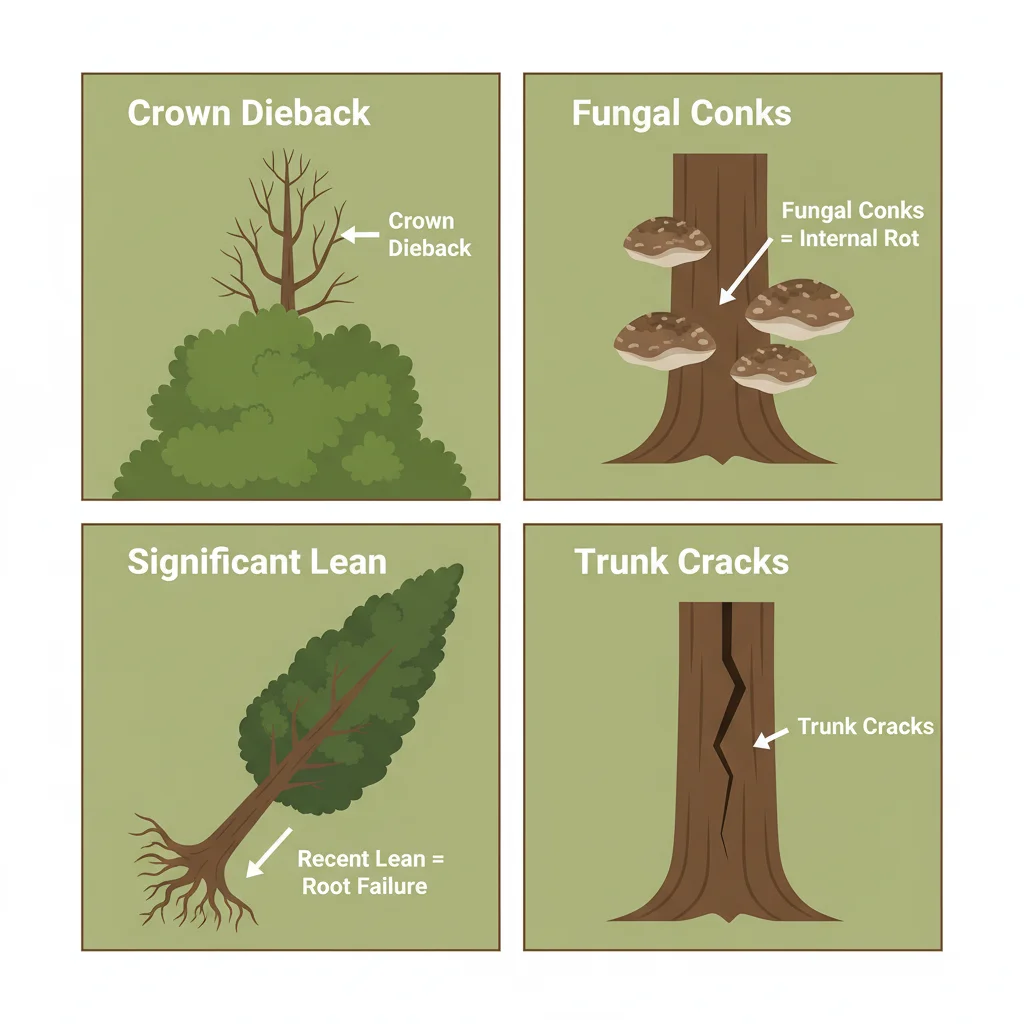
Dead or dying branches at the top of the crown while lower branches remain alive. Indicates root stress, vascular disease, or early pest infestation.
Shelf mushrooms at the base or on the trunk signal internal rot. The tree may look healthy outside while the core is hollow — a silent structural failure risk.
A lean that developed recently (not a natural growth lean) suggests root failure or soil instability. Exposed roots on one side confirm the concern.
Visible longitudinal cracks splitting the main trunk or major scaffold branches are structural failures in progress. Do not delay evaluation.
Unsure what you're seeing? A TRAQ-certified tree risk assessment documents conditions formally — valuable for insurance purposes if a hazard tree is later flagged.
Fox Valley Ice Storms and Tree Failure
Fox Valley experiences significant ice storms most winters. Ice accumulation adds 10–20 lbs per square foot of canopy — a large oak can carry 100,000+ lbs of ice load. Structurally compromised trees that appear stable in summer become dangerous under ice load. The highest-risk window is immediately after freezing rain events.
If you have a tree near your home with known warning signs, ice storm season is when it's most likely to fail. Removing or bracing a compromised tree before November is the most cost-effective approach — cabling and bracing can add years of life to trees that aren't removal candidates yet.
Homeowner Liability for Known Hazard Trees
Wisconsin follows the "known hazard" rule: if a homeowner is aware (or should reasonably be aware) of a hazardous tree condition and fails to act, they can be held liable for damages to neighboring property or public areas. Documenting an inspection — and acting on the findings — is your legal protection.
- ✓ Insurance covers accidental failure of healthy trees
- ✓ Written arborist report documents due diligence
- ✓ Removal or mitigation removes neighbor liability
- ✓ Proactive removal is cheaper than emergency removal later
- ✗ Insurer may deny claim if documented hazard was ignored
- ✗ Personally liable for neighbor's property damage
- ✗ Premium increases 20–40% after a tree damage claim
- ✗ Emergency removal costs 30–50% more than scheduled
If an arborist has flagged a tree, schedule a formal tree risk assessment to get a written report. This protects you in any future insurance or liability dispute.