



When Your Trees Need Professional Pruning
You notice branches scraping the roof. Deadwood hanging over the driveway. A canopy so thick that grass won't grow underneath anymore.
You grab the pole saw from the garage. You make a few cuts. The branches tear instead of slicing clean. The wounds weep sap for weeks. Two years later, decay sets in where you cut.
Improper pruning doesn't just look bad — it creates permanent structural damage. Trees don't heal like skin. They compartmentalize wounds. Cut in the wrong place, and you've opened a highway for disease and rot that the tree will fight for the rest of its life.
Sound familiar? Your maple keeps dropping branches after storms. You had "a guy" trim it last year. He topped the crown to reduce height. Now you've got twenty vertical shoots growing from every cut, and the tree looks worse than before.
Homeowners in Appleton and Green Bay call this "butchering." ISA-certified arborists call it malpractice. The difference comes down to understanding what each cut does — and why the branch collar matters more than you think.
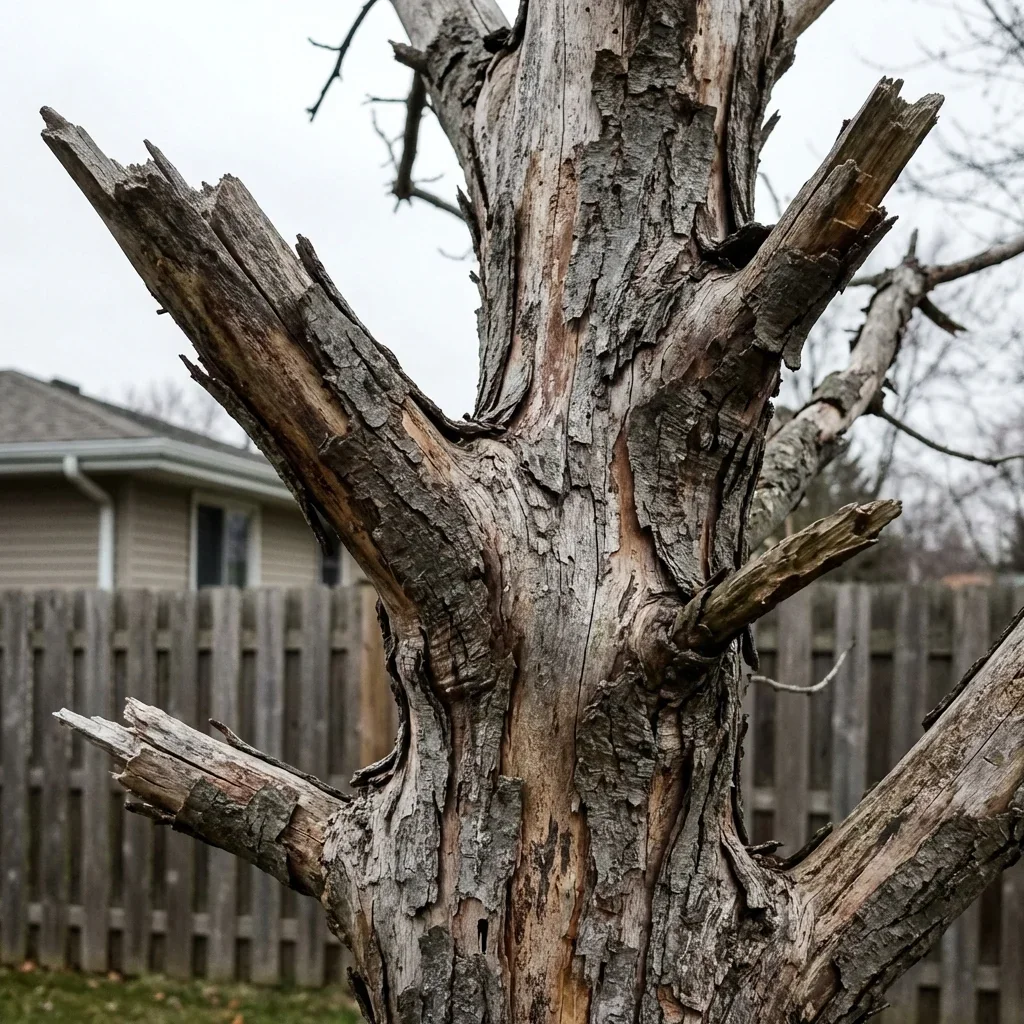
Crossing branches rub bark away, creating entry points for insects. Deadwood becomes a liability in windstorms. Overgrown canopies trap moisture and block airflow, inviting fungal disease. Low-hanging branches that were fine ten years ago now block sight lines at your Neenah corner property.
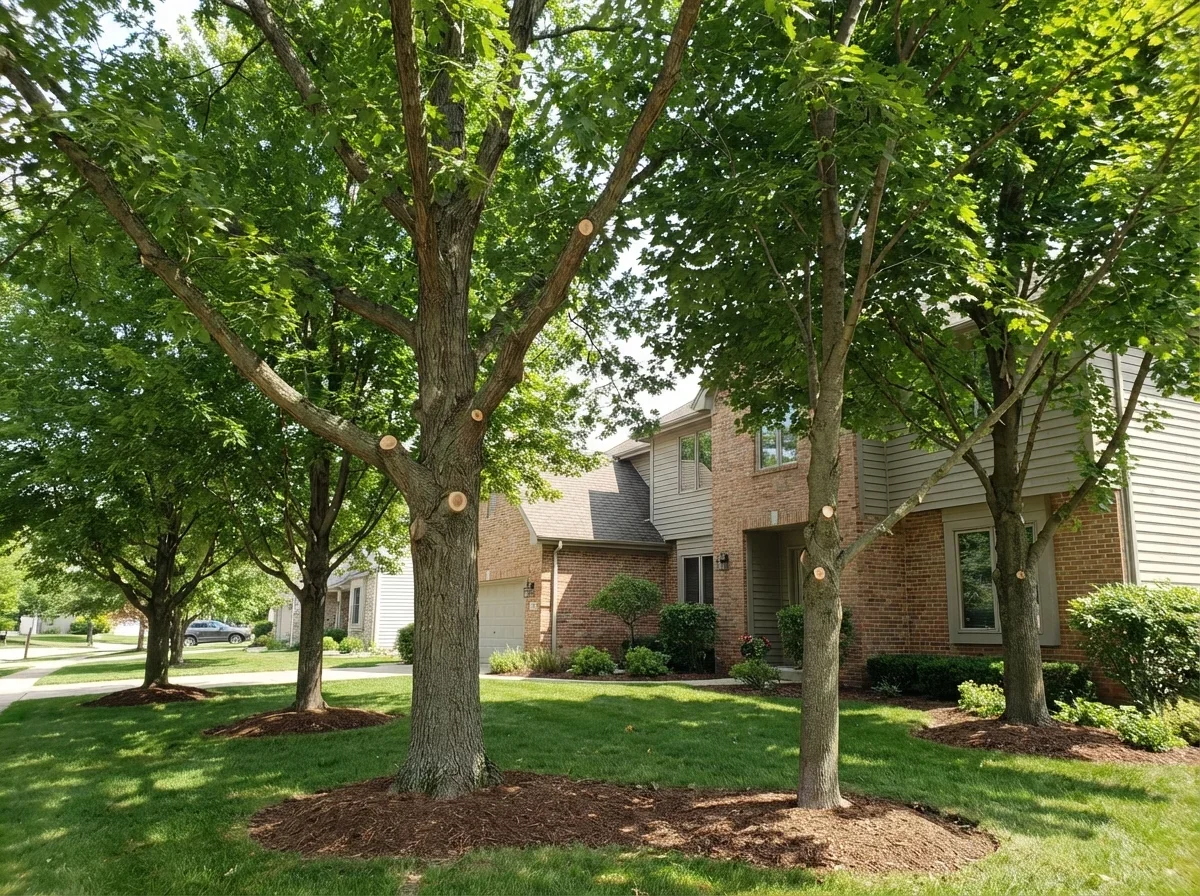
These aren't cosmetic issues. They're structural vulnerabilities that compound every year you wait. A 40-foot oak doesn't need a "trim." It needs a crown cleaning to remove deadwood, or a crown raising to restore clearance, or a crown thinning to improve light penetration. The method depends on what the tree actually needs — not what sounds cheapest over the phone.
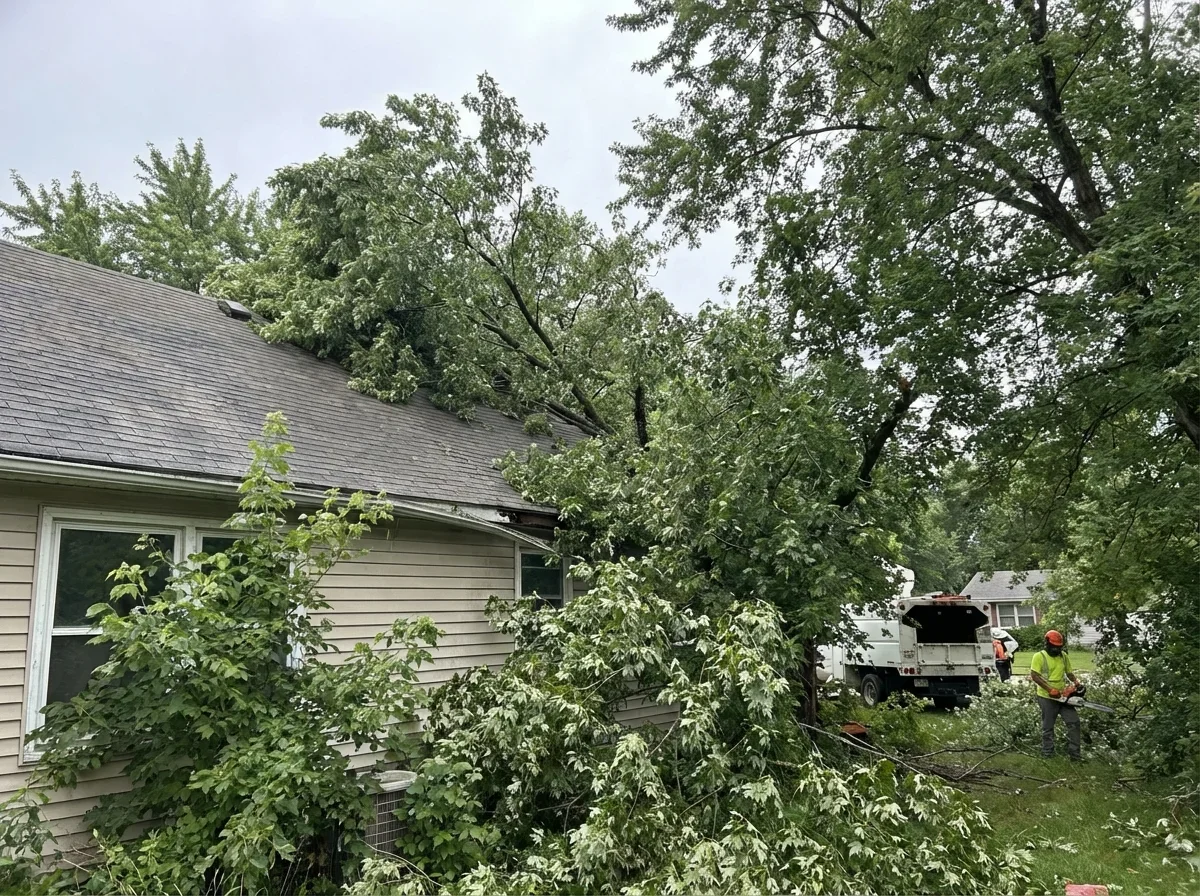
What Does Tree Trimming Cost in the Fox Valley?
The honest answer: anywhere from $300 to $1,500 per tree. Height, access, pruning type, and complexity all determine final cost.
Size and Height Factors
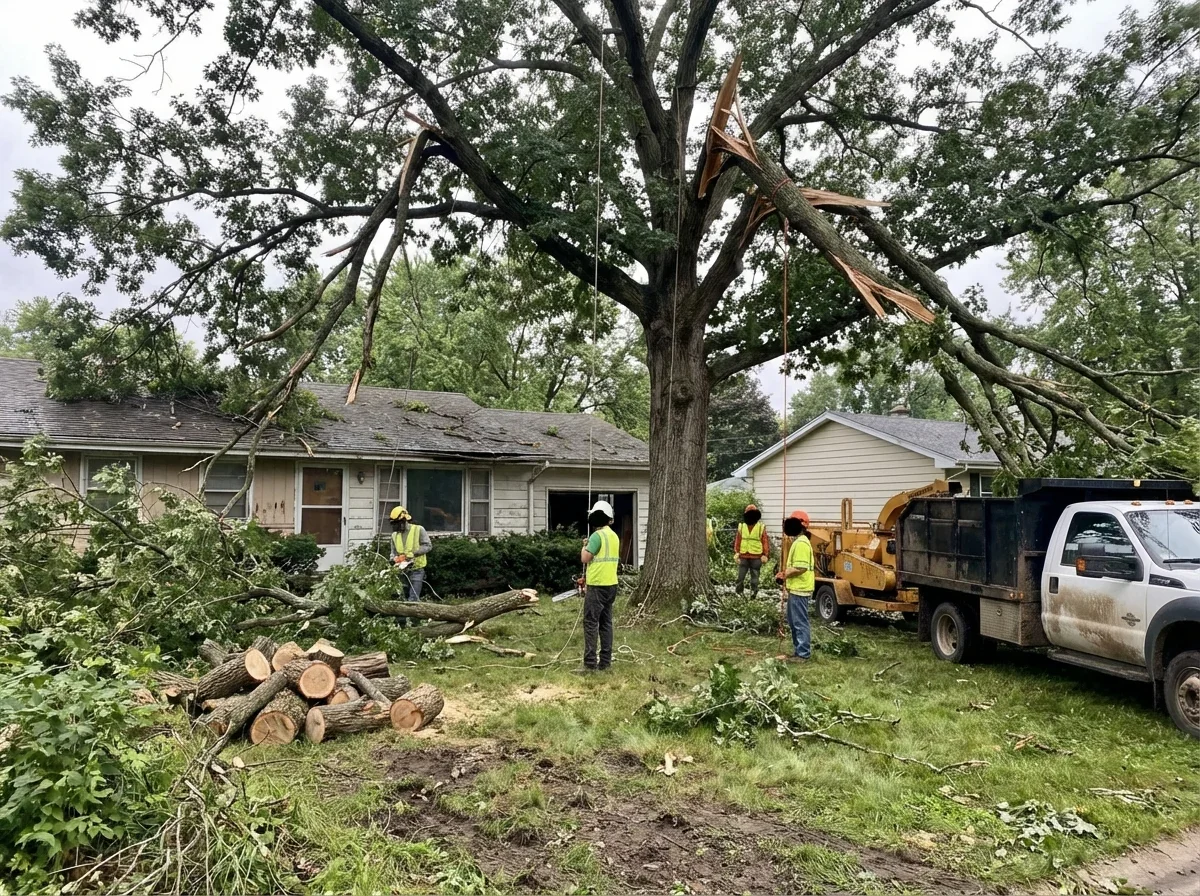
Oshkosh properties with mature street trees often fall in that top tier. You’re not just paying for trimming — you’re paying for technical rigging to lower 400-pound limbs without crushing your fence.
Pruning Type and Complexity
Crown cleaning (removing deadwood and broken branches) costs less — $400–$700 for a 40-foot tree. Less decision-making, faster work.
Crown thinning (selectively removing live branches to reduce density) requires precision. Every cut changes the tree’s balance. Same 40-foot tree: $600–$900.
Crown raising (removing lower branches for clearance) depends on what’s underneath. Raising over a driveway in Menasha is straightforward. Over a deck with pergola requires rigging. $500–$800 for most residential work.
Access and Equipment Premiums
Open Yard, Truck Access
Base RateNo access premium. Standard pricing applies.
Fenced Backyard
+20%Hand-carrying equipment and debris through limited access.
Overhangs House
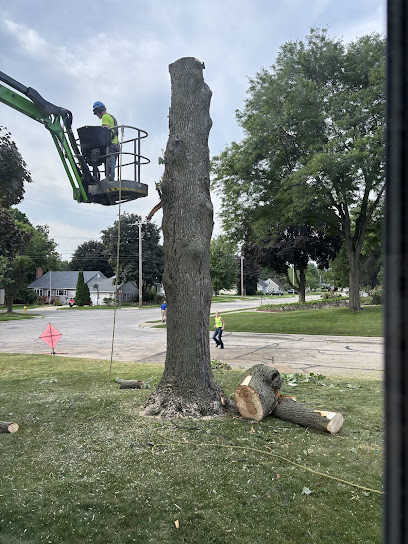
+40%Requires rigging and controlled lowering of every branch.
Kaukauna backyards with mature trees planted 10 feet from the foundation see this premium constantly. There’s no easy way in. Every branch gets roped and lowered in sections.
The Tree Trimming Process
Professional pruning follows a sequence. You don’t just show up with a chainsaw and start cutting.
Assessment & Planning
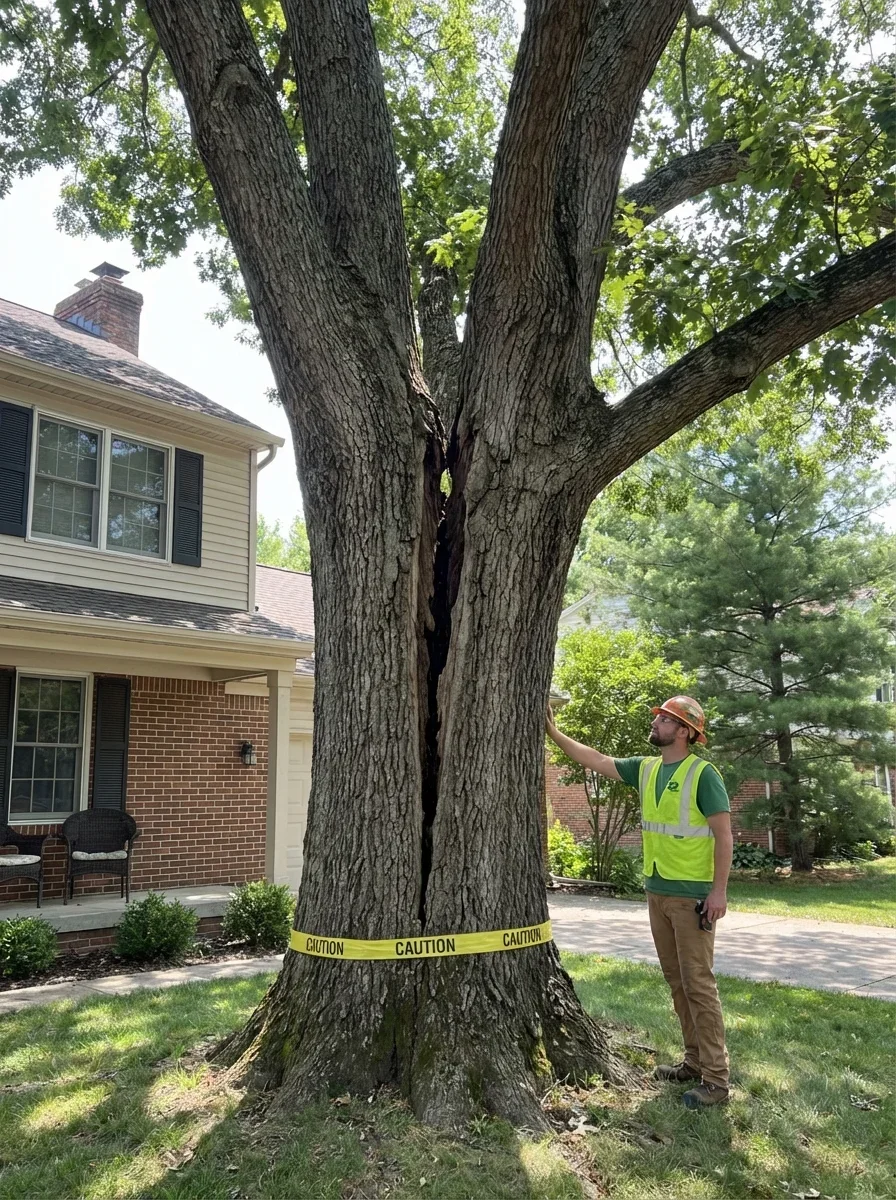
Before Work BeginsThe arborist walks the property examining each tree — identifying deadwood, crossing branches, structural defects, and clearance issues. They check for disease or insect damage that pruning won’t fix. This determines the pruning objective: hazard removal, structure improvement, light increase, or clearance restoration.
Deadwood Removal
Phase 1Crew sets up equipment — bucket truck, climbing gear, or both. They start with deadwood removal, taking out compromised material first. Every cut happens just outside the branch collar, preserving the tree’s natural defense zone. No flush cuts. No stubs. No wound dressing.
Structural Pruning
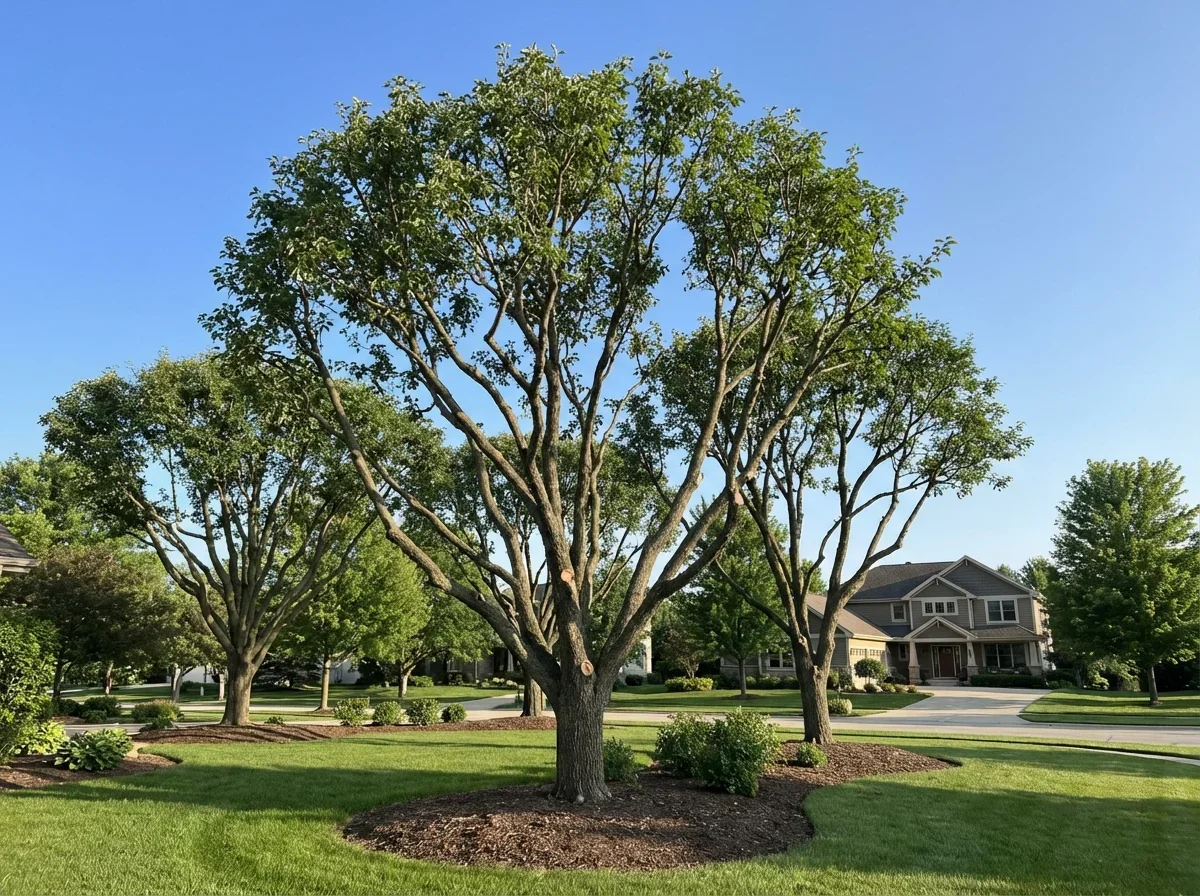
Phase 2For crown thinning, branches are removed evenly throughout the canopy — 15–20% reduction for airflow and light. For crown raising, lower branches come off to create 8–12 feet of clearance. The tree should look natural afterward, just less dense. In Wisconsin, dormant season pruning minimizes sap flow and pest attraction. Oaks must not be pruned April 15–July 15 due to oak wilt risk.
Debris Removal & Cleanup
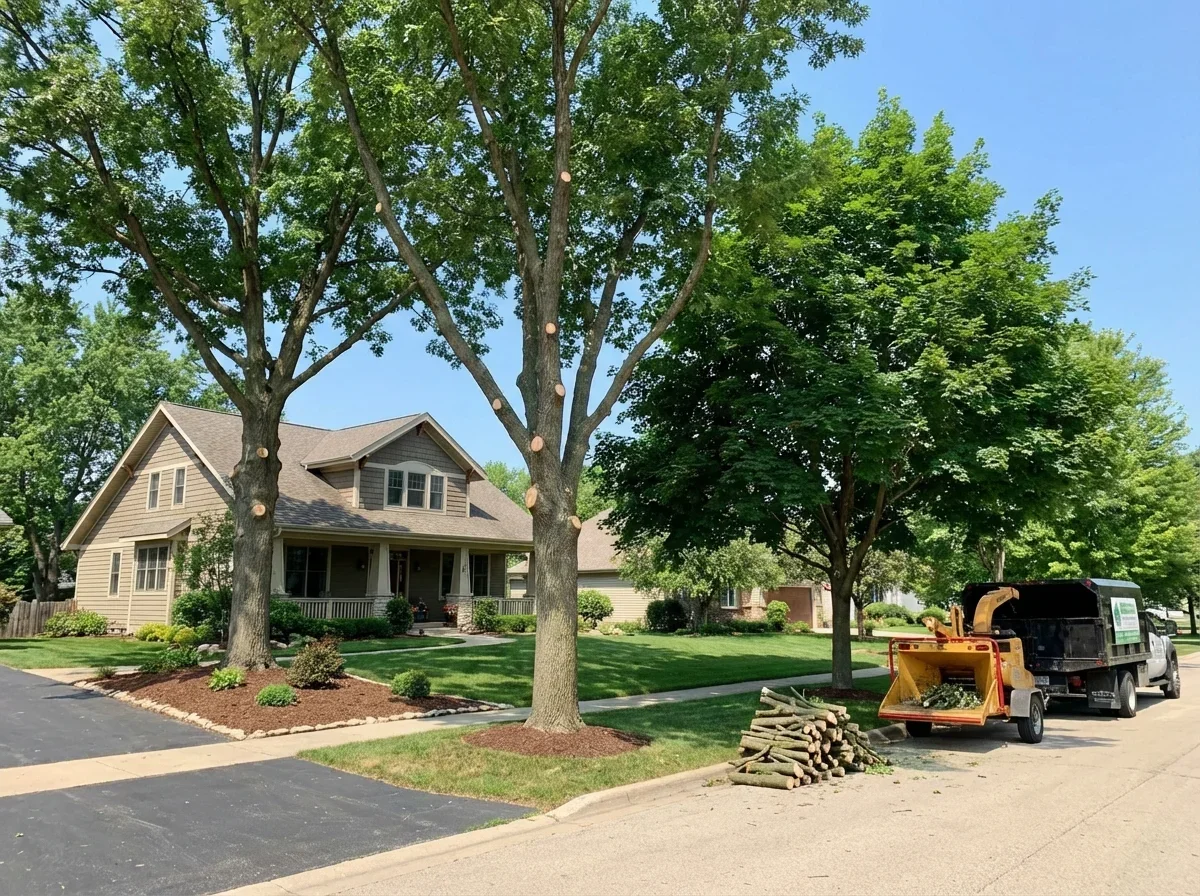
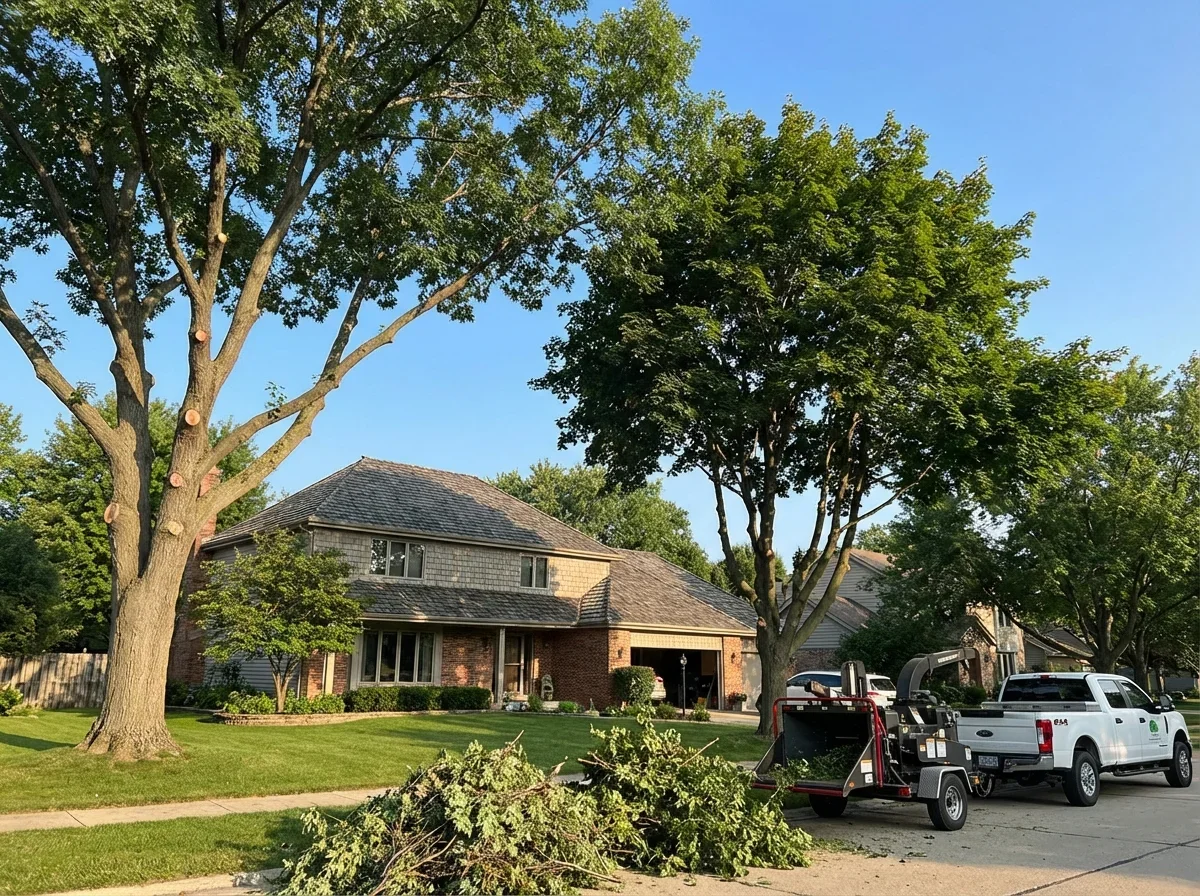
Same DayBranches get chipped on-site or hauled away. Some homeowners keep firewood-sized logs. The crew rakes the work area and blows sawdust from driveways and patios. Professional operations don’t leave you with cleanup work.
How to Choose a Tree Trimming Service
The difference between a certified arborist and "a guy with a chainsaw" shows up five years later when one tree is thriving and the other is rotting from the inside.
Certifications and Insurance
Ask if the lead arborist is ISA Certified. This credential requires passing a comprehensive exam covering tree biology, pruning standards, risk assessment, and safety protocols. It's not a weekend course. It's proof they understand how trees respond to cuts.
Verify liability insurance and workers' compensation coverage. Tree work is dangerous. If a climber falls on your property or a branch crushes your garage, you need to know their insurance covers it — not your homeowner's policy.
Questions to ask:
- "Is your lead arborist ISA Certified?" (Get the certification number. You can verify it online.)
- "What liability coverage do you carry?" (Minimum $1 million for residential work.)
- "Do you follow ANSI A300 pruning standards?" (This should be an automatic yes.)
Proper Pruning Standards
Red flags that indicate poor practices:
- They offer to "top" your tree to reduce height (topping destroys tree structure and creates hazardous regrowth)
- They use climbing spikes on trees that aren't being removed (spikes wound the tree with every step)
- They suggest removing more than 25% of the canopy in one session (over-pruning stresses trees and triggers excessive regrowth)
- They can't explain why they're making specific cuts (proper pruning has purpose for every branch removed)
A qualified arborist in Neenah or Menasha will explain which pruning type your tree needs and why. They'll point out the branch collar and show you where cuts will be made. They'll discuss timing — especially if you have oaks.
The goal isn't the cheapest bid. It's the right work done properly. Improper pruning creates problems that take years to show up and decades to correct. A tree that's been topped never regains its natural structure. Flush cuts create decay pockets that hollow out trunks.
Compare at least three estimates. Ask each contractor to mark which branches they plan to remove and why. The answers will separate professionals from hacks immediately.
Frequently Asked Questions
The professional approach to pricing tree pruning is to estimate labor hours, then multiply by your desired hourly rate:
- Assess the job on-site — Evaluate tree size, height, branch density, hazards, and debris removal.
- Estimate labor hours — Determine how long the job will realistically take (e.g., 3–5 hours).
- Add a safety margin — Add 1–2 buffer hours for unexpected complications or slower progress.
- Multiply by hourly rate — Use your target rate (e.g., $100/hour in Wisconsin) to calculate total labor cost.
- Add material/equipment costs — Include fuel, chipper rental, disposal fees, or specialized equipment if applicable.
- Quote a flat dollar amount — Present the client with a final price, not an hourly range, for clarity and confidence.
Example: 4 hours estimated + 1 buffer hour = 5 hours × $100/hour = $500 final quote (before materials).
- University of Minnesota Extension. "Tree Pruning." https://extension.umn.edu/tree-care/tree-pruning. Accessed February 10, 2026.
- Tree Care Industry Association (TCIA). "ANSI A300 (Part 1) Tree, Shrub, and Other Woody Plant Management – Standard: Pruning." https://www.tcia.org/standards/ansi-a300. Accessed February 10, 2026.
Related Articles
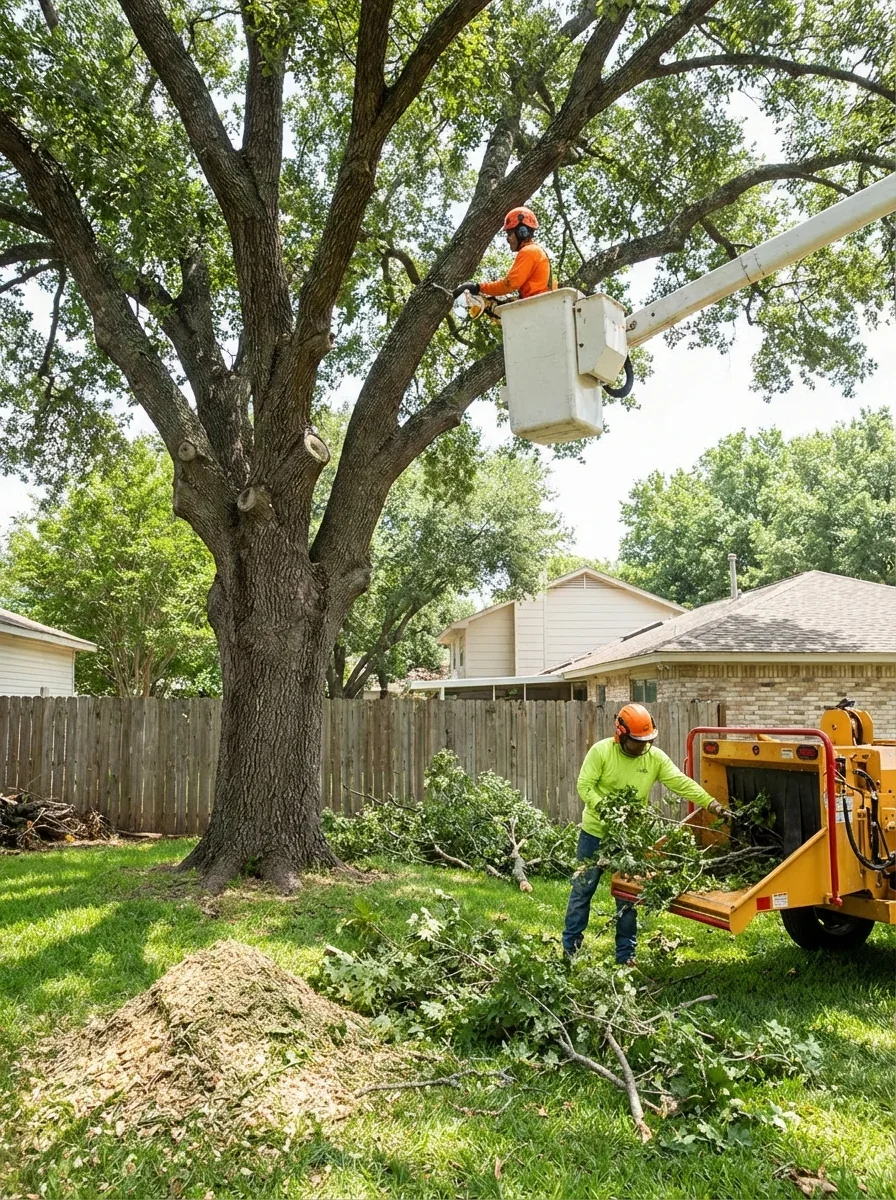
Tree Trimming Cost (2026 Guide)
Read Cost Guide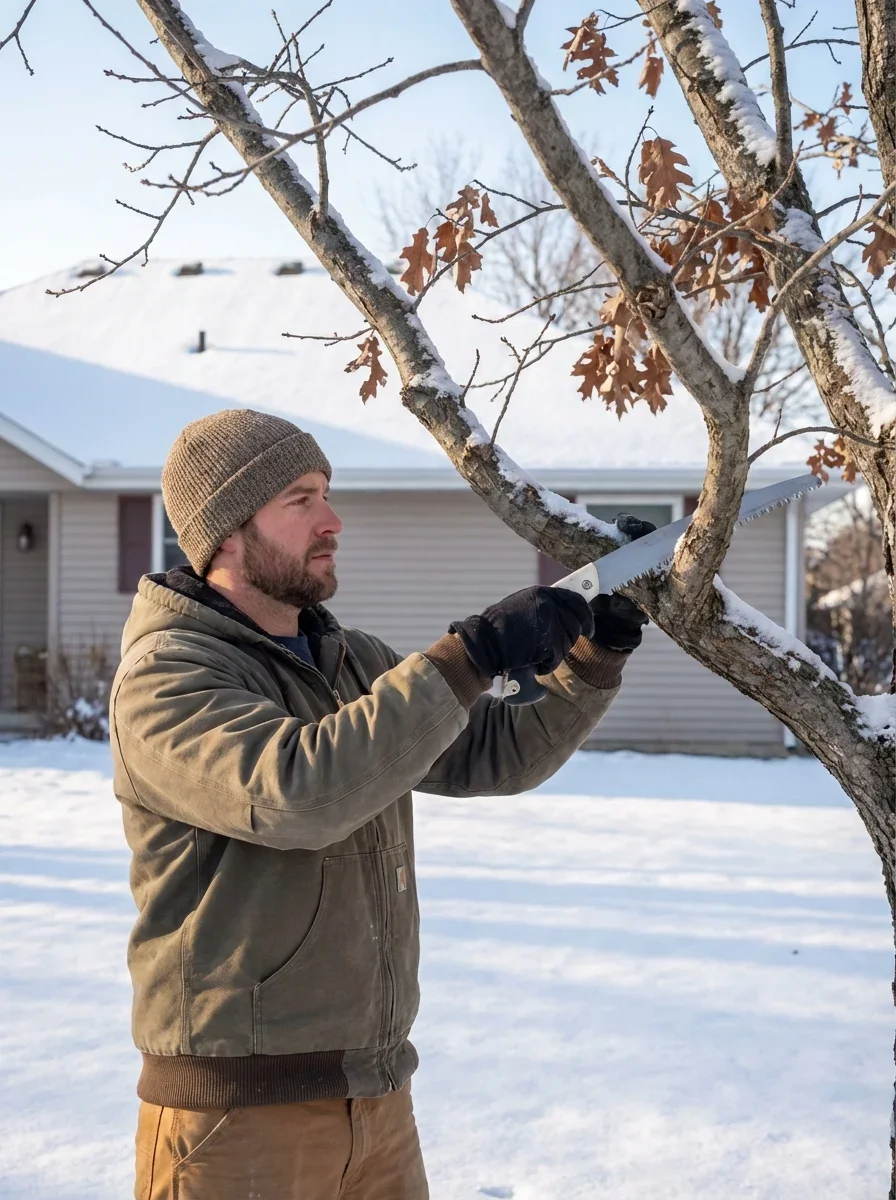
When to Prune Trees in Wisconsin
Read Guide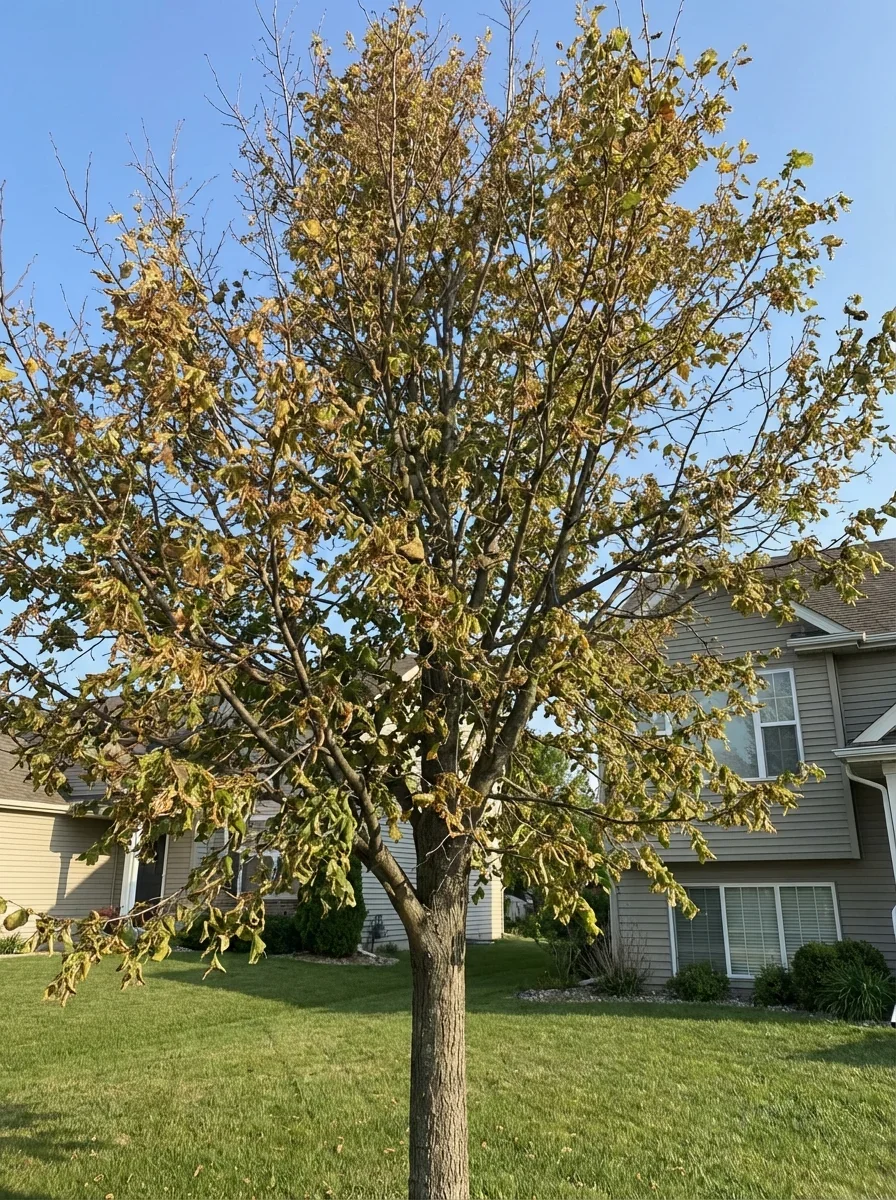
Signs Your Tree is Dying
Read ProblemDIY Tree Trimming vs Hiring a Professional: When to Call an Arborist
Read Guide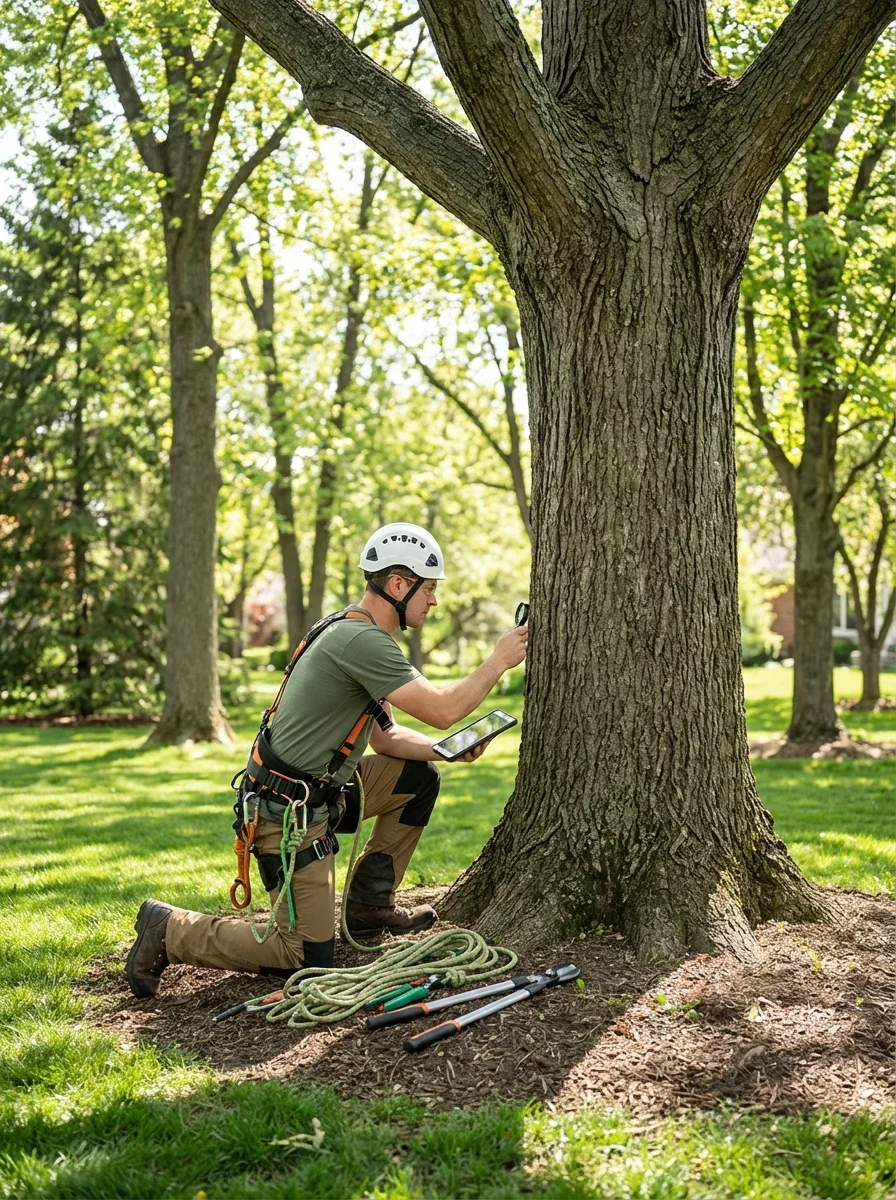
How to Hire an Arborist (Checklist)
Read Guide