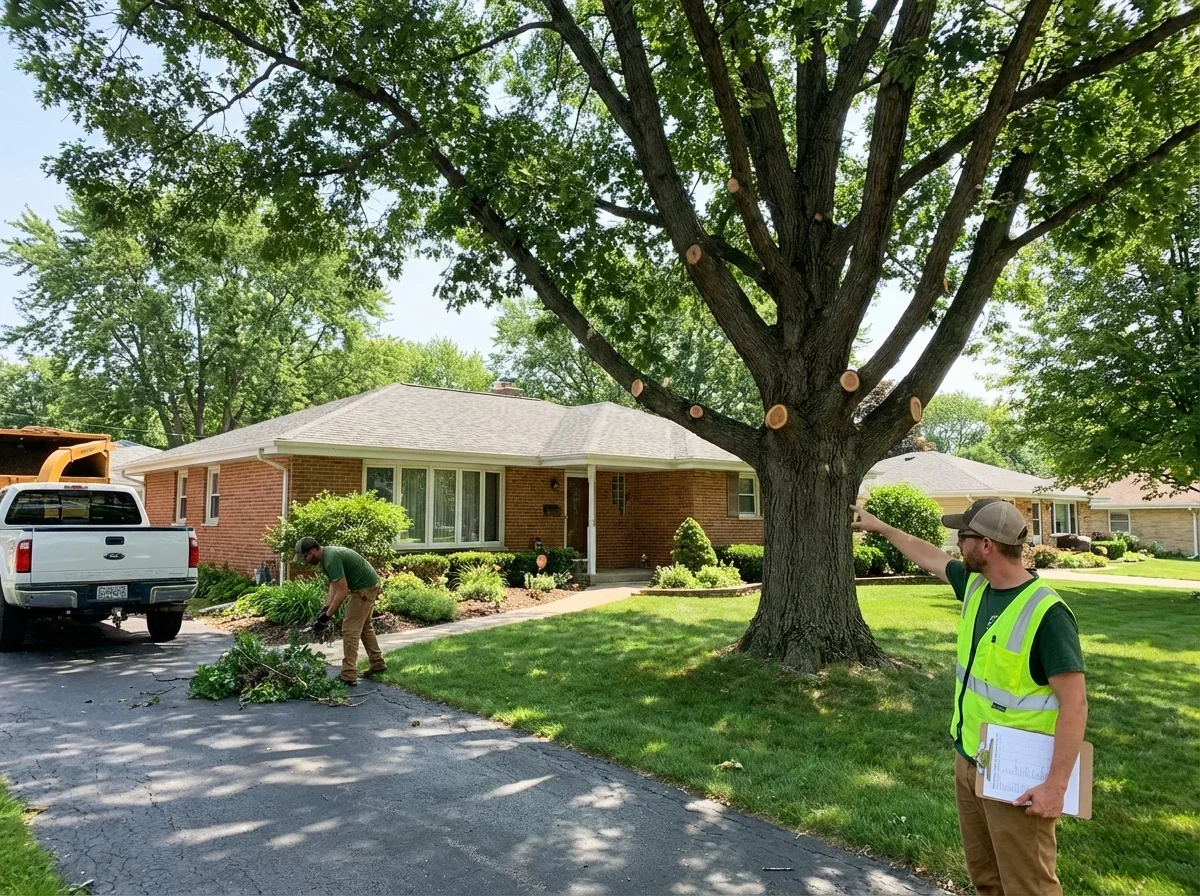
What Is a TRAQ Tree Risk Assessment?
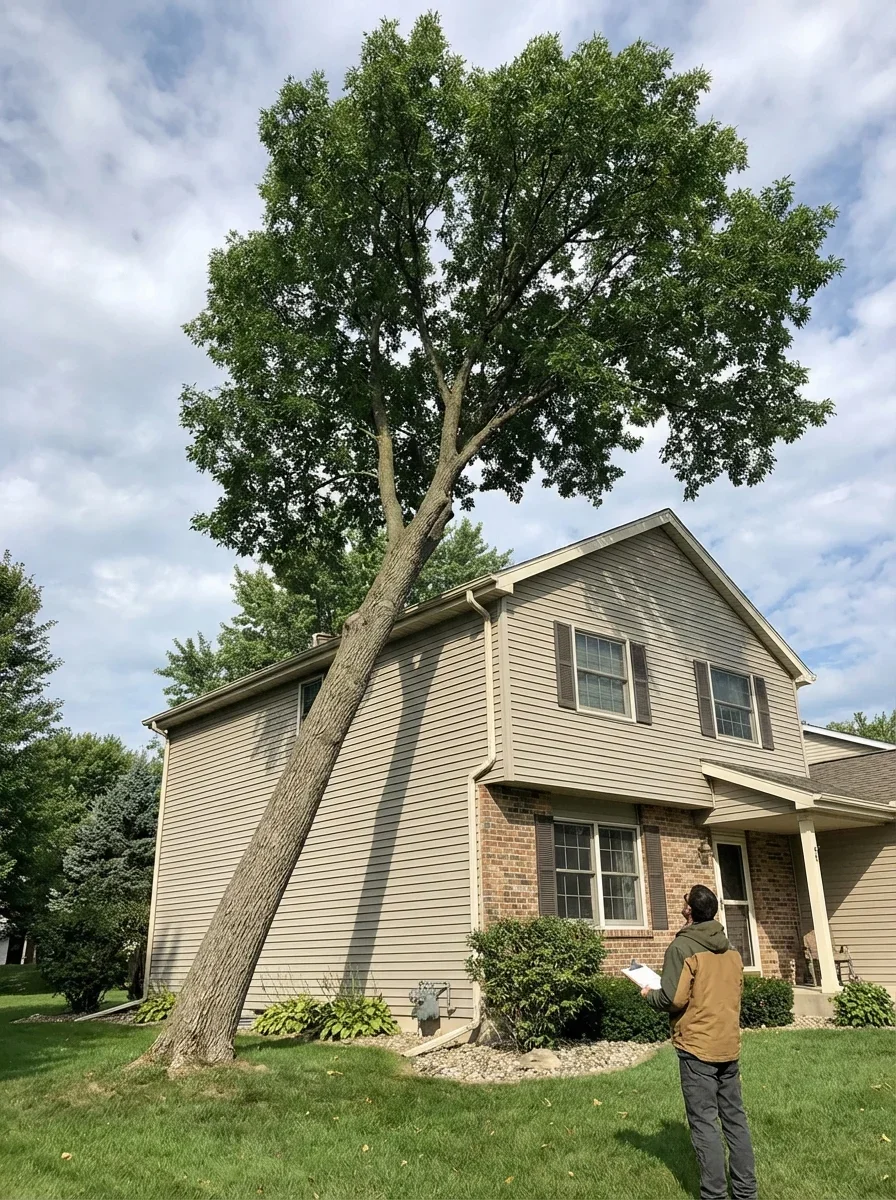
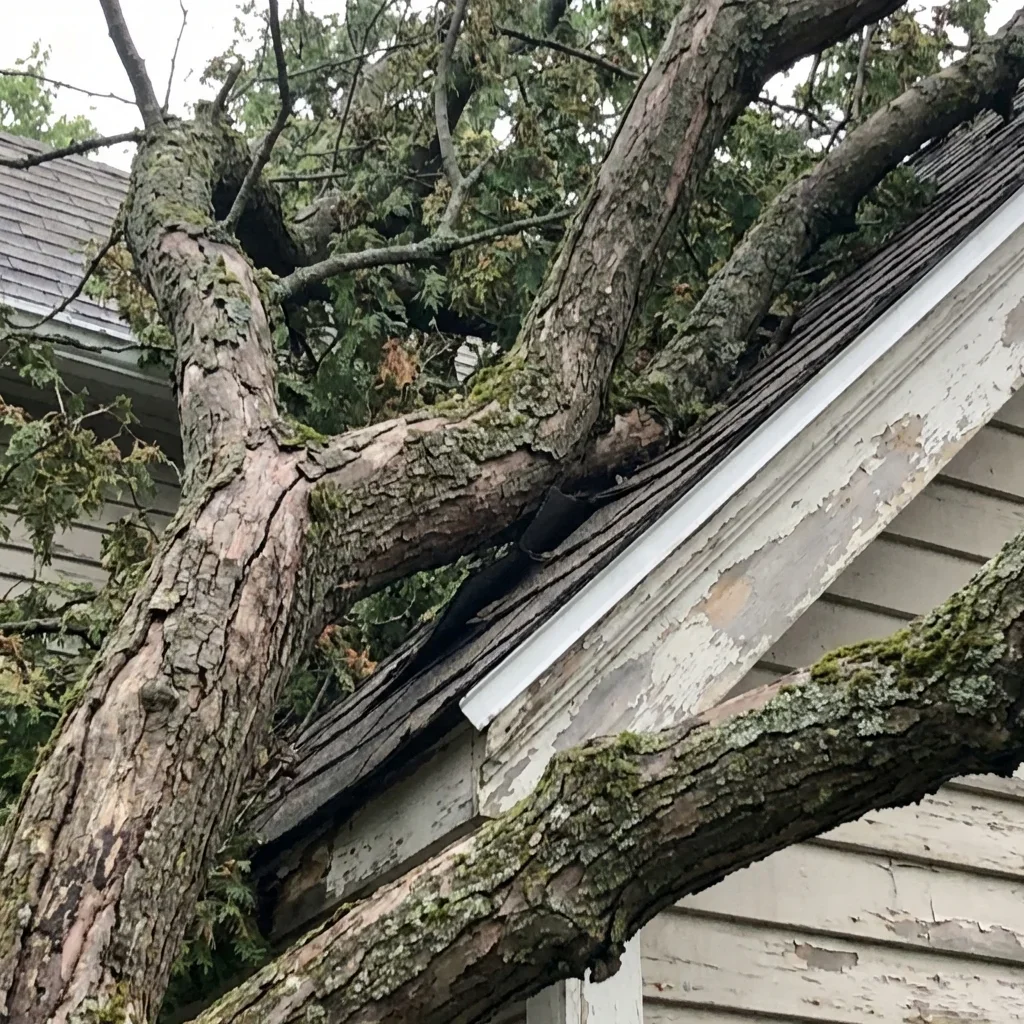
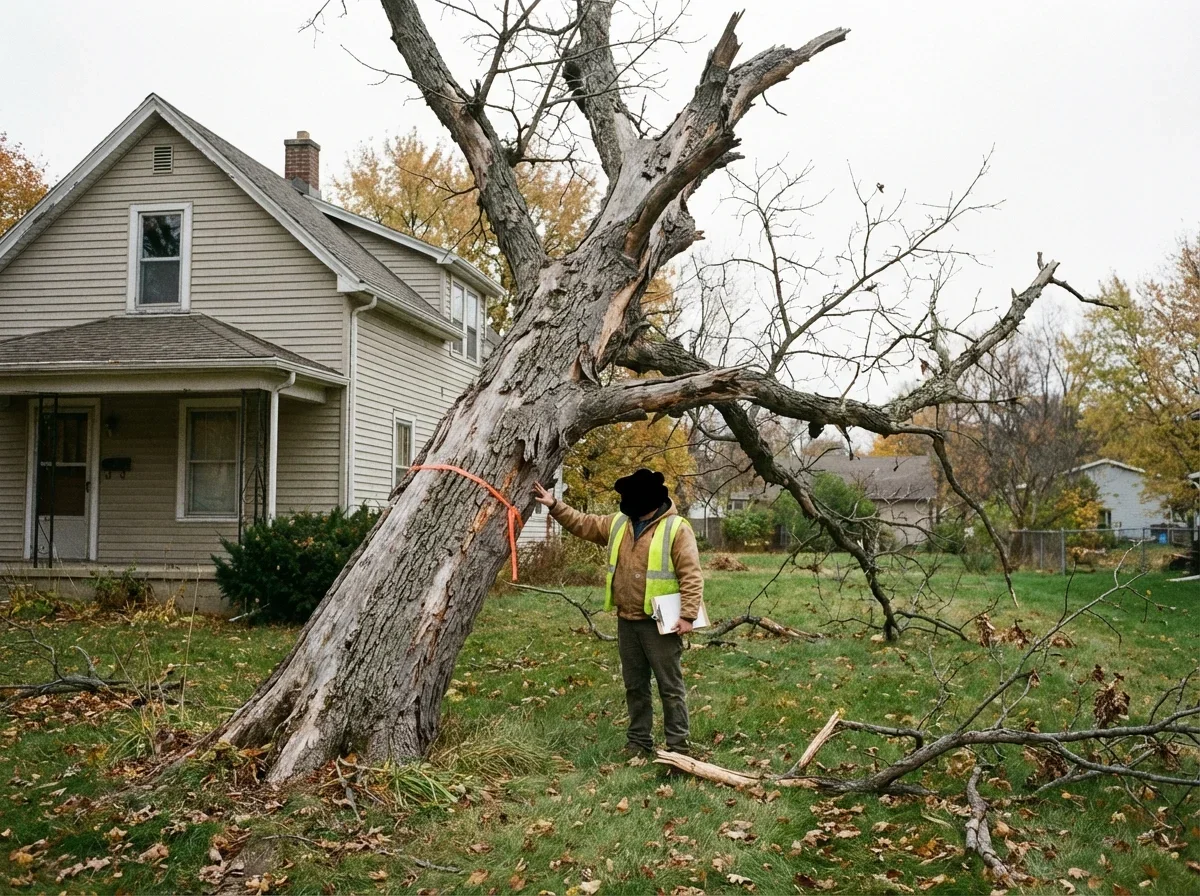
You know that mature oak leans toward your house. The ash tree near the playground has been declining since emerald ash borer swept through Oshkosh. Your property manager keeps asking about the trees along the parking lot.
But "it looks sketchy" doesn't satisfy an insurance claim. "I think it's okay" doesn't hold up in a liability dispute.
TRAQ assessment isn't a tree service showing up with a chainsaw and an opinion. It's a formal evaluation using ISA (International Society of Arboriculture) methodology that measures three specific factors: likelihood of failure, target identification, and consequence severity.[1] The result is a written report with actionable risk ratings that property managers, attorneys, and insurance adjusters actually recognize as defensible documentation.
The ISA TRAQ Methodology
The assessment uses descriptive categories — improbable, possible, probable, imminent — to rate failure likelihood. Not guesswork. A decision matrix that evaluates structural defects, decay patterns, root plate stability, and target zones.[1]
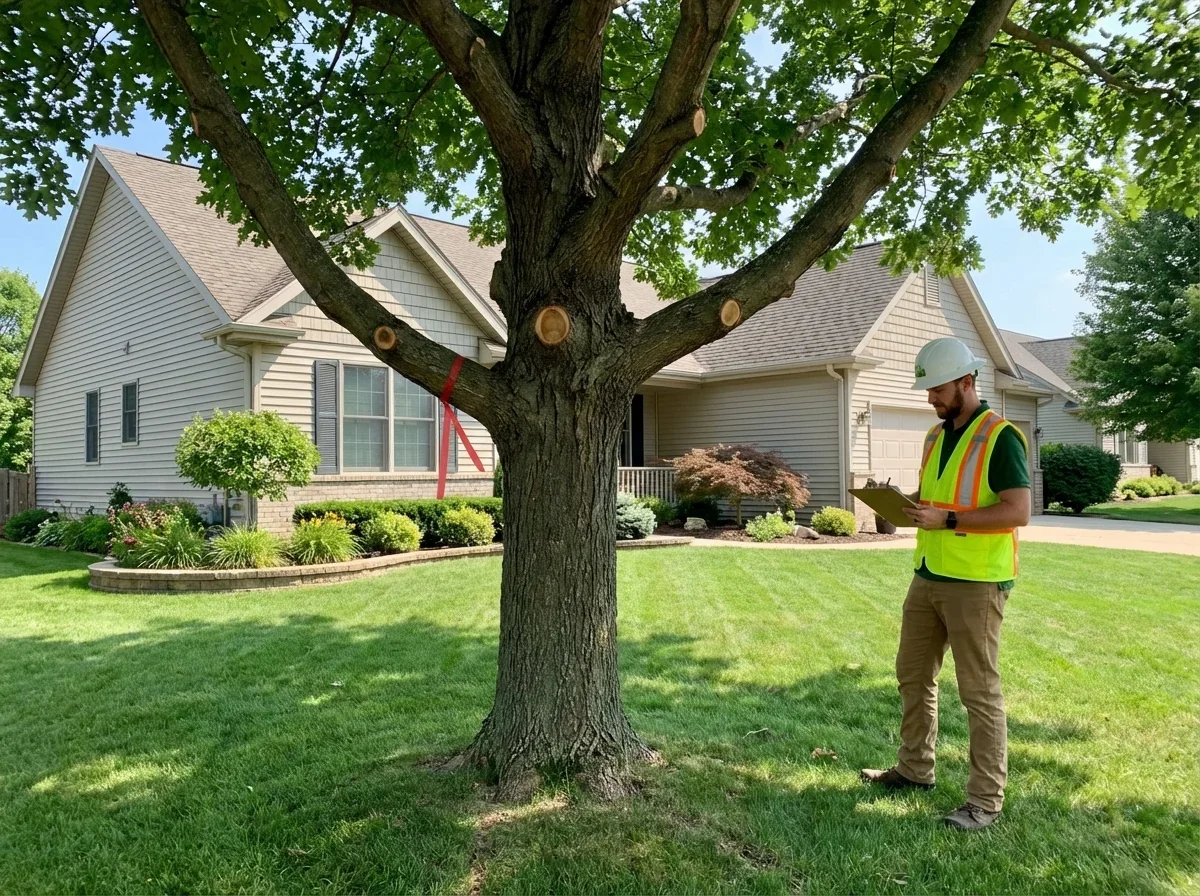
A TRAQ-qualified arborist looks at what could fail (the whole tree, a major limb, a section of crown), how likely that failure is based on visible defects and load factors, and what would be damaged if it happens. That produces a risk rating: low, moderate, high, or extreme. Each rating ties to specific recommended actions with priority levels.
Visual vs. Advanced Assessment Levels
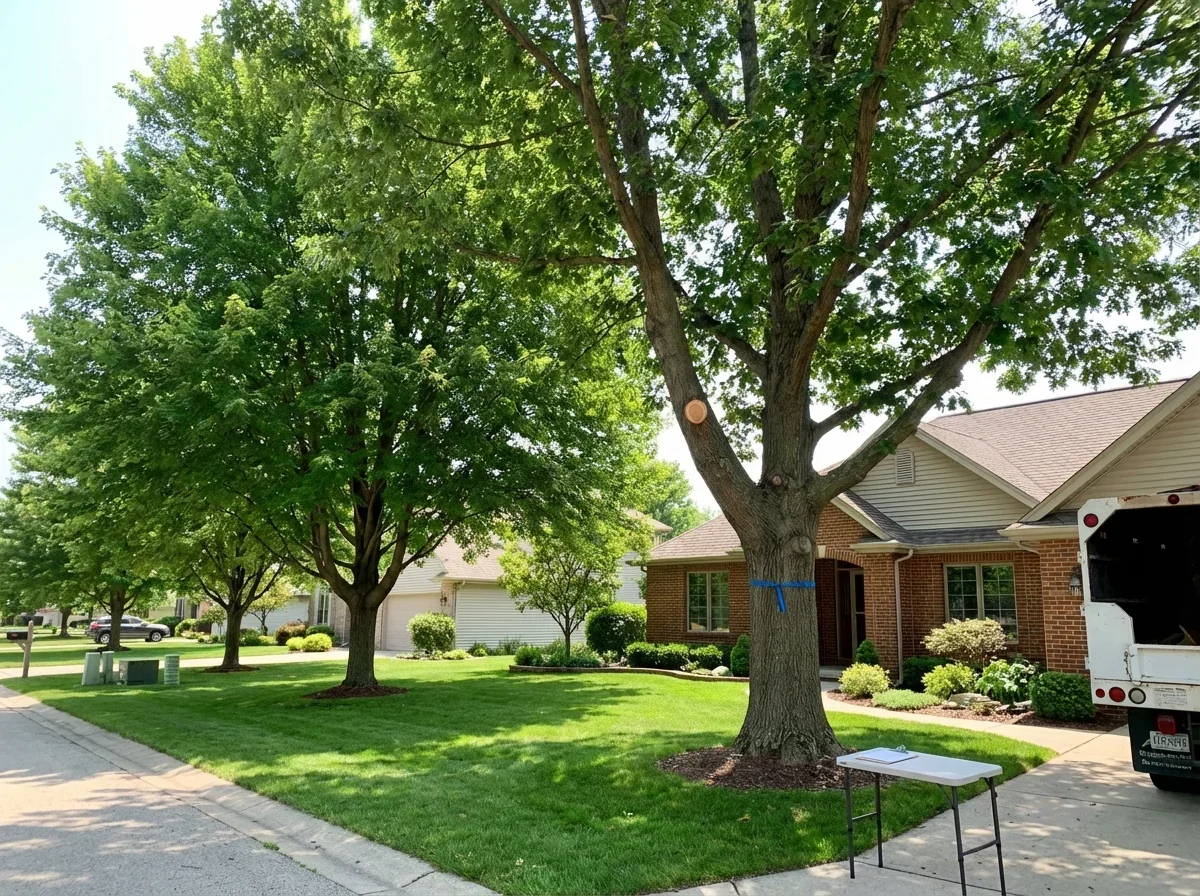
Most Fox Valley residential assessments are Level 2 Visual evaluations — walking the property, examining trees from all sides, documenting defects visible from the ground. For complex situations — major structural concerns, high-value targets, pre-construction planning in Neenah or Menasha — you might need Level 3 Advanced Assessment with climbing, aerial inspection, or resistograph drilling to measure internal decay.
The liability follows the knowledge. Once you know a tree poses high risk and you document it, inaction becomes legally significant. That's why property managers request formal TRAQ reports before deciding on removal or mitigation.
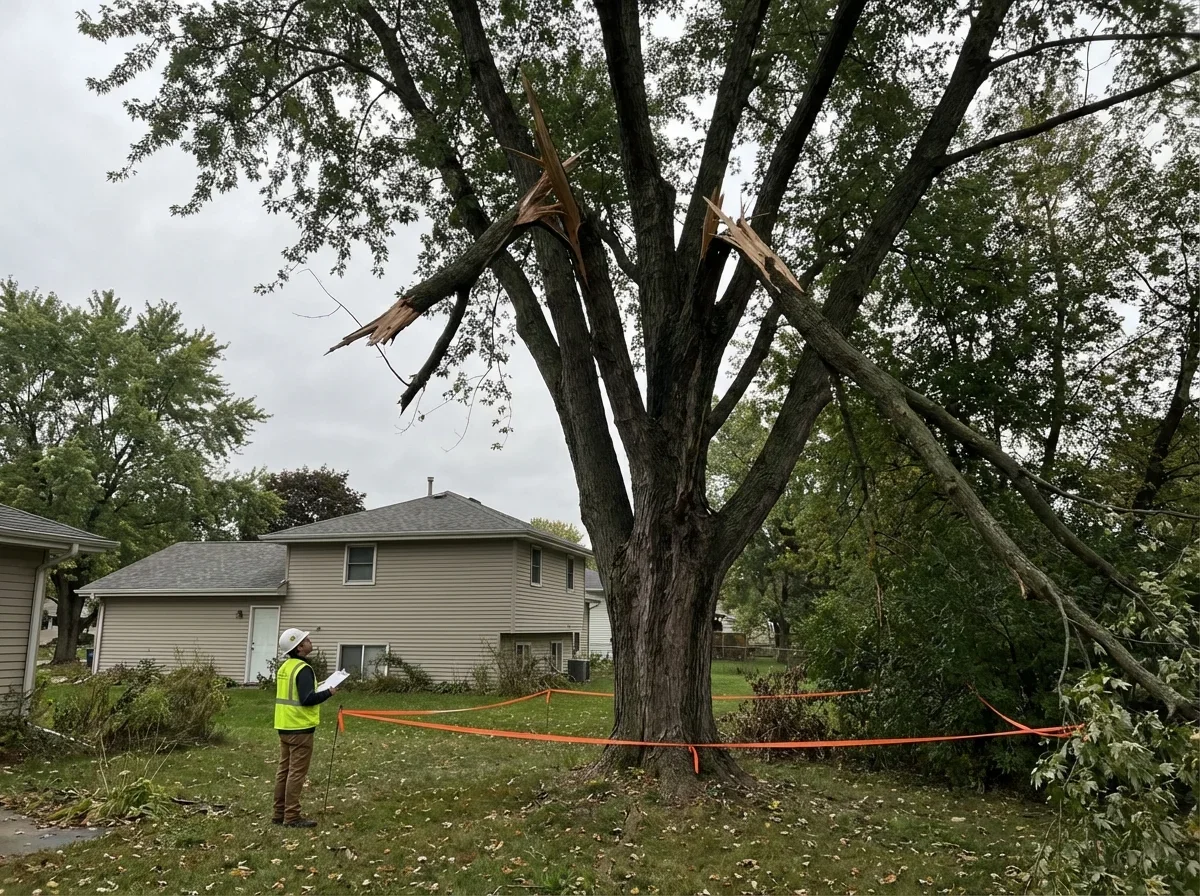
What Does Tree Risk Assessment Cost in the Fox Valley?
The pricing reflects the qualification requirement and the written deliverable. You're not paying for someone to eyeball your trees. You're paying for ISA TRAQ certification, methodology that holds up under scrutiny, and a formal report with photographic documentation.
Residential Property Assessments
For a typical homeowner in Appleton or Kaukauna evaluating 3-5 priority trees — the ones near the house, over the garage, beside the driveway — expect $300-$500 for a complete assessment with written report. That covers the site visit, individual tree evaluation using the risk matrix, failure likelihood ratings, and recommended actions.
Single high-value tree evaluation (that massive oak, the heritage maple): $150-$250 depending on complexity and whether advanced assessment techniques are needed.
| Assessment Scope | Tree Count | Cost Range | Deliverable |
|---|---|---|---|
| Focused residential | 3-5 priority trees | $300-$500 | Written report with risk ratings |
| Single high-value tree | 1 tree | $150-$250 | Individual assessment and recommendation |
| Whole-property inventory | 10-20 trees | $800-$1,500 | Complete risk assessment report |
Commercial and Municipal Assessments
Commercial properties, municipalities, and HOAs in Green Bay and Oshkosh typically negotiate per-tree rates for larger inventories: $75-$150 per tree depending on site complexity, documentation requirements, and whether the assessment needs to meet specific municipal code or insurance standards.
Pre-construction assessments — where liability is shared between property owner and contractor — often run higher because the documentation requirements are more stringent and the assessment may need to address tree protection zones and root plate stability for trees being retained on the development site.
The report is the product. Verbal assessment doesn't cut it for insurance claims, property disputes, or liability defense. The written deliverable with photographic evidence and specific risk ratings is what you're paying for — and what makes the assessment defensible if you ever need it in a legal or insurance context.
The Tree Risk Assessment Process
The arborist isn't just walking your property taking notes. TRAQ assessment follows a structured methodology that produces consistent, defensible results.
Initial Site Evaluation
The assessor starts by identifying the scope — which trees to evaluate, what the target zones are (structures, parking areas, play equipment, pedestrian paths), and what level of assessment is needed. For most Fox Valley residential properties, Level 2 Visual is appropriate. For commercial properties with high liability exposure or trees with suspected internal defects, Level 3 Advanced Assessment may be necessary.
Hazard Tree Identification and Rating
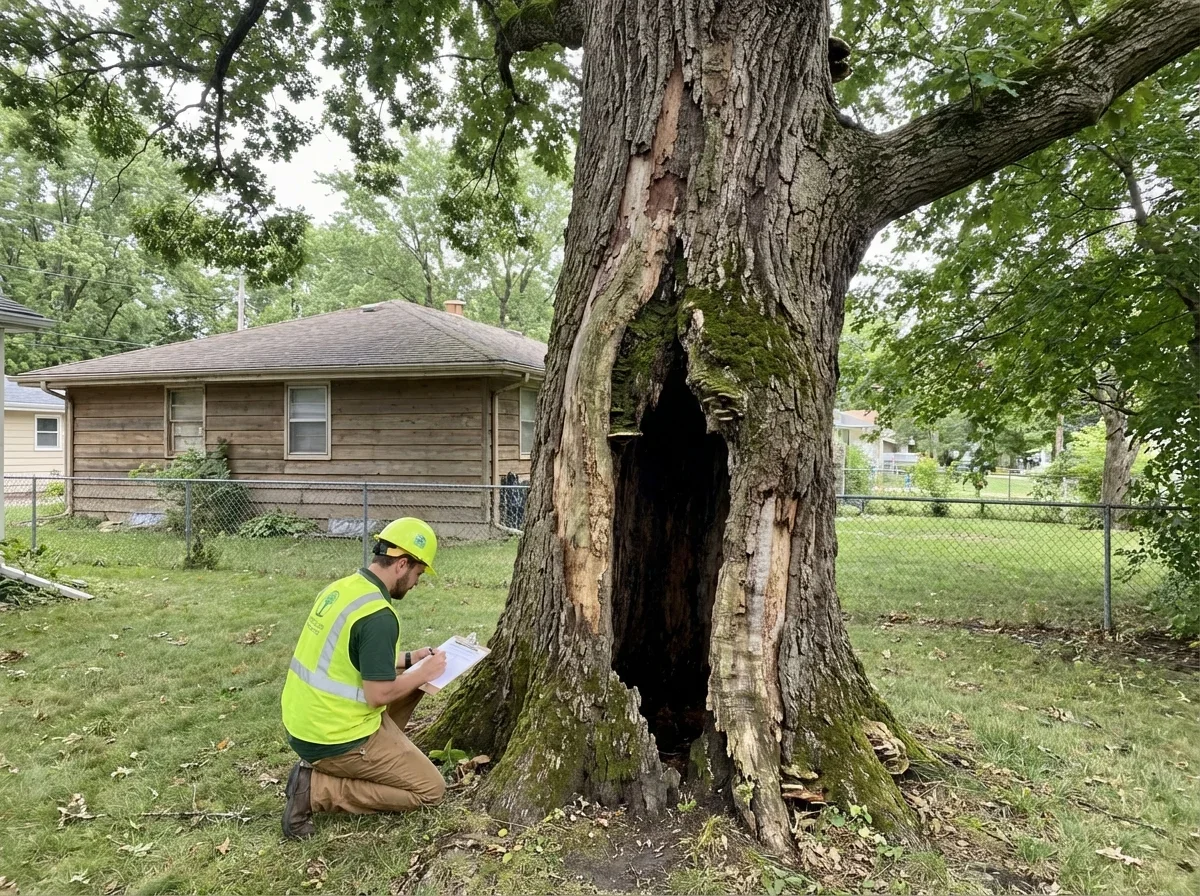
Each tree gets examined for visible defects: decay patterns, cracks, splits, cankers, root plate heaving, lean, dead branches in the canopy. The assessor evaluates what could fail — the entire tree, a scaffold limb, a section of crown — and rates the likelihood using the ISA TRAQ descriptive categories.[1]
Target identification is just as important as tree condition. A declining ash tree in the middle of an open field is low risk even if failure is probable. The same tree leaning over a playground in Neenah is high or extreme risk because the consequence of failure is severe.
Wisconsin-specific risk factors get documented: ice storm damage common in Fox Valley winters, frost cracks from temperature swings, emerald ash borer weakening that's left thousands of standing dead ash trees across the region, storm damage from the severe weather events that hit Appleton and surrounding areas every few years.
Written Report and Recommendations
The final report includes:
- Tree inventory with species, size, and location
- Risk ratings for each assessed tree (low, moderate, high, extreme)
- Photographic documentation of defects and target zones
- Recommended actions with priority levels (immediate, 1 year, monitor)
- Mitigation options where applicable (pruning, cabling, removal)
Timeline: 7-10 days from assessment to delivered report. Rush reports for insurance claims or legal deadlines available with premium pricing.
How to Choose a Qualified Tree Risk Assessor
Not every tree service can perform TRAQ assessment. The credential matters because the methodology and written report need to meet professional standards that hold up under scrutiny.
ISA TRAQ Certification Requirements
Only individuals with the Tree Risk Assessment Qualification (TRAQ) credential from the International Society of Arboriculture have the specific training required for formal tree risk assessment.[2] Ask to see the TRAQ certificate and verify current ISA Certified Arborist status. The credential requires continuing education — assessment standards and tree biology knowledge evolve.
Liability insurance is non-negotiable. The arborist should carry $1-2 million general liability coverage at minimum. They're documenting risk that could become the basis for legal or insurance claims. Their coverage protects both of you.
Experience with Wisconsin Tree Species and Weather Patterns
A qualified assessor needs to understand how Fox Valley weather affects tree structure. Ice loading that splits scaffold limbs. Freeze-thaw cycles that create frost cracks in maples. The progression of emerald ash borer decline and when standing dead ash trees transition from possible failure to probable or imminent.
Questions to ask before hiring:
- How many TRAQ assessments have you completed in the past 12 months?
- Are you familiar with emerald ash borer damage patterns and failure modes in declining ash?
- What does your written report include, and can I see a sample?
- Do you carry errors and omissions insurance in addition to general liability?
- How do you determine whether Level 2 Visual or Level 3 Advanced Assessment is needed?
- What's your timeline for report delivery?
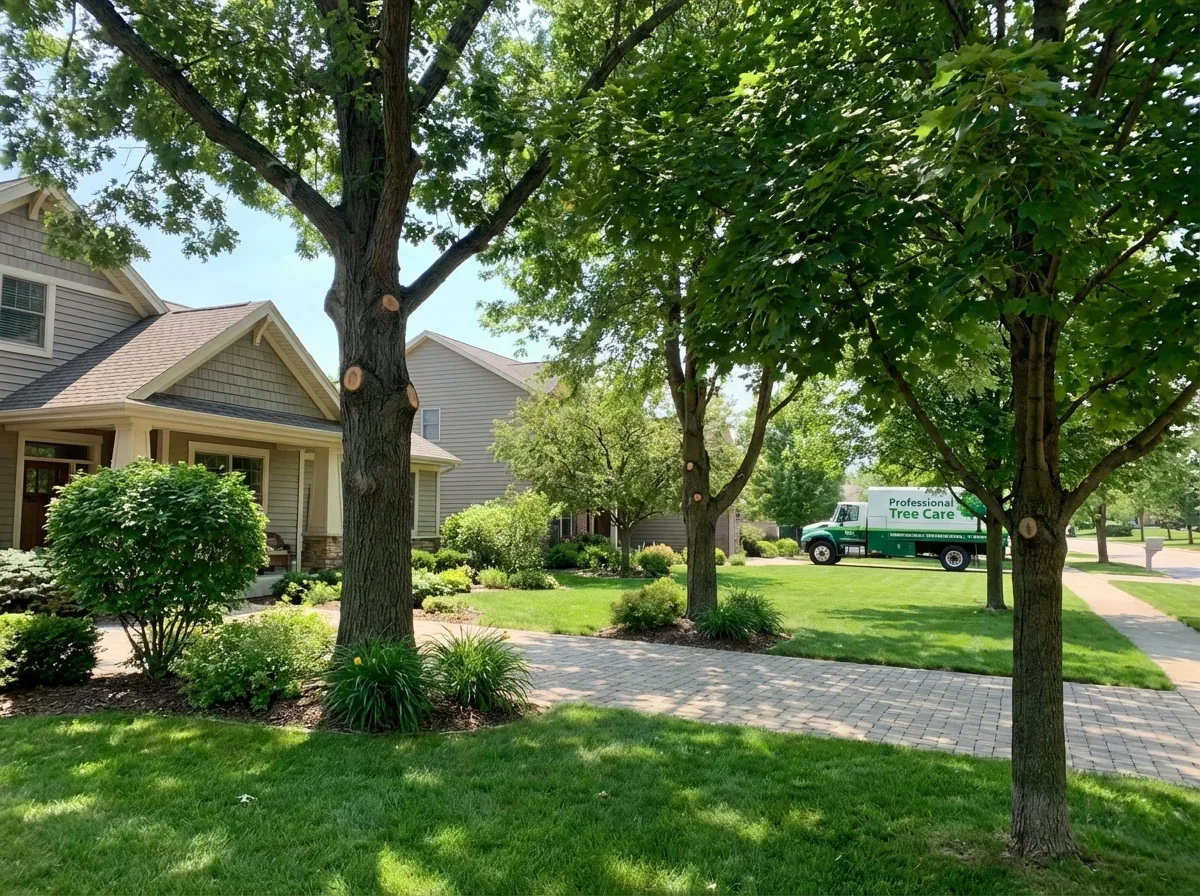
Fox Valley property owners and managers comparing certified arborists should prioritize TRAQ qualification, recent assessment experience in residential or commercial contexts matching your needs, and clear examples of written reports that meet documentation standards. The right assessor delivers defensible risk ratings you can actually use to make informed decisions about tree management and liability mitigation.
Frequently Asked Questions
A professional arborist report in Wisconsin typically costs $250–$400 for a single tree assessment, or $75–$250 per hour for consultation. Full site analyses covering multiple trees or complex conditions may range from $400–$1,000+.
Arborist consulting fees by service type:
| Service | Cost Range | Time/Scope |
|---|---|---|
| Single tree consultation/estimate | $250–$400 | 30–60 min; diagnosis + written report |
| Hourly consultation (no report) | $75–$150/hour | Per-hour billing; advice + recommendations |
| Multi-tree site analysis | $400–$800 | 2–4 hours; landscape-wide assessment |
| Health assessment + treatment plan | $300–$500 | Diagnosis, testing, long-term care strategy |
| Insurance/liability claim evaluation | $350–$600 | Documentation for damage or liability disputes |
| Certified arborist (ISA credential) | Higher end ($150–$250/hr) | Premium expertise; legal standing for reports |
ISA-certified arborists charge premium rates due to credentials, liability insurance, and legal admissibility in disputes.
- Ohio Department of Natural Resources. "Tree Risk Assessment Methods: A Comparison of Three Common Evaluation Forms." https://dam.assets.ohio.gov/image/upload/ohiodnr.gov/documents/forestry/uftoolbox/TreeRiskAssessment-MethodsComparison.pdf. Accessed February 11, 2026.
- North Dakota State University Extension. "Tree Risk Assessment Guidelines." https://www.ndsu.edu/vpag/tree-risk-assessment-guidelines. Accessed February 11, 2026.
Related Articles
How Much Does an Arborist Cost?
Read Cost Guide
How to Hire an Arborist (Checklist)
Read Guide
Hazardous Tree - Signs & What to Do
Read Problem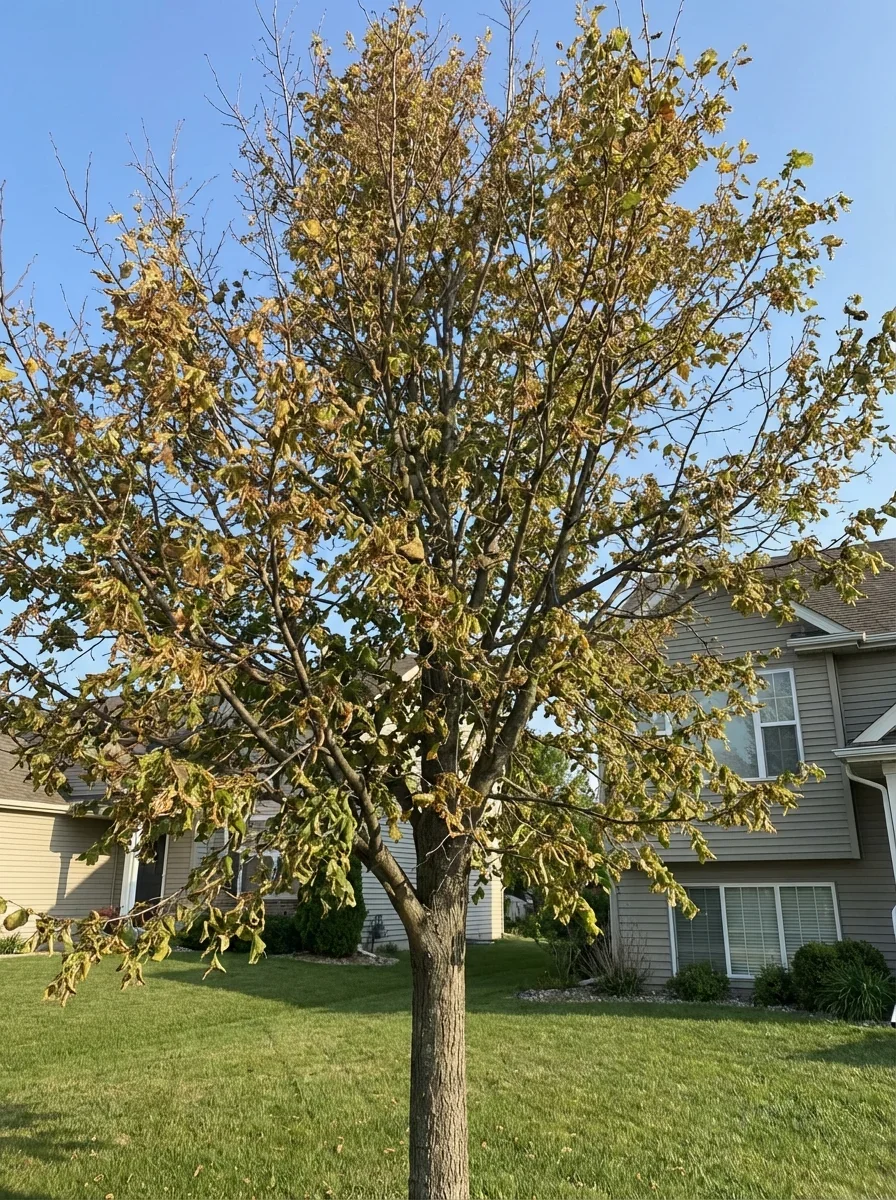
Signs Your Tree is Dying
Read ProblemTree Health Assessment vs Arborist Consultation: Which Do You Need?
Read Guide