


Signs You Need Tree Removal
You know something's wrong when you start parking on the other side of the driveway. Or when you stop letting the kids play in the backyard. Or when you're checking the forecast every night because you're worried about wind.
Dead branches covering more than half the canopy means the root system is failing. It's not coming back. In Green Bay and Oshkosh, homeowners often wait until a storm takes the decision out of their hands—which is exactly when removal costs spike and availability disappears.
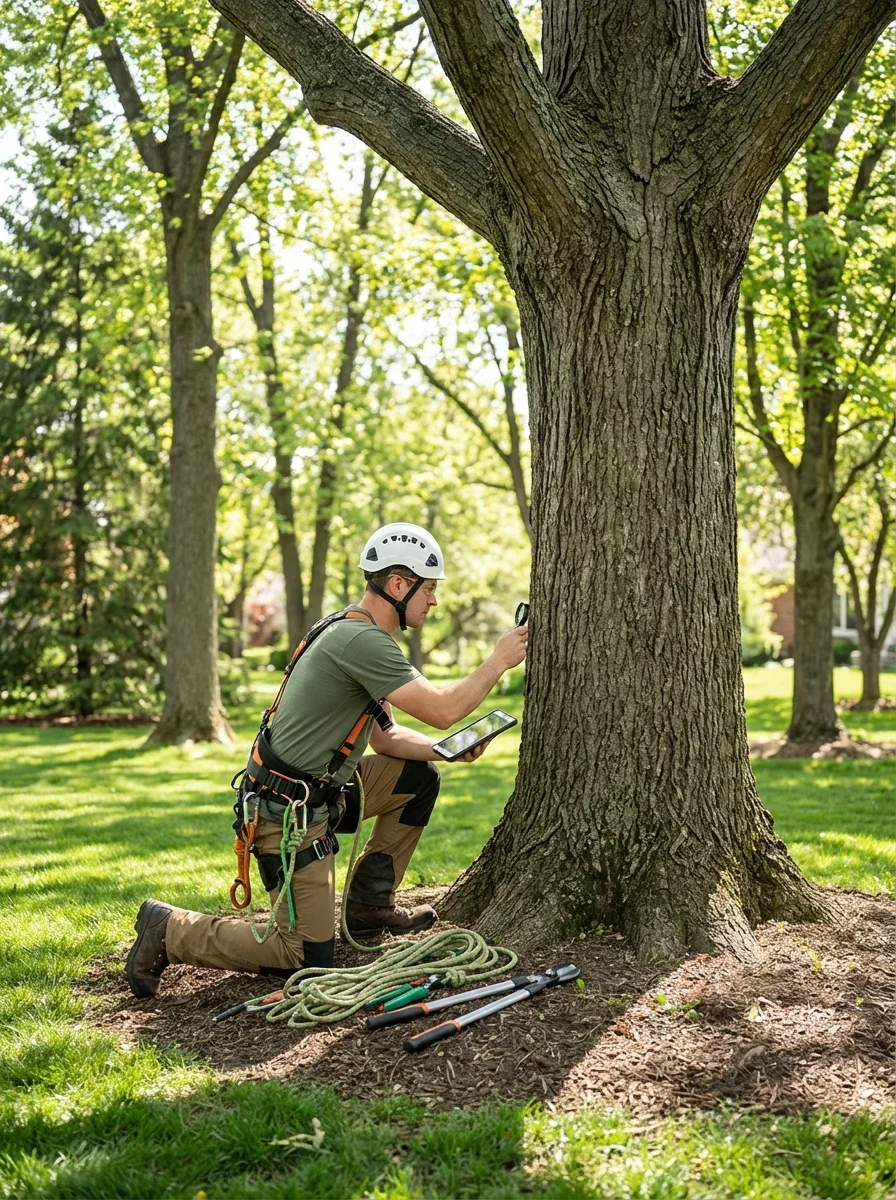
Here's what arborists look for during assessments in the Fox Valley:
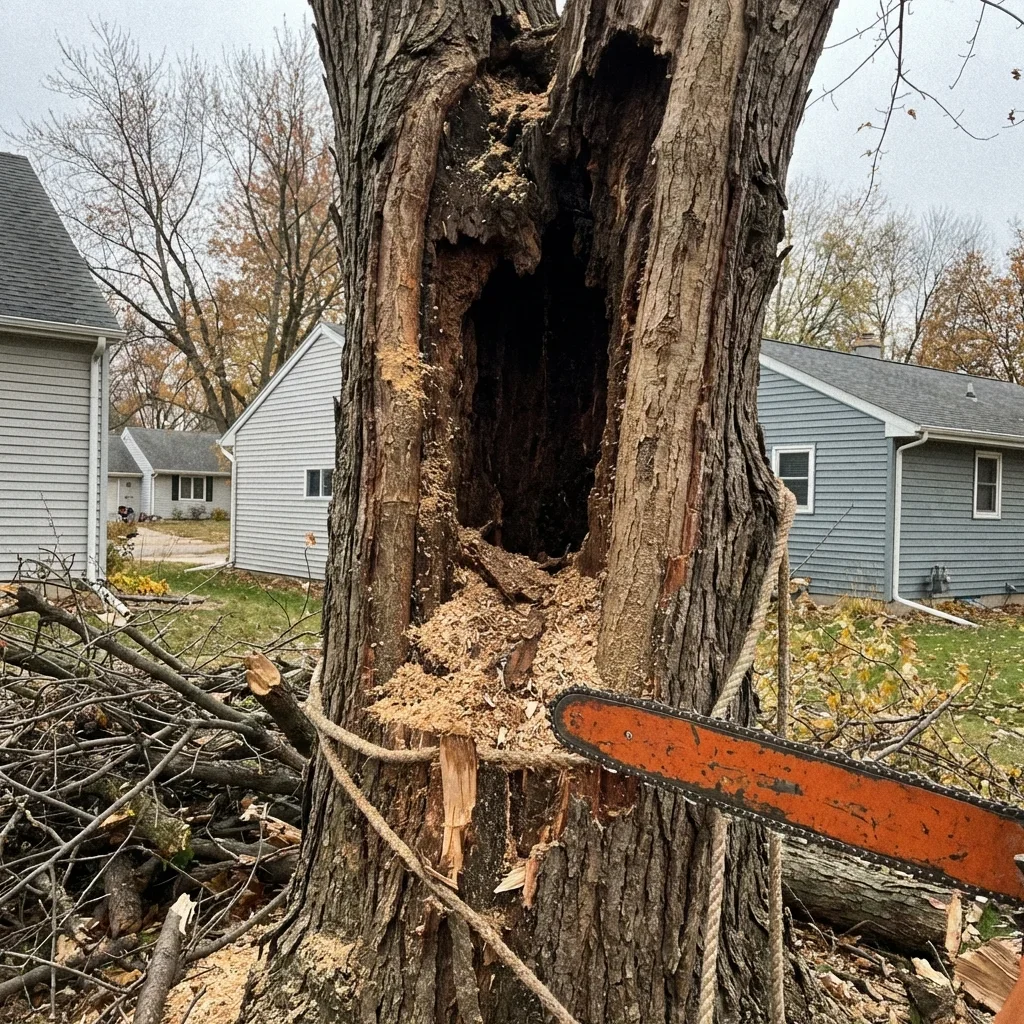
Structural failures: Trunk splits, cavities larger than your fist, mushrooms growing at the base (root rot), or a lean greater than 15 degrees. That lean didn't happen overnight—the root plate is compromised.
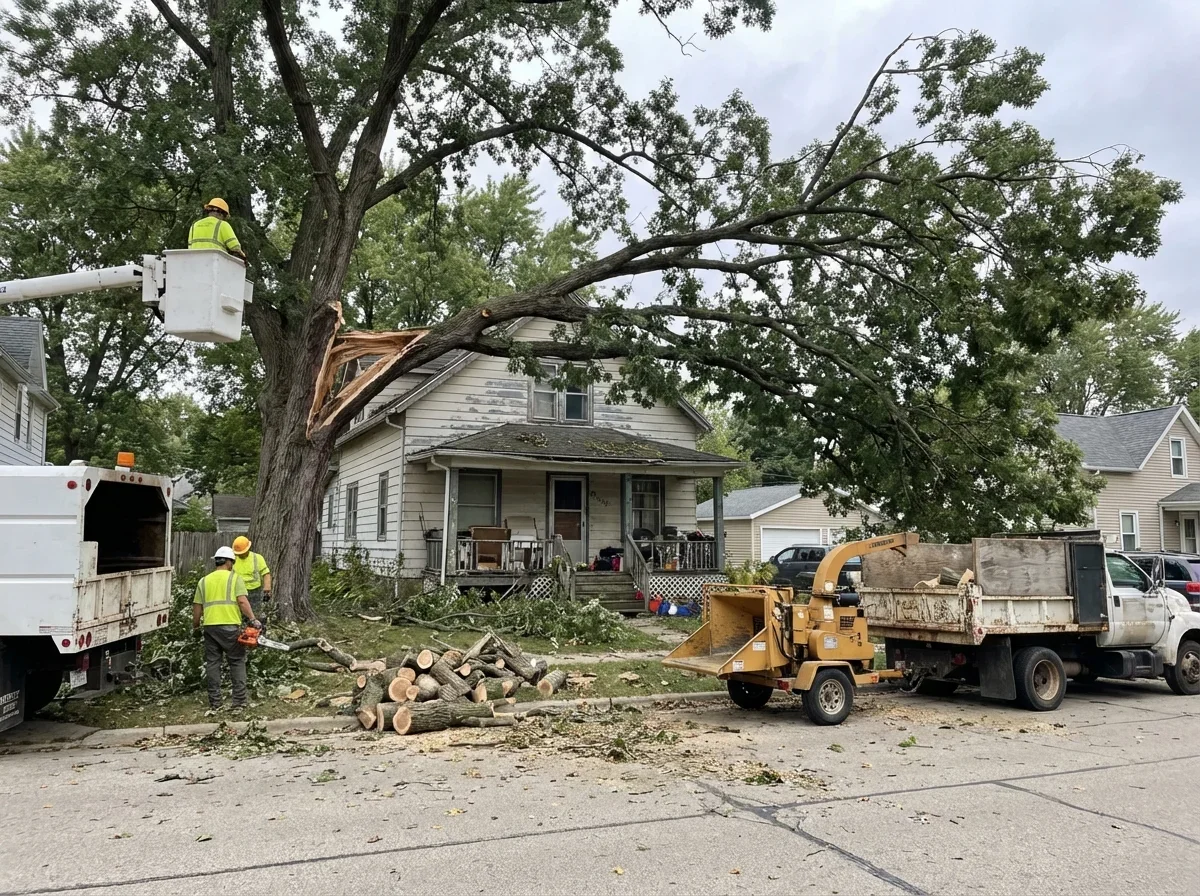
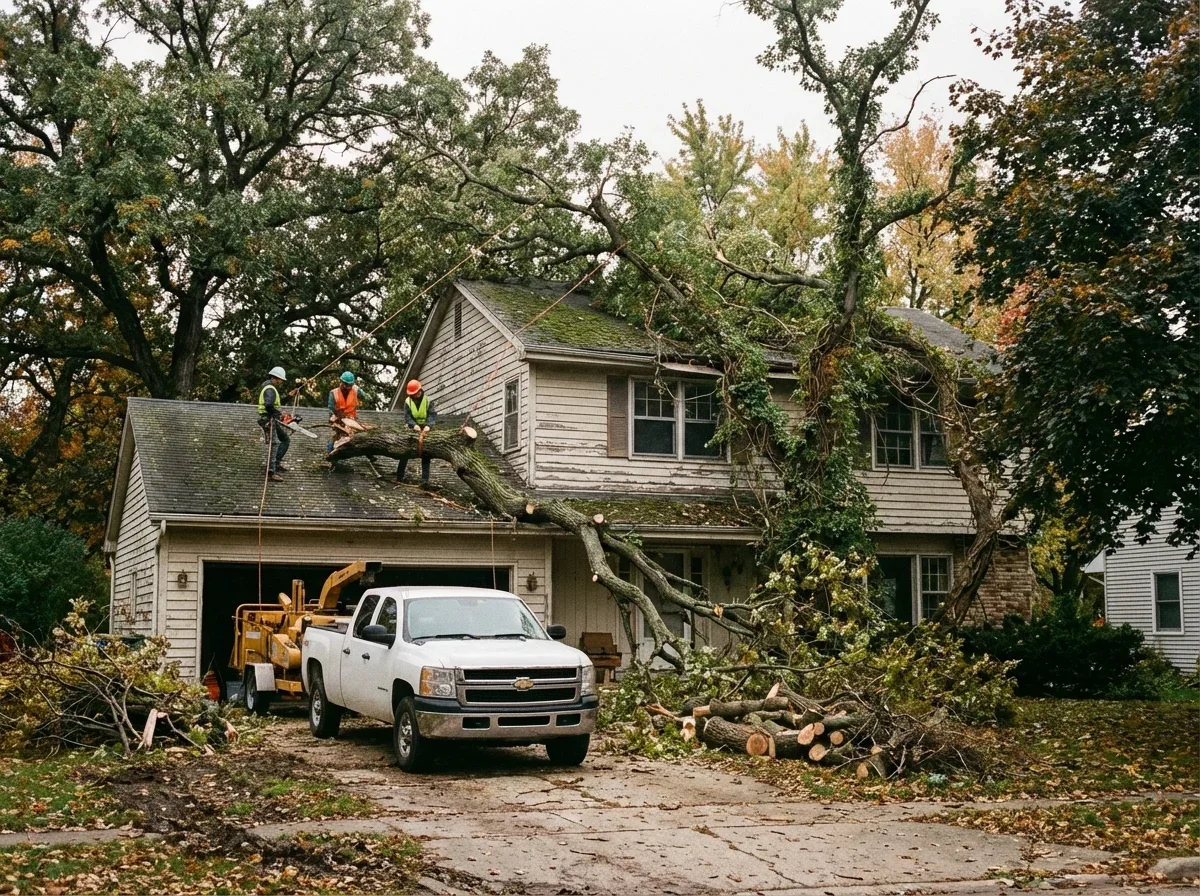
Storm damage assessment: If a tree lost major limbs in a storm, the remaining structure is now unbalanced. The weight distribution changed, and physics doesn't negotiate. Trees in Neenah and Menasha that survived the derecho winds but lost 30-40% of their canopy often need removal within the year.
Proximity hazards: A healthy tree 10 feet from your house is a different calculation than a dying tree 10 feet from your house. Distance to structures, power lines, septic systems, and neighboring properties all factor into whether removal is urgent or can wait.
The cost of waiting: A 60-foot oak that needs removal costs $1,800-$2,500 on your timeline. The same tree after it drops a limb through your roof? $3,000-$4,500 for emergency removal, plus your insurance deductible, plus contractor backlog, plus temporary weatherproofing. Storm-damaged trees in Kaukauna last spring took 4-6 weeks to schedule because every crew was booked solid.
Root damage from construction, repeated trunk wounds from lawn equipment, or pest infestations (emerald ash borer wiped out thousands of ash trees across the Fox Valley) all compromise structural integrity. Once decay reaches the heartwood, removal is the only option.
What Does Tree Removal Cost in the Fox Valley?
Tree removal pricing isn’t about the species — it’s about the physics. Height, diameter, lean, location, and what’s in the fall zone determine the final cost.
Size and Height Pricing
A 40-foot ash tree in an open yard runs $800–$1,200 in Appleton. The same tree wedged between your house and neighbor’s fence with power lines overhead? $2,200–$3,000 because it requires piece-by-piece dismantling.
Hazardous Tree Surcharges
Leaning Toward Structure
+40–75%Increases rigging complexity. Every section must be roped and lowered.
Storm-Damaged or Uprooted
+40–75%Unstable and unpredictable. May shift during removal.
Entangled in Power Lines
+40–75%Requires utility coordination or hotline clearance. Emergency storm removal in Oshkosh runs $2,500–$5,000.
Additional Service Costs
Stump grinding is separate. Most removal quotes don’t include grinding unless you ask. Leaving the stump means it’ll sprout, rot slowly, and attract carpenter ants. Permits in Appleton cost $25–$50 for trees over 8 inches diameter on residential lots.
The Tree Removal Process
Professional tree removal is controlled demolition. Every cut is planned before anyone starts a chainsaw.
Site Assessment and Planning
The crew walks the property before unloading equipment. They're identifying the lean, checking for hollow sections by tapping the trunk, looking at branch weight distribution, and mapping the fall zone. They mark underground utilities, measure clearance to structures, and decide whether they're climbing or bringing in a crane.
If power lines run through the canopy, they coordinate with the utility company for a temporary shutdown or work around energized lines with insulated tools and safety clearances. In Menasha and Kaukauna, mature neighborhoods often have lines running through 70-year-old maples—this adds a day to the schedule but prevents catastrophic accidents.
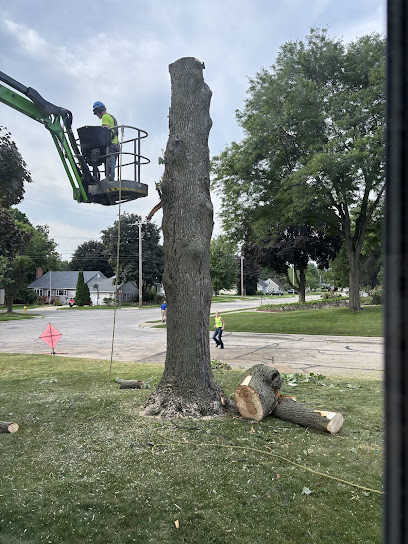
Rigging setup comes next. Arborists anchor ropes high in the tree or attach crane straps to control each section as it's cut. The goal is zero free-fall. Sections are lowered, not dropped.
Felling and Sectioning
For open-area removals, the arborist makes directional cuts—a notch facing the intended fall direction, then a back cut that releases the trunk. The tree drops where physics and geometry dictate. This takes 20 minutes for a straightforward tree.
For complex removals, the climber starts at the top. They remove limbs in sections, rigging each piece to prevent ground impact near structures or landscaping. As the canopy comes down, they section the trunk into manageable logs—usually 4-8 foot lengths depending on diameter. Crane jobs lift each section up and over structures before lowering it to the ground crew.
A 60-foot oak near structures in Appleton takes 4-6 hours for a three-person crew. Crane jobs run longer because of setup time and slower cutting pace (every cut must be coordinated with the crane operator).
Cleanup and Stump Options
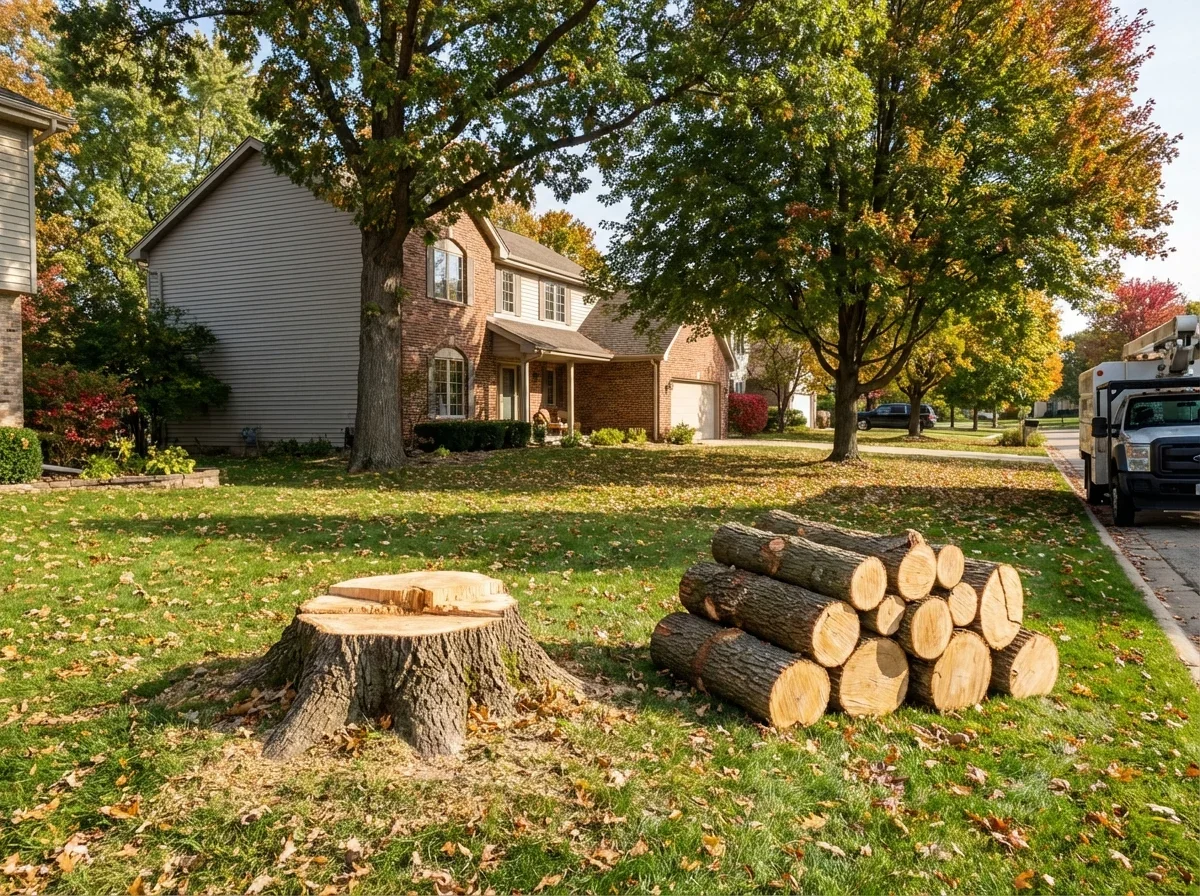
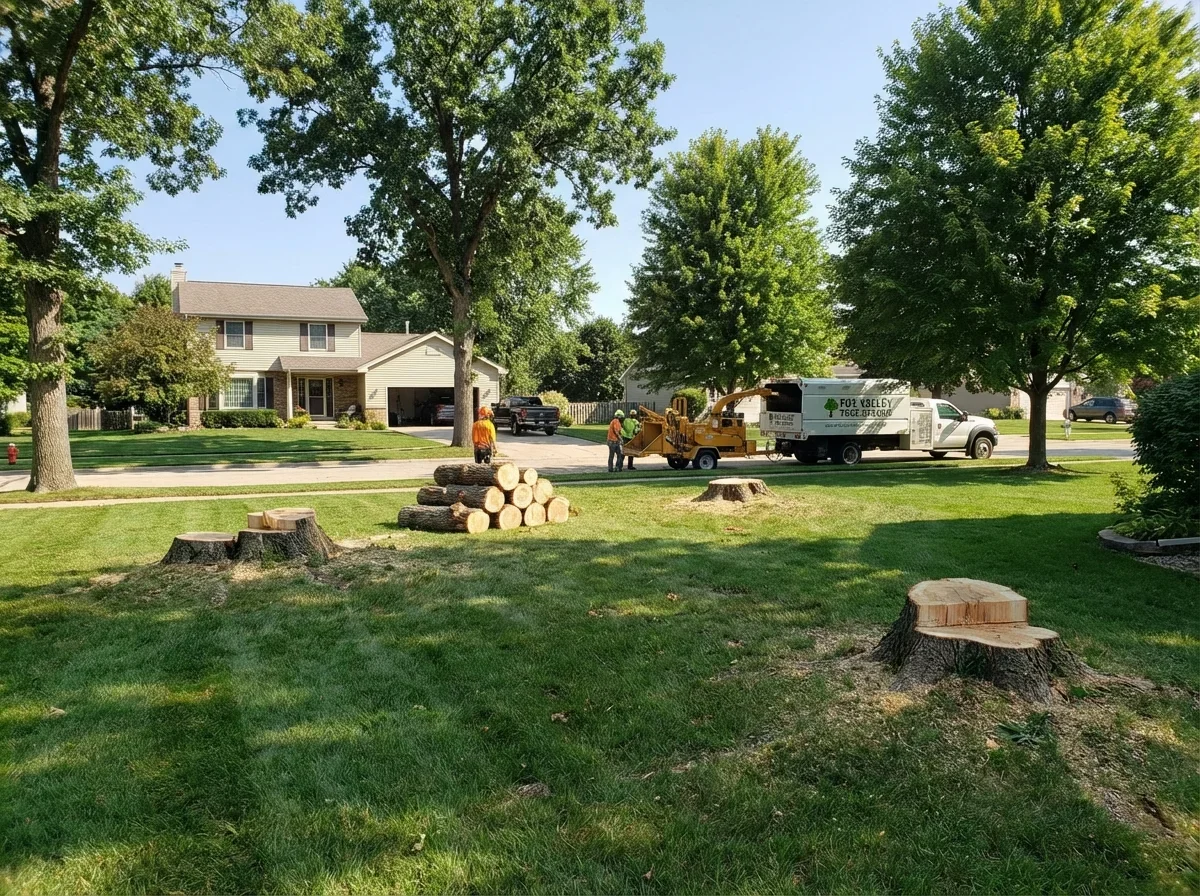
Debris removal is standard. Crews chip branches on-site (that screaming chipper turning limbs into mulch), cut trunk sections into firewood-length rounds if you want them, or haul everything away. Most Fox Valley services include haul-away in the removal price.
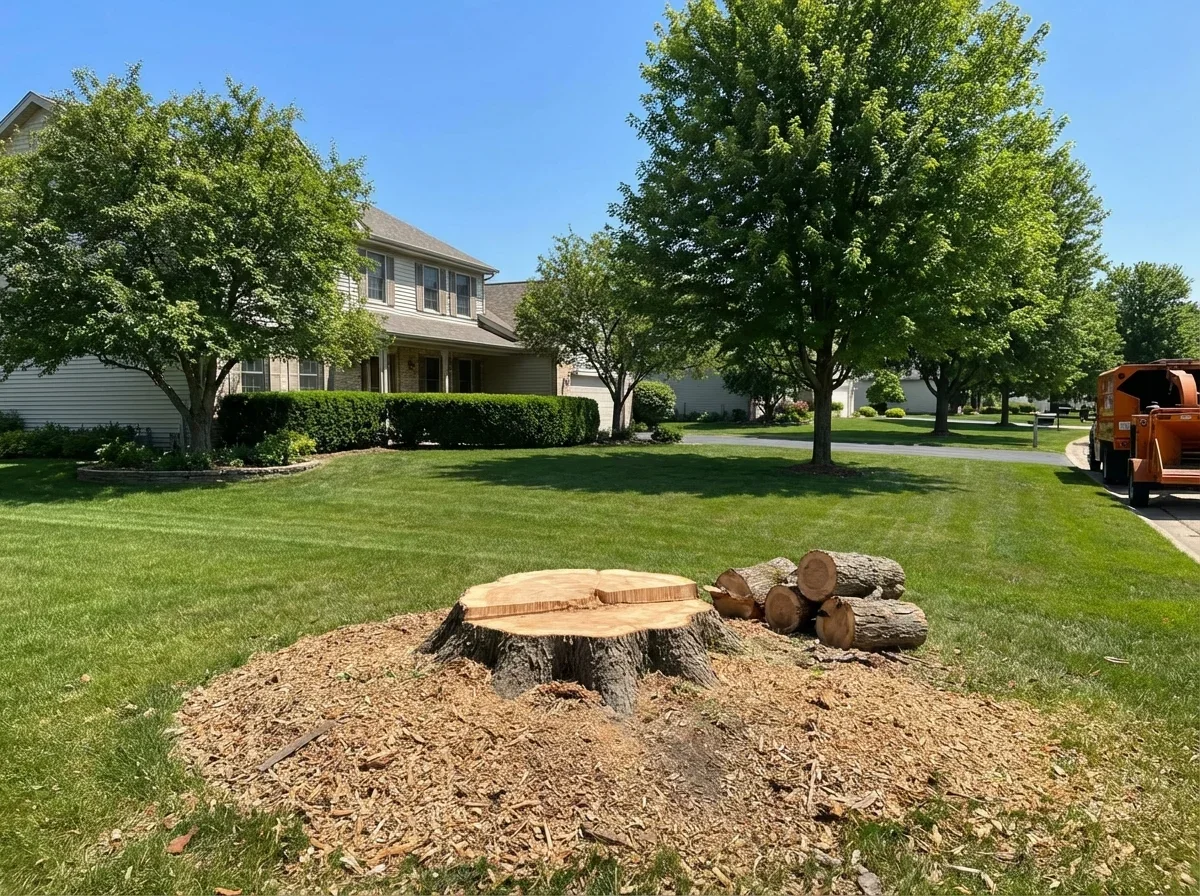
Stump grinding happens after the tree is down. The grinder chews the stump 6-12 inches below grade, turning it into wood chips. You can leave the chips as mulch or have them removed for an additional fee. Grinding doesn't remove lateral roots—those decay naturally over 3-5 years.
If you're replanting in the same spot, some homeowners opt for full stump and root excavation ($500-$1,200), but grinding is sufficient for most situations.
Seasonal timing in Wisconsin: frozen ground in January and February actually helps with equipment access—less turf damage. Spring storm season (April-May) creates backlogs. Late fall after leaf drop improves visibility for climbers and reduces weight. Summer removals are fine but you'll wait longer for scheduling.
How to Choose a Tree Removal Service
Tree work has the highest fatality rate of any green industry profession. You're not hiring someone to mow your lawn—you're hiring someone to safely dismantle a 12,000-pound structure next to your house.
Licensing and Insurance Requirements
Verify general liability insurance with a minimum $1 million coverage. This protects your property if a tree section damages your roof, fence, or vehicle. Ask for a certificate of insurance and confirm it's current—not expired.
Workers' compensation insurance is non-negotiable. If a worker is injured on your property and the company doesn't carry workers' comp, you can be held liable for medical bills and lost wages. Wisconsin law requires it for tree services with employees. Sole proprietors without employees aren't required to carry it, but that means you're accepting the risk.
Get both insurance certificates before signing a contract. Legitimate companies in Green Bay and Oshkosh provide them without hesitation.
Equipment and Safety Standards
Certified arborists (ISA certification) have formal training in tree biology, risk assessment, and removal techniques. Not every skilled climber has the certification, but it demonstrates commitment to professional standards.
Look for companies with proper equipment:
- Bucket trucks or cranes for large trees near structures
- Professional-grade chainsaws and rigging gear (not homeowner equipment)
- Chippers rated for commercial use
- Safety gear: helmets, eye protection, chainsaw chaps, climbing harnesses
Red flags: No proof of insurance, quotes that are 40-50% lower than competitors (they're cutting corners somewhere), pressure to start immediately without a written contract, or reluctance to pull permits when required.
Questions to ask before hiring:
- How long have you been doing tree removal in the Fox Valley? (Experience with regional tree species and local regulations matters.)
- What's your cleanup process? (Hauling debris should be included.)
- Do you handle stump grinding, or is that a separate contractor? (Coordination hassle if you need to hire separately.)
- What happens if you damage my property during removal? (Insurance claim process.)
- Can you provide references from jobs in Neenah or Kaukauna in the last year? (Recent local work.)
Get three quotes. The lowest bid isn't always the best value—it often means faster work, fewer safety precautions, or surprise charges for "extras" like debris removal that should be standard.
Fox Valley Arborist connects you with tree removal services that carry proper insurance, use professional equipment, and have track records in Appleton, Oshkosh, and surrounding communities. Compare verified pros instead of guessing based on a Facebook ad.
Frequently Asked Questions
To reduce tree removal costs, follow these strategies:
- Get multiple quotes — Contact 3–5 local arborists and tree services; compare prices, insurance, and credentials (ISA certification). Don't choose the lowest bid alone; verify the company is licensed and insured
- Remove trees in the off-season — Winter months (November–February) typically offer 15–25% discounts due to lower demand; crews have more availability
- Bundle services — Combine tree removal with stump grinding, land clearing, or multiple tree removals to negotiate a package rate
- Remove branches yourself — If safe and legal, trim accessible lower branches before the crew arrives; this reduces dismantling time
- Accept longer timelines — Ask about scheduling flexibility; companies may offer lower rates for jobs scheduled weeks in advance vs. emergency same-day removal
- Use local, smaller crews — Independent arborists may undercut large companies; verify credentials and references
- Check for municipal discounts — Some Wisconsin cities offer subsidies for hazardous tree removal; contact your village clerk or public works
Warning: Never hire unlicensed or uninsured contractors. If a crew is injured on your property, you may be liable for medical costs.
Related Articles
When to Remove a Tree: Signs It's Time vs. When You Can Wait
Read Guide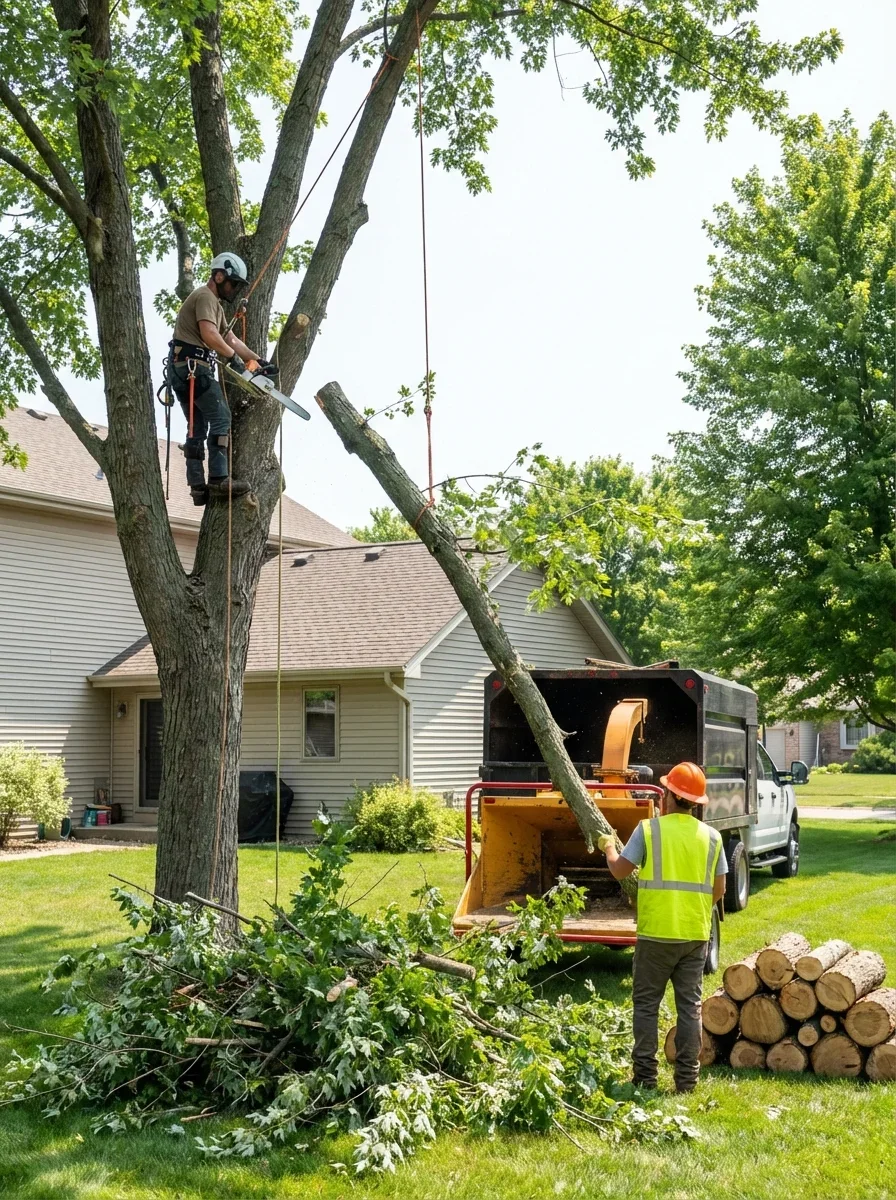
Tree Removal Cost in Wisconsin (2026 Guide)
Read Cost Guide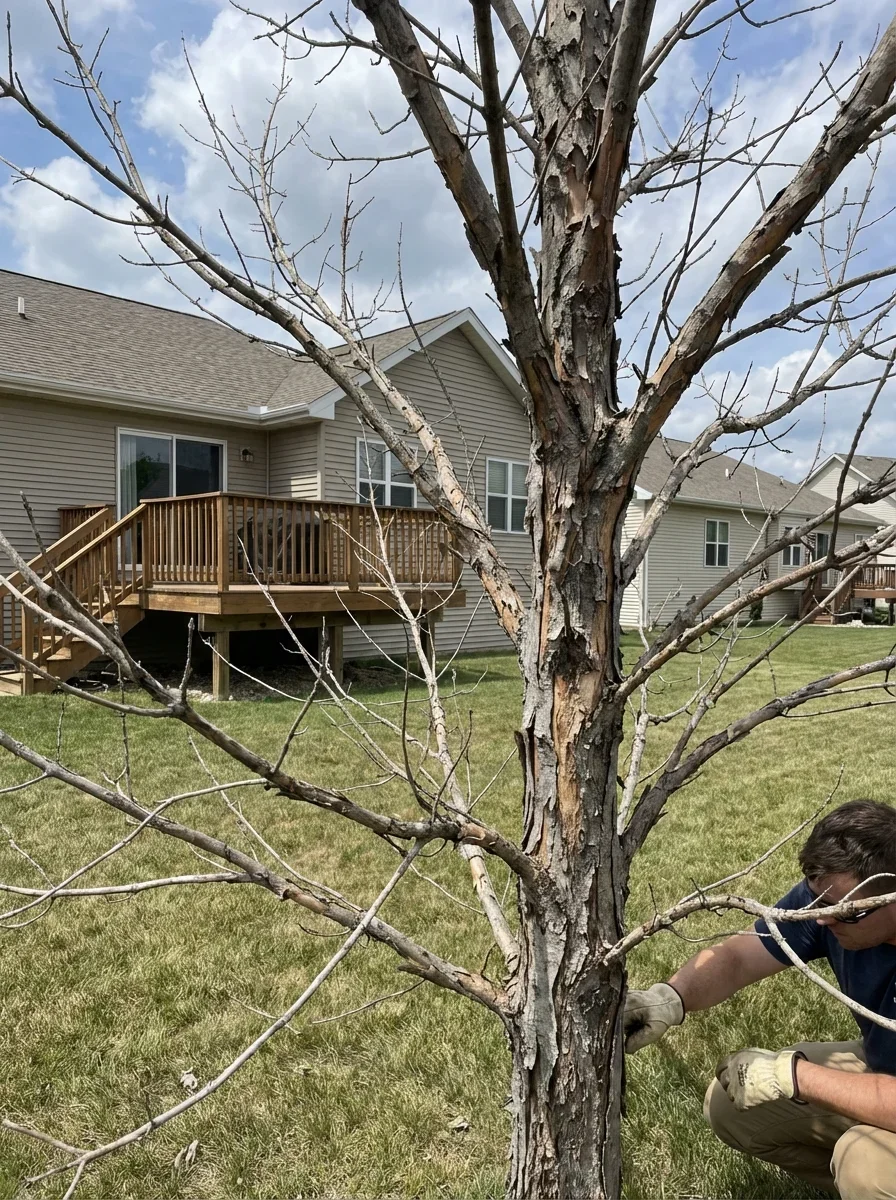
Dead Tree in Yard - What to Do
Read ProblemWhen to Remove a Tree: Signs It's Time vs. When You Can Wait
Read Guide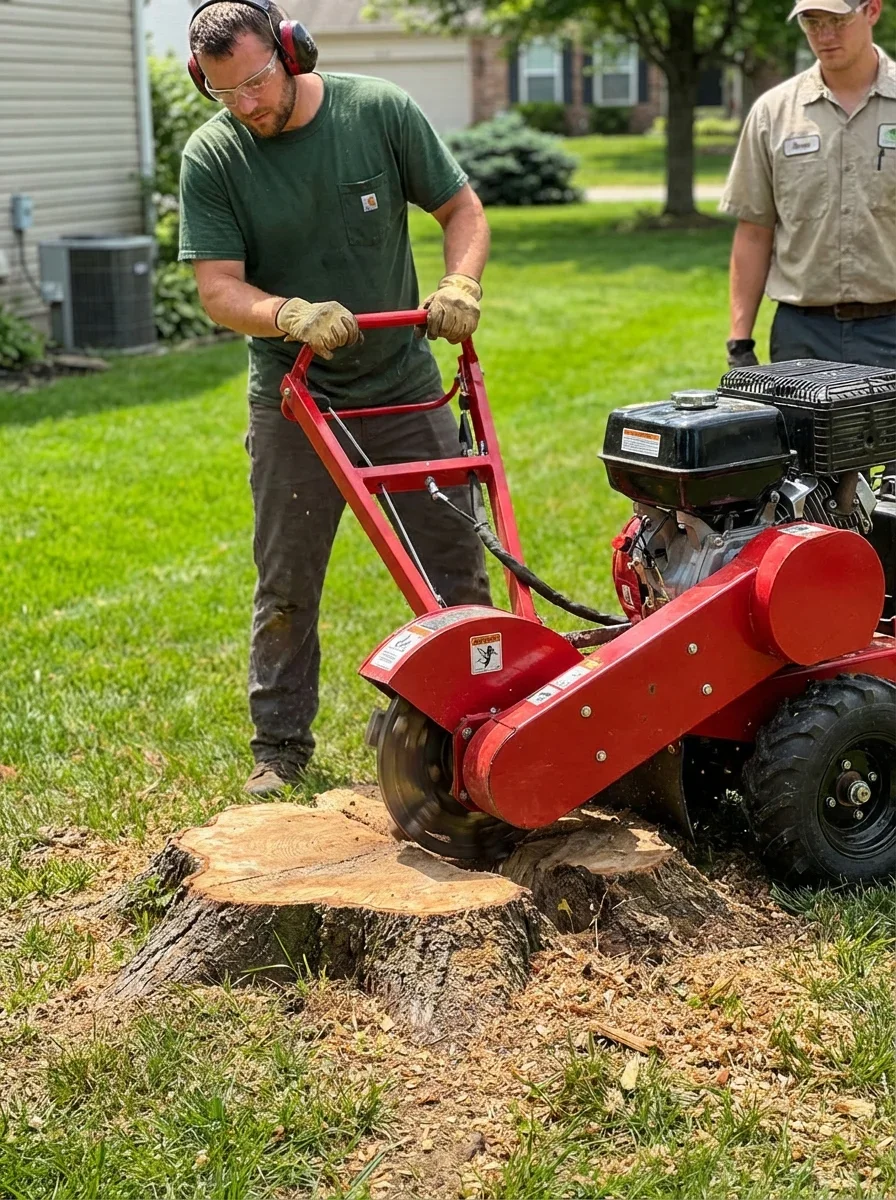
Stump Grinding Cost (2026 Pricing)
Read Cost Guide