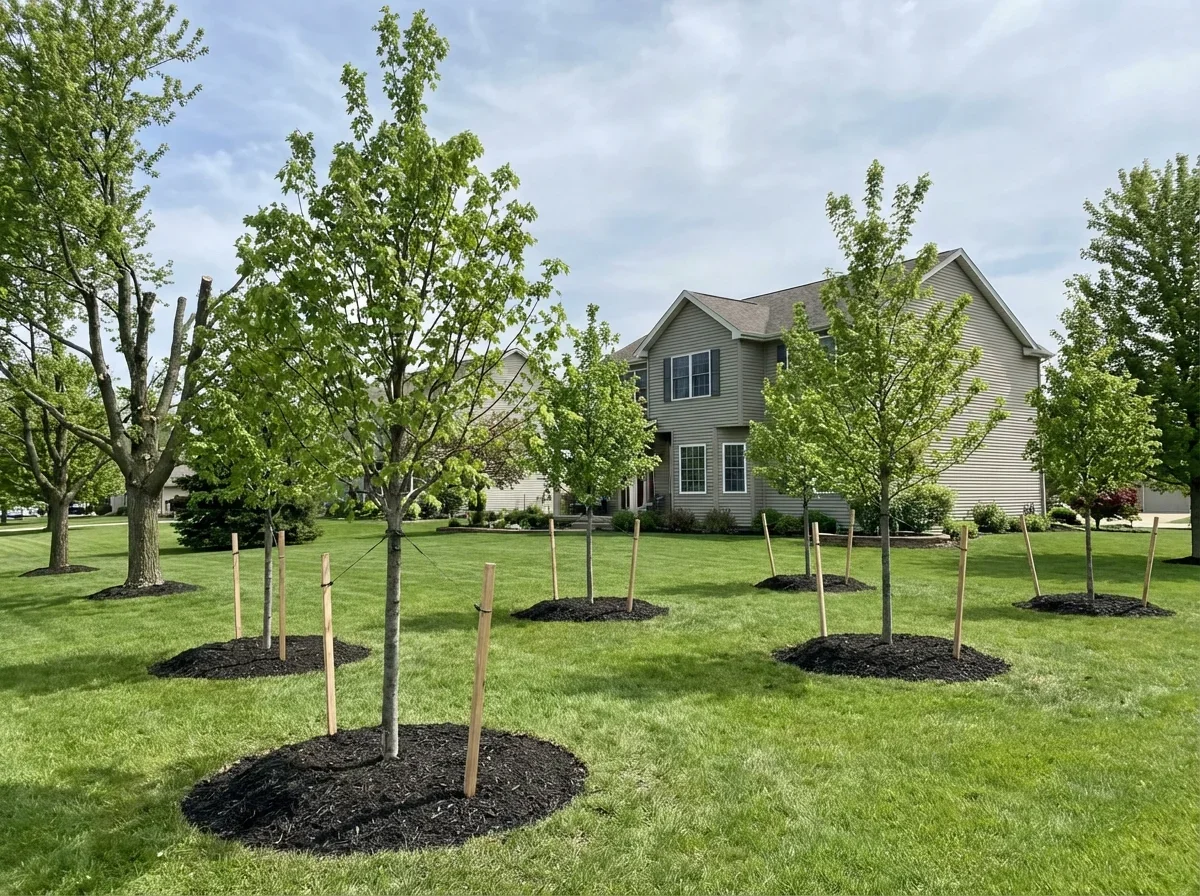
Why Professional Tree Planting Matters in Wisconsin
You can't replant a tree's first five years.
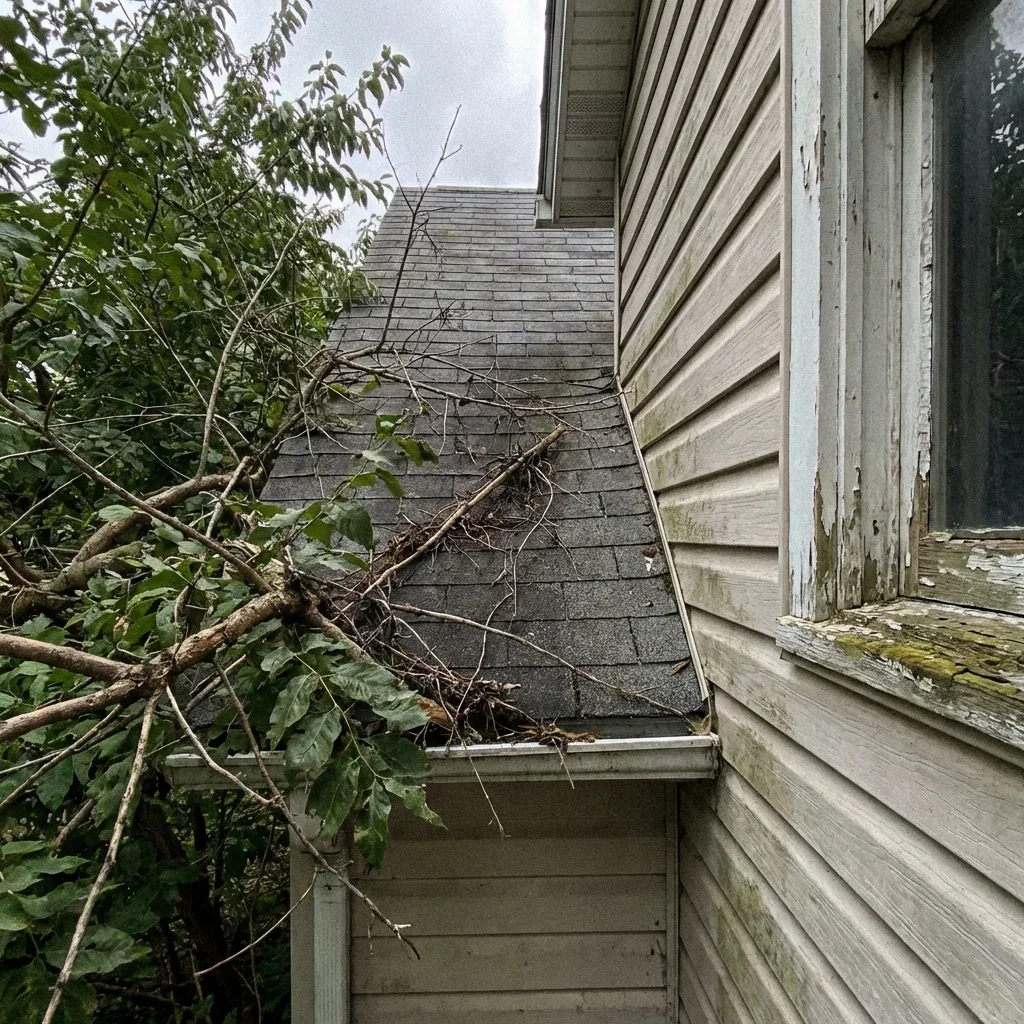
Most tree failures in Appleton and Green Bay don't happen because the tree died — they happen because it was planted wrong from day one. The root flare buried six inches deep under "protective" mulch. The Norway maple stuck in a wet corner when it needed drainage. The river birch that looked beautiful at the nursery but can't handle Fox Valley clay.
Wisconsin's climate doesn't forgive planting mistakes. Our freeze-thaw cycles heave improperly planted trees right out of the ground. Summer droughts stress shallow-rooted transplants. Clay soil suffocates root balls that weren't prepped correctly.
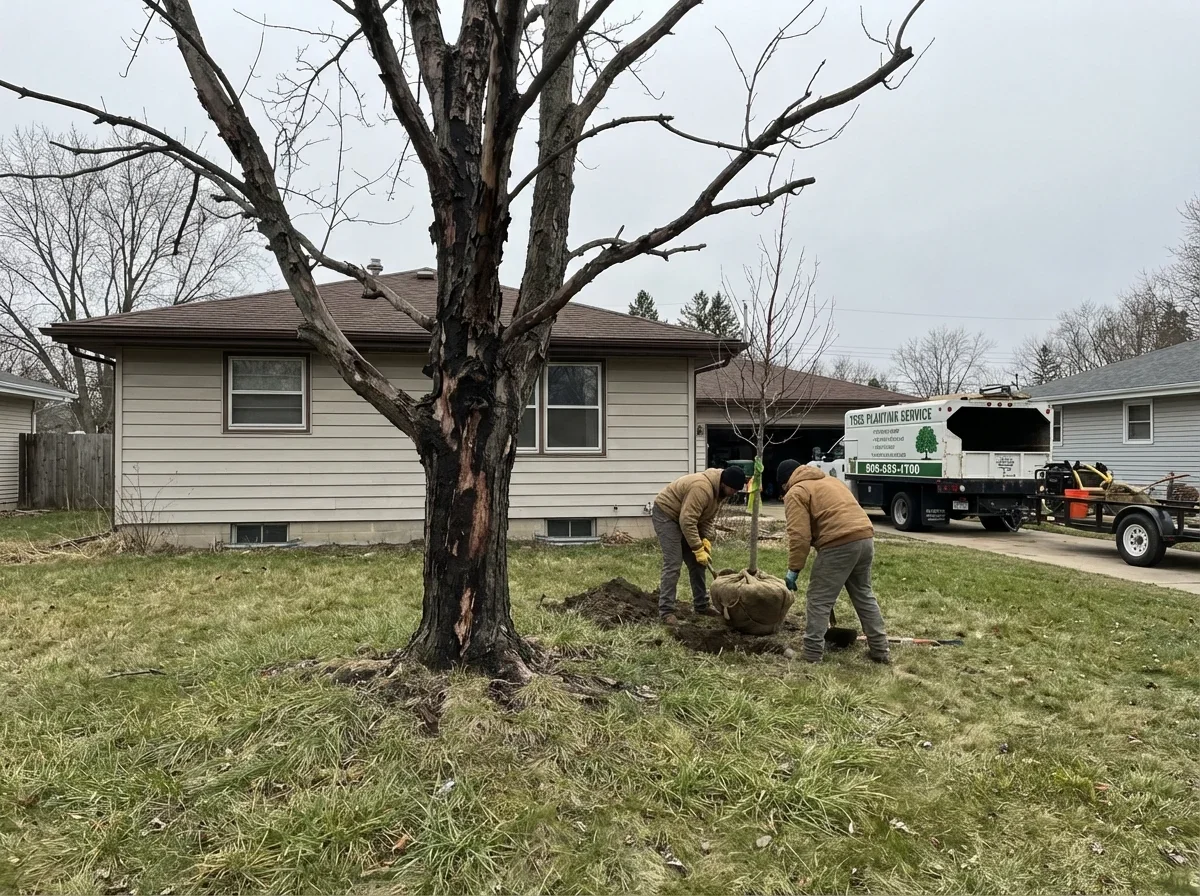
The twenty-year regret: That Bradford pear looked perfect in 2005. By 2015 it was splitting apart in ice storms. By 2025 you're paying $1,200 to remove it and grinding the stump. A $300 tree became a $2,000 lesson.
Professional arborists in Neenah and Oshkosh see the same mistakes repeatedly: big-box trees planted at the wrong depth, ornamental species chosen for looks instead of hardiness, no soil testing before digging. The tree survives the first season on nursery nutrients, then slowly declines.
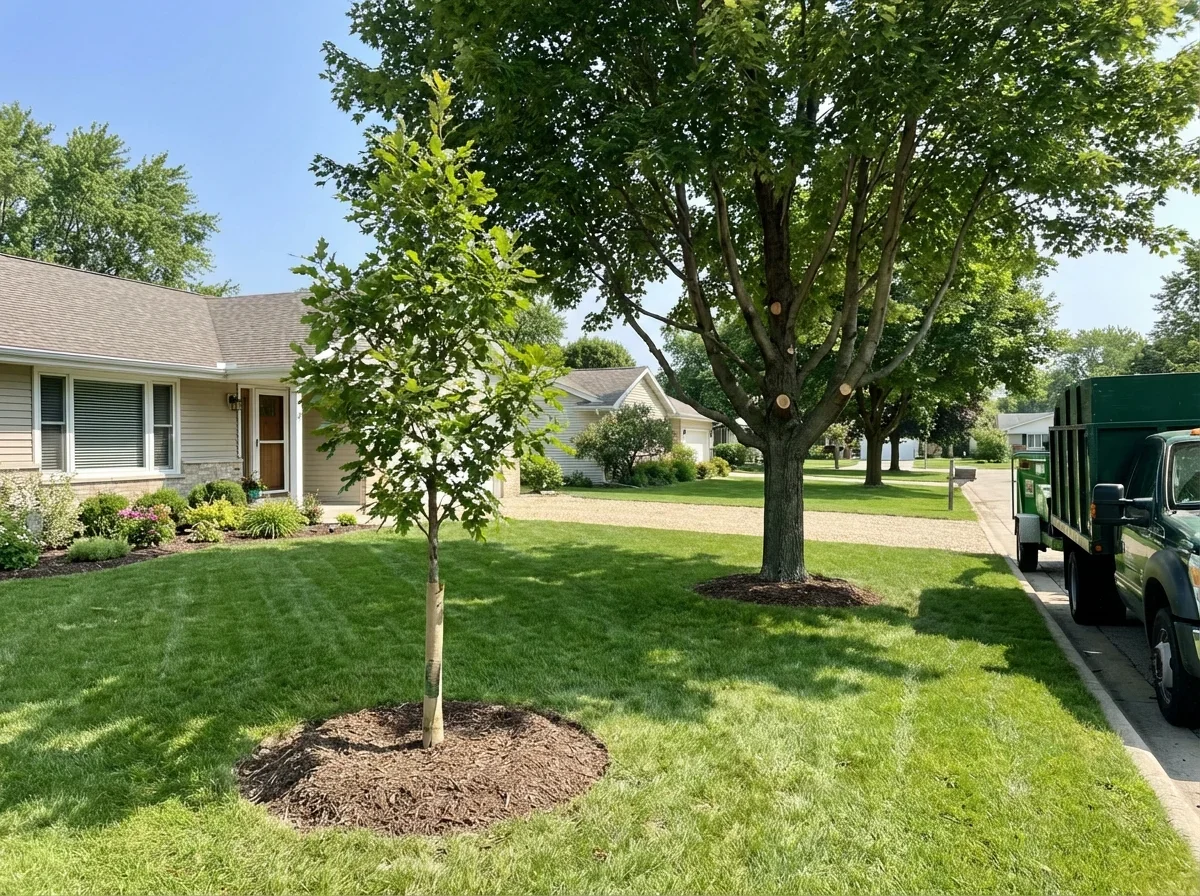
The transformation happens over decades. A properly planted bur oak in Menasha adds $8,000-$15,000 to property value over twenty years. It shades your AC unit, cutting cooling costs 15-20%. It becomes the landmark tree on your block.
But only if the root flare sits at grade level. Only if you picked a species that thrives in Zone 5a. Only if someone knew to amend that compacted builder's clay before backfilling.
What Does Tree Planting Cost in the Fox Valley?
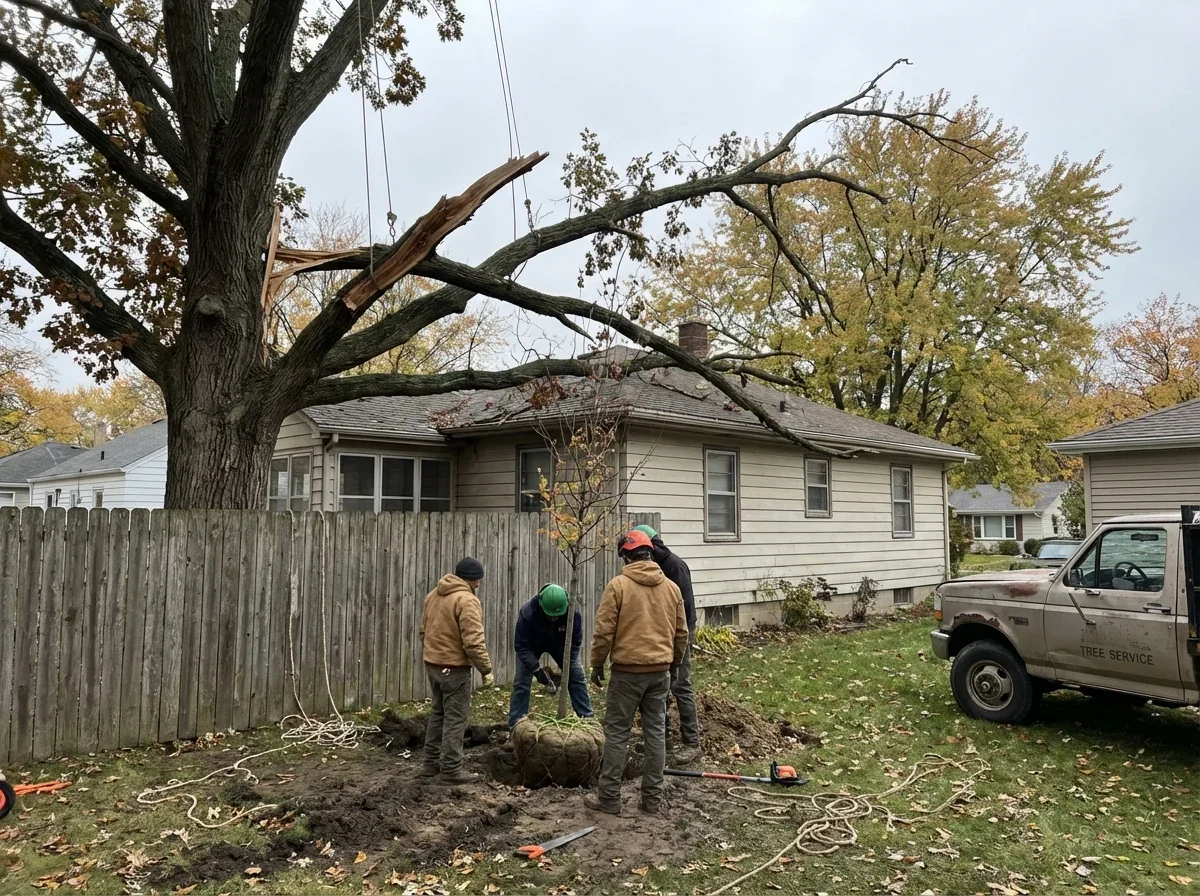
Expect $150–$800 per tree for professional installation. The wide range reflects tree size, species, site complexity, and whether you’re planting a container sapling or a balled-and-burlapped specimen.
Cost by Tree Size and Type
Site conditions add costs. Clay soil amendment (common across Green Bay and Oshkosh) adds $50–$150 per tree. Poor drainage requiring French drains adds $200–$400. Difficult access adds labor charges.
The DIY Reality Check
The $200 you save planting yourself often becomes the $800 you spend removing a failed tree five years later.
The Professional Tree Planting Process
Certified arborists follow ISA standards that maximize survival rates in Wisconsin’s challenging climate.
Site Assessment & Species Selection
ConsultationThe arborist evaluates soil, sun exposure, overhead wires, and underground utilities. They test soil pH and drainage — critical for Fox Valley clay. They’ll recommend 3–4 species matched to your conditions. Full sun? Red oak or hackberry. Wet shade? River birch or swamp white oak. Street tree with wires? Ornamental crabapple. Wisconsin-hardy means Zone 4b minimum.
Soil Preparation & Hole Excavation
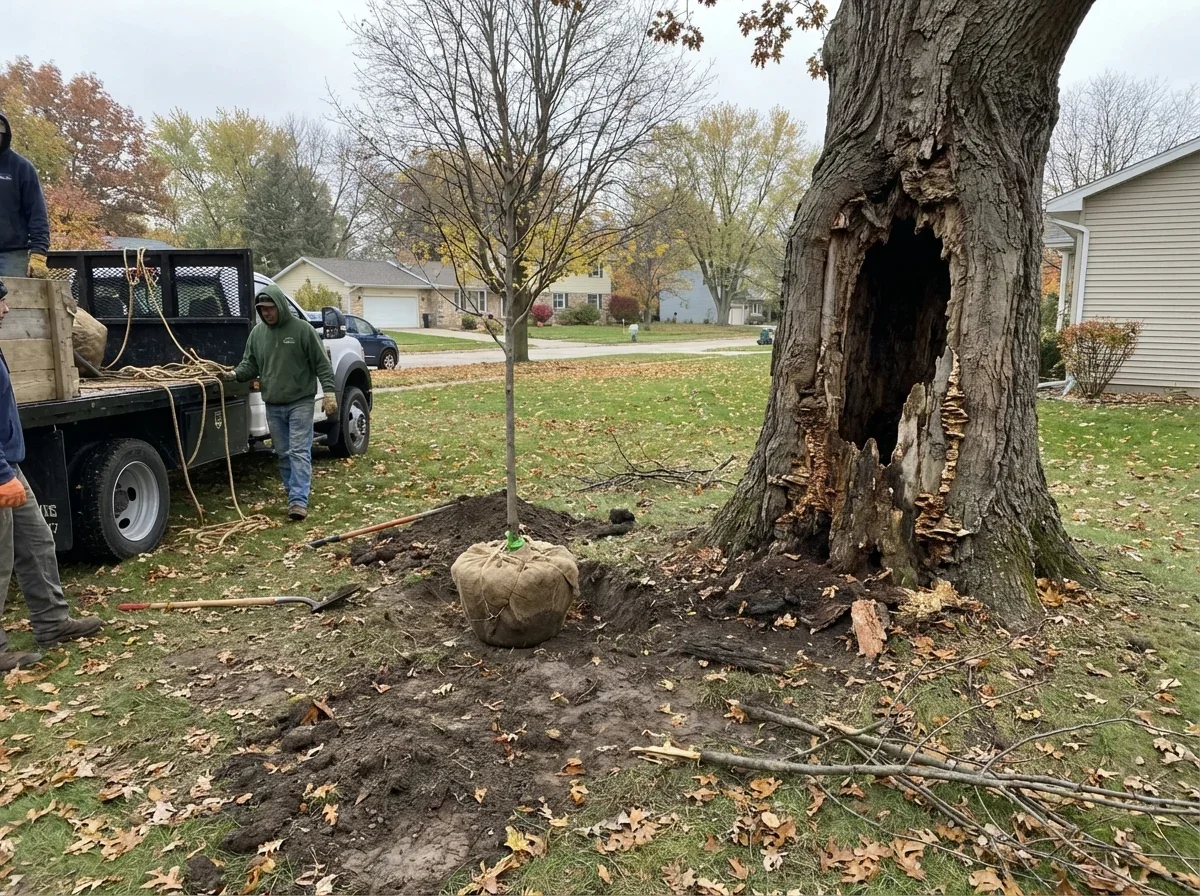
30 min – 3 hrsThe hole gets dug 2–3x wider than the root ball but no deeper — the root ball sits on undisturbed soil to prevent settling. In compacted clay (common in new construction across Oshkosh and Kaukauna), the crew scarifies hole sides and works compost into the backfill without creating a “bathtub” that holds water.
Planting & Root Flare Exposure
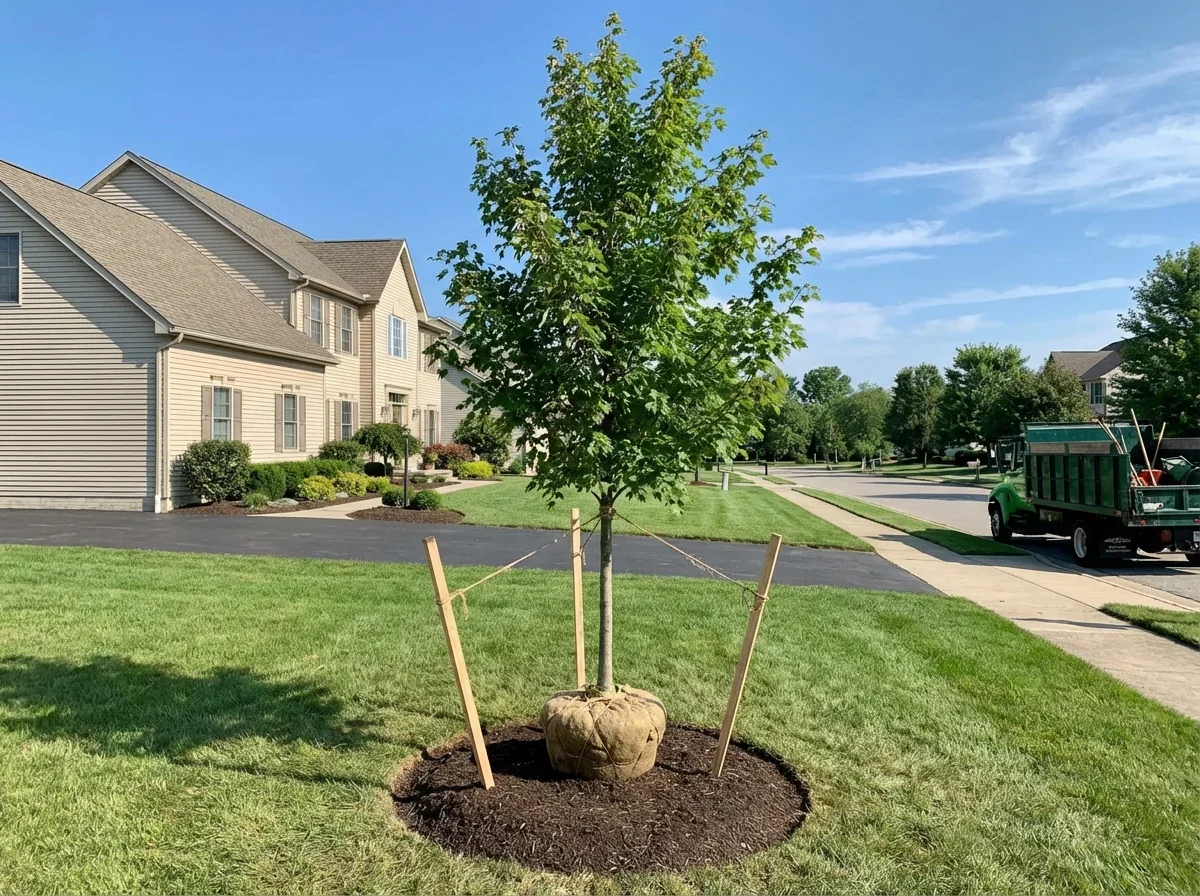
Planting DayThe critical moment: exposing the root flare. Nurseries often plant too deep. The arborist removes burlap from the top third of the ball, finds where roots emerge, and sets that flare exactly at grade level — or one inch above on clay soils that settle. Backfill with native soil, water at the halfway point and again at the top.
Mulch, Staking & Setup
Same DayA 2–4 inch mulch ring extends to the drip line but pulls back from the trunk — no mulch volcanoes. Staking happens only for trees over 2” caliper or in high-wind sites. Stakes come out after one growing season.
Establishment Care Plan
First 60 Days CriticalYou get a written establishment care plan: watering frequency (critical first 60 days), mulch maintenance, and when to fertilize (usually year two). Proper aftercare is the difference between 85–95% survival and the 40–60% DIY rate.
How to Choose a Tree Planting Service
The Fox Valley has plenty of people who'll dig a hole and drop a tree in it. Finding someone who plants trees that thrive for decades requires specific vetting.
Certifications and Experience That Matter
- ISA Certified Arborist — not just a landscaper. The certification means they understand tree biology, not just aesthetics.
- Licensed and insured — $1M+ liability coverage. Tree work involves equipment, property damage risk, and long-term liability if the tree fails.
- TCIA accreditation — Tree Care Industry Association membership signals commitment to industry standards.
- Wisconsin nursery licenses — if they're sourcing trees, they should have state-verified supplier relationships.
Ask for references from Appleton, Green Bay, and Oshkosh clients from 3-5 years ago. You want to see established trees, not last season's installs.
Questions to Ask Before Hiring
"How do you determine planting depth?" The right answer involves finding and exposing the root flare, setting it at or slightly above grade. Wrong answers: "We plant it at the same depth as the container" or vague references to "level with the ground."
"What species do you recommend for my site conditions?" They should ask about sun, soil, drainage, and utilities before recommending anything. Instant recommendations without assessment are red flags.
"Do you provide soil testing?" Professional arborists test pH and drainage before planting in Fox Valley clay.
"What does your establishment care include?" Look for written watering schedules, mulch depth specifications, and first-year monitoring.
"When do you recommend planting?" In Wisconsin, spring (after ground thaws, typically late April through May) and fall (late August through mid-October, allowing 6-8 weeks before hard freeze) are optimal. Summer planting means higher stress and more intensive watering.
Red Flags to Avoid
- Recommending planting during summer heat (June-July stress period)
- Offering "bargain" trees with no species information or source documentation
- Suggesting mulch piled against the trunk "for protection"
- No mention of root flare depth or soil assessment
- Unable to explain why they recommend specific species for your site
The Fox Valley directory connects you with certified arborists who've planted hundreds of trees across Kaukauna, Menasha, and surrounding communities. Compare credentials, read recent reviews, and ask the questions above. The tree you plant this spring should still be thriving when your kids graduate college.
Frequently Asked Questions
The 10/20/30 rule is an urban forestry guideline for species diversity in municipal tree populations:
- 10% rule: No single tree species should comprise more than 10% of the urban forest
- 20% rule: No single genus should comprise more than 20%
- 30% rule: No single family should comprise more than 30%
This rule promotes ecological resilience and reduces risk of widespread disease or pest outbreaks. While the exact origin and scientific basis are debated, it is widely used by municipal arborists and landscape planners.
- Wisconsin Department of Natural Resources. "R3B Plant a Tree Program Stock and Planting Specification." https://dnr.wisconsin.gov/sites/default/files/topic/UrbanForests/R3B-StockPlantSpecs.pdf. Accessed February 11, 2026.
- University of Wisconsin-Madison Division of Extension. "Proper Tree Planting Techniques (B&B)." https://hort.extension.wisc.edu/articles/proper-tree-planting-techniques-bb/. Accessed February 11, 2026.
Related Articles
How to Hire an Arborist (Checklist)
Read Guide
How Much Does an Arborist Cost?
Read Cost GuideBest Time to Plant Trees in Wisconsin: Seasonal Planting Guide
Read Guide