
What Is a Tree Health Assessment?
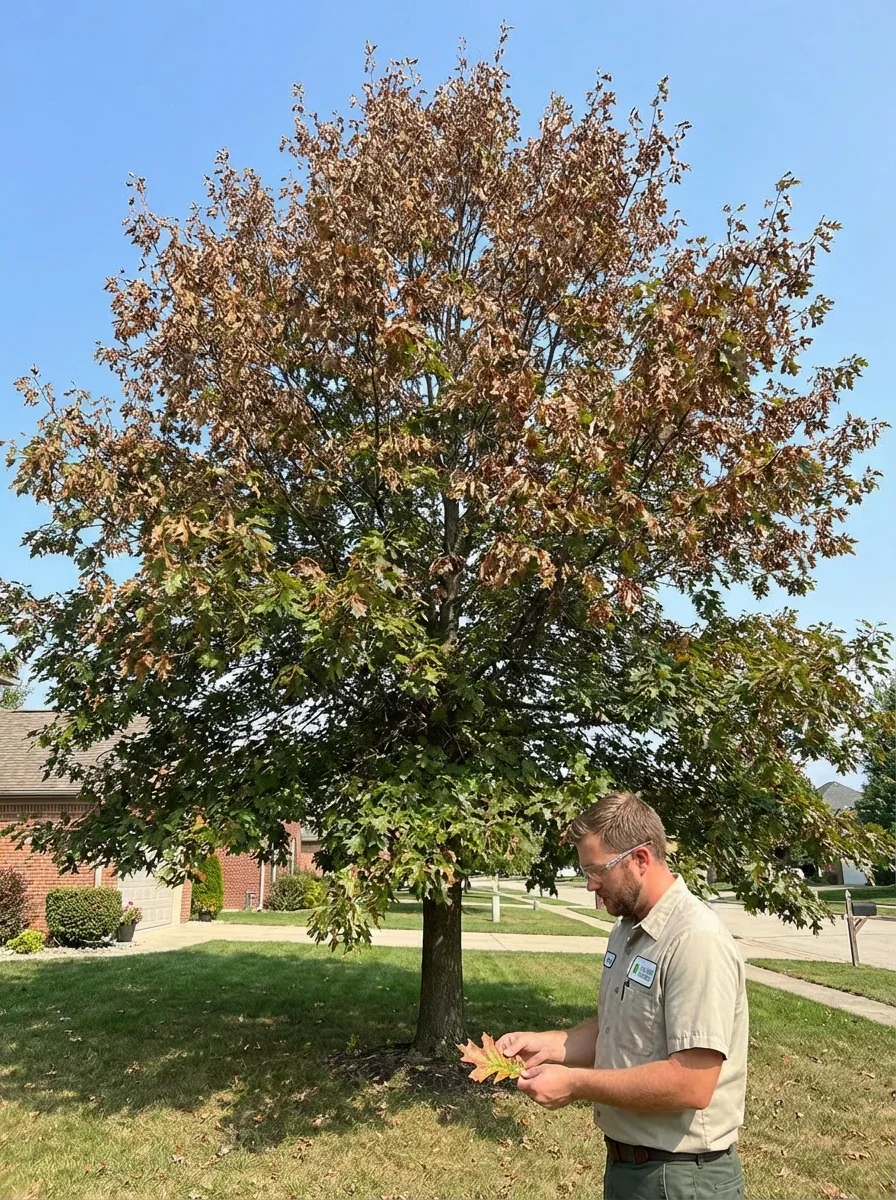
You noticed something wrong. Maybe it's the maple in your Appleton front yard that's half-green, half-brown. Maybe it's branch dieback on that big cottonwood, or mushrooms growing at the base of your favorite tree in Neenah. You Googled the symptoms and got twelve different answers.
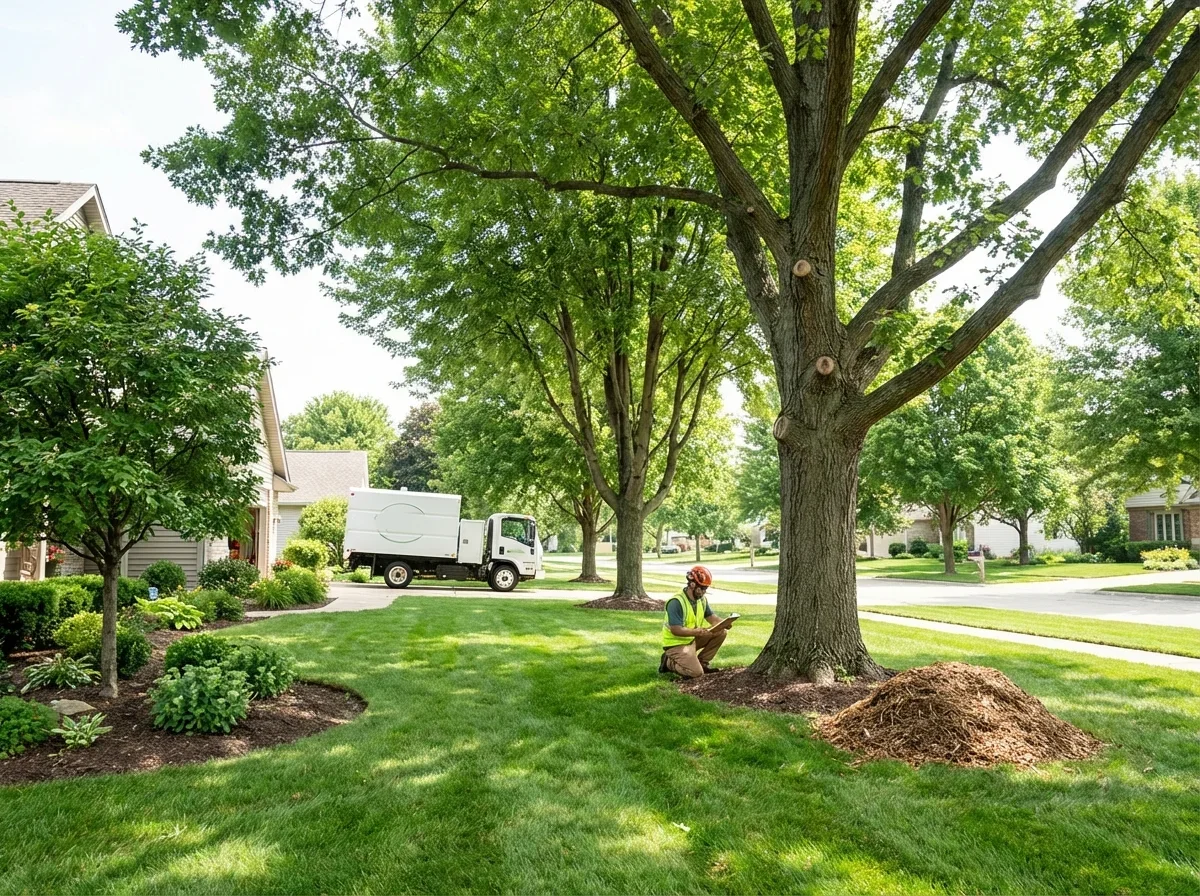
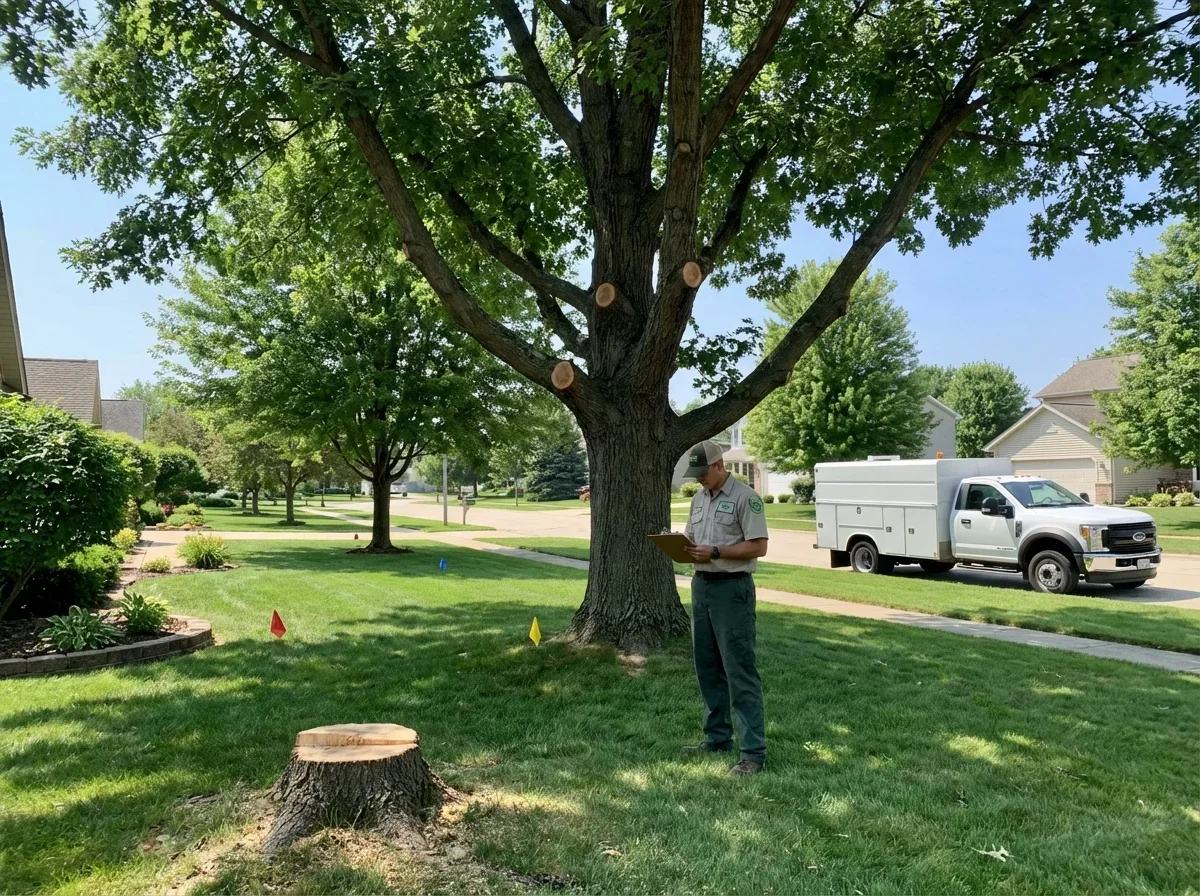
A professional tree health assessment is diagnostic work—like taking your tree to the doctor instead of guessing with internet advice. An ISA Certified Arborist[2] examines the tree from roots to crown, identifies the actual problem (disease, pest, structural damage, soil issues), and gives you a treatment plan with priorities and costs.
This isn't the guy who knocks on your door after a storm offering to "trim up that dangerous tree for cheap." This is someone trained in tree biology, pathology, and diagnostic protocols. They know the difference between oak wilt and anthracnose, between carpenter ants and emerald ash borer damage, between a tree that needs fertilization and one that needs removal.
What an Arborist Evaluates
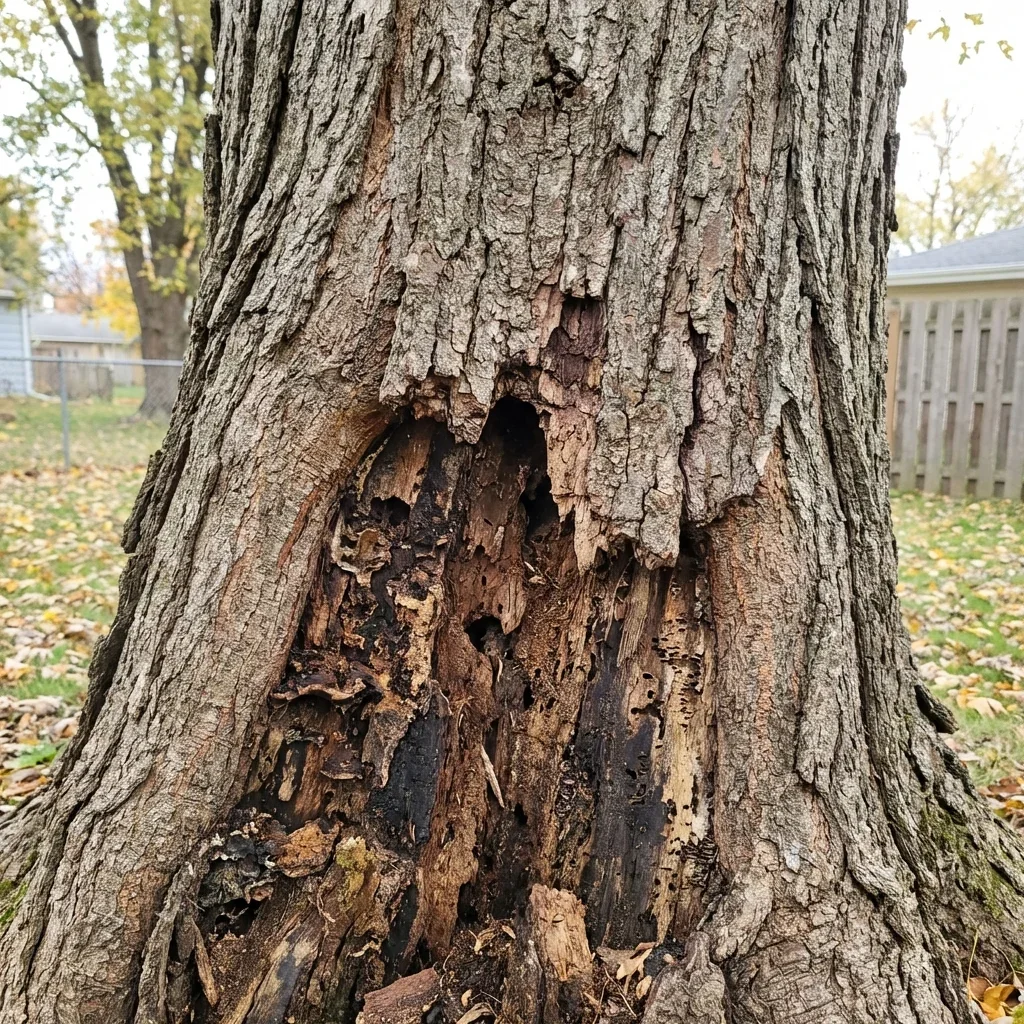
The assessment covers everything affecting tree health. Crown condition—leaf color, density, dieback percentage. Trunk inspection—bark cracks, cankers, pest entry holes, decay. Root collar examination—girdling roots, soil grade issues, fungal fruiting bodies. Soil conditions—compaction, pH, drainage.
They're looking for patterns. EAB damage starts in the upper crown. Oak wilt shows flagging on individual branches. Root rot causes mushrooms at the base but symptoms in the canopy. An experienced arborist connects what they see above ground to what's happening below.
When Homeowners Need an Assessment
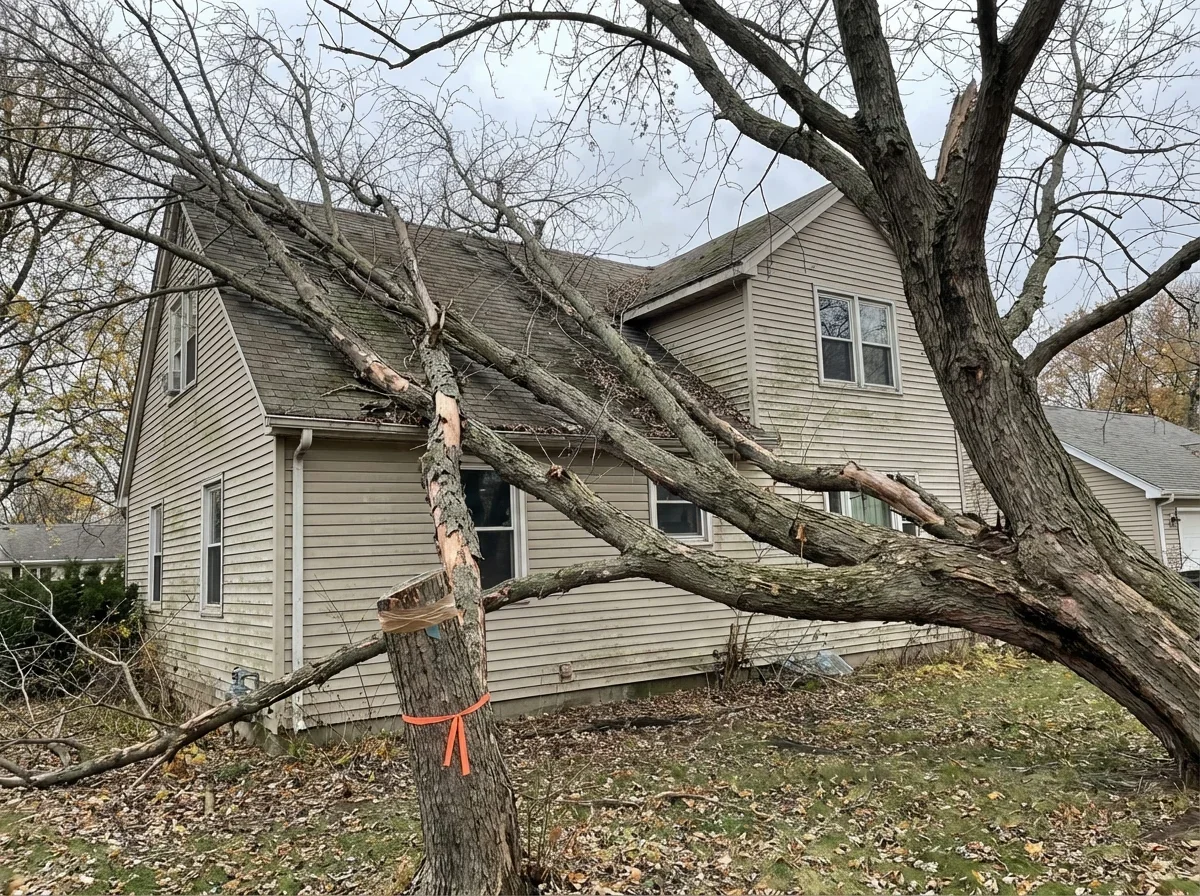
You need professional diagnosis when you see unexplained leaf discoloration mid-season, significant branch dieback, bark splitting or peeling, mushrooms or conks on the trunk, insect damage or holes in bark, leaning or structural instability, or when neighboring trees have died from disease.
The assessment catches problems early—when a $400 treatment prevents a $3,000 removal. When pruning infected branches stops oak wilt from killing the whole tree. When soil amendments reverse decline before permanent damage sets in.
Sound familiar? Half your tree looks fine. The other half is sparse and yellow. You don't know if it's drought stress, disease, or just old age. You're afraid to spend money treating the wrong thing—or worse, losing a tree you could have saved.
What Does a Tree Health Assessment Cost in Fox Valley?
Standard residential assessment: $150-$250 for evaluation of 1-3 trees on a typical property. That includes the site visit, visual inspection, verbal recommendations, and often a brief written summary.
Comprehensive assessment with detailed written report: $300-$400. You get documented findings, photos, species-specific treatment recommendations with cost estimates, priority rankings, and follow-up timelines. Property managers in Green Bay and Oshkosh typically request this level for insurance documentation or HOA records.
Multi-tree evaluation for larger properties: pricing moves to per-tree rates after the base visit fee. Expect $50-$75 per additional tree assessed.
Pricing Factors
Property size and tree count matter most. A single sick tree consultation costs less than evaluating ten mature specimens. Accessibility affects pricing—trees near buildings, over driveways, or with limited access require more time and sometimes aerial inspection equipment.
Tree size and complexity increase assessment time. A 15-foot ornamental crabapple takes fifteen minutes. An 80-foot oak with crown dieback requires binoculars, multiple angles, a root collar excavation, and significantly more diagnostic evaluation.
| Property Type | Tree Count | Typical Cost |
|---|---|---|
| Single tree concern | 1 tree | $150-$200 |
| Residential assessment | 2-4 trees | $200-$300 |
| Large property evaluation | 5-10 trees | $350-$500 |
| Estate/commercial | 10+ trees | Custom quote |
Diagnostic Testing Add-Ons
Visual inspection identifies most problems, but some conditions require lab confirmation. Soil testing for pH and nutrient deficiencies: $75-$150. Tissue sample analysis for disease confirmation (especially oak wilt or fire blight): $100-$200 including lab fees. Resistograph drilling for internal decay detection: $150-$250 per tree—it measures wood density to find hidden rot without causing significant tree damage.
Testing makes sense when treatment costs are high and you need certainty—confirming oak wilt before removing healthy oaks as a preventive barrier, or verifying EAB before committing to multi-year systemic treatments.
The assessment cost is diagnosis, not treatment. It tells you what's wrong and what fixing it will cost. Think of it as avoiding the $2,500 you'd waste on fungicide treatments for a tree that actually has beetle damage, or the $4,000 removal of a tree that just needed pruning and fertilization.
The Tree Health Assessment Process
Initial Visual Inspection
The arborist starts at a distance, evaluating overall crown structure and foliage density. They're comparing this tree to healthy specimens of the same species—looking for asymmetry, sparse areas, off-season leaf drop, or color abnormalities. This wide view reveals patterns invisible when you're standing at the trunk.
Then they move closer. They circle the tree examining bark condition, looking for cracks, cankers, wounds, insect galleries, or fungal growth. They check the trunk base and root flare—if it's buried or malformed, that's often the hidden cause of crown symptoms.
Leaf inspection comes next. Not just "are they green," but specific symptom patterns. Scorching on leaf margins suggests root problems or salt damage. Spots or blotches indicate fungal disease. Stippling or webbing means spider mites or other pests. The location and pattern of damage tells them what's attacking the tree.
Advanced Diagnostic Tools
For internal issues, arborists use tools beyond visual inspection. A resistograph drills a tiny probe into the trunk, measuring resistance to create a density profile—solid wood versus decayed zones. This reveals hidden rot in trees that look fine externally, critical for risk assessment near structures.
Soil probes and pH meters test growing conditions. Compacted soil starves roots of oxygen. Wrong pH locks out nutrients even when they're present. A tree in Kaukauna might be chlorotic not from disease but from alkaline soil blocking iron uptake—completely different treatment approach.
Binoculars or aerial lifts for tall tree inspection let arborists see upper crown conditions obscured from the ground. EAB typically kills from the top down. Some canker diseases start high. Without seeing the upper structure, diagnosis is guesswork.
Written Report and Treatment Plan
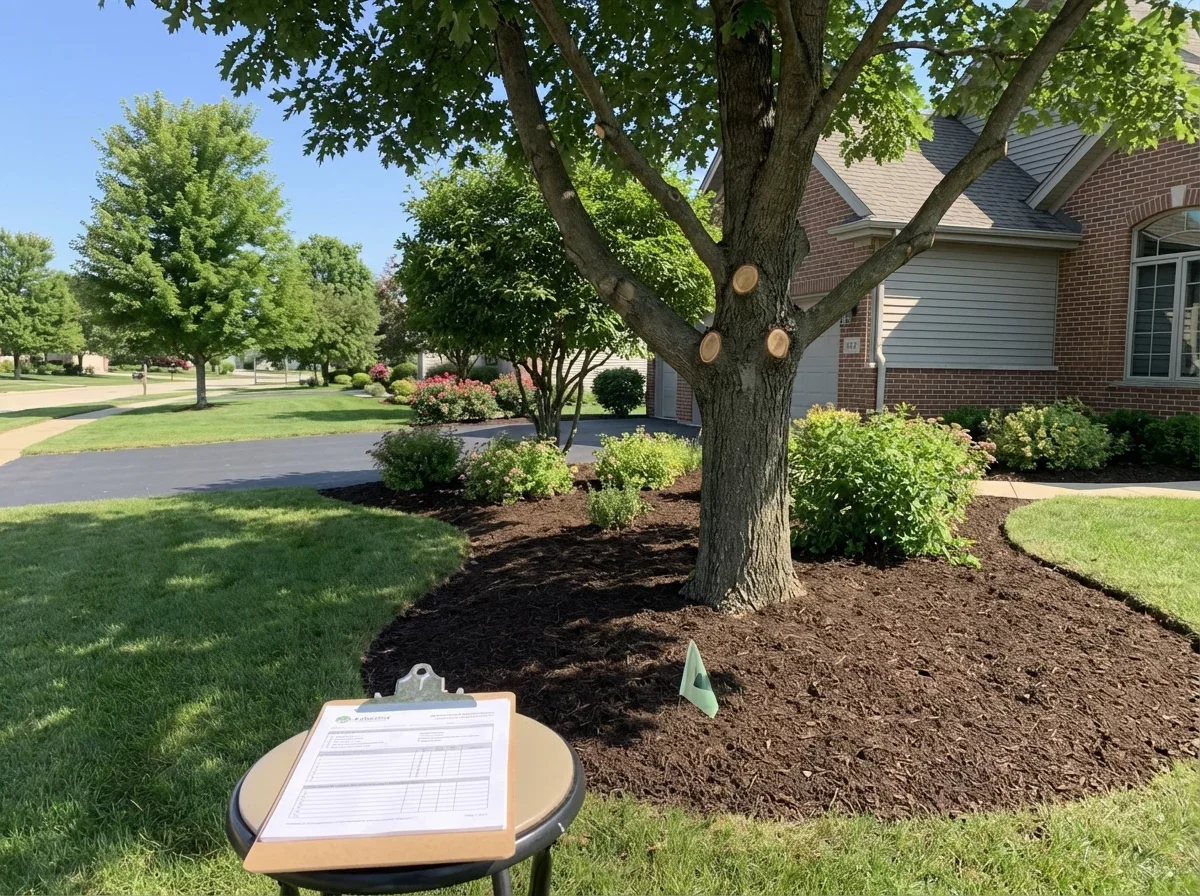
The assessment concludes with documentation. Basic reports list findings and immediate recommendations. Comprehensive reports include tree inventory (species, size, location), condition ratings, photos of specific issues, diagnosis with causal factors, treatment options ranked by priority and cost, timeline for interventions, and follow-up assessment schedule.
The value is in prioritization—what needs action now versus next season, what's cosmetic versus life-threatening, where you'll get the most return on treatment investment. A good report helps you budget across multiple trees rather than reacting to each problem as it becomes a crisis.
Expect the report within 3-5 days for standard assessments, up to two weeks if lab testing is involved. Some Appleton and Menasha arborists provide preliminary findings on-site, then follow up with detailed written documentation.
How to Choose a Tree Health Assessment Provider
ISA Certification and Credentials
Start with ISA Certified Arborist credentials[2]. This ANSI-accredited certification requires passing a comprehensive exam covering tree biology, diagnosis, and safety standards. Certification proves the arborist has formal training beyond just running a tree service.
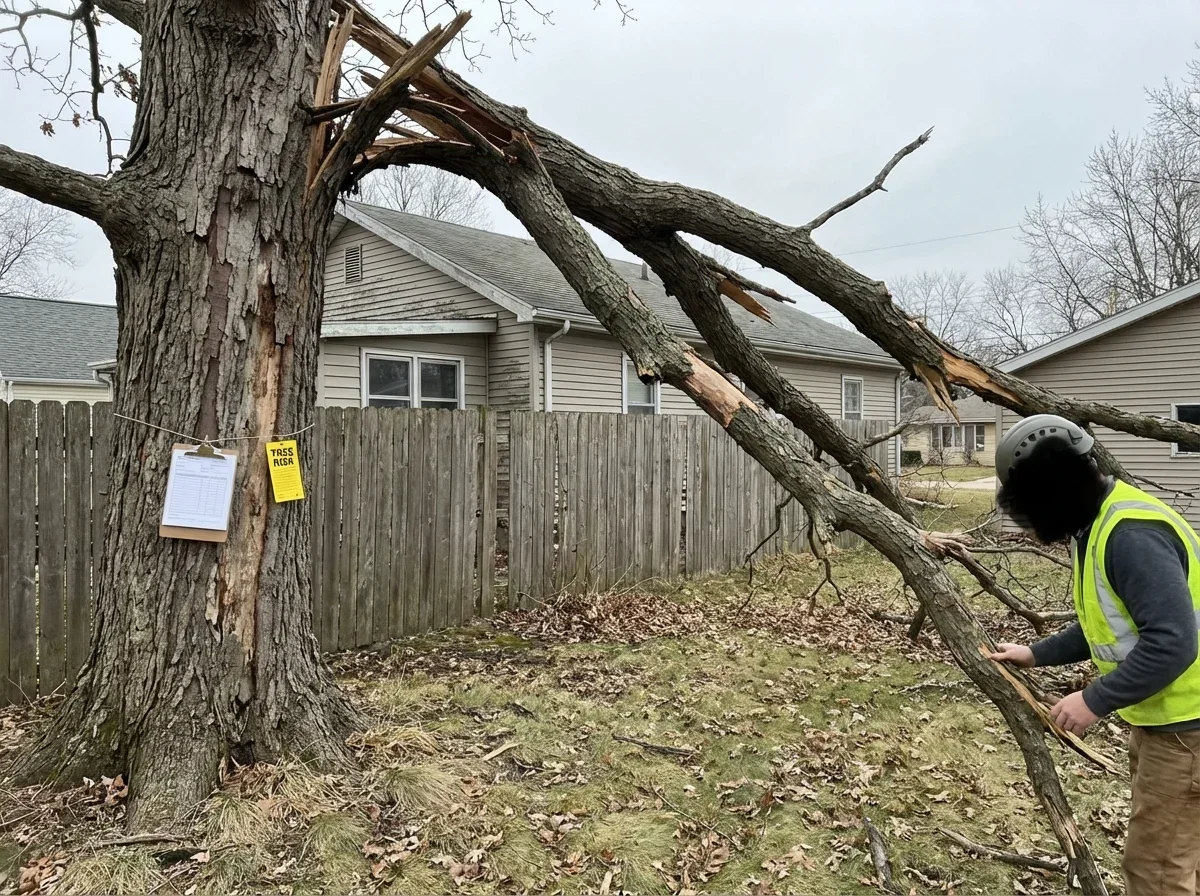
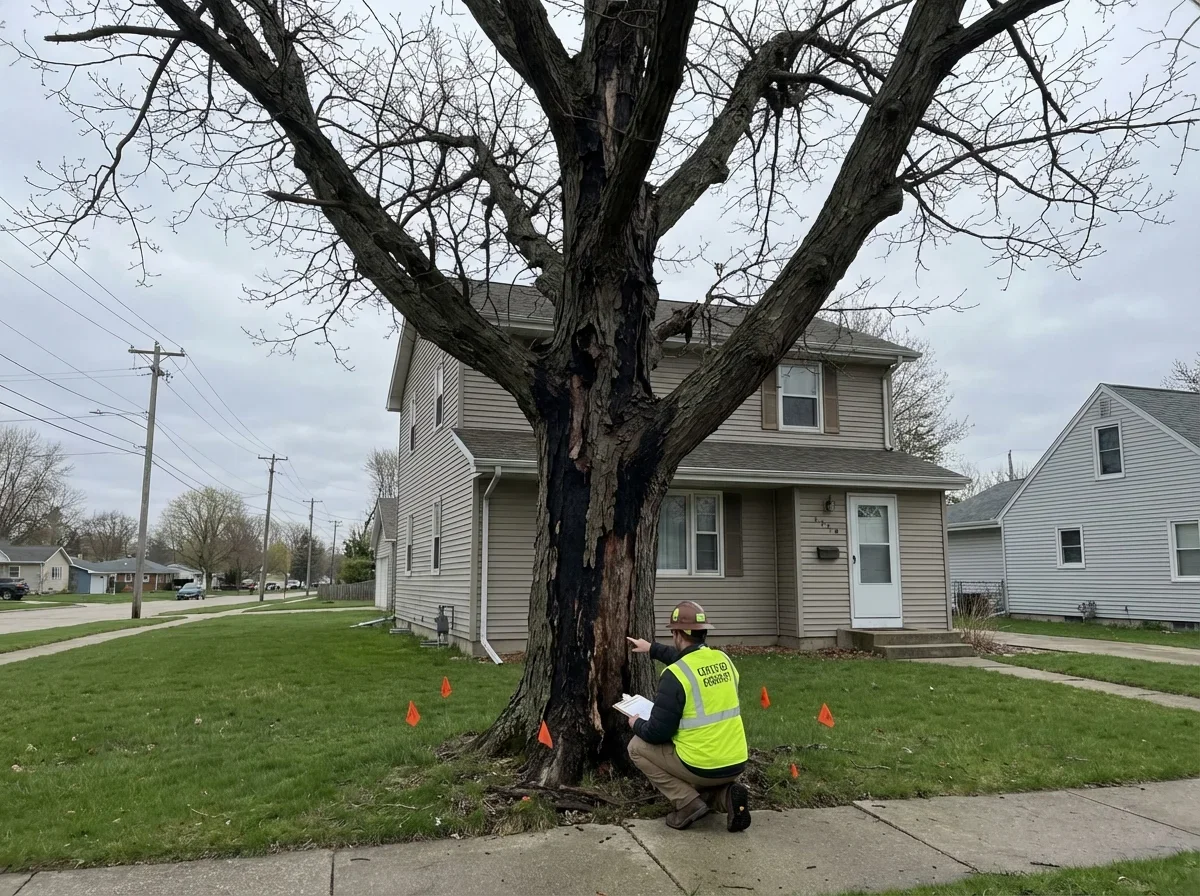
For complex risk evaluation—trees near homes, over power lines, or showing structural instability—look for the Tree Risk Assessment Qualification (TRAQ)[1]. This advanced credential requires additional training and assessment specifically in standardized risk evaluation protocols, renewed every seven years. A TRAQ-qualified arborist uses systematic methods to quantify failure probability and consequence, not just guesswork about "dangerous trees."
Ask how long they've worked in Wisconsin. Fox Valley tree problems are regional—experience with oak wilt management, emerald ash borer progression, and cold-climate stress physiology matters more than generic arborist knowledge from other states.
Questions to ask during initial contact:
- Are you an ISA Certified Arborist? (Ask for certification number—it's verifiable online)
- Do you carry liability insurance and workers compensation? (Request certificates)
- Will you provide a written assessment report or just verbal recommendations?
- Do you perform both diagnosis and treatment, or diagnosis only? (Some assess objectively without selling services)
- What diagnostic tools do you use beyond visual inspection?
- Can you provide references for similar assessment work?
Insurance and Liability Coverage
Verify general liability insurance (minimum $1M coverage) and workers compensation. An uninsured arborist who gets injured on your property creates liability exposure. Request certificate of insurance directly from their carrier—"we're fully insured" isn't documentation.
Check if they're bonded. It's less common for assessment-only work but indicates financial accountability and professionalism.
Red flags that disqualify providers:
- Offering to "take care of the problem today" without diagnostic assessment first
- Recommending removal as the only option without explaining treatment alternatives
- Providing estimates without examining the actual tree (phone quotes based on your description)
- Pressure tactics—"this tree will fall on your house any day now"
- No written credentials or verifiable certification
- Reluctance to provide insurance documentation or references
The assessment is your most important decision point. Get it right—from a credentialed professional focused on accurate diagnosis—and the treatment decisions that follow become clear. Get it wrong, and you're either spending thousands on unnecessary removal or wasting money treating the wrong problem while the real issue kills the tree.
Frequently Asked Questions
A professional tree assessment is a comprehensive evaluation combining ground and aerial inspection to identify health, structural, and hazard concerns. The process typically includes:
- Soil and Root Condition Evaluation — Inspect soil compaction, drainage, root collar health, and girdling or structural root damage
- Trunk and Lower Structure Inspection — Examine bark condition, cavities, cankers, wounds, and structural defects
- Crown and Upper Canopy Assessment — Evaluate foliage density, branch dieback, dead wood, and canopy balance
- Aerial Inspection — Use climbing or elevated equipment to closely examine upper trunk, major branches, and crown details not visible from ground level
- Hazard Assessment — Evaluate movement, lean, weak crotches, and any features posing safety risks
- Health Diagnosis — Test for pest damage, disease, nutrient deficiency, and environmental stress
- Documentation — Compile findings, photos, and recommendations for treatment or monitoring
Consulting arborists often provide formal written reports with photographs and treatment plans.
- International Society of Arboriculture. "Credentials - ISA Tree Risk Assessment Qualification." https://www.isa-arbor.com/Credentials/ISA-Tree-Risk-Assessment-Qualification. Accessed February 10, 2026.
- International Society of Arboriculture. "Credentials - Types of Credentials - ISA Certified Arborist." https://www.isa-arbor.com/credentials/types-of-credentials/isa-certified-arborist. Accessed February 10, 2026.
Related Articles
Tree Health Assessment vs Arborist Consultation: Which Do You Need?
Read Guide
How Much Does an Arborist Cost?
Read Cost Guide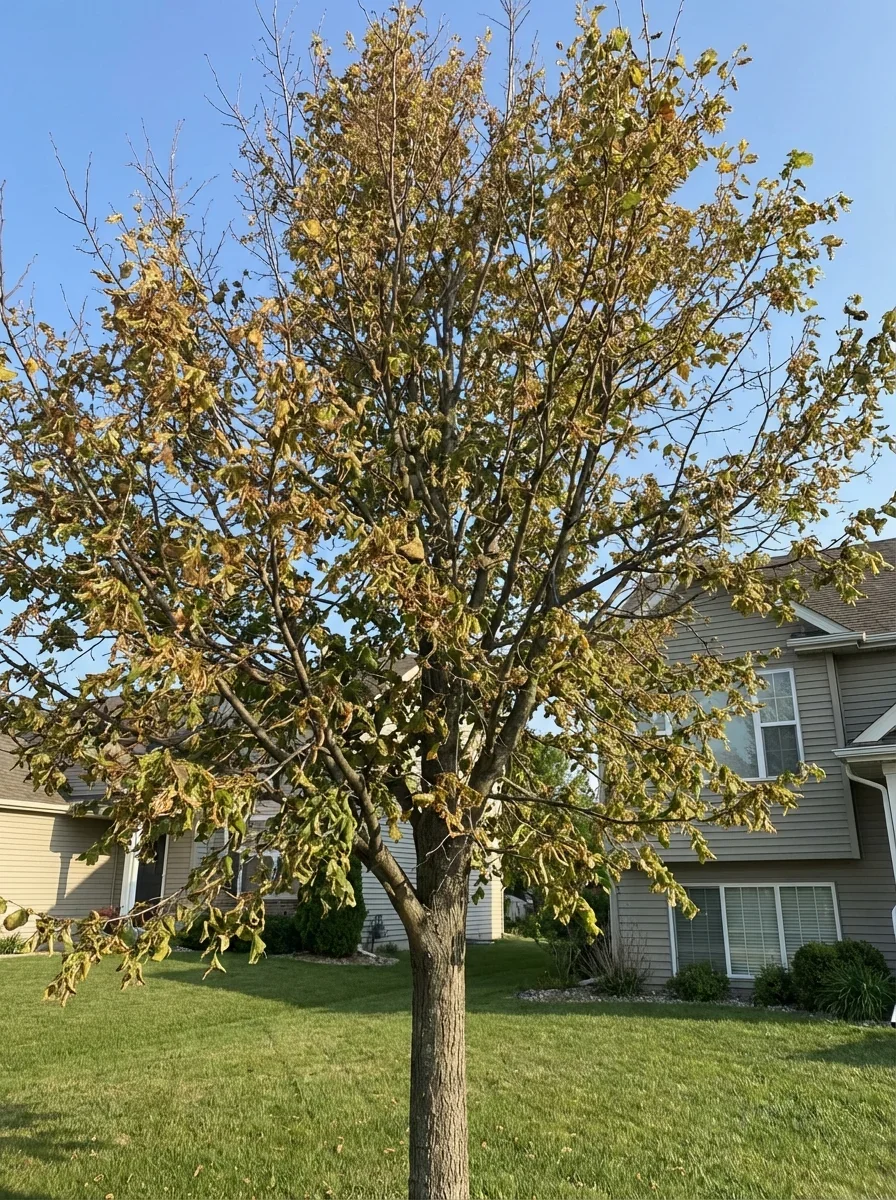
Signs Your Tree is Dying
Read ProblemTree Health Assessment vs Arborist Consultation: Which Do You Need?
Read Guide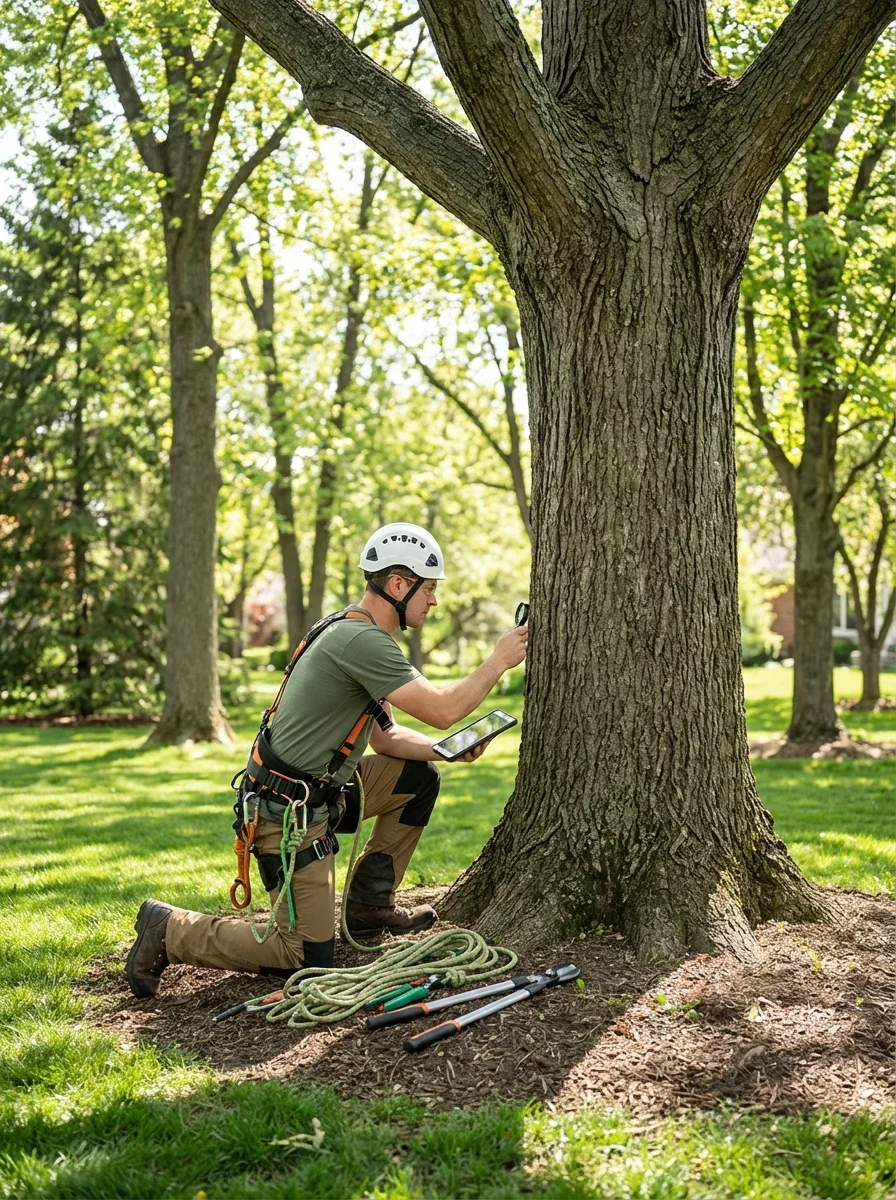
How to Hire an Arborist (Checklist)
Read Guide