


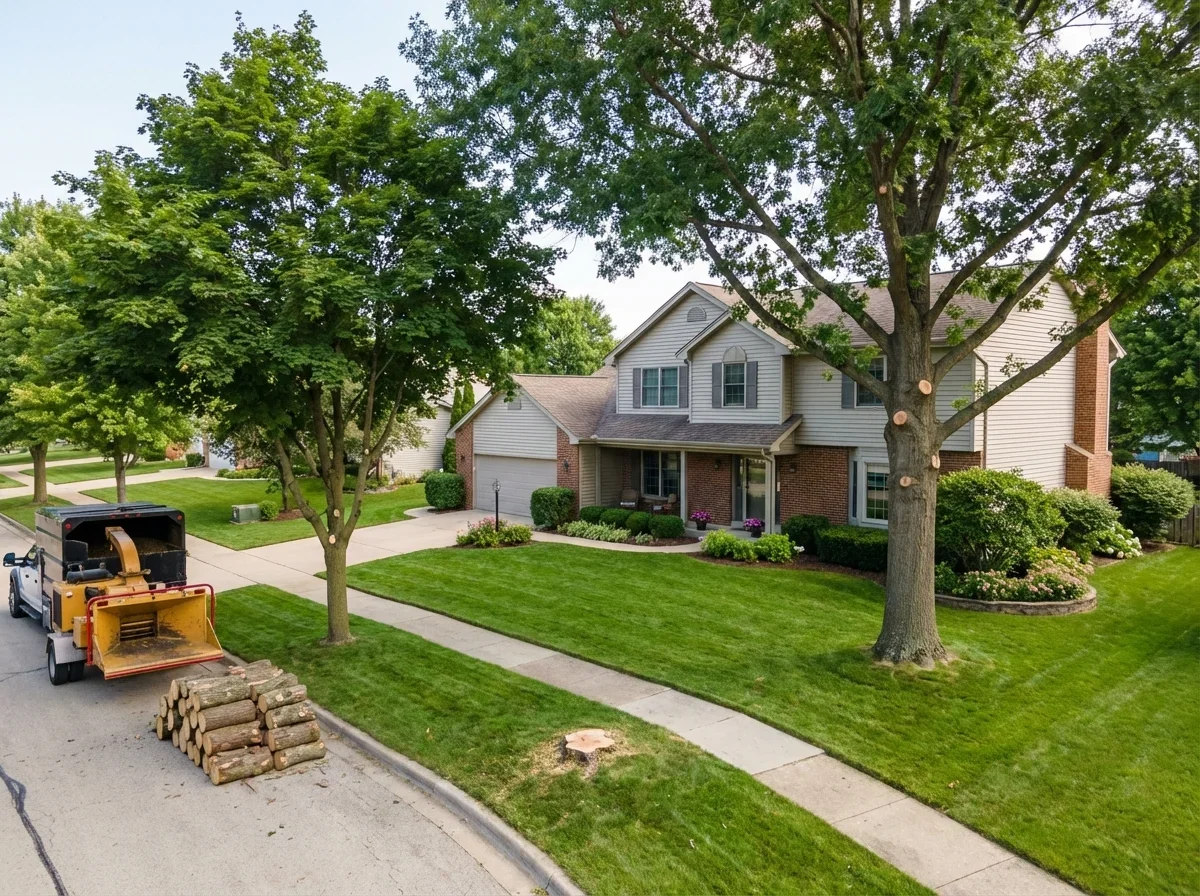
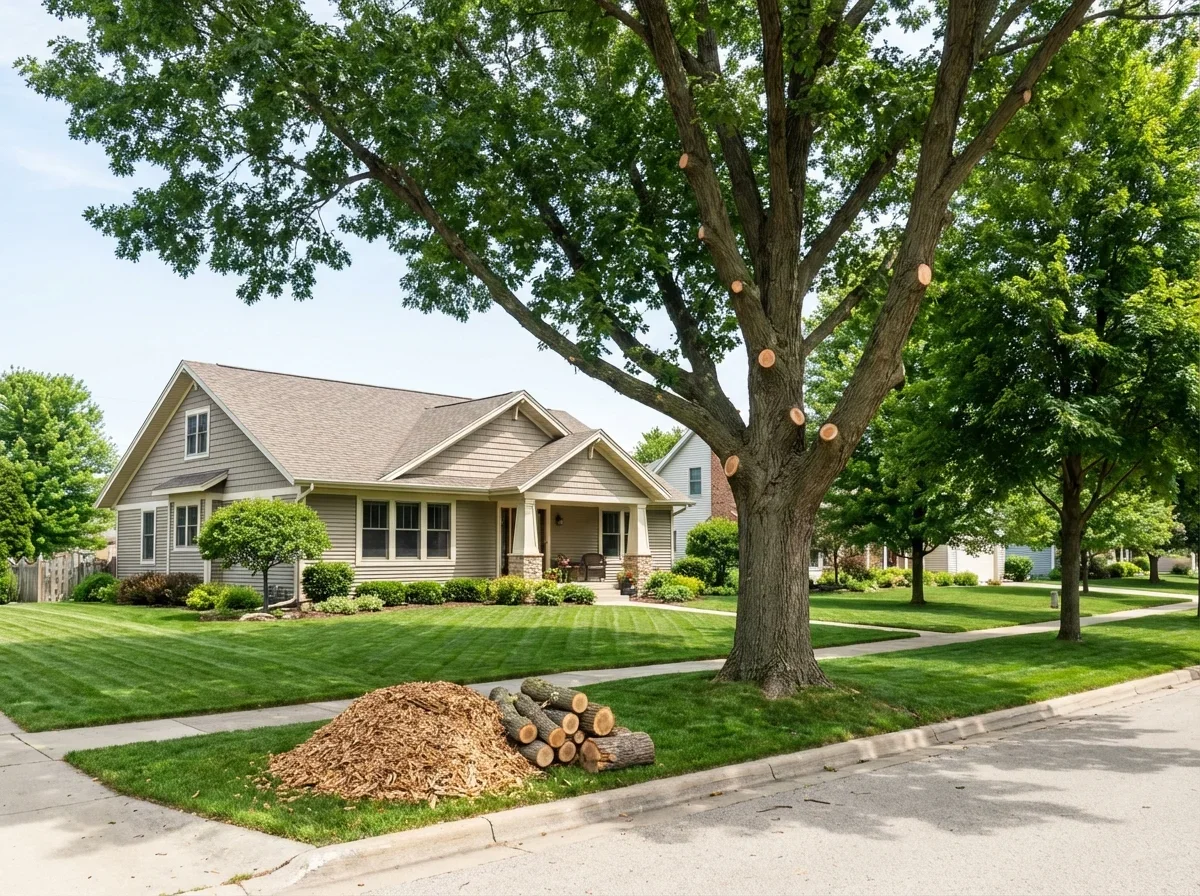
When Storm Damage Becomes an Emergency
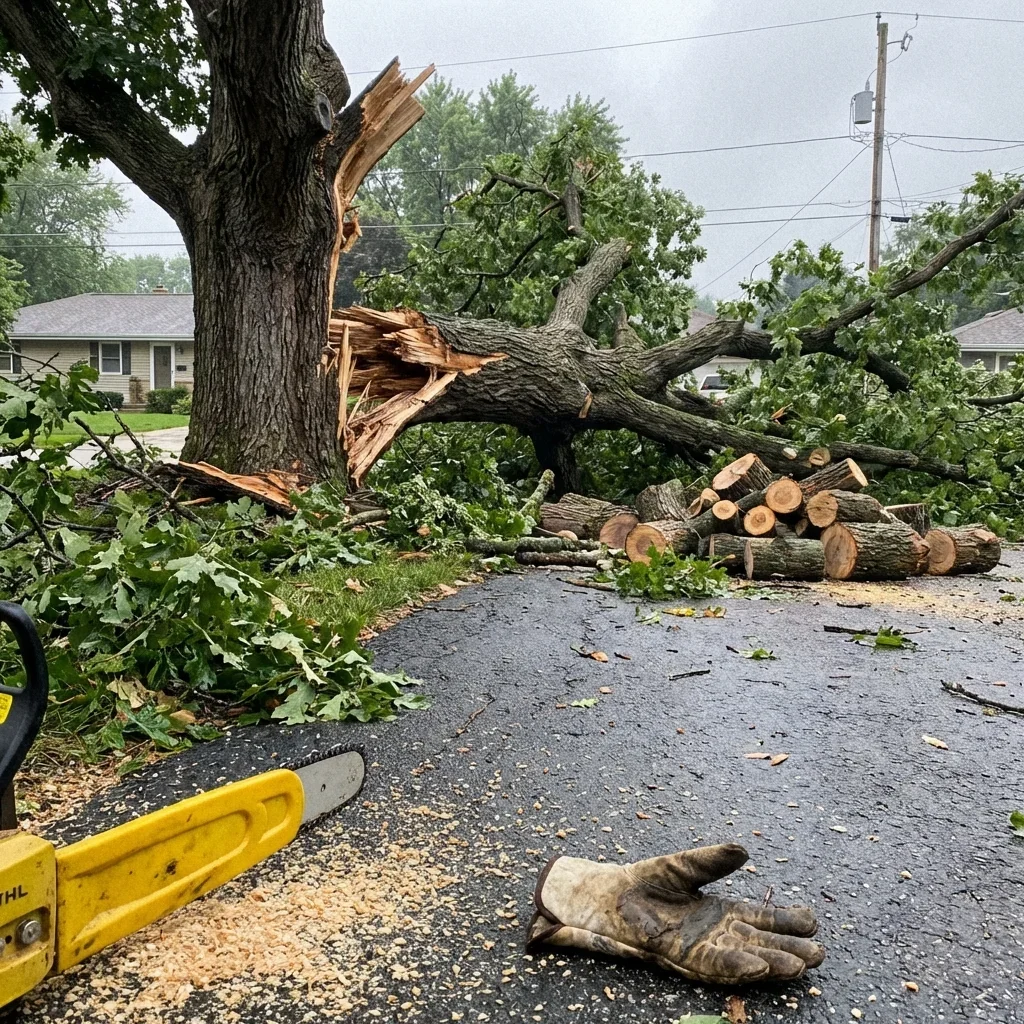
You heard the crack during the storm. Maybe you woke up to a tree across your car. Or you're standing in your Appleton yard looking at a massive oak split down the middle, half leaning toward your house, half still upright.
The question isn't whether you need help—it's how fast you can get it.
Fox Valley weather doesn't mess around. Ice storms in January and February coat every branch until something gives. May through August brings severe thunderstorm warnings that turn into straight-line winds, hail, and the occasional tornado touchdown in outlying areas. Derecho events—those terrifying walls of wind—can level entire sections of mature trees in minutes.
The damage falls into categories that determine urgency:
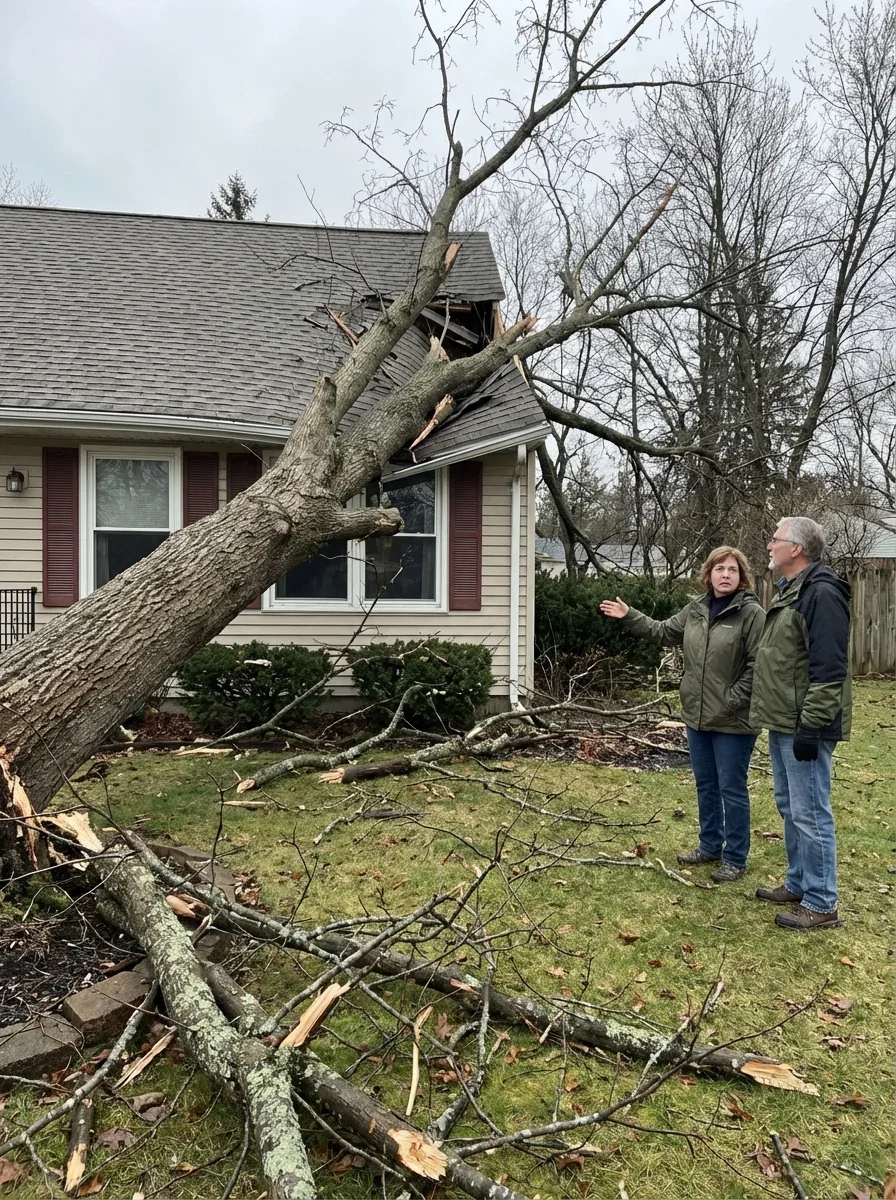
Immediate hazards require same-day response. A tree on your house. Hanging branches over power lines. A split trunk that could fall any direction. Roots exposed with the tree leaning at a new angle. Most Fox Valley arborists prioritize these within hours—not days.
Stable but damaged trees get scheduled within 24-48 hours. The branch broke but it's on the ground. The tree fell in the backyard away from structures. Cleanup is necessary but nothing's actively threatening property or people.
The risk escalates fast. That hanging branch looks stable until wind picks up again. The leaning tree puts pressure on roots that weren't meant to handle it. What starts as "we can wait a few days" becomes "it fell on the neighbor's fence at 2am."
Storm damage in Green Bay and Oshkosh often affects multiple properties simultaneously. When a severe weather system moves through, every arborist is slammed. The contractors who respond fastest are the ones with 24/7 emergency lines, multiple crews, and equipment already staged for storm season.
You'll know it's urgent when you see split trunks exposing fresh wood, major branches hanging by splinters, trees leaning at angles they weren't yesterday, root balls lifting out of the ground, or any tree contact with structures or utilities.
What Does Storm Damage Cleanup Cost in the Fox Valley?
The honest answer: it depends on what fell and where it landed. A small branch in your yard costs differently than a 60-foot maple that crushed your garage.
Emergency response costs more than scheduled work. You're paying for immediate availability, after-hours labor, and equipment mobilization on short notice. Most Fox Valley arborists charge a premium for same-day emergency calls—typically 1.5x to 2x standard rates.
Here's what actual cleanup projects cost in Neenah, Menasha, and surrounding areas:
| Damage Type | Typical Cost Range | Factors That Increase Cost |
|---|---|---|
| Fallen tree removal (property access clear) | $500 - $1,500 | Size, species, location |
| Fallen tree on structure | $1,200 - $3,000+ | Structural contact, dismantling requirements |
| Hanging/broken branches | $200 - $800 | Height, accessibility, number of branches |
| Debris haul-away | $150 - $400 per load | Volume, distance to disposal site |
| Stump grinding (post-removal) | $100 - $300 per stump | Diameter, root spread, access |
| Emergency stabilization/cabling | $300 - $800 | Complexity, hardware required |
Insurance Coverage and Out-of-Pocket Costs
Most homeowner's insurance policies in Wisconsin cover storm damage tree removal when the tree damages a covered structure. That's the key phrase. A tree on your house? Covered. A tree on your garage? Covered. A tree that fell in your yard but didn't hit anything? Usually not covered.
Your insurance typically covers:
- Tree removal when it damaged your home, garage, or fence
- Debris removal from the damaged structure
- Repairs to the structure itself
- Sometimes: removal of trees blocking your driveway (check your policy language)
You'll pay out-of-pocket for:
- Trees that fell but didn't damage insured structures
- Preventive removal of damaged-but-standing trees
- Stump grinding (usually not covered)
- Cleanup of branches and limbs that didn't cause damage
Standard deductibles apply. If your tree removal costs $800 and your deductible is $1,000, you're paying the full $800. For major damage with $2,500 in cleanup costs and that same $1,000 deductible, insurance covers $1,500.
The arborists who work storm damage regularly in Kaukauna and Appleton know exactly how to document for insurance. They take the photos adjusters want to see. They write the reports in language that matches policy coverage requirements. They understand the difference between "tree removal necessary for structure repair" (covered) and "yard cleanup" (not covered).
Get at least three estimates for insurance purposes. Adjusters want to see competitive pricing. One quote lets them argue you overpaid. Three quotes show market rate.
The Storm Damage Cleanup Process
Professional storm cleanup follows a specific sequence that prioritizes safety, meets insurance requirements, and leaves your property cleared and restored.
Initial Assessment and Safety Evaluation
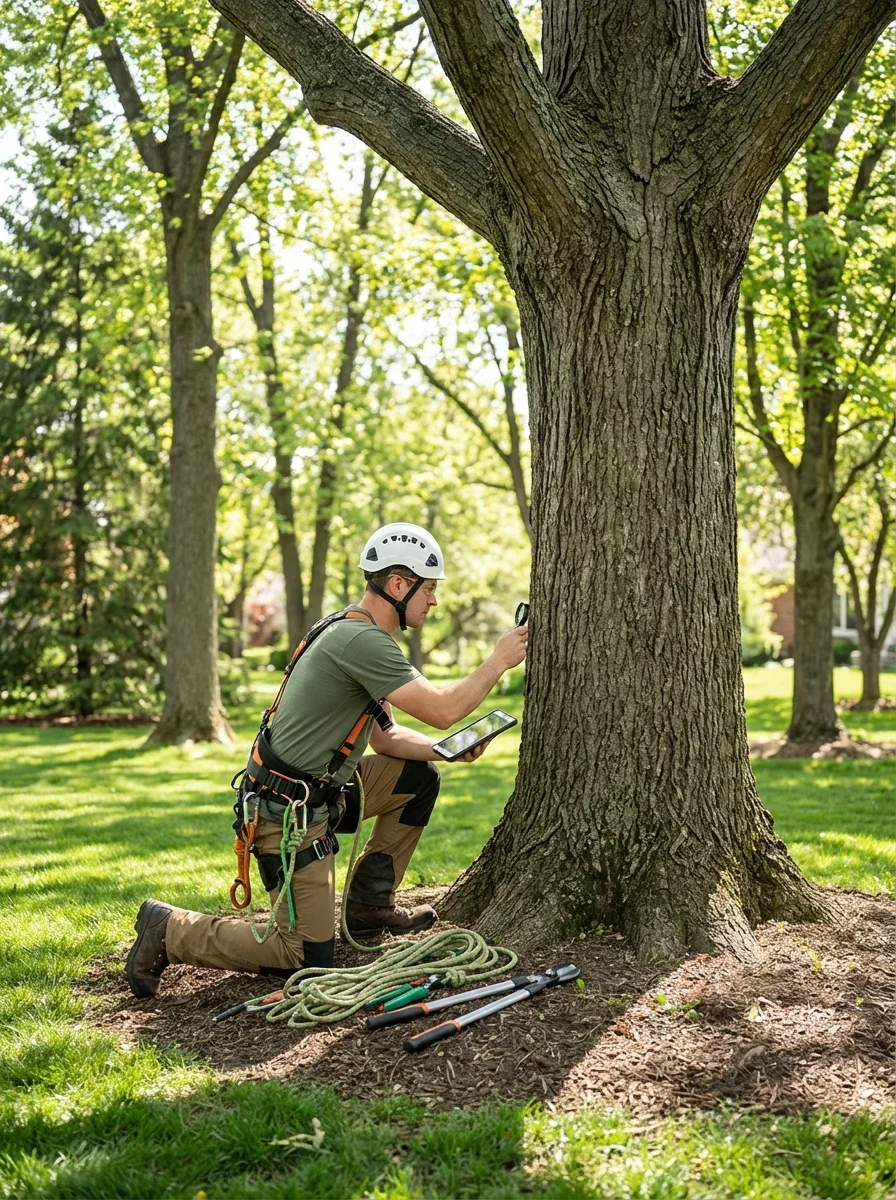
The arborist arrives and walks the entire property before touching anything. They're looking for utility line contact (absolute stop-work situation until the power company clears it), structural damage risks, and unstable trees that could shift during removal.
The assessment determines approach. A tree resting on your roof requires careful dismantling from the top down—cutting the wrong section first could send the whole mass crashing through. A tree in the yard gets standard fell-and-section treatment.
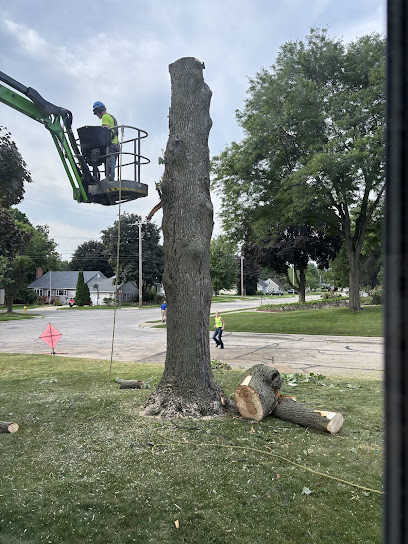
They'll mark hazard zones, identify rigging points for ropes and pulleys, and determine equipment access. Can the bucket truck reach? Does the crane need to come in? Will they climb and dismantle by hand?
This phase includes documentation if you're filing insurance. Photos from multiple angles. Measurements. Written notes about what caused the damage and what it damaged. The good contractors in Oshkosh and Green Bay do this automatically—they know what adjusters need.
Tree Removal and Debris Management
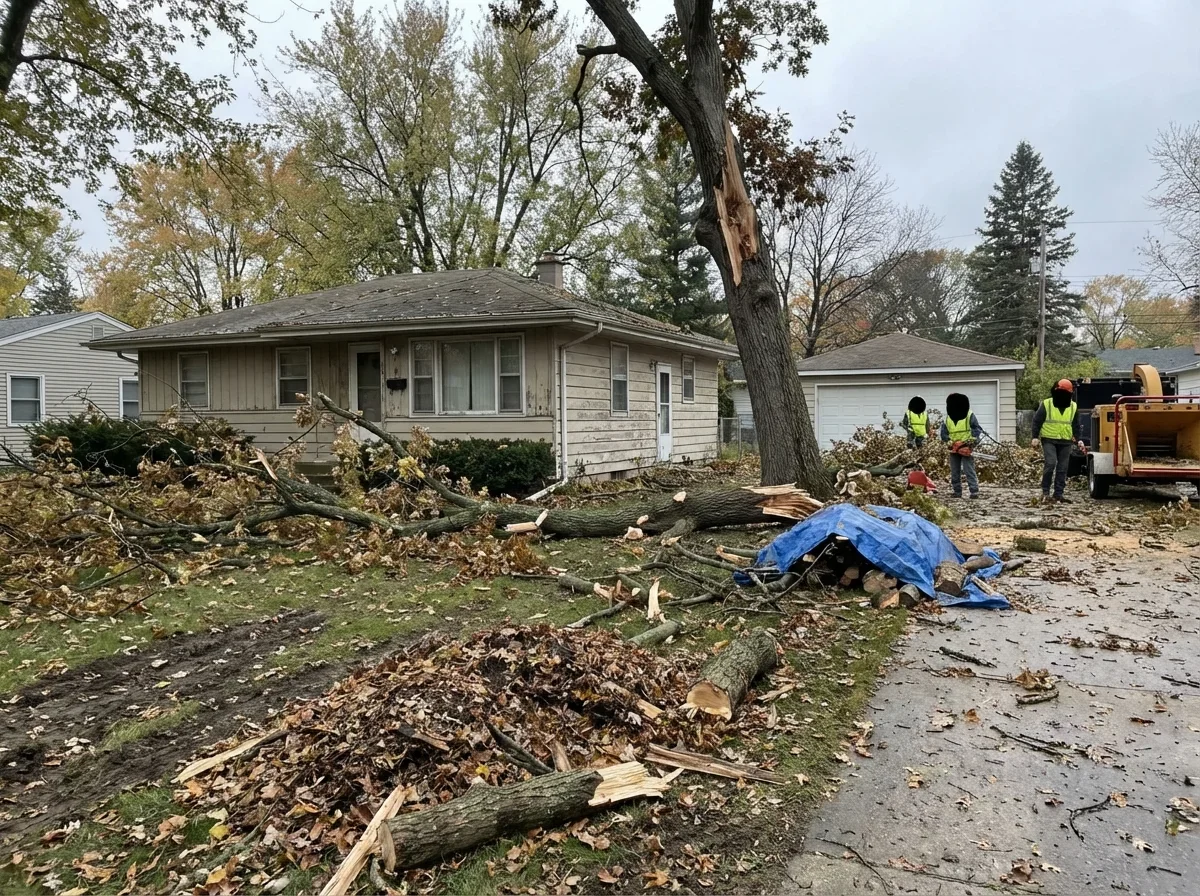
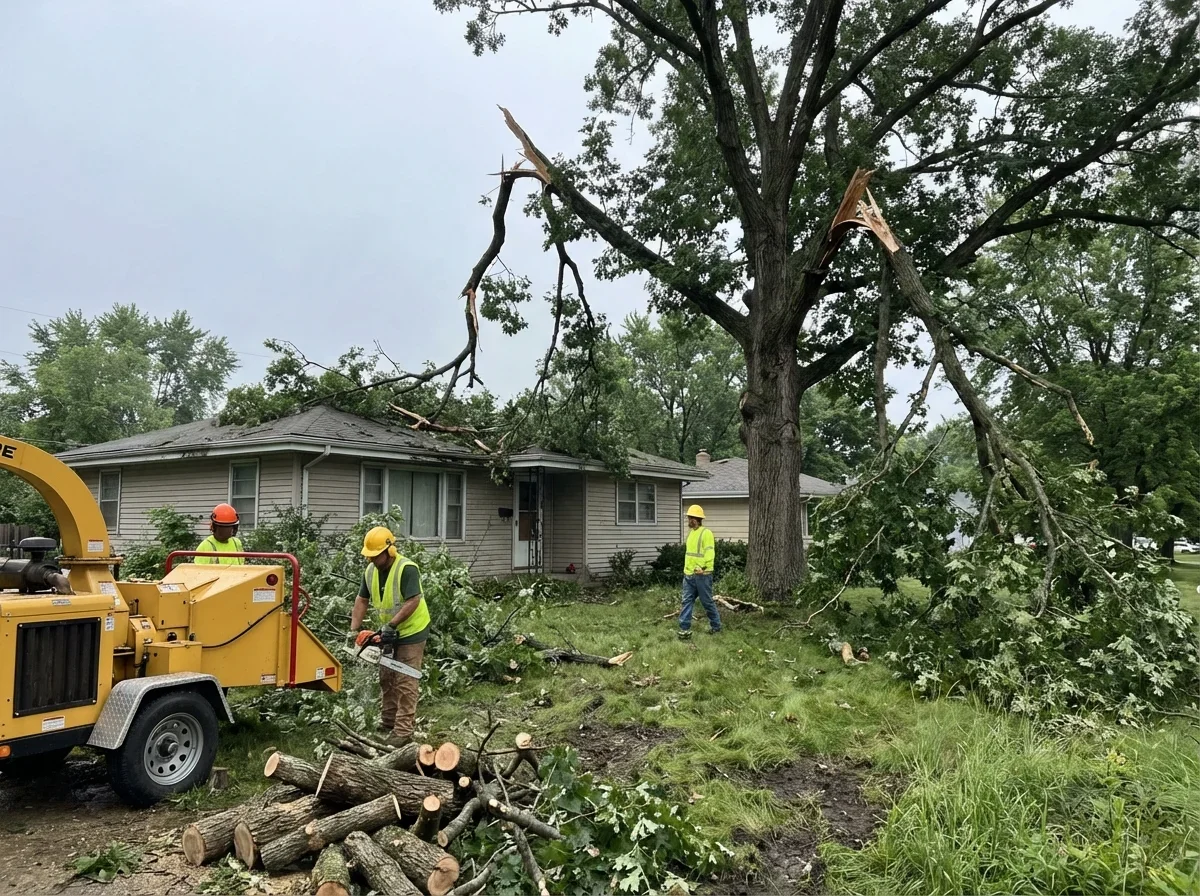
Actual removal starts with securing the work area. No one walks under a tree being dismantled. Vehicles get moved. Tarps go down if they're working near landscaping you want to protect.
For trees on structures, they remove weight systematically. Top sections first, working down. Each cut is rigged with ropes to control the fall. Branches get lowered, not dropped. The goal is removing the tree without causing additional damage.
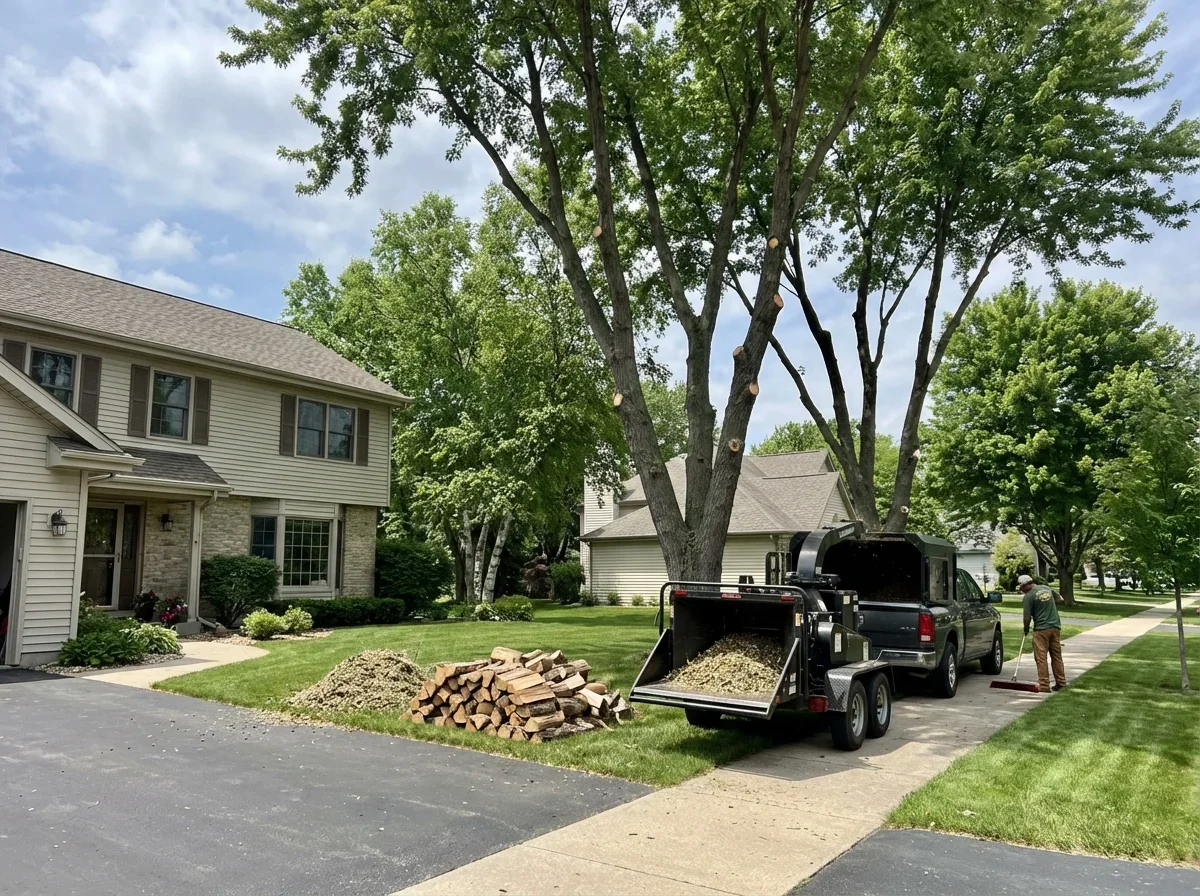
Trees on the ground get sectioned into manageable pieces. Trunks cut into rounds. Branches separated and stacked. Everything sized for the chipper or trailer.
Most Fox Valley crews bring a chipper for branches and a loader/truck for trunk sections. Small debris becomes mulch. Large wood gets hauled to a disposal site or cut into firewood-length pieces if you want to keep it. (Spoiler: most storm-damaged wood is trash-grade—full of dirt, metal fragments from where it hit structures, and stress fractures.)
Timeline for typical projects:
- Single fallen tree, clear access: 2-4 hours
- Tree on structure requiring dismantling: 4-8 hours
- Multiple trees or major storm damage: 1-3 days
Stump Grinding and Property Restoration
After the tree is gone, you're left with a stump. Grinding is usually a separate service—different equipment, often a different crew or scheduling.
The grinder takes the stump 6-12 inches below grade. The result is a pile of wood chips and a depression where the stump was. You can fill it with topsoil and seed grass, use the chips as mulch, or leave it to settle naturally over a season.
Final cleanup includes raking debris, removing equipment ruts if the ground was soft, and walking the property to pick up small branches the chipper missed. Professional crews in Neenah leave your yard looking like nothing happened—except the tree is gone.
How to Choose a Storm Damage Cleanup Service
When you're standing in your driveway at 6am looking at a tree across your garage, you don't have time to vet contractors like you normally would. But a few key questions separate the professionals from the opportunists who show up after every storm.
Response Time and 24/7 Availability
Ask: "Do you have crews available today?" Not "can you give me an estimate"—can they actually do the work?
Storm damage creates a surge in demand. The contractors with multiple crews, staged equipment, and established emergency protocols respond fastest. The guy with one truck and a chainsaw is already booked for the next week.
Red flag: "I can come look at it Thursday." For genuine emergencies, you need same-day or next-day response.
Insurance Documentation Experience
Ask: "How do you document for insurance claims?" and "Will you work directly with my adjuster?"
You want an arborist who photographs the damage before touching it, writes detailed reports connecting the storm event to the damage, and itemizes the work in language insurance companies recognize. Experienced contractors have done this hundreds of times. They know what adjusters approve and what gets denied.
The best ones in Menasha and Appleton will talk to your adjuster directly, explain the scope of work, and justify their pricing. They're not intimidated by insurance companies questioning their estimates.
Equipment and Crew Size
Look at what rolls up. A professional storm cleanup operation brings:
- Bucket truck or crane for tall trees
- Industrial chipper (12+ inch capacity)
- Stump grinder
- Loader or skid steer for moving large sections
- Multiple crew members (storm work is dangerous solo)
A pickup truck and a chainsaw means you're getting a laborer, not a tree service company. They might do the work cheaper, but you'll wait longer and the results won't meet professional standards.
Credentials and Coverage
Verify these before anyone touches a tree:
- ISA Certified Arborists on staff (not required, but indicates training)
- Liability insurance (minimum $1M—ask for proof)
- Workers' comp insurance (if someone gets hurt on your property, you need this protection)
- Written estimates that itemize work and costs
- References from recent storm cleanup jobs
Questions that reveal experience level:
- "What's your process for trees in contact with power lines?" (Answer should be: "We don't touch it until the utility clears it.")
- "How do you handle trees on structures?" (Answer should include rigging, controlled dismantling, damage prevention.)
- "What happens if you cause additional damage during removal?" (Answer should reference their liability coverage.)
Avoid contractors who pressure immediate decisions, demand large deposits upfront, or can't provide insurance documentation. Fox Valley has enough qualified arborists that you don't need to hire the first person who shows up.
The directory listings show response times, service areas, and insurance documentation support. After a major storm, that information helps you find available crews fast—when half the contractors are already booked solid.
Frequently Asked Questions
A tree removal job typically reaches $1,000 in cost for trees 50–70 feet tall with standard difficulty (moderate branch spread, accessible location, no major obstacles). The $1,000 threshold depends heavily on circumstances:
- Straightforward removal (open yard, no power lines nearby): 50–65 ft tall
- Moderate complexity (near house or fence, some rigging needed): 40–55 ft tall
- High complexity (dense neighborhood, multiple hazards, dead wood): 30–45 ft tall
Stump grinding adds $100–$200, so a "$1,000 job" may include both removal and stump work if the tree is smaller but hazardous or multitrunked.
- City of Aurora, IL. "Post-Storm Clean Up Efforts." https://www.aurora.il.us/News-articles/Post-Storm-Clean-Up-Efforts. Accessed February 10, 2026.
Related Articles
Tree Fell on House - Emergency Help
Read ProblemStorm Damage Tree Cleanup Cost: What to Expect After Severe Weather
Read Cost GuideStorm Damage Tree Cleanup Cost: What to Expect After Severe Weather
Read GuideWhen to Remove a Tree: Signs It's Time vs. When You Can Wait
Read Guide
Tree Removal Cost in Wisconsin (2026 Guide)
Read Cost Guide