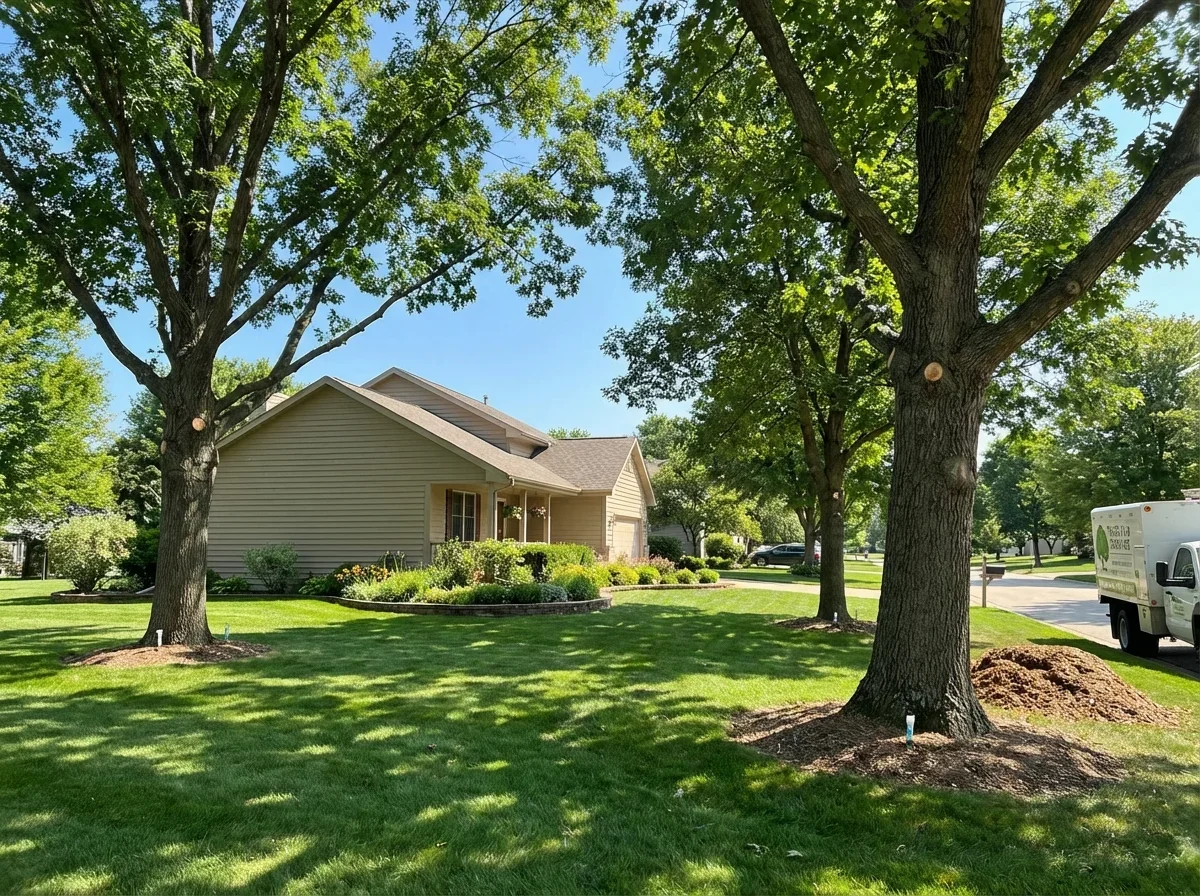
When Do You Need Oak Wilt Treatment?
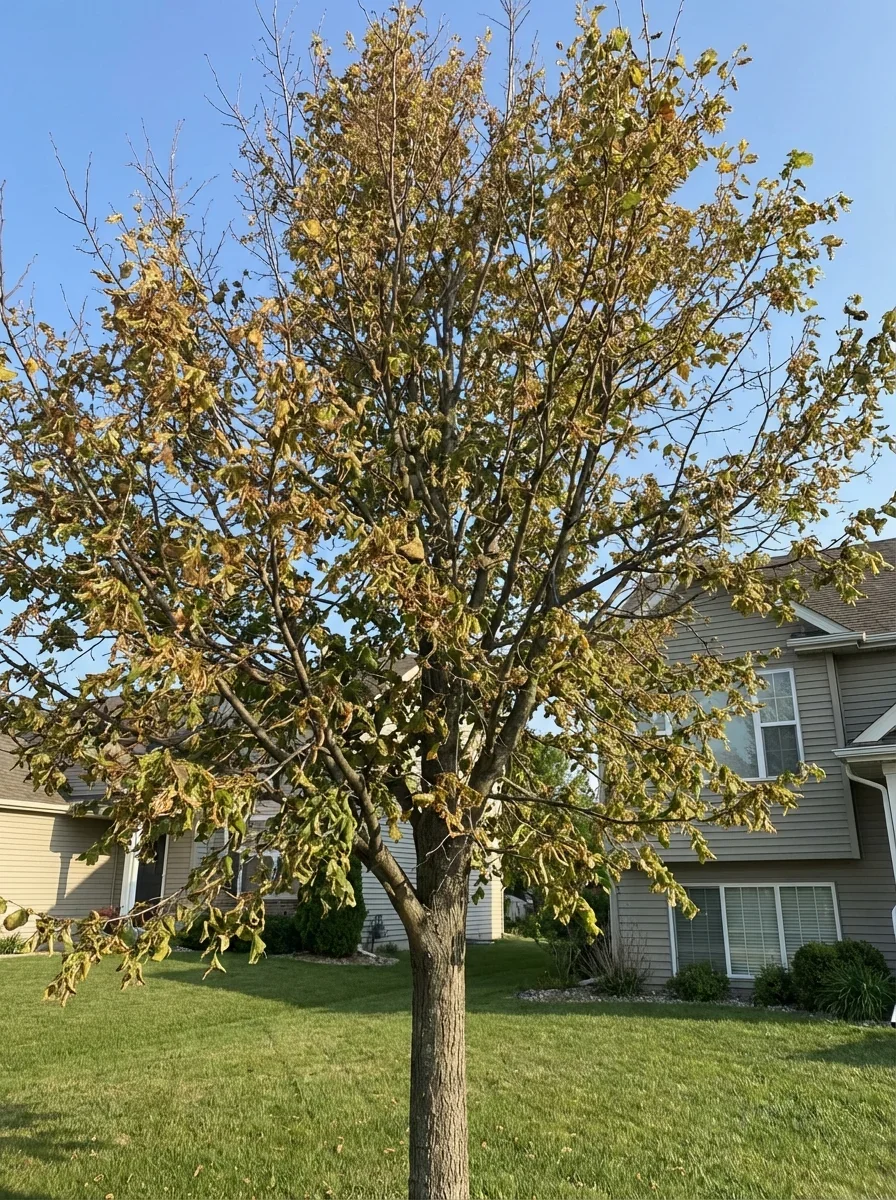
You notice the top branches of your mature red oak starting to wilt in early summer. Within three weeks, half the canopy has turned bronze. Your neighbor's oak died last year—same symptoms, same rapid decline.
Oak wilt is a lethal fungal disease caused by Bretziella fagacearum that spreads two ways in Fox Valley properties: through bark beetle wounds during spring and summer, and underground through root grafts connecting nearby oak trees. Red oaks die in 4-6 weeks once symptoms appear. Bur oaks take 1-3 years but eventually succumb without intervention.
Early Warning Signs in Your Oak Trees
The disease announces itself differently depending on oak species. Red oaks (northern red oak, pin oak) show rapid wilting starting at the crown. Leaves turn bronze or brown from the tip toward the base, often on scattered branches first. The progression is shockingly fast—a healthy-looking tree in May can be dead by July.
Bur oaks and white oaks decline more slowly. You might see gradual thinning, small leaves, branch dieback over multiple seasons. This slower progression gives you more treatment options, but waiting still means watching a 100-year-old specimen deteriorate.
Sound familiar? Your neighbor's oak died two years ago. Now your trees are showing the same top-down wilting. You're worried the fungus is spreading underground. You don't know if it's too late to save the healthy oaks on your property.
Underground spread is the real threat. Oak trees growing within 50-100 feet often share root grafts—natural connections that let them share water and nutrients. Oak wilt fungus travels through these highways at 50-75 feet per year. One infected tree becomes five infected trees. Property owners in Appleton and Oshkosh frequently discover they're dealing with a cluster infection, not a single tree problem.
Critical Treatment Windows in Wisconsin
Timing determines whether you're preventing oak wilt or reacting to it. Preventive fungicide injections must happen April through June, before symptoms appear, when trees are actively moving sap. Treatment after visible wilting is often ineffective—the fungus has already colonized the vascular system.
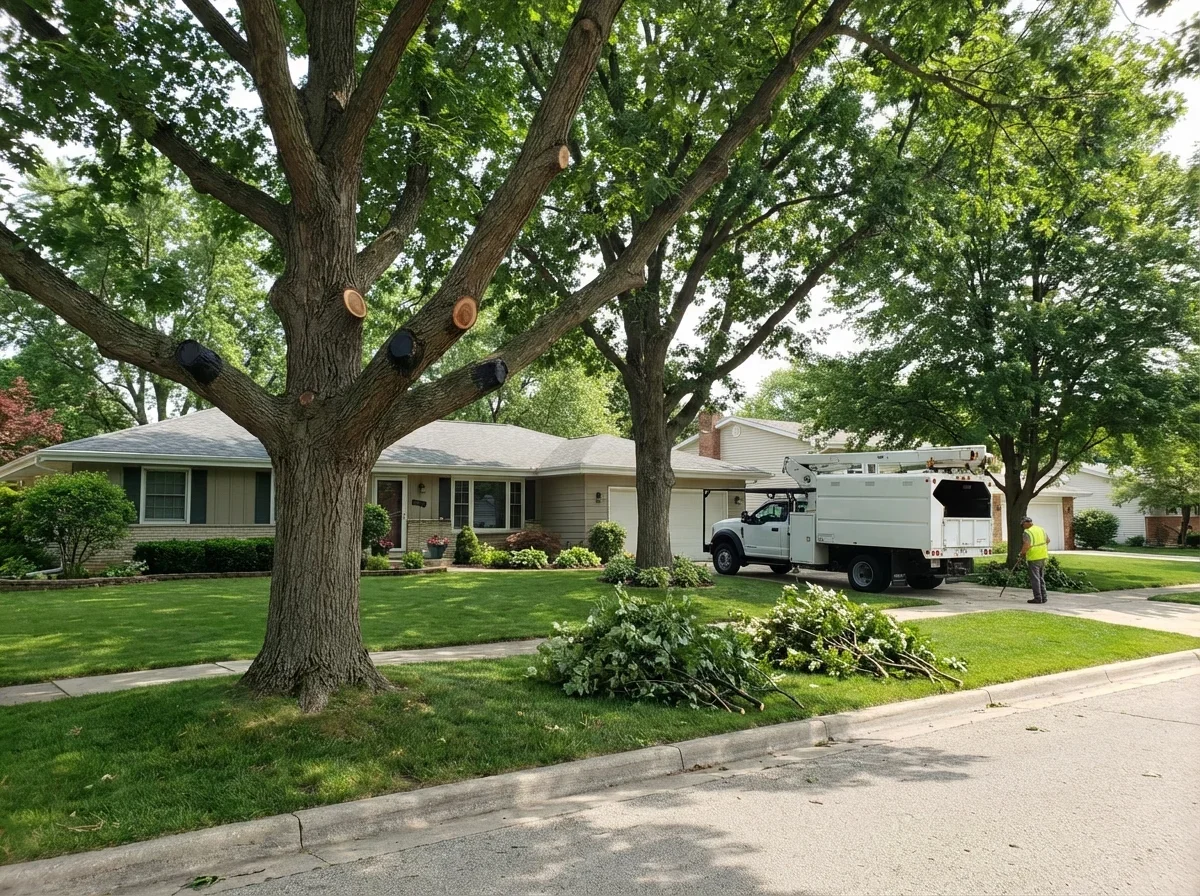
Never prune oaks between April and July. Bark beetles that vector oak wilt are active during this period, attracted to fresh wounds and oak sap. A well-intentioned spring pruning can introduce the disease to a healthy tree. If storm damage occurs during the restricted period, immediately seal wounds with latex paint—a temporary barrier until beetle activity subsides.
Properties in Neenah and Menasha with oak-dense neighborhoods face the highest risk. When oak wilt establishes in a mature oak grove, it spreads systematically through the root network unless you install physical barriers.
What Does Oak Wilt Treatment Cost in the Fox Valley?
The price difference between prevention and reaction is stark. A fungicide injection costs a few hundred dollars. Root barrier trenching after disease spreads costs thousands.
Preventive Fungicide Injection
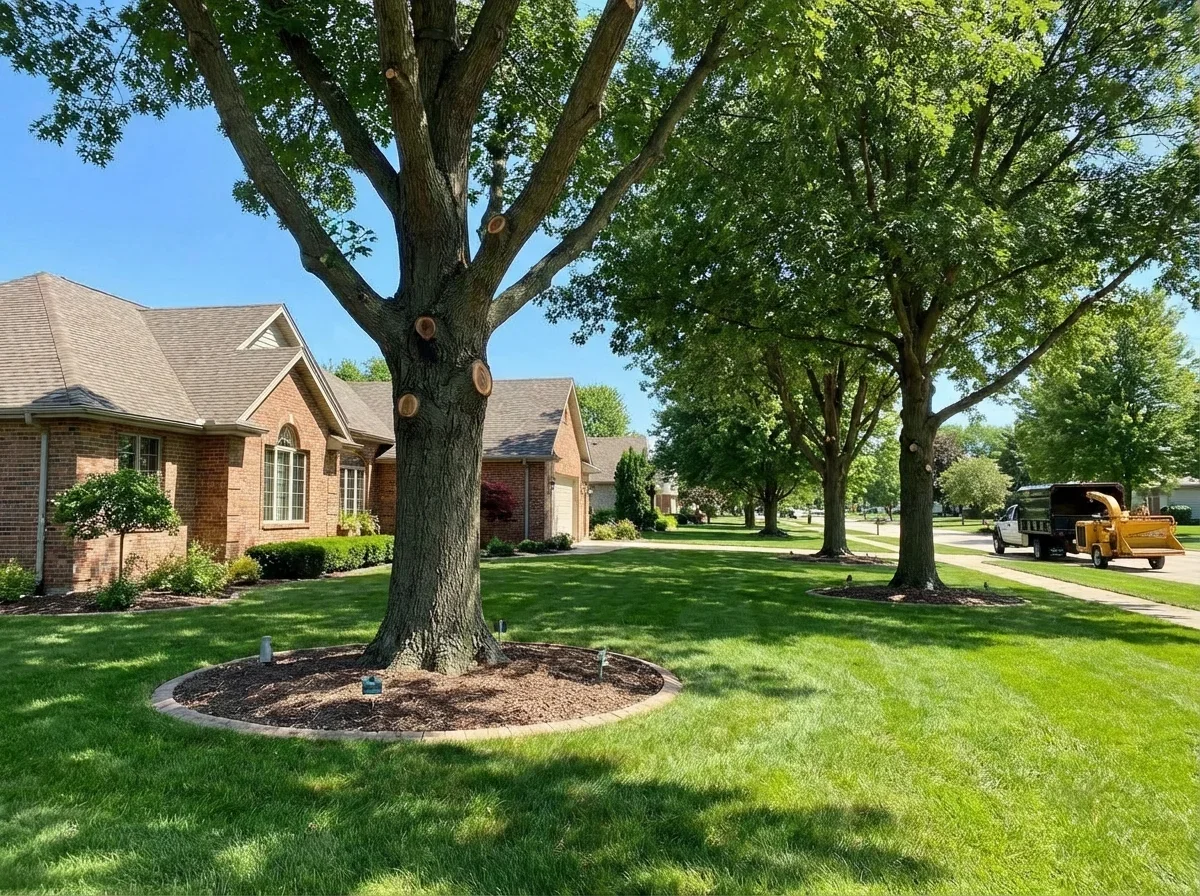
A certified arborist can treat three mature trees for less than $1,500 — protecting specimens worth $15,000–$20,000 each in landscape value. Properties with multiple oaks often establish biennial treatment protocols for their most valuable specimens.
Root Barrier Trenching (After Infection)
Single Isolated Tree
50–75 linear ftOne tree confirmed. Trench severs root connections before spread.
Small Cluster (2–3 Trees)
150–250 linear ftMultiple trees infected. Extended trenching to protect remaining oaks.
Large Infection Center
300+ linear ftMajor outbreak. Includes trenching, infected tree removal, and disposal.
Infected tree removal adds $800–$2,500 depending on size and access. The wood must be destroyed or covered immediately — leaving infected logs exposed spreads disease.
The financial equation is clear: spend $400 preventing infection or spend $5,000+ containing it after spread.
The Oak Wilt Treatment Process
Oak wilt management follows a specific protocol. Your arborist isn't just treating one tree—they're assessing your entire property for current infections, vulnerable specimens, and underground spread potential.
Step 1: Professional Diagnosis and Spread Assessment
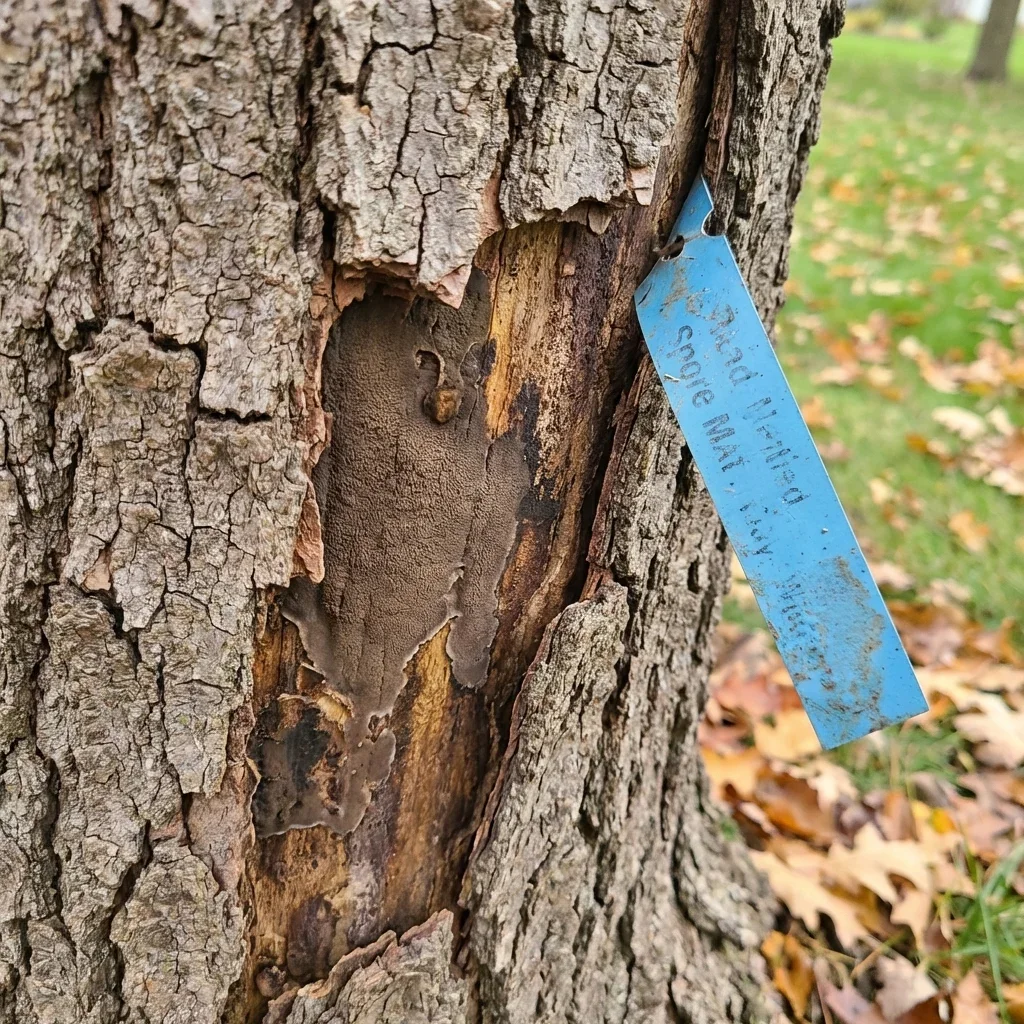
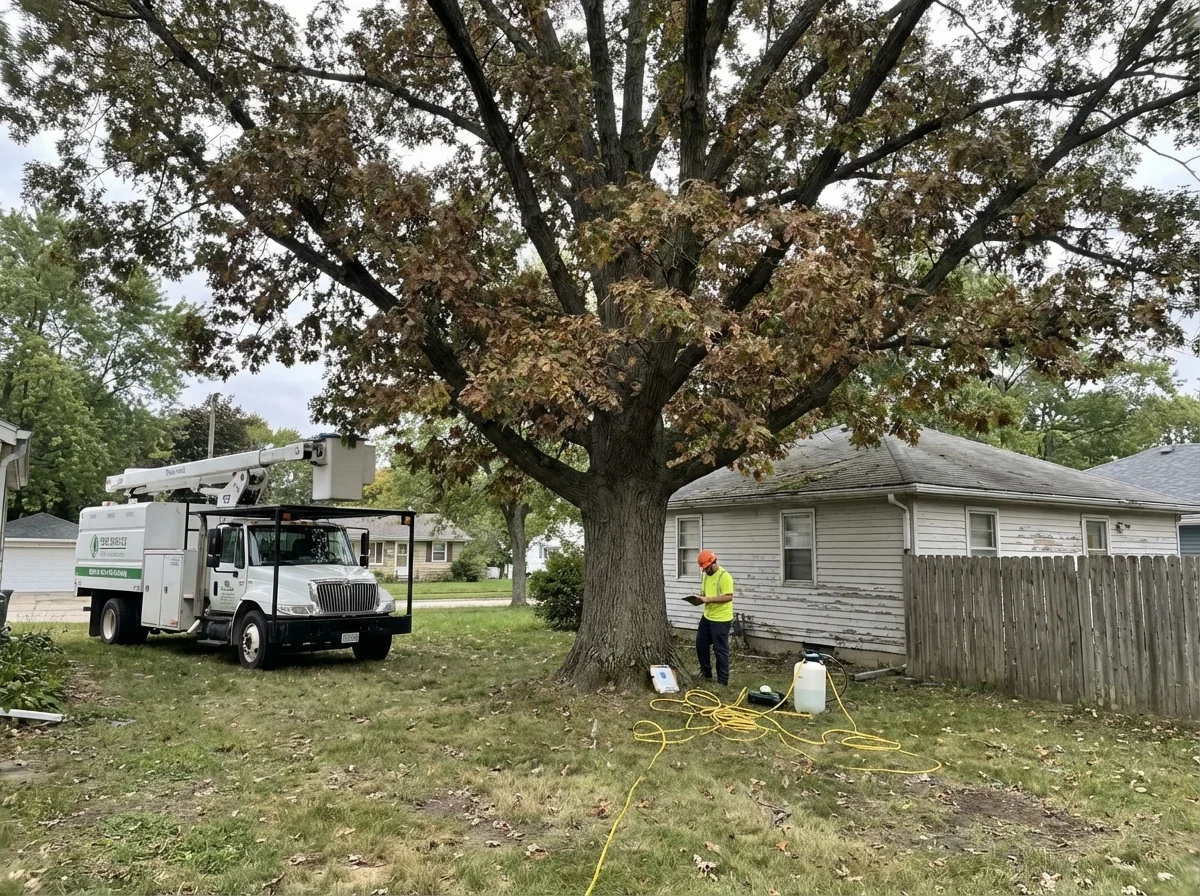
A certified arborist evaluates symptom patterns, species identification, and spatial relationships between trees. Oak wilt symptoms can mimic other problems—drought stress, Armillaria root rot, bacterial leaf scorch. Definitive diagnosis requires lab testing (vascular tissue samples sent to a plant diagnostic clinic). Results take 7-10 days.
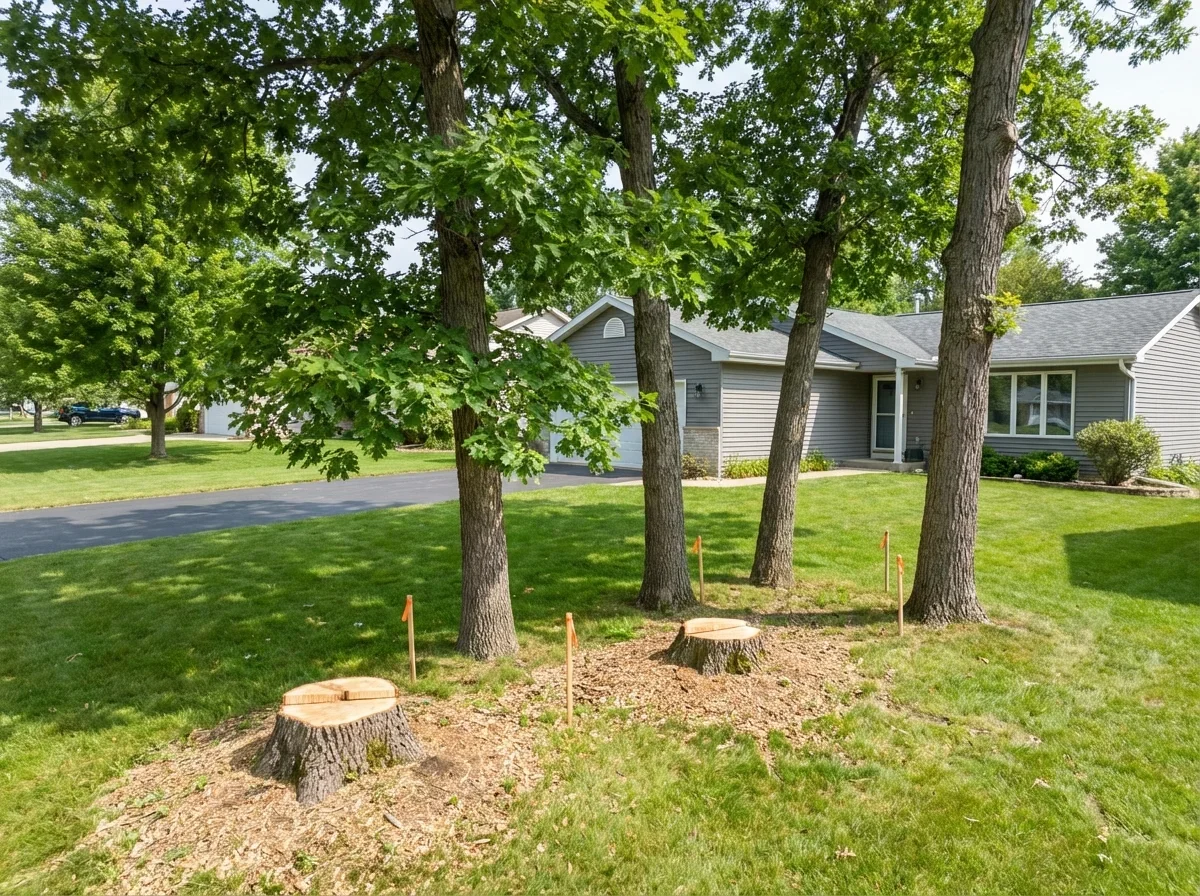
Your arborist maps root graft likelihood based on tree spacing. Oaks within 50 feet of each other almost certainly share roots. They'll identify which healthy trees are high priorities for preventive injection and where trenching would be necessary if infection confirms.
This assessment phase happens year-round, but treatment timing depends on the calendar and disease status.
Step 2: Fungicide Injection (Propiconazole)
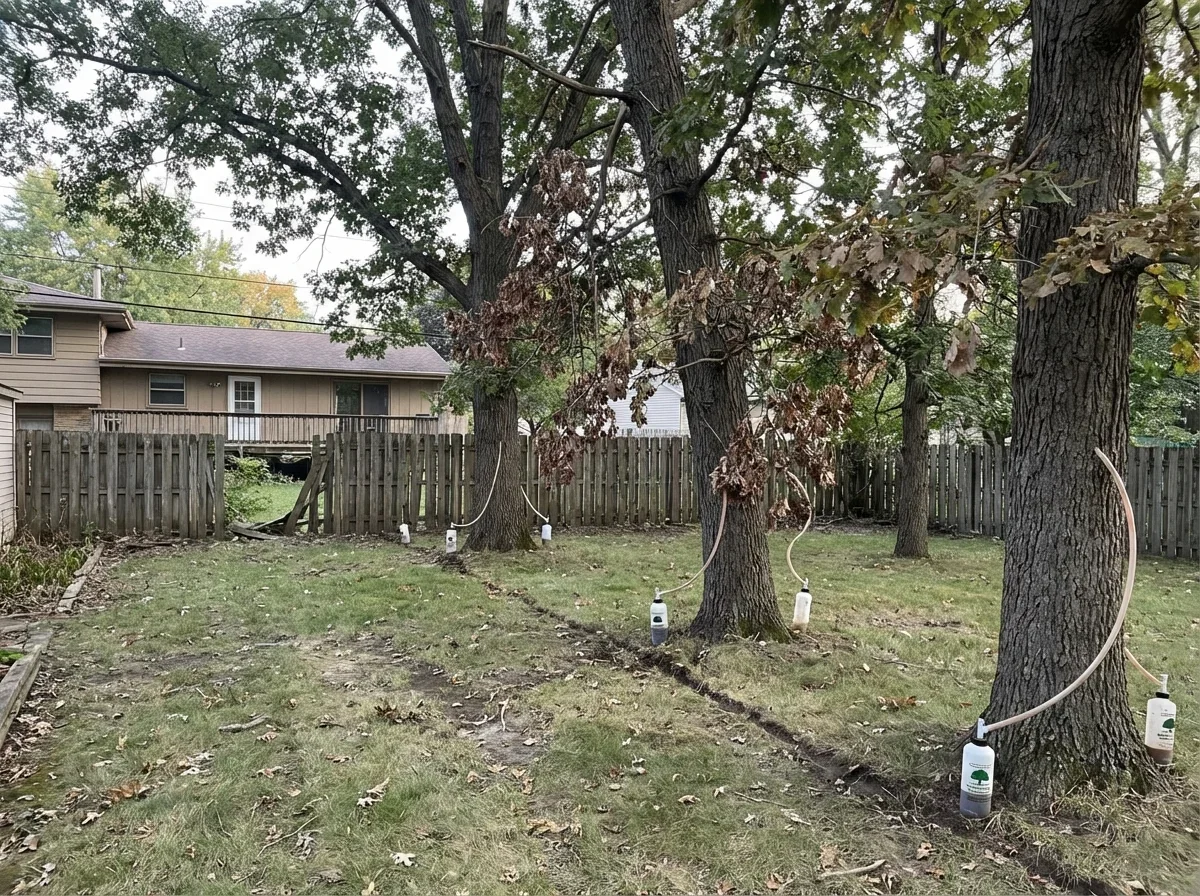
Preventive injections occur April through June when trees are actively moving sap. Your arborist arrives with a macro-infusion system—professional equipment that introduces propiconazole directly into sapwood through small ports drilled at the root flare. A mature oak requires 4-8 injection points around the trunk circumference.
The process takes 1-2 hours per tree. The fungicide distributes systemically through the vascular system, creating a protective barrier that prevents fungal colonization. You'll see small drill holes at the base—these compartmentalize naturally as the tree heals.
Treatment protects for approximately two years. High-risk properties (oak-dense neighborhoods with known infection history) often maintain biennial injection schedules for their most valuable specimens.
Step 3: Root Barrier Installation
When infection confirms and threatens neighboring oaks, trenching happens immediately—ideally outside the April-July bark beetle activity period, but disease containment trumps seasonal preference. A vibratory plow or trenching machine cuts a continuous barrier 4-5 feet deep, positioned 50-100 feet from the infected tree on the side facing healthy oaks.
The trench severs all root connections. This physical barrier stops underground spread but doesn't treat trees—it contains the infection zone. Healthy trees on the protected side may still receive preventive fungicide injections for additional security.
Properties in Appleton with multiple mature oaks sometimes install strategic barriers preemptively, particularly when a neighbor's property has confirmed oak wilt. The trenching cost is substantial, but it's insurance against losing an entire oak stand.
Step 4: Infected Tree Removal and Disposal
Infected trees must be removed promptly—they continue generating fungal spores and attracting bark beetles. Removal timing depends on species: red oaks should come down immediately (they're hazardous once the canopy dies). Bur oaks can sometimes be monitored through one season if they're not creating safety risks.
The wood requires immediate disposal. Your contractor either chips it on-site and covers the pile with plastic for a full year (heat and time kill the fungus) or hauls it to an approved facility. Never store oak wilt wood uncovered—you're creating a disease reservoir.
Most Fox Valley property owners are surprised by the disposal requirements. You can't burn infected oak in your firepit next winter. You can't give the logs to neighbors. Disease management extends beyond the visible tree.
How to Choose an Oak Wilt Treatment Specialist
Oak wilt management requires specific knowledge and equipment. Your contractor needs practical Wisconsin experience—understanding local disease pressure, seasonal timing restrictions, and the difference between red oak emergencies and white oak gradual decline.
Certifications and Oak Wilt Experience
Start with ISA Certified Arborists who have local oak wilt treatment experience. Ask how many injection treatments they perform annually (you want someone doing 50+, not five). Request examples of properties where they've successfully contained oak wilt through trenching and prevention protocols.
Wisconsin arborists working in oak wilt-prone areas should be familiar with DNR guidelines and local municipal regulations. Some cities have notification requirements when oak wilt confirms—your arborist should handle this documentation.
Look for contractors who own professional injection equipment. The hardware investment separates serious arborists from tree services that occasionally dabble in disease treatment. Macro-infusion systems cost several thousand dollars—contractors who own them treat enough trees to justify the investment.
Treatment Timing and Protocol Knowledge
The right arborist will tell you when treatment won't work. If you call in August about a red oak with 80% canopy wilt, an honest professional says "it's too late for this tree, but let's talk about protecting your other oaks." Contractors who promise miracle cures for symptomatic red oaks don't understand oak wilt biology.
Questions to ask during your consultation:
- How do you differentiate oak wilt from other decline issues before recommending expensive treatment?
- What's your protocol for confirming diagnosis through lab testing?
- Do you recommend preventive treatment, and if so, for which trees on my property?
- Where would you position root barriers based on my tree layout and infection location?
- What's your disposal protocol for infected wood?
Pay attention to how they discuss timing. Knowledgeable arborists emphasize the April-June injection window and explain why emergency calls during summer beetle season require wound-sealing protocols. They should volunteer pruning timing restrictions without prompting.
Fox Valley property owners dealing with oak wilt often work with their arborist for multiple years—initial treatment, monitoring, follow-up injections for high-value trees. Choose someone who treats this as ongoing oak health management, not a one-time transaction. The arborists in this directory have been vetted for oak wilt expertise specific to Wisconsin conditions.
Your mature oaks represent decades of growth and thousands in landscape value. The difference between losing them and protecting them comes down to early action and working with someone who understands exactly what they're dealing with.
Frequently Asked Questions
Yes, oak wilt spreads through tree roots as one of two primary transmission pathways. The fungus can move underground between oak trees that are root-grafted (roots physically touching or overlapping). Additionally, oak wilt spreads above ground when beetles carry fungal spores from infected trees to fresh wounds on healthy oaks.
Two main transmission routes:
- Below ground (root-to-root) — fungus travels through grafted root systems between adjacent or nearby oaks; accounts for ~80% of spread in endemic areas
- Above ground (beetle vectors) — insects breed in fungal spore mats under the bark of infected trees and carry spores to fresh wounds on healthy oaks; occurs April–October
This dual pathway makes oak wilt particularly dangerous: even if above-ground transmission is prevented, root grafts can still transmit the fungus to neighboring trees.
- Wisconsin Department of Natural Resources. "Oak Wilt." https://dnr.wisconsin.gov/topic/foresthealth/oakwilt. Accessed February 10, 2026.
- University of Wisconsin-Madison Division of Extension. "Oak Wilt Management—What Are the Options?." https://hort.extension.wisc.edu/articles/oak-wilt-management-what-are-the-options/. Accessed February 10, 2026.
Related Articles
How Much Does an Arborist Cost?
Read Cost GuideOak Wilt Treatment vs Prevention: When to Act in Wisconsin
Read Guide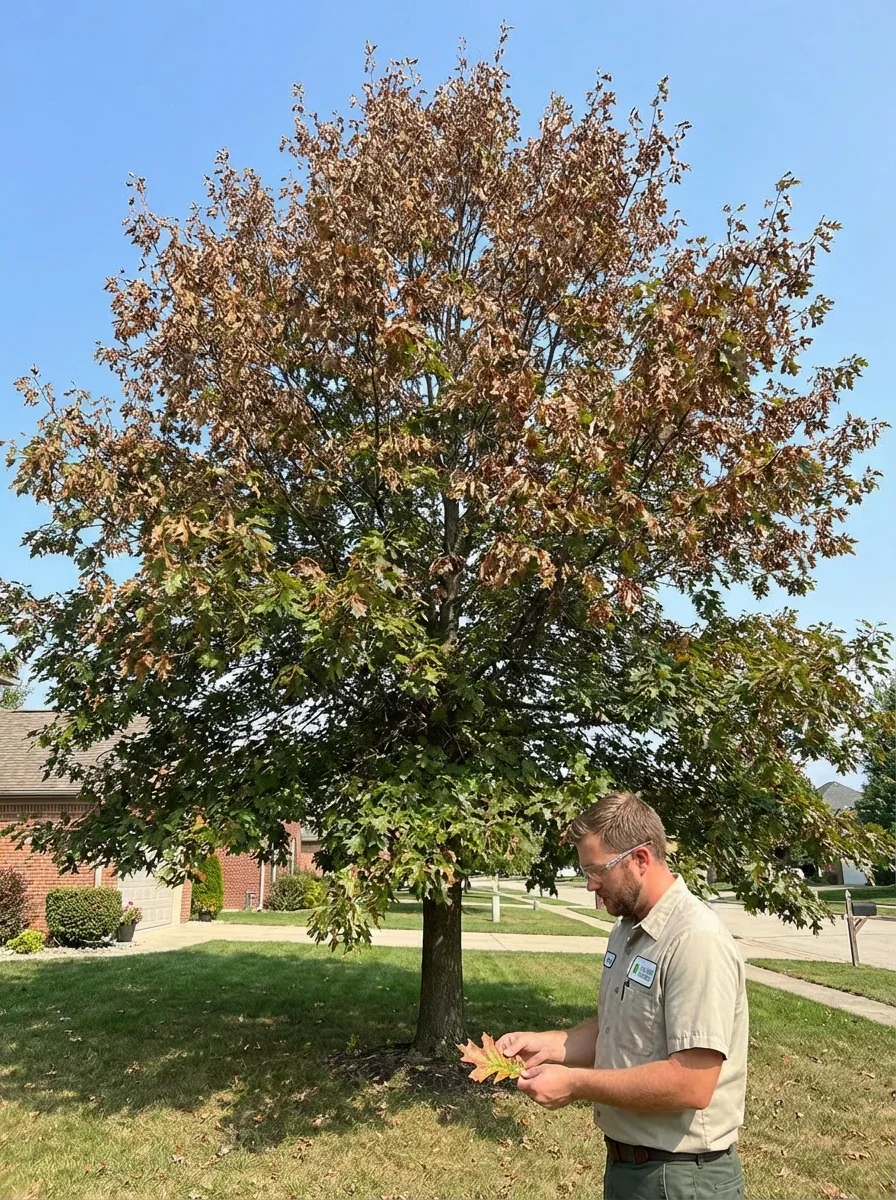
Oak Wilt Symptoms - Is Your Oak Tree Infected?
Read ProblemOak Wilt Treatment vs Prevention: When to Act in Wisconsin
Read Guide
How to Hire an Arborist (Checklist)
Read Guide