




Why Fox Valley Land Clearing Requires Local Expertise
You bought the lot. The builder needs a cleared pad by spring. But between the mature oaks, dense brush, and proximity to Lake Winnebago's watershed, you're looking at wetland permits, erosion control plans, and equipment that won't tear up six inches of precious Wisconsin topsoil.
The raw land you purchased isn't build-ready. Most Fox Valley lots come with decades of growth — trees that need professional removal, stumps that'll interfere with foundations, and brush thick enough to hide drainage issues. You can't grade what you can't see. You can't pour footings around root systems.
In Green Bay and Appleton, the bigger issue is what you can't see: wetland boundaries. The Fox-Wolf watershed system means many lots touch jurisdictional wetlands. Clear the wrong section without a DNR permit and your project stops dead. The city won't issue building permits until you're compliant. We've seen Neenah projects delayed six months because someone with a bulldozer didn't check the wetland maps first.
The cost of doing it wrong? One Oshkosh developer cleared 0.3 acres into a wetland buffer. DNR required mitigation planting, environmental consulting, and a $12,000 restoration. The two-week clearing job became a six-month compliance nightmare.
Then there's timing. Break ground in March on uncleared land and you're working in mud. Wisconsin's freeze-thaw cycle turns cleared sites into quagmires without proper erosion control. The contractors who know Fox Valley handle topsoil preservation differently — our 6-10 inch topsoil layer is half the depth of southern states. Strip it carelessly during clearing and you're trucking in expensive fill before you landscape.
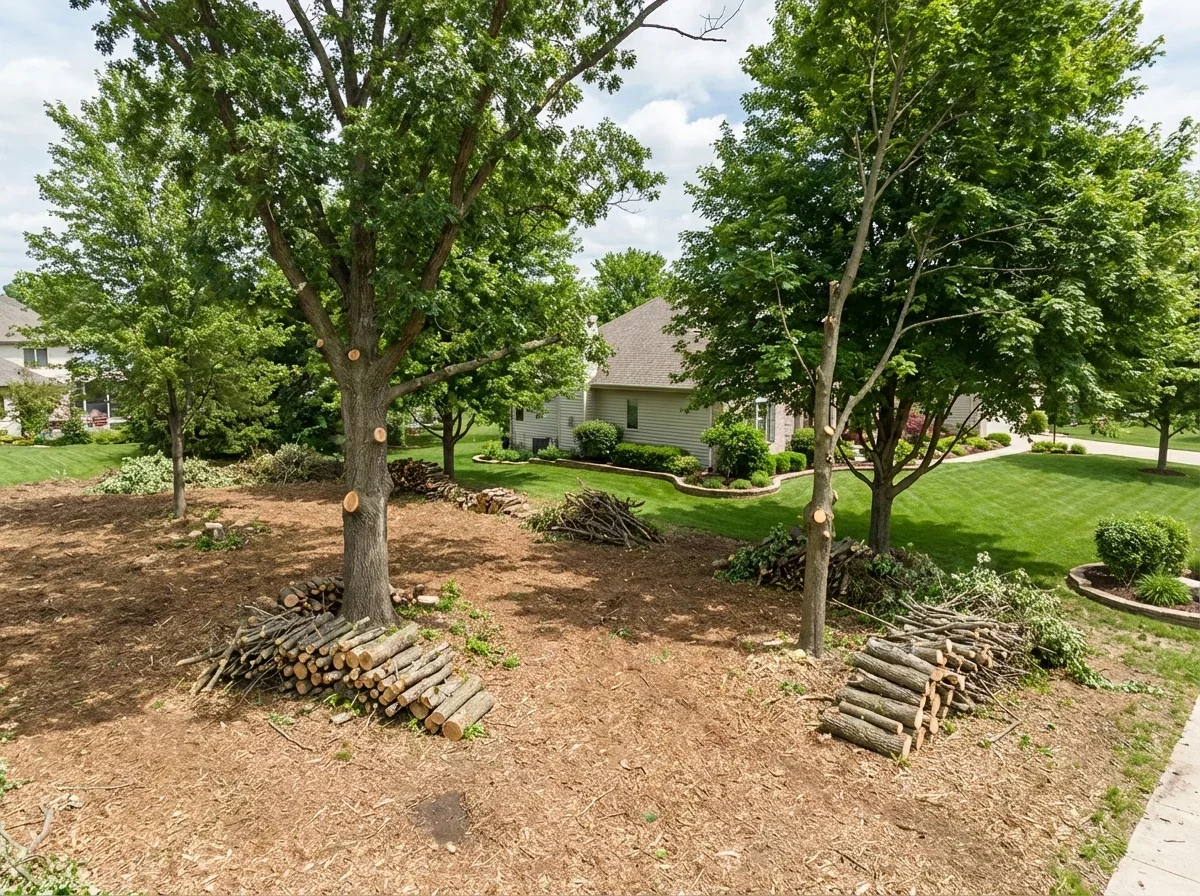
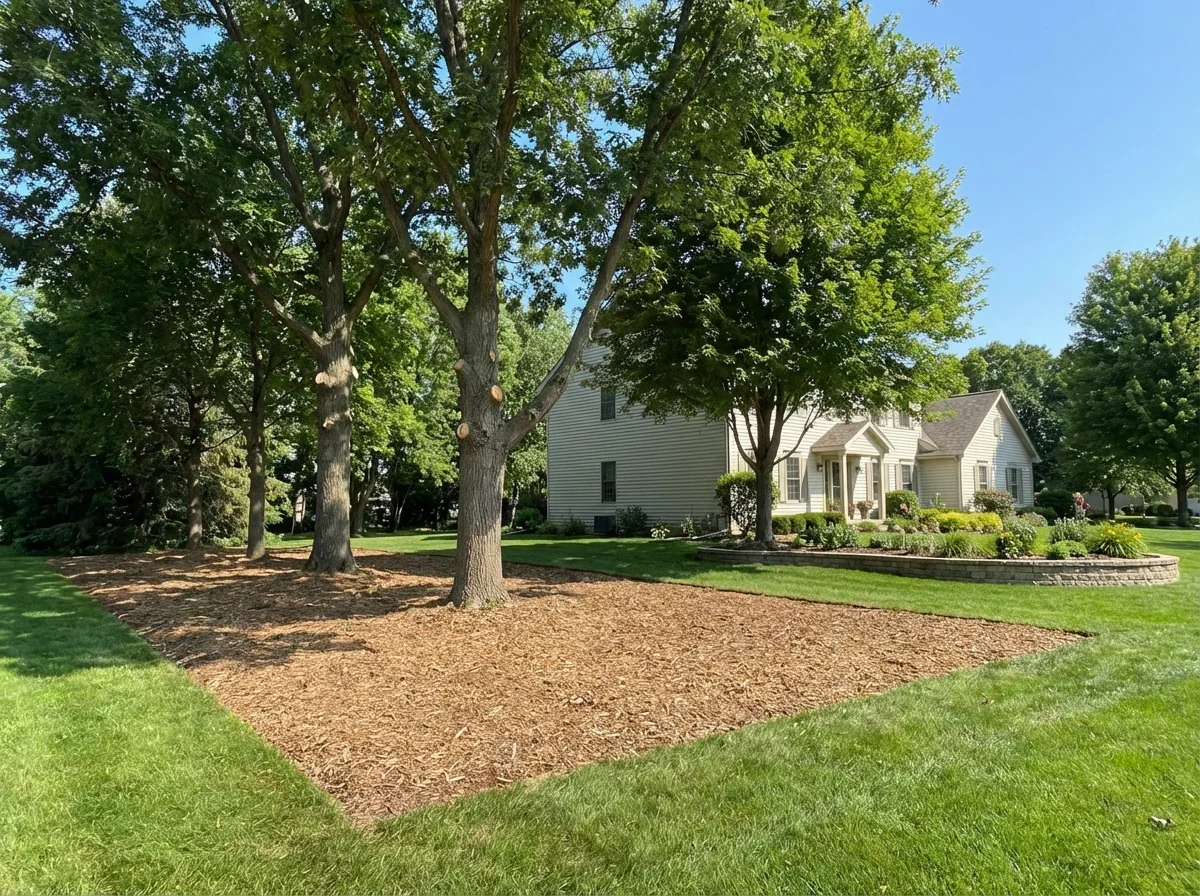
Selective clearing costs more upfront but saves on grading. Builders in Menasha are keeping mature trees as property features rather than clearing everything. It requires forestry mulching equipment and operators who can work around survey stakes. But the lots sell faster and the townships are friendlier to projects that preserve canopy.
You need someone with tracked equipment for Wisconsin clay, wetland delineation experience, and relationships with Fox Valley building departments. This isn't about renting a bulldozer. It's about navigating our regulatory environment while preparing a site that'll pass inspection.
What Does Lot Clearing Cost in the Fox Valley?
Expect $3,000-$15,000+ for most residential and small commercial lots. The wide range reflects acreage, vegetation density, site access, and whether you're near regulated wetlands. Wisconsin land clearing averages $1,763.56 per acre for basic brush and tree removal, with costs ranging from $1,159.60 to $2,367.52 per acre depending on density.[1]
Pricing by Lot Size and Density
| Lot Size | Light Clearing (grass, small brush) | Medium Density (mixed brush, small trees) | Heavy Clearing (mature trees, thick undergrowth) |
|---|---|---|---|
| 0.25 acre (residential) | $1,200 - $2,500 | $3,000 - $5,500 | $6,000 - $9,000 |
| 0.5 acre | $2,000 - $4,000 | $5,000 - $8,500 | $9,000 - $14,000 |
| 1.0 acre | $3,500 - $7,000 | $8,500 - $14,000 | $15,000 - $25,000 |
| 2+ acres (commercial) | $6,000+ | $15,000+ | $30,000+ |
Labor costs run $0.89-$1.45 per square foot for basic clearing work[2], but equipment and disposal drive the real expense. A tracked excavator with a grapple runs $800-$1,200/day. Forestry mulchers cost more ($1,500-$2,500/day) but eliminate debris hauling by grinding everything on-site.
Equipment and Disposal Costs
The machinery matters. Wheeled equipment is cheaper but tears up Wisconsin clay and gets stuck in spring conditions. Tracked excavators distribute weight better and work year-round. Access is critical — if trucks can't reach your Kaukauna lot, you're paying for smaller equipment and more trips.
Stump removal adds $3-$7 per inch of diameter. A 24-inch oak stump runs $75-$175 to grind. Multiply that across a wooded lot and you're adding $2,000-$5,000 to the base clearing cost. Some contractors include stump grinding; others charge separately.
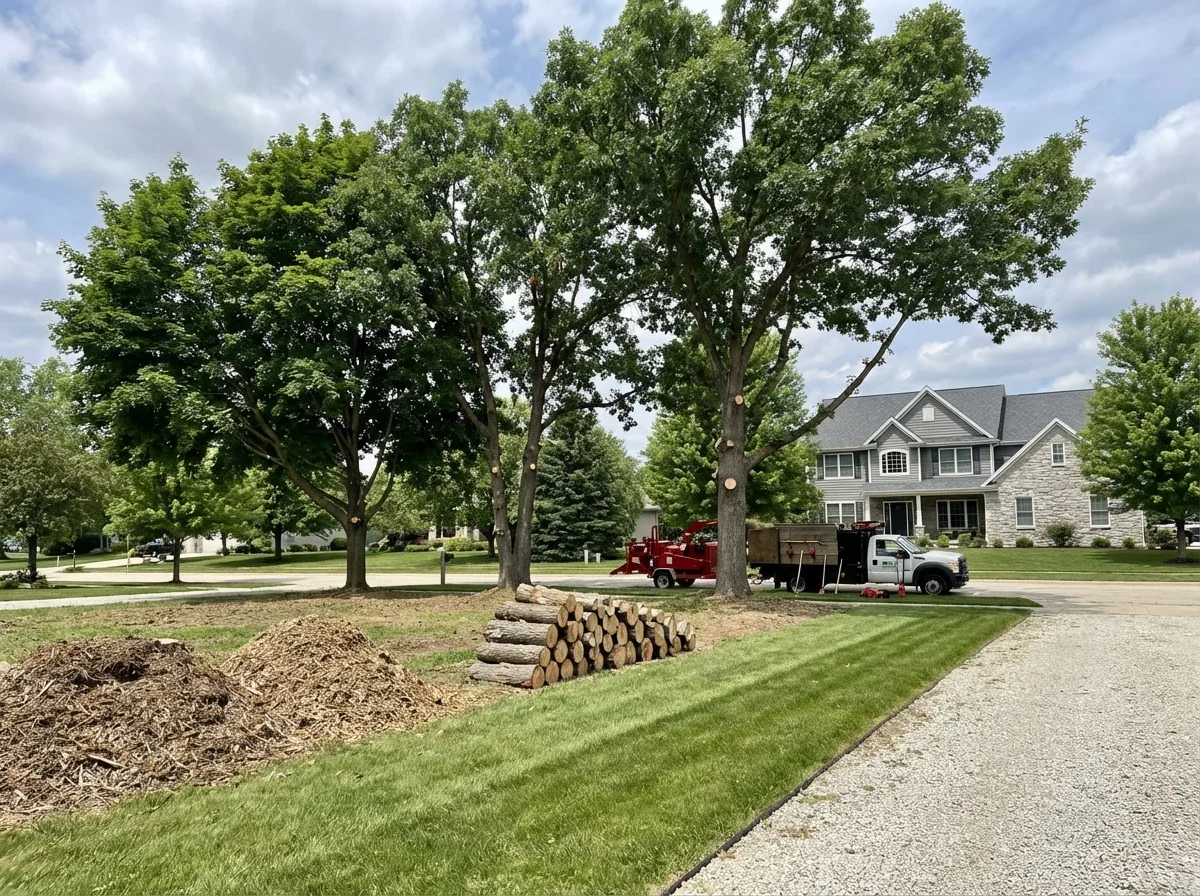
Debris disposal runs $40-$80 per load for a tri-axle dump truck. Burning requires an open burning permit from the DNR (limited to rural areas, restricted April-May and October-November). Most Fox Valley contractors haul to licensed disposal sites or chip material for mulch. If you're clearing in Appleton's city limits, burning isn't an option — factor $1,500-$4,000 for hauling on a typical residential lot.
Hidden Costs: Permits and Erosion Control
Wetland permits through Wisconsin DNR cost $200-$1,000 depending on impact. Environmental consulting for delineation runs $800-$2,500. Erosion control (silt fencing, straw bales, seeding) adds $1,200-$3,000 for a residential lot. These aren't optional if you're within 300 feet of waterways — and much of the Fox Valley is.
If structures exist on the property, demolition costs average $11,629 for buildings with basements, ranging from $7,683 to $15,575 depending on size and foundation type.[1]
The Land Clearing Process
Land clearing in the Fox Valley follows a regulated sequence. Skip steps and you’re dealing with stop-work orders. Good contractors handle permitting, clearing, and final grading as an integrated process.
Site Assessment & Permitting
1–3 WeeksThe contractor walks the property with survey maps and wetland delineation data — identifying property lines, utility easements, drainage patterns, and regulated areas. Wisconsin DNR requires permits for work within 300 feet of navigable waters. Most Fox Valley lots touch the Fox River watershed. Permit approval takes 2–4 weeks. Diggers Hotline (811) marks underground utilities before any equipment rolls.
Erosion Control Installation
Day 1Before any trees fall, silt fencing goes up along property lines and drainage paths. Straw wattles get placed across slopes. These barriers prevent sediment from reaching streets, storm drains, or wetlands. Fox Valley building inspectors check erosion control before they approve clearing work.
Clearing & Debris Removal
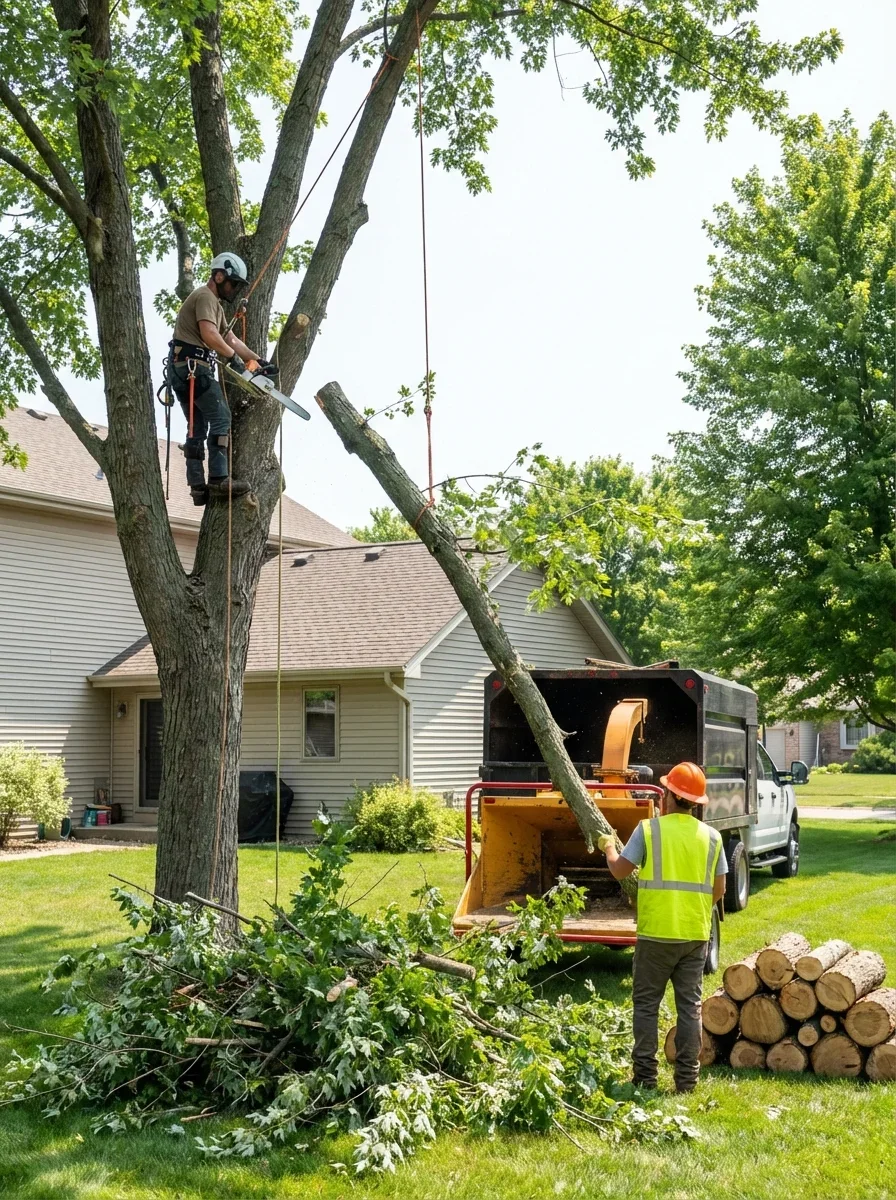
1–5 DaysMethod depends on your end use. Traditional excavator clearing works for sites needing precise grading. Forestry mulching grinds trees into chips on-site — no hauling, no burn permits. Selective clearing preserves mature trees at higher cost but lots with established trees sell at a premium in Green Bay’s residential market.
Stump Grinding & Grading
1–3 DaysGrinding machines remove stumps 6–12 inches below grade. The contractor grades the site to establish drainage away from building areas, preserving Wisconsin’s 6–10 inch topsoil layer by stripping and stockpiling it for final landscaping.
Final Inspection & Stabilization
CompletionErosion control stays in place until the site is stabilized with seeding or sod. Building inspectors verify grade, drainage, and compliance before releasing permits for construction. The cleared lot is ready for foundation work.
How to Choose a Land Clearing Contractor
The wrong contractor turns a straightforward clearing job into a regulatory mess. Fox Valley land clearing requires specific equipment, local permit knowledge, and understanding of Wisconsin's environmental rules. Here's how to separate the qualified contractors from the guys with a rented bulldozer.
Insurance, Licensing, and Equipment Requirements
Verify general liability insurance of at least $2 million. Land clearing involves heavy equipment near property lines, utilities, and often public roads. If an excavator damages a neighbor's foundation or severs a gas line, you need to know the contractor's insurance covers it. Ask for a certificate of insurance naming you as additional insured.
Check for environmental liability coverage if the property has wetlands or is near waterways. Standard GL policies don't always cover DNR violations or wetland restoration costs. Contractors who regularly work in regulated areas carry specific environmental policies.
Look at their equipment list. Tracked excavators are essential for Wisconsin soil. Wheeled loaders are cheaper to operate but get stuck in clay and cause rutting. Forestry mulchers, stump grinders, and dump trucks should be owned or under long-term lease — not rented for your job. Equipment breakdowns on rental machines cause delays.
Questions to Ask Before You Hire
"Have you cleared lots in [your city] before, and can you provide references?" Fox Valley municipalities have different erosion control requirements. An Appleton contractor knows city inspectors and understands local enforcement. Someone from out of the region doesn't.
"How do you handle wetland permitting?" The right answer involves environmental consultants, DNR coordination, and permit timelines. If they say "we'll deal with it if it comes up," walk away.
"What's your debris disposal method, and is it included in the bid?" Burning, hauling, chipping — each has different costs and timelines. Make sure disposal isn't a surprise add-on.
"Do you strip and preserve topsoil?" Critical if you're building a home. Contractors who don't preserve topsoil are used to commercial pads, not residential lots where landscaping matters.
Red Flags That Signal Problems
Unwillingness to provide proof of insurance or references. Verbal bids without written contracts detailing scope, timeline, and disposal methods. Pressure to start before permits are secured. Prices significantly below other quotes — usually means they're skipping erosion control, proper disposal, or permit compliance.
Local knowledge saves money and headaches. A contractor familiar with Neenah's building department knows which inspectors are sticklers for erosion control. Someone who's worked near the Fox River understands setback requirements. That experience prevents expensive do-overs.
Compare at least three contractors with specific Fox Valley experience. Check online reviews, verify insurance, and ask for photos of similar completed projects. The directory listings here connect you with clearing professionals who work regularly in Appleton, Green Bay, and throughout the Fox Valley — contractors who know our soil, our regulations, and our seasonal challenges.
Frequently Asked Questions
Land clearing costs are high because the work is labor-intensive and involves multiple phases. The density and type of vegetation directly drive price: heavily wooded areas with mature trees and thick underbrush require significantly more labor, equipment, and time than lighter vegetation removal. Additionally, debris disposal—including chipping, hauling, or burning—adds substantial cost. In Wisconsin, clearing costs typically range from $1,000–$5,000+ per acre depending on vegetation density, accessibility, and local disposal fees.
- ProMatcher Cost Report. "Wisconsin Land Clearing Costs & Prices." https://land-clearing.promatcher.com/cost/wisconsin.aspx. Accessed February 11, 2026.
- HomeWyse. "Cost to Clear Land - 2026 Cost Calculator." https://www.homewyse.com/services/cost_to_clear_land.html. Accessed February 11, 2026.
Related Articles
How to Hire an Arborist (Checklist)
Read GuideLot Clearing Cost: What to Expect for Land Preparation in Wisconsin
Read Cost Guide
Dead Tree in Yard - What to Do
Read ProblemLot Clearing Cost: What to Expect for Land Preparation in Wisconsin
Read GuideWhen to Remove a Tree: Signs It's Time vs. When You Can Wait
Read Guide