Common Tree Pests in the Fox Valley
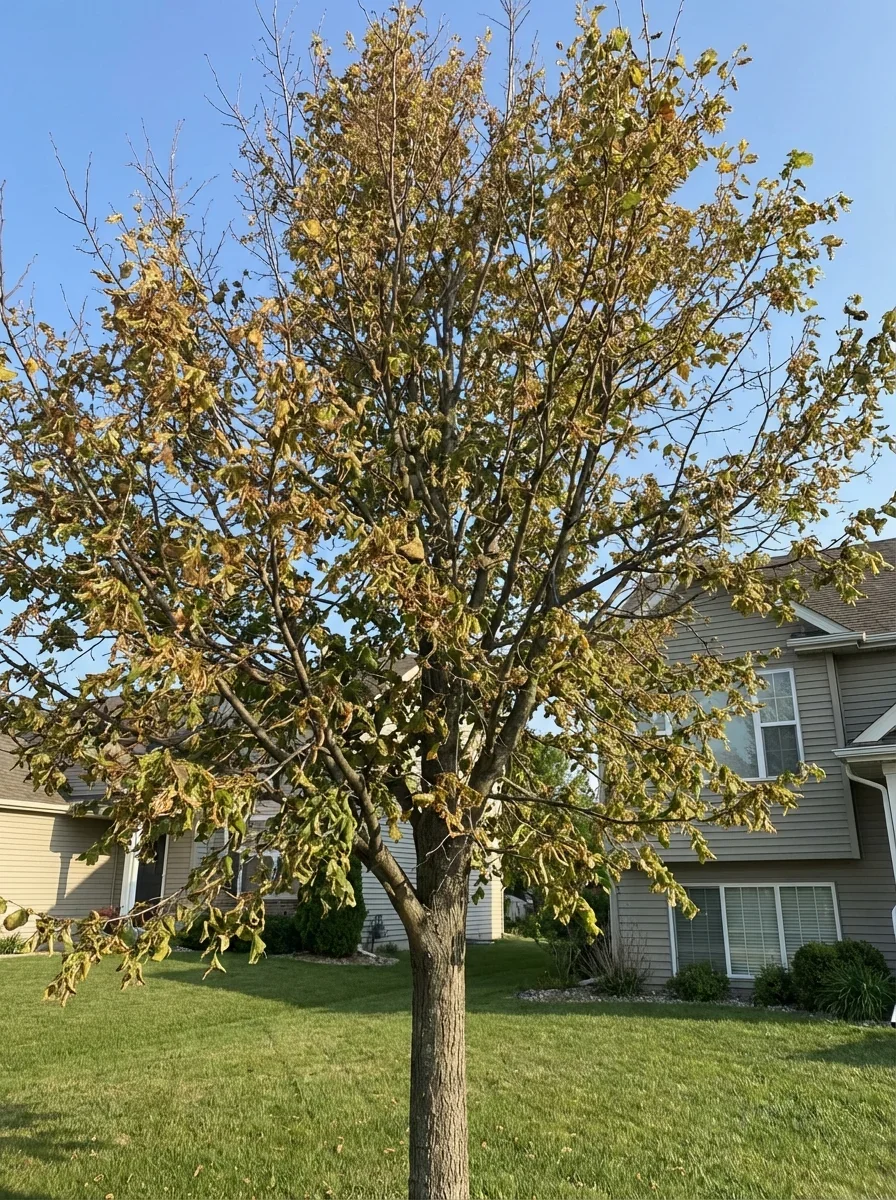
You're staring at a tree that doesn't look right. Leaves yellowing in July when the neighbors' oaks are dark green. Small holes peppered across the trunk. Sticky residue coating your car underneath the canopy. Something's feeding on your tree, and you're watching the decline accelerate.
Most property owners in Appleton and Oshkosh call an arborist after months of visible damage — when the pest population has multiplied and stress has weakened the tree's defenses. By then, treatment becomes more expensive and less effective. The earlier you catch an infestation, the better your odds of saving the tree without permanent structural damage.
Spring and Early Summer Threats
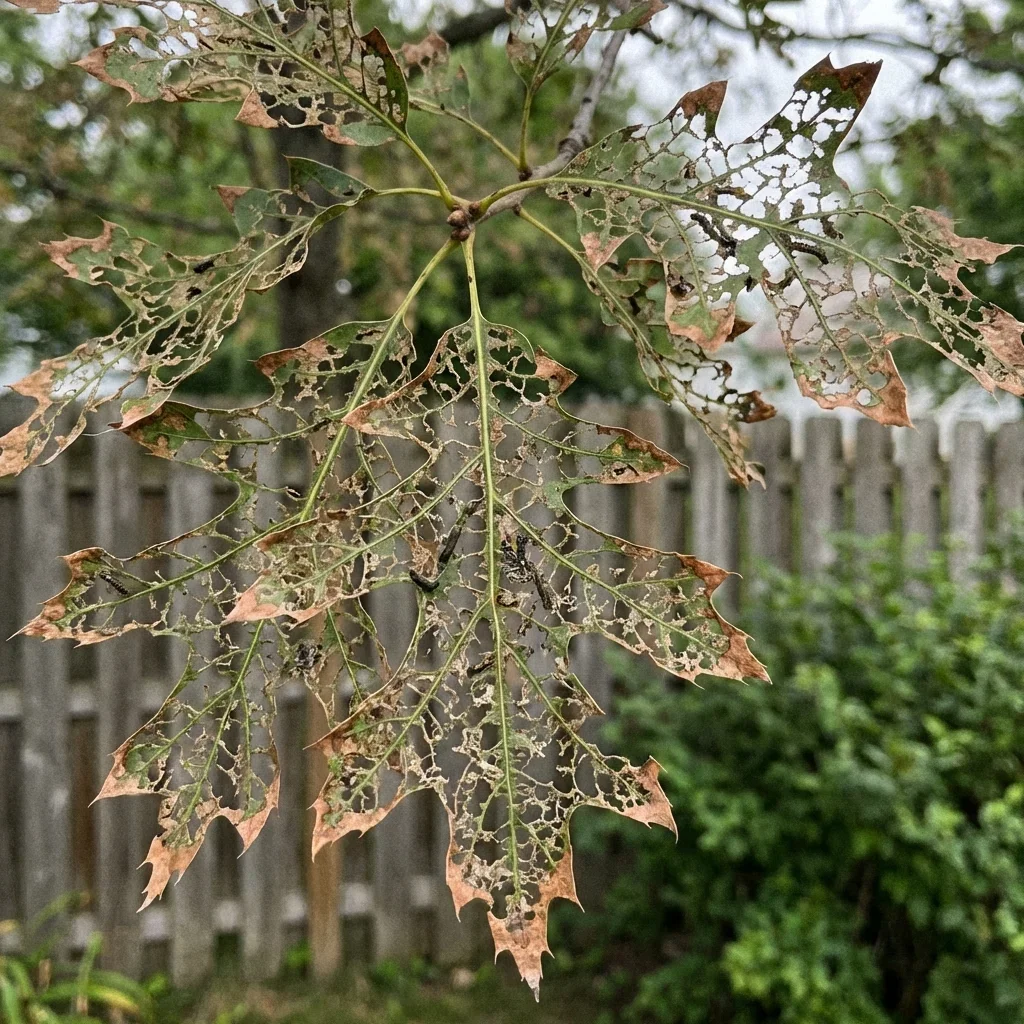
Aphids, tent caterpillars, and leaf-feeding insects emerge with the first warm weeks. You'll see webbing in branch crotches, clusters of insects on new growth, or leaves that look skeletonized by mid-May. Honeydew drips from infested branches — that sticky film that coats everything underneath and turns black with sooty mold within days.
Eastern tent caterpillars build conspicuous silk nests in crabapples and cherries across Green Bay and Neenah. They're unsightly but rarely kill mature trees. Spring cankerworms strip oak foliage in waves, defoliating entire canopies before homeowners realize it's not storm damage.
Early season pests respond well to targeted foliar sprays if treated during active feeding periods. Miss the window and you're watching leaf damage accumulate with no recourse until next year's hatch.
Borers and Wood-Damaging Insects
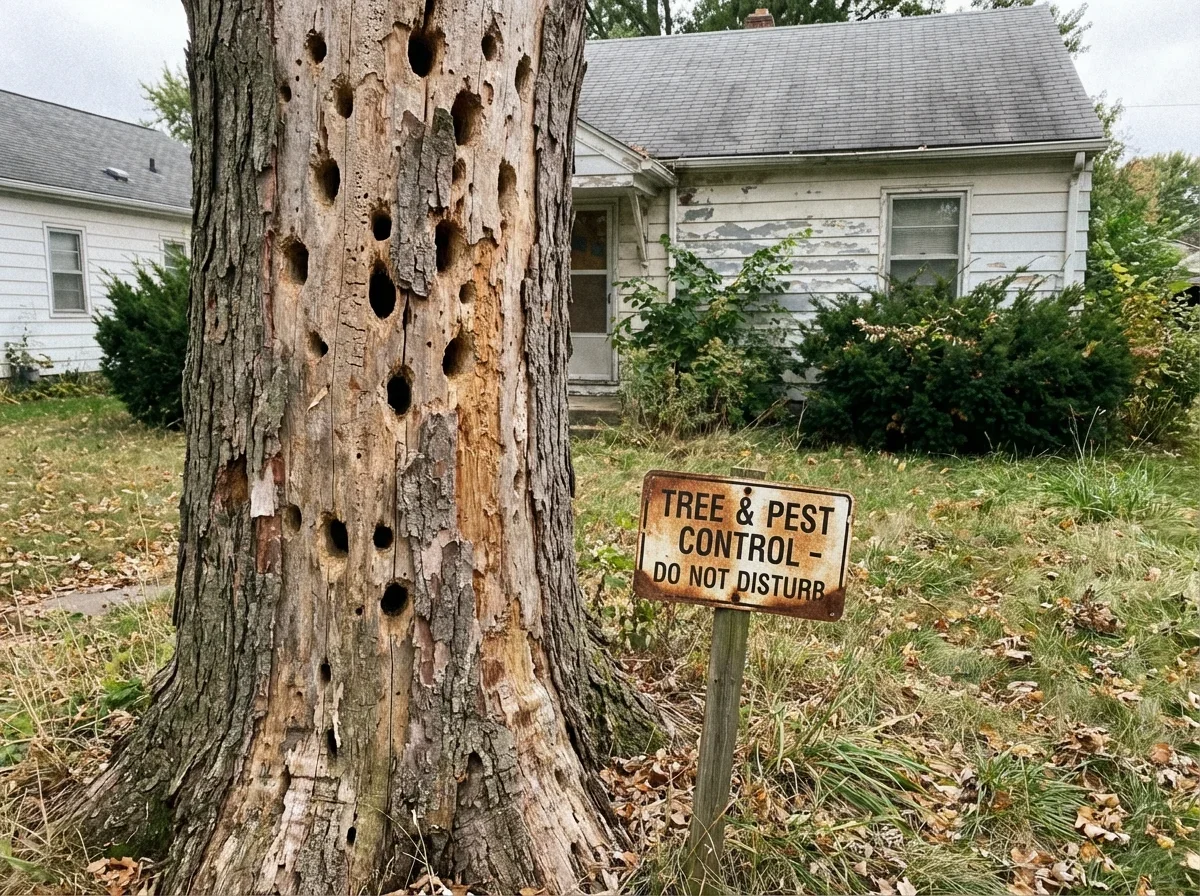
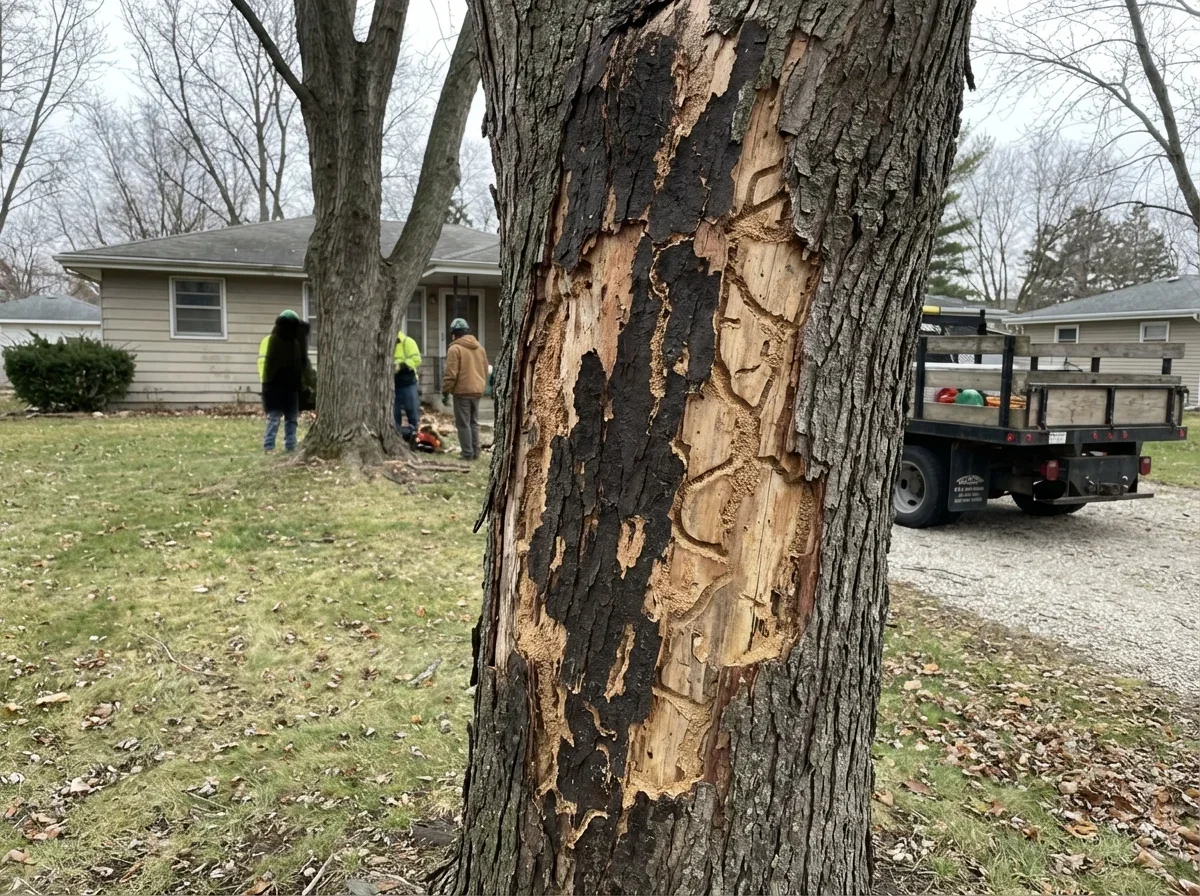
Bronze birch borer and emerald ash borer don't announce themselves with webbing or visible insects. You notice the tree declining — canopy thinning from the top down, bark splitting vertically, woodpeckers suddenly interested in the trunk. By the time you see D-shaped exit holes, the larvae have been tunneling under the bark for months, girdling nutrient pathways.
Fox Valley sits squarely in Wisconsin's EAB quarantine zone[1]. Every ash tree in Winnebago, Outagamie, and Calumet Counties is at risk. Property owners in Kaukauna and Menasha face a choice: treat valuable ash trees preventively with systemic insecticides, or budget for removal when the infestation becomes severe enough to compromise structural integrity.
The math is brutal. Preventive trunk injections cost $200-$400 every two years for a mature ash. Removal and stump grinding runs $1,500-$3,500 depending on size and access. Treatment makes financial sense if the tree has value — shade coverage, aesthetic prominence, healthy root structure. Once canopy loss exceeds 50%, removal becomes the safer bet.
Bronze birch borers target stressed birch trees — drought, poor soil, transplant shock all increase vulnerability. White-barked birches decline fastest. Once borers establish, treatment focuses on tree vigor as much as insect suppression. Soil drenches with systemic insecticides combined with proper watering and mulching give infested birches a fighting chance.
Scale, Mites, and Sap-Feeders
Scale insects look like barnacles coating branches and trunks. They're stationary, feeding in place and reproducing underneath protective shells. Heavy infestations cause branch dieback, early leaf drop, and sooty mold from honeydew secretions. Oystershell scale attacks ash and poplar throughout the Fox Valley. Magnolia scale — the largest soft scale in North America — drips so much honeydew it's visible from across the yard.
Spider mites thrive in hot, dry summers. Evergreens show bronzing or stippling as mites drain cell contents from needles. By August, honeylocust and spruce in full sun look drought-stressed even with adequate water. Shake a branch over white paper — if tiny specks start moving, you've got mites.
Timing is everything with scale and mites. Dormant oil applications in early spring smother overwintering eggs before hatch. Foliar sprays target the vulnerable crawler stage when immature scale migrate to new feeding sites. Treat too early or too late and the protective shell or rapid reproduction overwhelms contact insecticides.
What Does Tree Pest Control Cost in the Fox Valley?
Pricing depends on tree size, pest type, treatment method, and property access. A single foliar spray application for aphids on a young maple costs substantially less than systemic trunk injections for EAB protection on a 60-foot ash.
Treatment Type and Cost Breakdown
| Treatment Method | Cost Range | Efficacy Duration | Best For |
|---|---|---|---|
| Foliar Spray (per tree) | $75-$200 | Single season | Aphids, caterpillars, early-season leaf feeders |
| Trunk Injection (systemic) | $200-$500 | 1-2 years | Emerald ash borer, bronze birch borer, adelgids |
| Soil Drench (systemic) | $150-$350 | 1-2 years | Scale, borers, root-applied for smaller trees |
| Dormant Oil Application | $100-$250 | Prevents spring hatch | Overwintering scale, mite eggs, adelgids |
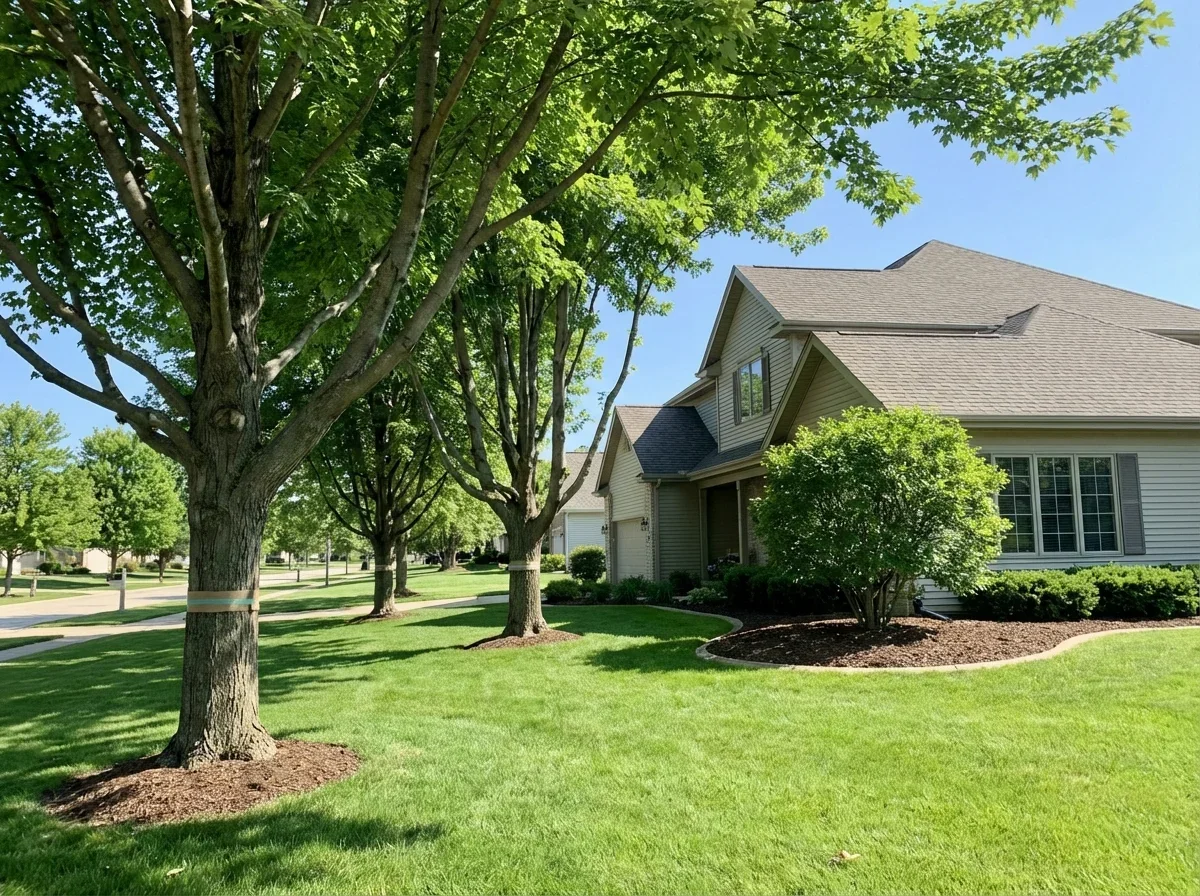
Systemic trunk injections cost more upfront but deliver targeted, long-lasting protection[2]. The insecticide travels through the tree's vascular system, concentrating in leaf tissue and cambium where borers and leaf-feeders cause damage. For EAB management in Appleton and Green Bay, injections every 1-2 years keep ash trees healthy when applied before canopy loss exceeds 30%.
Foliar sprays work fast but require precise timing. You're paying for the application plus the arborist's knowledge of pest life cycles — hitting the brief window when caterpillars are actively feeding or scale crawlers are mobile. A single mistimed spray wastes money with zero pest suppression.
Per-Tree vs Property-Wide Pricing
Most arborists price pest control per tree with volume discounts for multiple specimens. Treating 1-2 trees costs the full per-tree rate. Five trees or more on the same property typically brings per-unit costs down 15-25%.
Property-wide programs for high-value landscapes run $500-$1,500 annually depending on tree count, species mix, and treatment frequency. These contracts include spring and summer monitoring, seasonal treatments timed to local pest pressures, and follow-up applications if infestations break through initial control.
A 40-foot oak with tent caterpillars — single foliar spray in May: $150-$200.
Three mature ash trees, preventive EAB injections: $600-$1,200 every two years.
Mixed landscape with 8 trees (maples, birch, spruce) — comprehensive IPM program with dormant oil, spring spray, and monitoring: $800-$1,400 annually.
Wisconsin arborists operating in EAB quarantine zones often bundle ash treatment into annual care packages since every untreated ash is on a countdown to infestation. The earlier you start preventive injections, the better your odds of maintaining healthy canopy density as borers spread through Oshkosh and Neenah neighborhoods.
Removal costs dwarf treatment costs for significant landscape trees. A mature ash removal averages $2,000-$4,000 in the Fox Valley. If that tree shades your house, drops property value, or anchors curb appeal — five years of preventive treatment ($1,000-$2,000 total) beats one removal bill every time.
The Tree Pest Treatment Process
Professional pest control starts with accurate identification. Half the insect damage homeowners report turns out to be disease, abiotic stress, or secondary symptoms from root problems. You're paying an arborist to diagnose what's actually attacking your tree before committing to treatment.
Inspection and Pest Identification
The arborist examines canopy condition, bark integrity, and signs of insect activity — exit holes, frass accumulation, webbing, honeydew, sawdust, or feeding patterns on leaves. They look for life stages: egg masses, larvae, adult insects, or protective scale coverings. Some pests leave distinctive signatures — D-shaped holes mean EAB, bronze sawdust at the base indicates bronze birch borer, tent webbing confirms caterpillars.
For borers and internal feeders, diagnosis often involves symptoms rather than seeing live insects. Canopy thinning from the top down, bark splitting, woodpecker damage, and epicormic sprouting (shoots emerging from the trunk) all indicate cambium stress from larvae tunneling beneath bark.
Timing the inspection matters. Spring inspections catch overwintering pests and early hatch. Mid-summer checks reveal borer activity and scale populations. Fall assessments determine if treatments worked and guide next year's strategy.
Treatment Selection and Application
Once the pest is identified, the arborist recommends treatment based on pest life cycle, tree species, infestation severity, and seasonal timing. Foliar sprays require calm weather and dry conditions for 24 hours post-application. Trunk injections work best during active growth periods when sap flow distributes insecticide throughout the canopy. Soil drenches go down in spring or fall when roots actively absorb nutrients.
Systemic treatments for EAB in Fox Valley ash trees follow strict timing windows — late spring through mid-summer when the tree is transpiring and vascular uptake is strongest[2]. Injection sites are drilled strategically around the trunk circumference, sealed with caps after insecticide delivery to prevent pathogen entry.
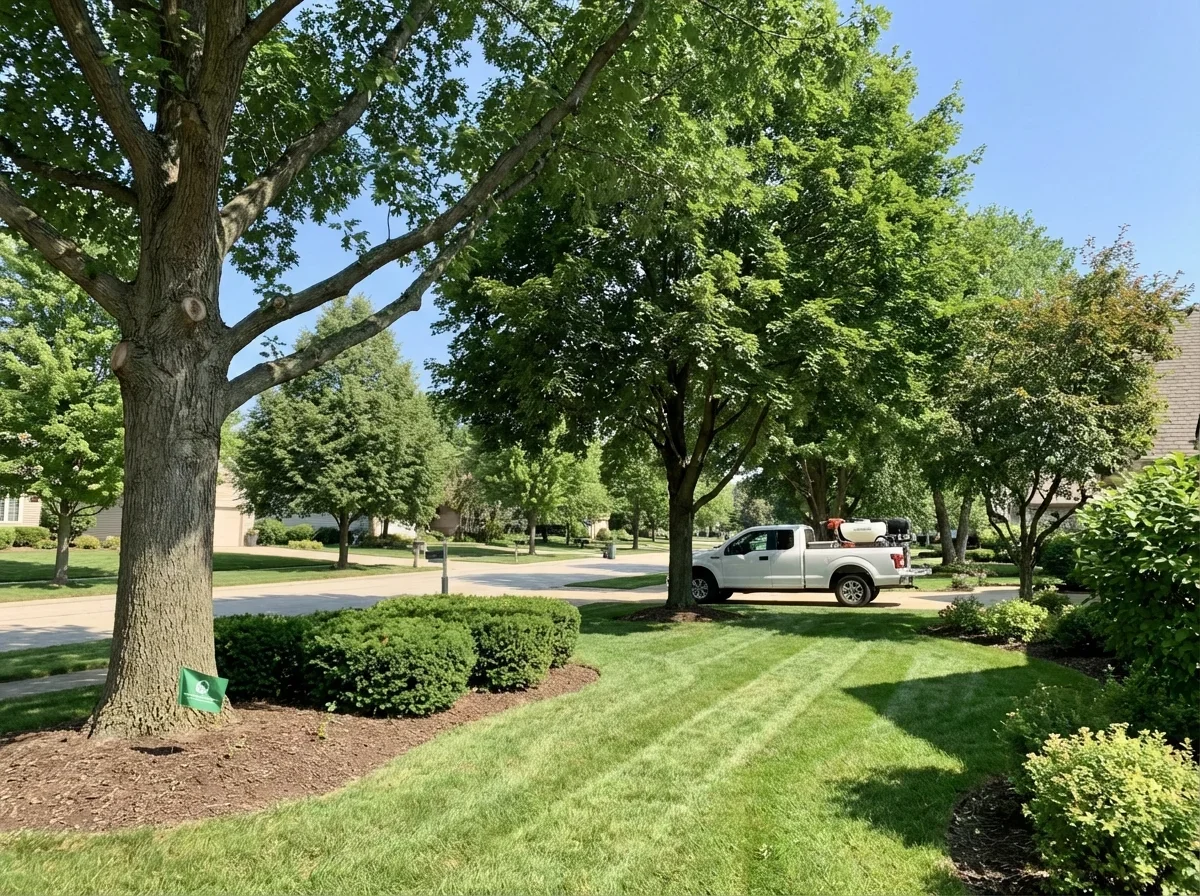
Foliar applications use backpack sprayers or truck-mounted systems depending on tree height and canopy access. The goal is full coverage on leaf surfaces where feeding occurs. Under-canopy drift requires notifying neighbors if adjacent properties are within spray range.
Follow-Up and Monitoring
Treatment isn't one-and-done for most tree pests. Foliar sprays may need reapplication if populations surge or life cycles produce multiple generations per season. Systemic injections provide 1-2 years of protection but require reapplication before efficacy drops off.
Monitoring visits confirm treatment success — reduced pest populations, improved canopy density, elimination of feeding damage on new growth. For EAB management, annual inspections track ash health and adjust treatment schedules based on borer pressure in the surrounding area.
If a tree doesn't respond to treatment, the arborist reassesses. Sometimes the primary issue wasn't the insect — borers and scale infest stressed trees preferentially. Addressing soil compaction, drainage problems, or root damage alongside pest control gives the tree better odds of recovery.
How to Choose a Tree Pest Control Service
You need someone who knows the difference between bronze birch borer and two-lined chestnut borer by damage pattern alone. Misidentification leads to wrong treatments, wasted money, and trees that keep declining while you think you're solving the problem.
Wisconsin Certified Arborists carry credentials that require continuing education on regional pest pressures, including EAB management protocols for quarantine zones[1]. Ask if the company employs certified applicators with pesticide licenses — Wisconsin law requires licensing for commercial insecticide applications. Verify they carry liability insurance covering chemical applications. Property damage from overspray or equipment isn't theoretical.
Questions to Ask Before Hiring
- What pest do you think is damaging the tree, and how did you identify it?
- What treatment method do you recommend, and why that approach over alternatives?
- What's the treatment timing, and how does that align with the pest's life cycle?
- How long will protection last, and when should retreatment occur?
- What happens if the infestation persists after treatment?
Legitimate arborists explain their diagnosis and treatment rationale. If they can't name the pest species and explain why their timing is optimal — keep looking.
Treatment Options and IPM Practices
Integrated Pest Management prioritizes tree health and targeted interventions over calendar-based spraying. An arborist following IPM principles assesses pest thresholds (is the population actually damaging the tree or just present?), considers non-chemical alternatives first, and uses selective insecticides that minimize impact on beneficial insects.
Ask about treatment options: "Do you offer trunk injections or only spray applications?" For EAB in Kaukauna and Menasha, injections are the gold standard — more expensive but dramatically more effective than foliar sprays that can't reach cambium-feeding larvae.
Beware contractors pushing whole-property spray treatments without inspecting individual trees. Blanket applications kill pollinators, beneficial predators, and cost more than targeted treatments based on actual pest presence.
Timing and Seasonal Scheduling
Fox Valley pest pressures follow predictable seasonal patterns. Dormant oil applications happen in March before budbreak. Spring caterpillar sprays target early May hatch. EAB injections window from late May through July. Fall treatments prep trees for overwintering pests.
An arborist who can't explain seasonal timing either doesn't understand local pest cycles or isn't prioritizing efficacy. If they offer to spray your ash tree in September for EAB when vascular uptake is shutting down — they're selling services, not solutions.
Ask when they schedule treatments and how that aligns with pest biology in the Fox Valley. Experienced contractors track local hatch timing, degree day accumulation, and outbreak patterns across Appleton, Oshkosh, and Green Bay. That regional knowledge determines whether your treatment works or wastes money.
Compare multiple arborists. Look for consistency in pest identification, treatment recommendations, and timing explanations. If three arborists say bronze birch borer and one claims it's oak wilt — go with the majority who can show you the diagnostic evidence.
Frequently Asked Questions
The average cost to remove a tree in Wisconsin is $1,200 per tree, with typical costs ranging from $900 to $1,400. Your final cost depends on several factors:
- Tree size — small trees (<30 ft) cost $300–$800; medium trees (30–60 ft) cost $800–$1,500; large trees (>60 ft) cost $1,500–$3,500+
- Tree condition — dead, diseased, or hazardous trees may cost more due to safety complexity
- Location — proximity to structures, power lines, or fences increases risk and labor
- Access — trees in backyards with limited equipment access cost more than roadside trees
- Stump removal — add $150–$400 for grinding; $50–$200 for chemical treatment
- Debris removal — chip and haul services may add $200–$500 depending on volume
Get multiple quotes from licensed Wisconsin arborists for accurate estimates.
- Wisconsin Department of Agriculture, Trade and Consumer Protection. "Emerald Ash Borer." https://datcp.wi.gov/Pages/Programs_Services/EAB.aspx. Accessed February 10, 2026.
- Wisconsin Department of Natural Resources. "Forest Pest - Emerald Ash Borer." https://dnr.wi.gov/topic/foresthealth/emeraldashborer.html. Accessed February 10, 2026.
Related Articles
How Much Does an Arborist Cost?
Read Cost Guide
How to Hire an Arborist (Checklist)
Read Guide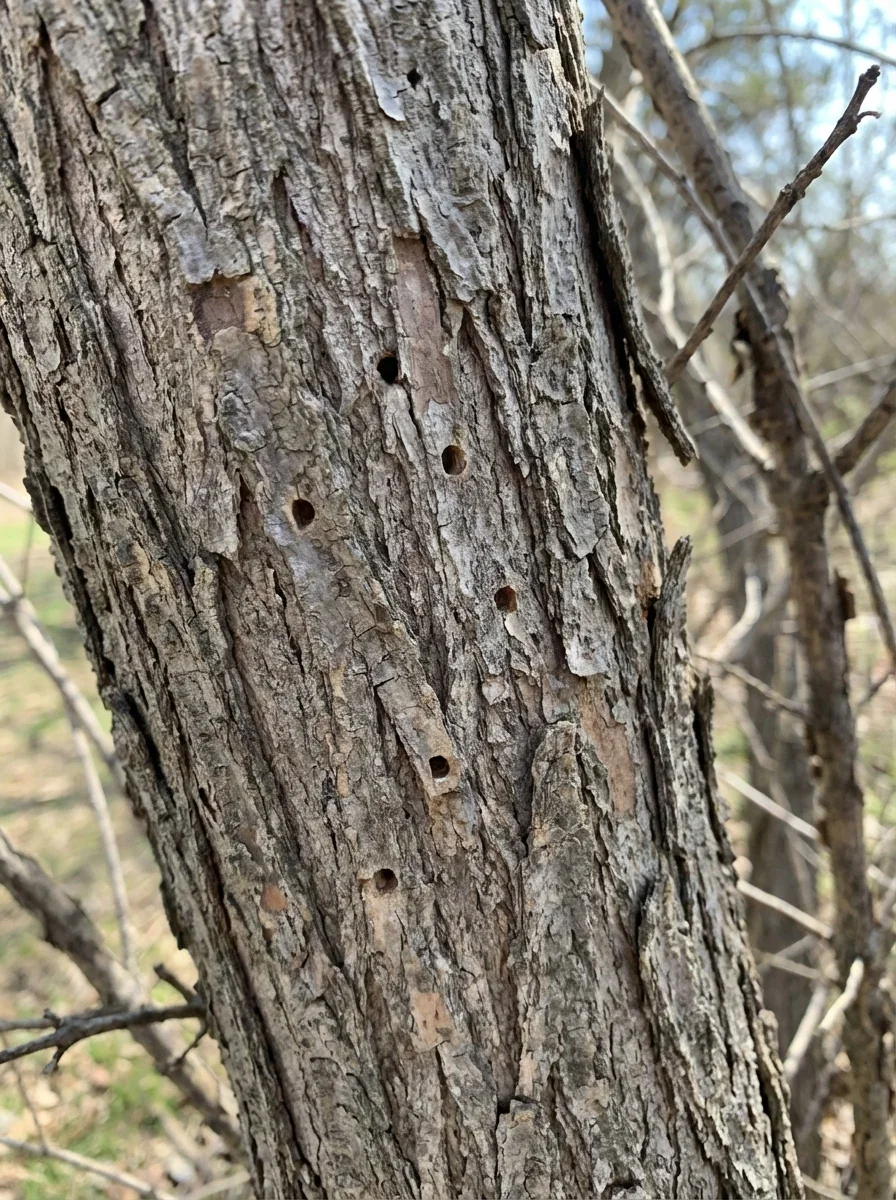
Ash Tree Dying? Signs of Emerald Ash Borer
Read Problem