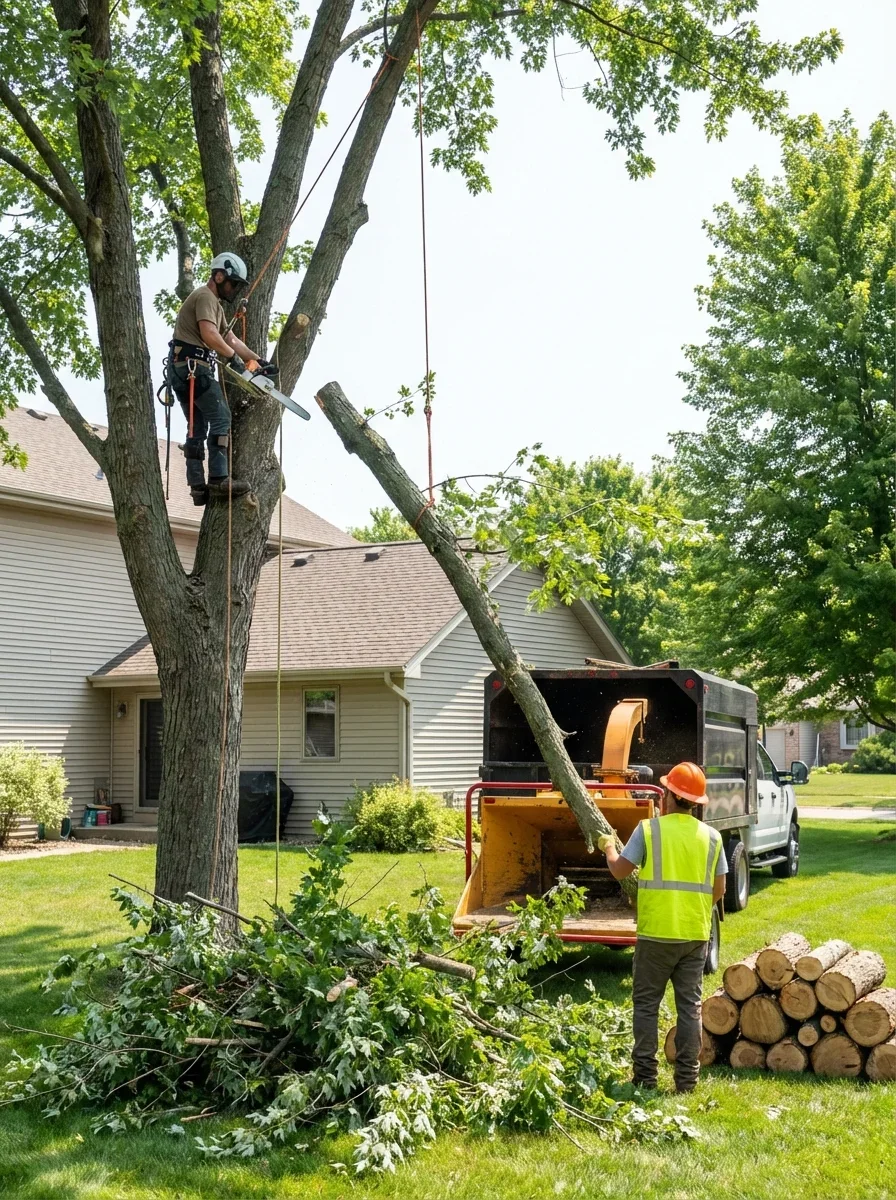
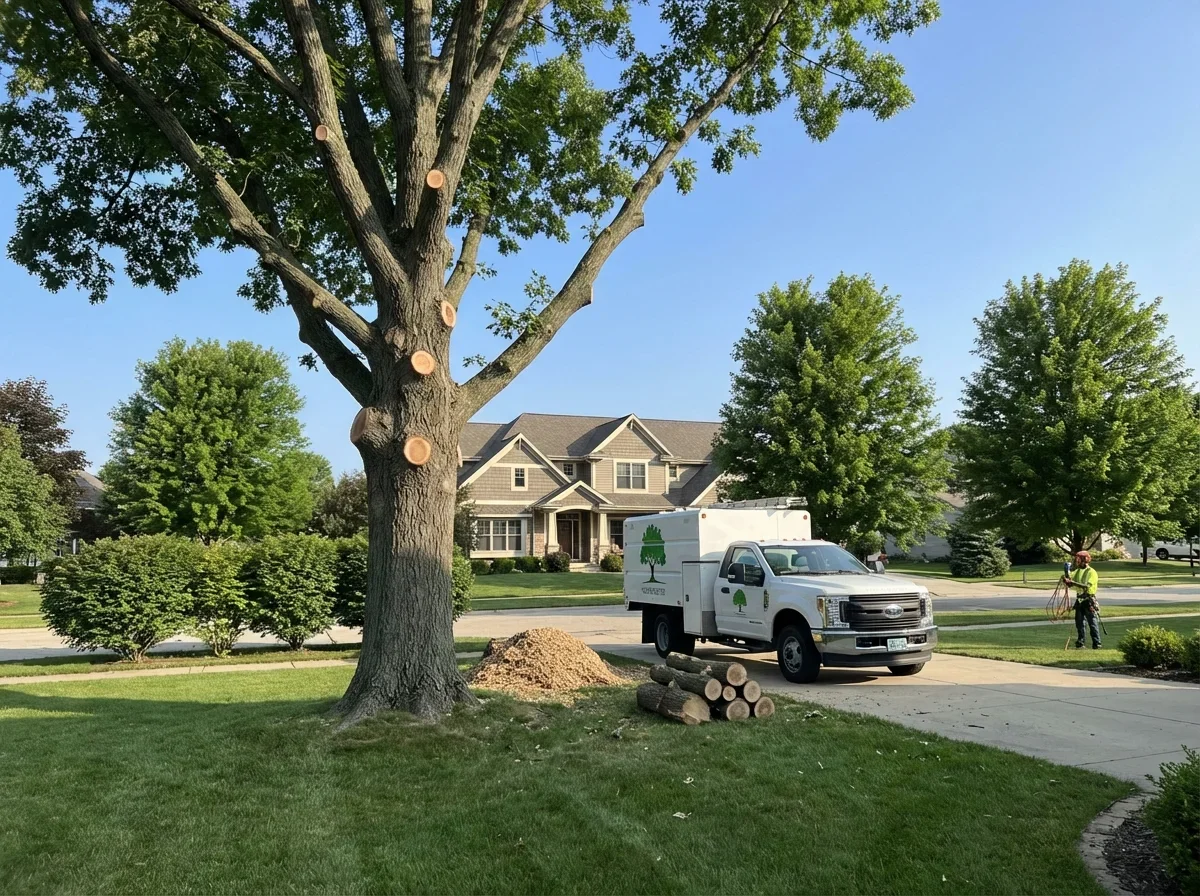




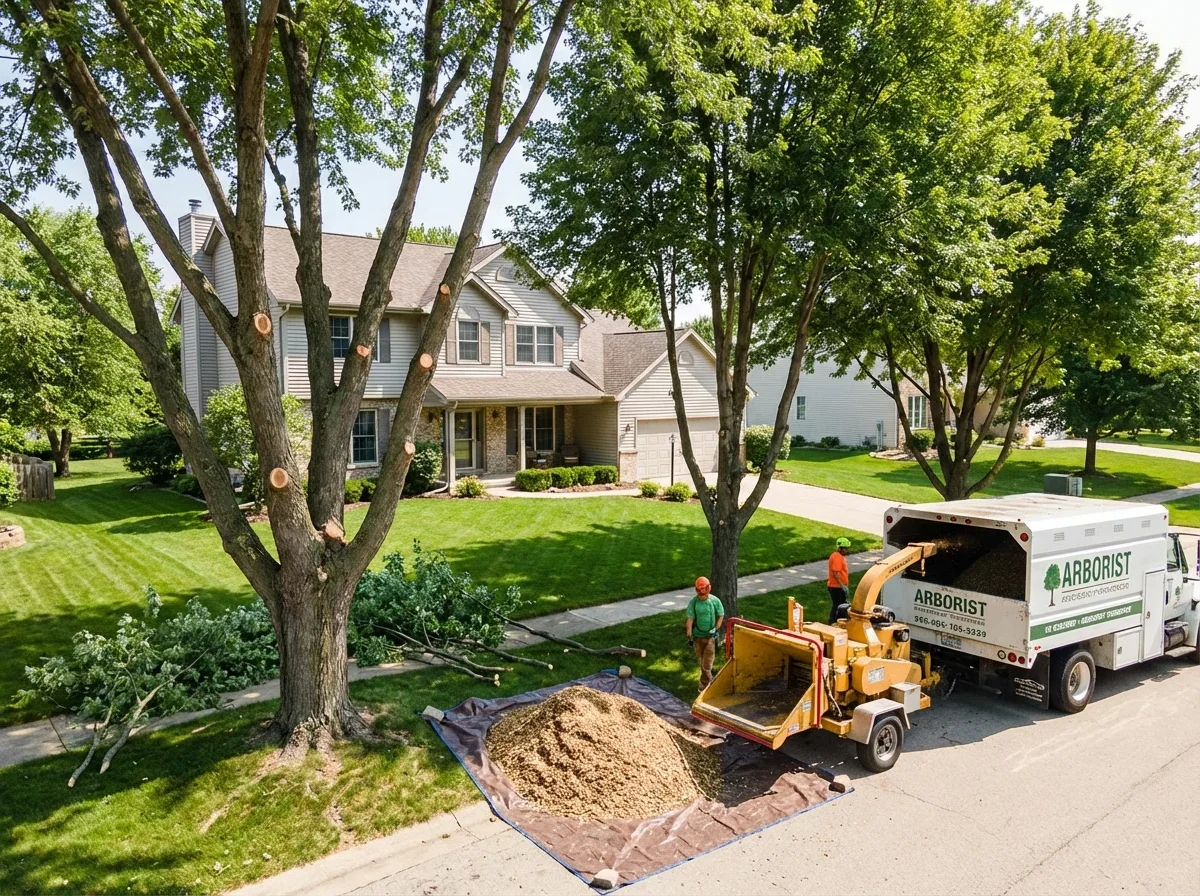
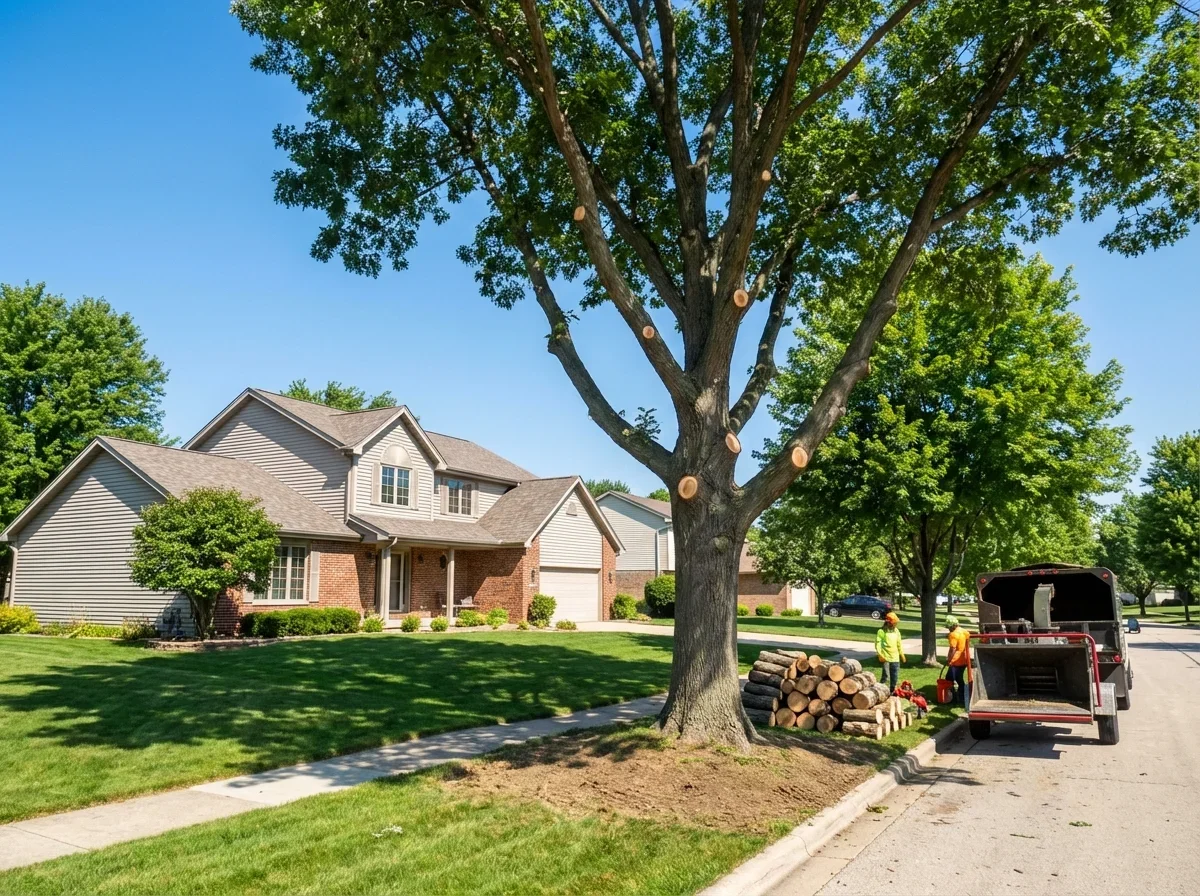
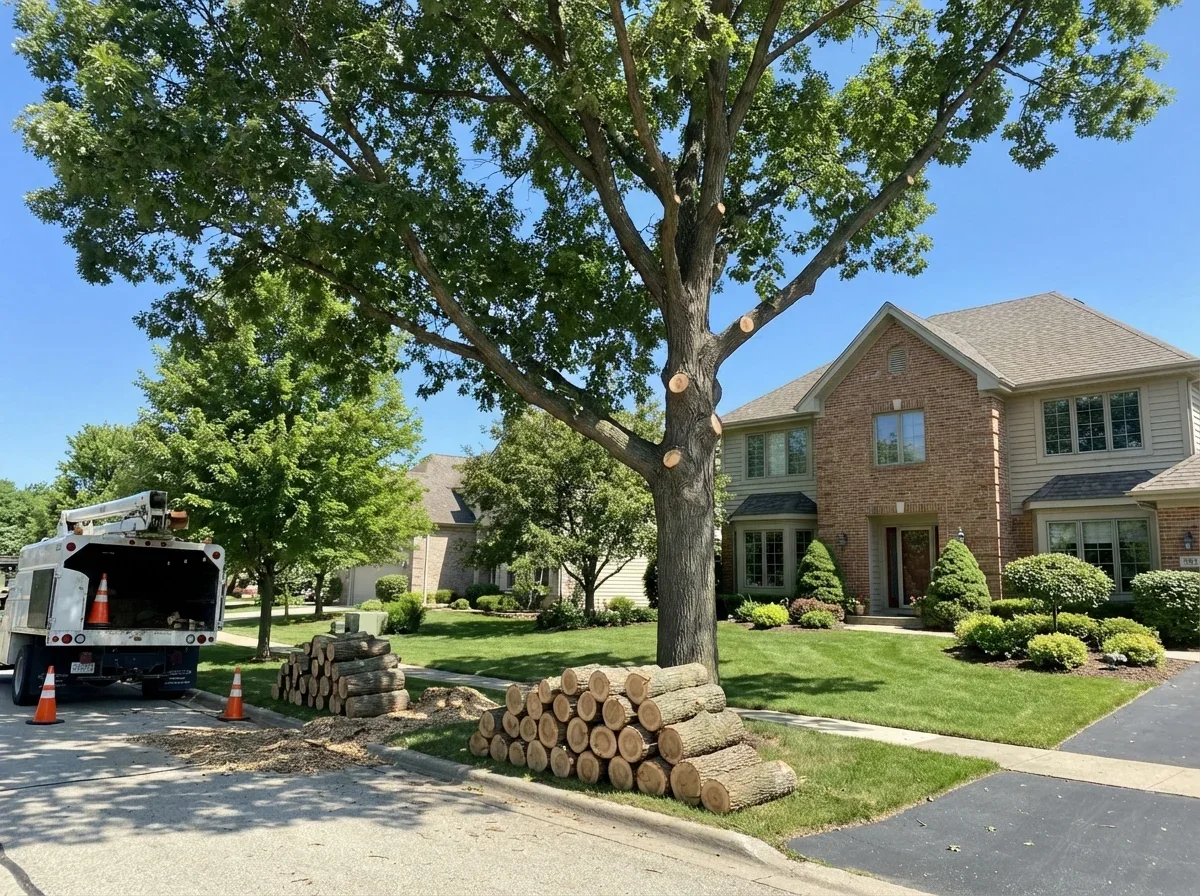
What Qualifies as a Tree Emergency?
Not every downed branch needs a middle-of-the-night call. But some situations escalate fast — from property damage to life safety threats in the span of an hour.
A tree emergency means immediate risk to people, structures, or utilities. The distinction matters because emergency tree service in Appleton and Green Bay costs 50-100% more than scheduled work, and your insurance adjuster will want to know the hazard was real.
Immediate Hazards That Require 24/7 Response
Power line contact tops the list. If a tree or limb is touching or dangling near power lines, you don't assess it yourself — you call the utility company first, then an emergency arborist. In Oshkosh and Neenah, spring thunderstorms and ice storms regularly bring trees into contact with lines. One wrong move turns a tree problem into an electrocution risk.
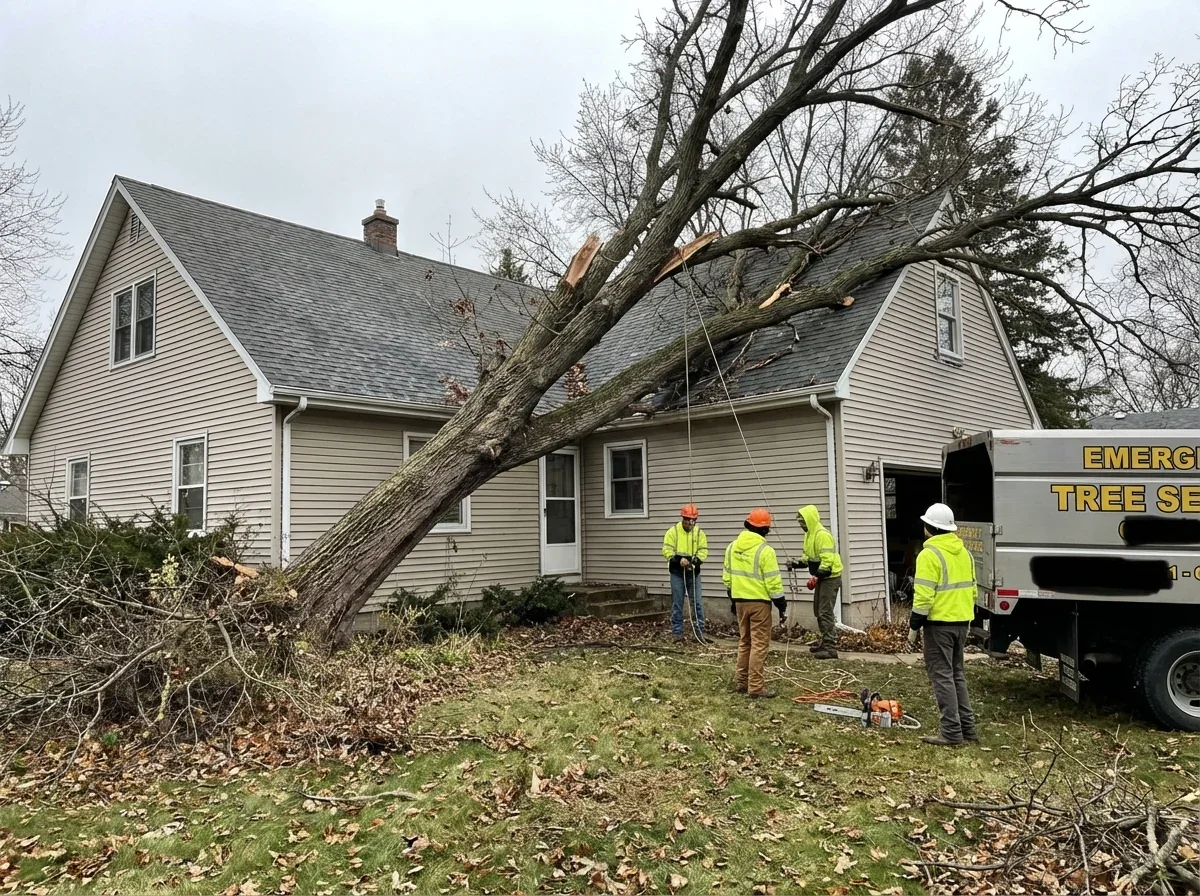
Structural compromise comes next. A tree leaning against your house isn't stable just because it stopped moving. Wind shifts. Weight redistributes. What's resting on your roof at 9 PM could punch through by midnight. Same goes for trees blocking your only driveway exit or hanging over a neighbor's property with visible cracks in the trunk.
Sound familiar? The ice storm hit overnight. You woke up to a 40-foot maple leaning on your garage. It's groaning every time the wind picks up. Your car is trapped inside and you're supposed to be at work in two hours.
Blocked access qualifies when it prevents emergency vehicle entry. If a tree fell across your driveway in Menasha and you have a medical situation, that's a 911 call first — but the tree still needs professional removal within hours, not days.
Urgent vs. Non-Urgent Tree Issues
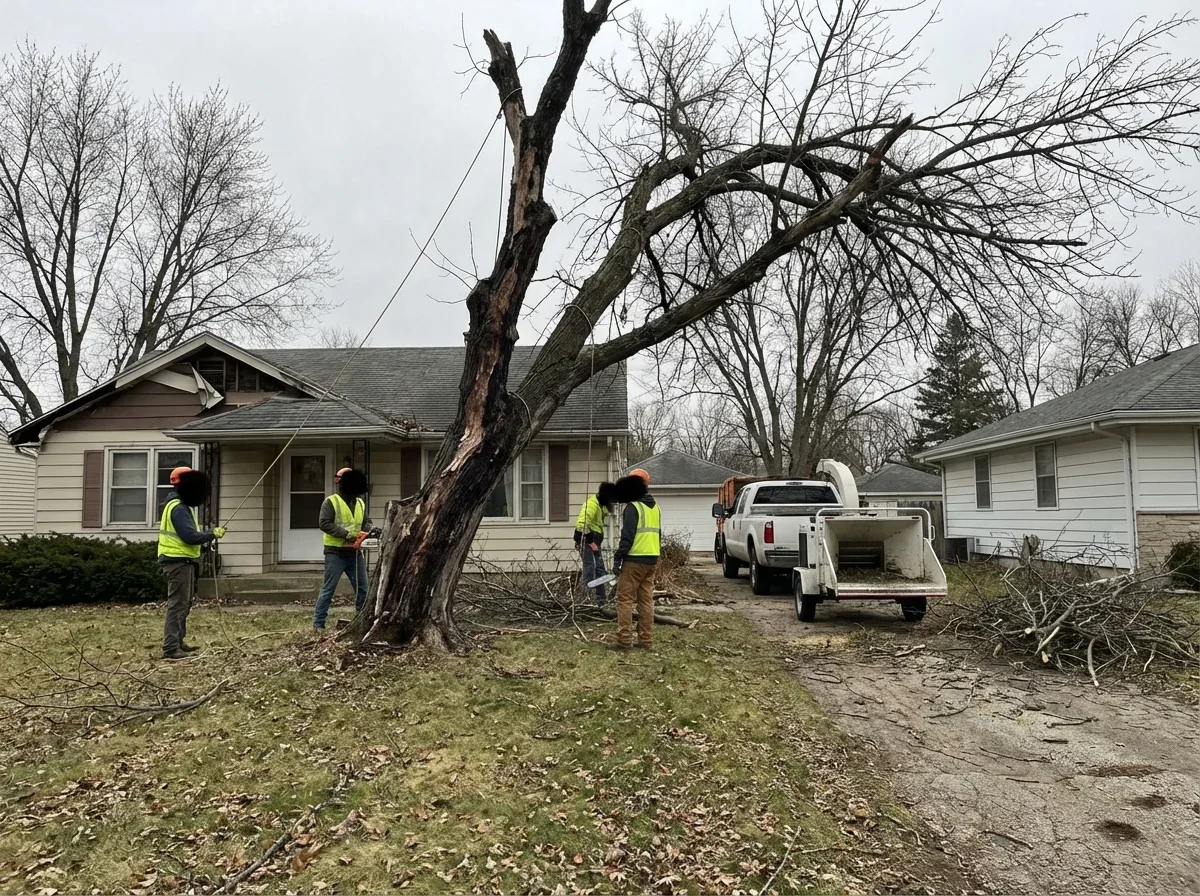
Urgent situations need same-day or next-day response but don't require overnight crews. A large limb hanging by bark fibers after a storm — dangerous, but not actively falling. A tree uprooted in your backyard with the root ball exposed — ugly and destabilizing your yard, but not threatening structures. Split trunks that haven't separated yet. These get scheduled for the next available daylight window, usually within 12-24 hours across the Fox Valley.
Non-urgent work includes standing dead trees nowhere near buildings, routine storm debris cleanup once hazards are cleared, and stump grinding after an emergency removal. You'll pay standard rates instead of emergency premiums if you can wait.
The test: if you're afraid to sleep with the situation as-is, it's an emergency. If you're just frustrated or inconvenienced, it's urgent at most.
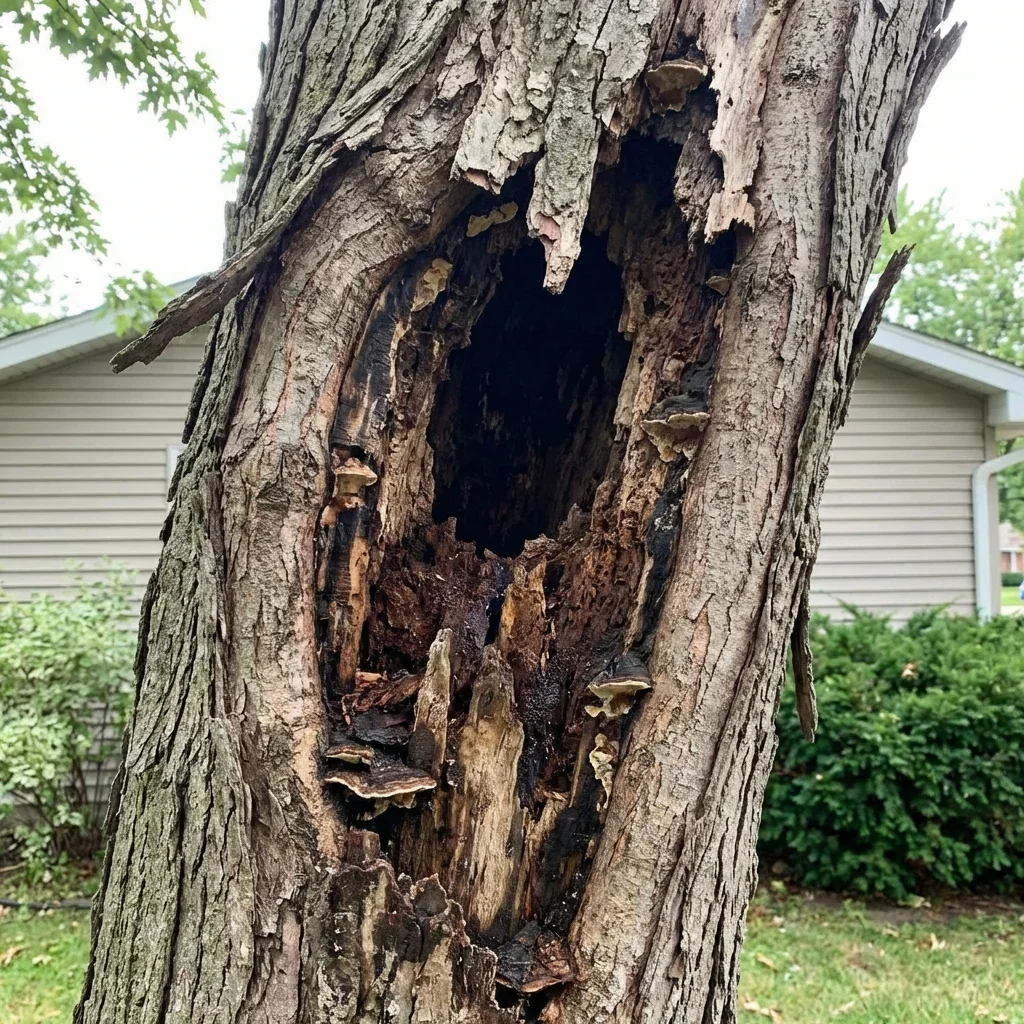
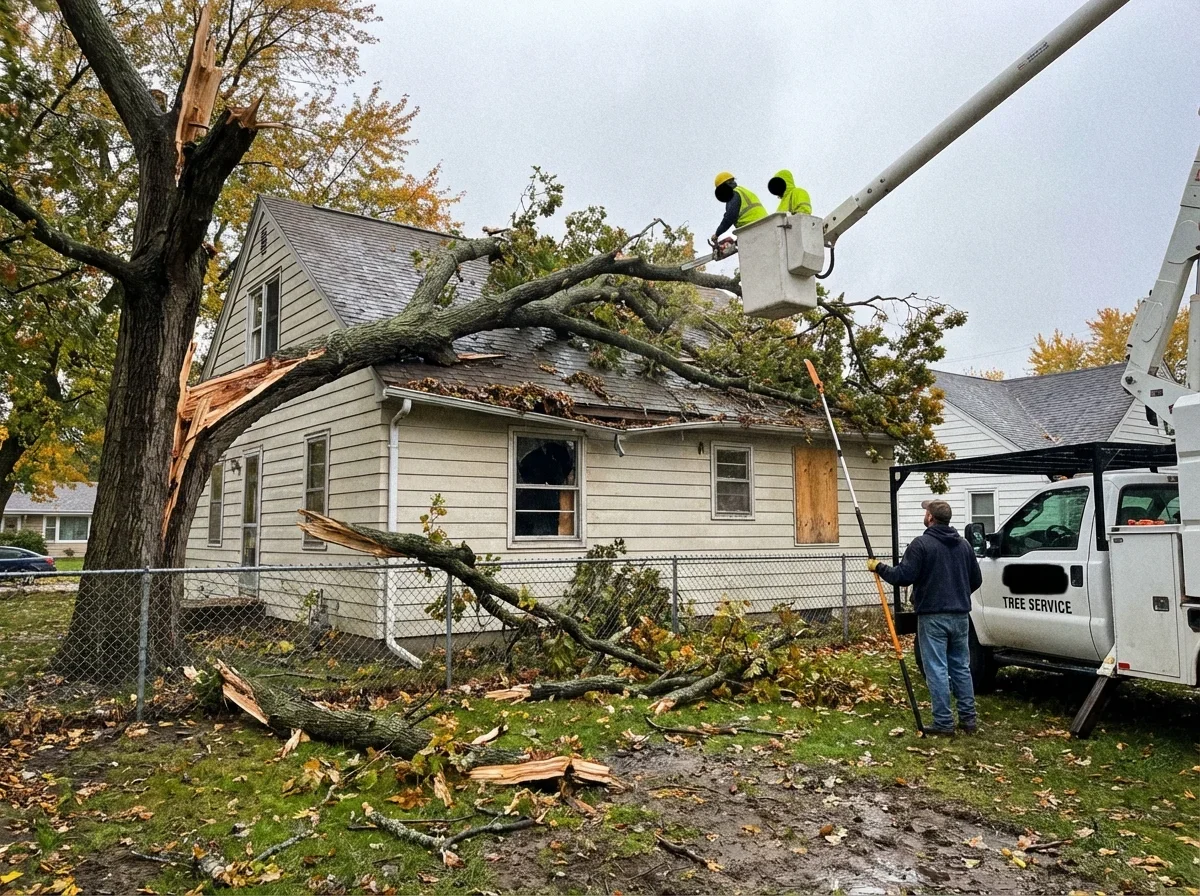
What Does Emergency Tree Service Cost in the Fox Valley?
Emergency tree removal in Appleton, Green Bay, and surrounding communities runs $500 to $3,500 depending on tree size, location complexity, and time of call. That's roughly double what the same work costs during business hours — but when a tree threatens your home at 2 AM, you're not shopping for deals.
| Tree Size & Complexity | Standard Removal | Emergency Removal |
|---|---|---|
| Small tree (under 30 ft), easy access | $300-$800 | $500-$1,200 |
| Medium tree (30-50 ft), moderate complexity | $800-$1,800 | $1,500-$2,800 |
| Large tree (50+ ft), roof contact, power lines nearby | $1,500-$3,000 | $2,500-$5,000+ |
After-hours calls (nights, weekends, holidays) add 50-100% to base rates. Multi-tree storm damage gets per-tree pricing with slight volume discounts. Crane work for trees entangled in structures adds $800-$1,500 to the total.
Factors That Affect Emergency Tree Removal Pricing
Accessibility determines half the price. A tree in your front yard in Kaukauna with street access? Straightforward. A tree behind your house with no equipment access, requiring ropes and manual hauling? That's 2-3x the labor.
Hazard level matters more than tree size sometimes. A 30-foot oak leaning on power lines costs more to remove safely than a 50-foot tree that fell cleanly into an open yard. Arborists charge for risk management, not just wood removal.
Time of service compounds costs. A Saturday afternoon call in Neenah runs about 50% over weekday rates. A 3 AM Monday call during an ice storm? Expect double, plus potential fuel surcharges if crews are running back-to-back emergencies across the region.
Debris removal adds $150-$400 depending on volume and local disposal requirements. Some Fox Valley municipalities allow temporary curbside storm debris — others require professional hauling to licensed facilities. Your arborist handles permits and disposal, but you pay for it.[1]
Insurance Coverage for Storm Damage
Homeowner's insurance typically covers emergency tree removal when the tree damages a covered structure — your house, garage, or fence. If it just falls in your yard without hitting anything? You're paying out of pocket in most cases.
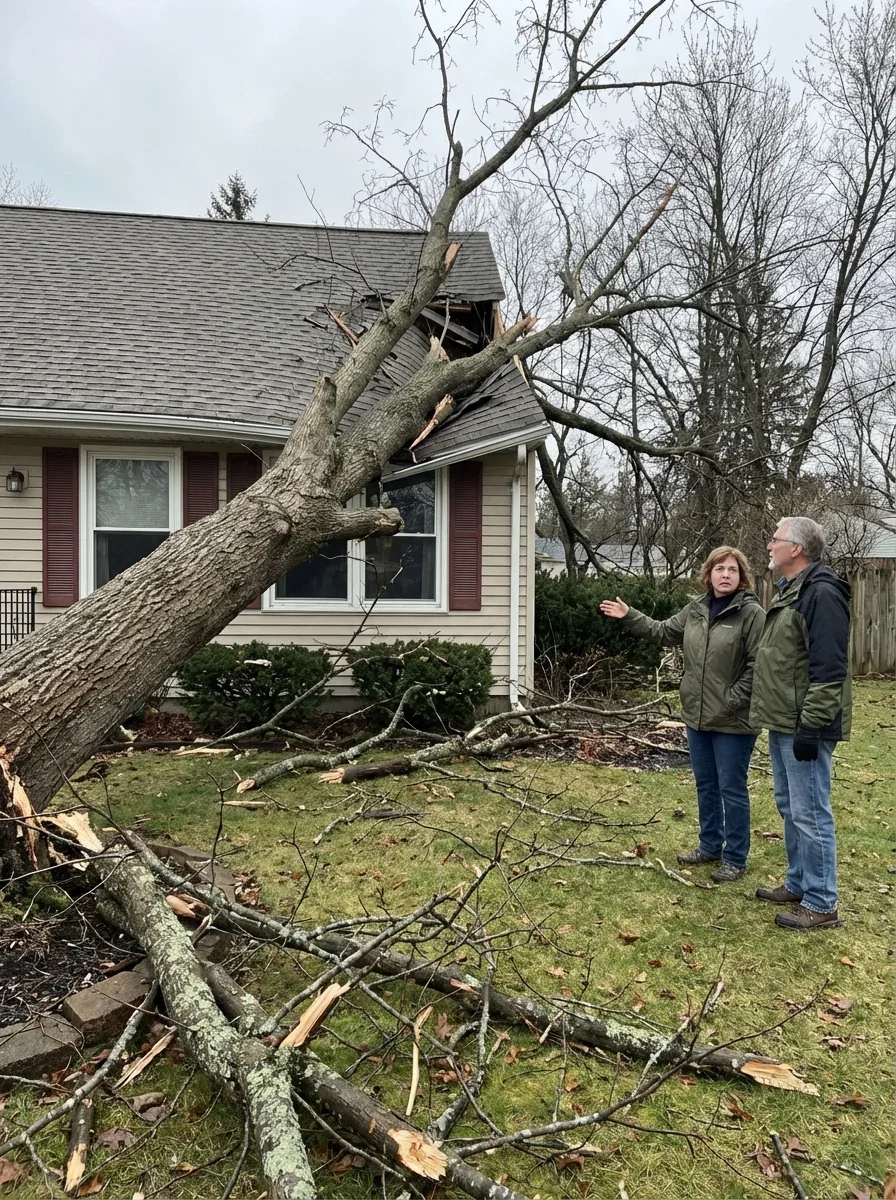
File your claim before the tree crew arrives. Adjusters want to see the damage in situ. Take photos from multiple angles showing the tree's point of failure, what it struck, and any structural damage. Emergency mitigation (securing the scene, tarping the roof, removing immediate hazards) is usually covered even before the adjuster visits.
Wisconsin weather patterns mean storm surges hit multiple properties simultaneously. After severe thunderstorms roll through Green Bay or Oshkosh, adjusters get backlogged. Your tree service should document everything — photos, measurements, hazard assessment — to support your claim even if the adjuster takes days to arrive.
Liability coverage kicks in if your tree damages a neighbor's property. Your homeowner's policy covers it if the tree was healthy and fell due to an act of God. If the tree was visibly dead or diseased and you ignored it? You might be on the hook personally. That's why property managers in Appleton schedule risk assessments before storm season.
Frequently Asked Questions
Trees should NOT be pruned or cut during these times:
- Spring (active growth period, roughly March–May in Wisconsin) — Sap is rising and trees are pushing energy into new shoots and leaves. Pruning causes excessive sap bleeding, weakens the tree, and opens wounds to disease.
- Summer (June–August) — Heat stress makes trees vulnerable to insect damage and sunscald after pruning wounds.
- Late fall/early winter (November–December) — Trees are entering dormancy; pruning encourages new tender growth that frost will kill.
Best time to prune: Late fall (after leaf drop, November–early December) or late winter (February–early March, before sap rises). This allows the tree to heal over spring and summer without the stress of active growth.
Exception: Remove dead, diseased, or hazardous branches any time of year for safety reasons. Schedule routine pruning for dormant season.
- City of Appleton, Wisconsin. "Guidelines for Tree Preservation and Protection." https://www.cityofappleton.org/191/Tree-Preservation-Protection. Accessed February 10, 2026.
- Outagamie County, Wisconsin. "Stormwater Permits and Tree Removal." https://www.outagamie.org/government/n-natural-resources/stormwater/stormwater-permits. Accessed February 10, 2026.
Related Articles
Tree Fell on House - Emergency Help
Read ProblemStorm Damage Tree Cleanup Cost: What to Expect After Severe Weather
Read Cost GuideEmergency Tree Service vs Regular Tree Service: Response Time & Cost Differences
Read Guide
How to Hire an Arborist (Checklist)
Read Guide