
When Do Your Trees Need Deep Root Fertilization?
Your trees aren't getting what they need from the soil. Not because the nutrients aren't there — but because they can't reach them.
In Appleton, Green Bay, and Oshkosh, urban trees face a perfect storm: heavy clay soil that compacts like concrete, turf grass competing for nutrients, and construction activity that destroys feeder roots. Surface fertilizer sits on top of that compacted layer, feeding your lawn while your trees slowly decline.
Symptoms of Nutrient Deficiency
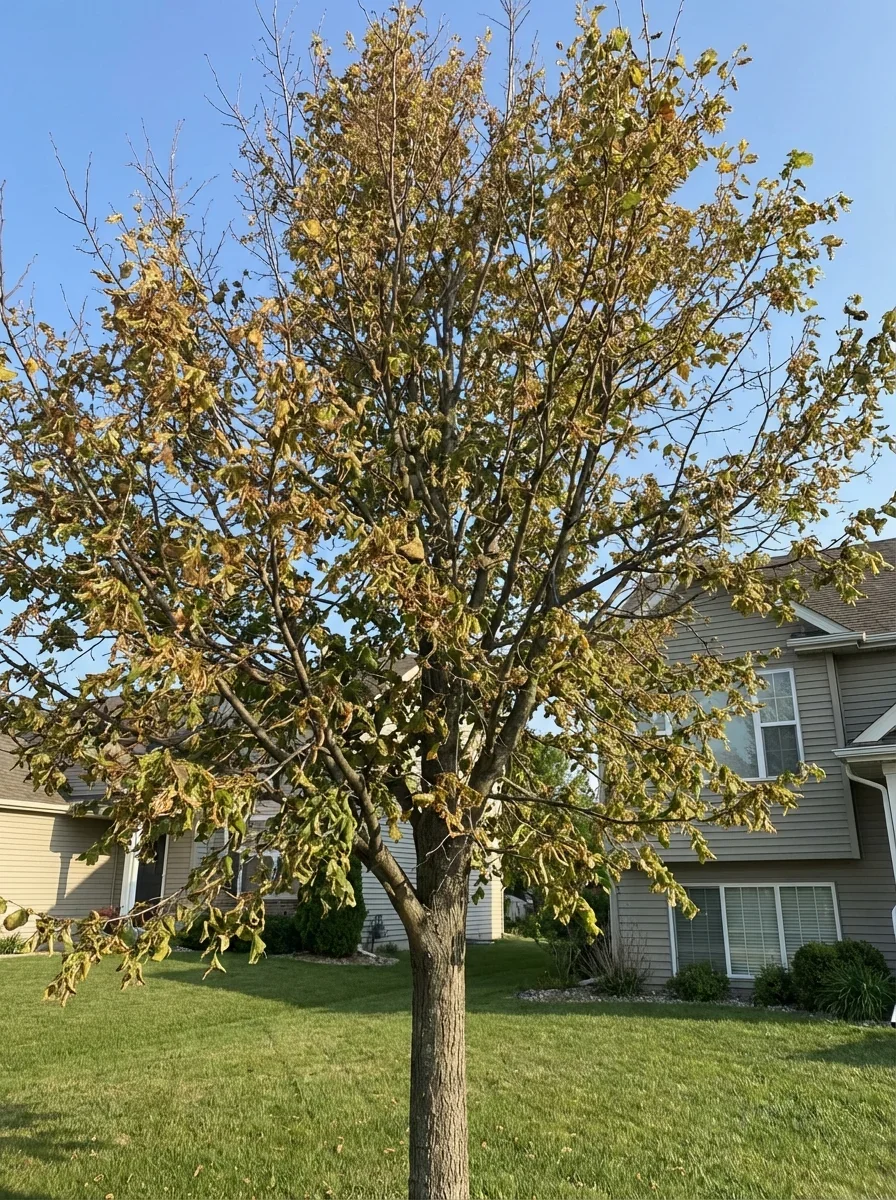
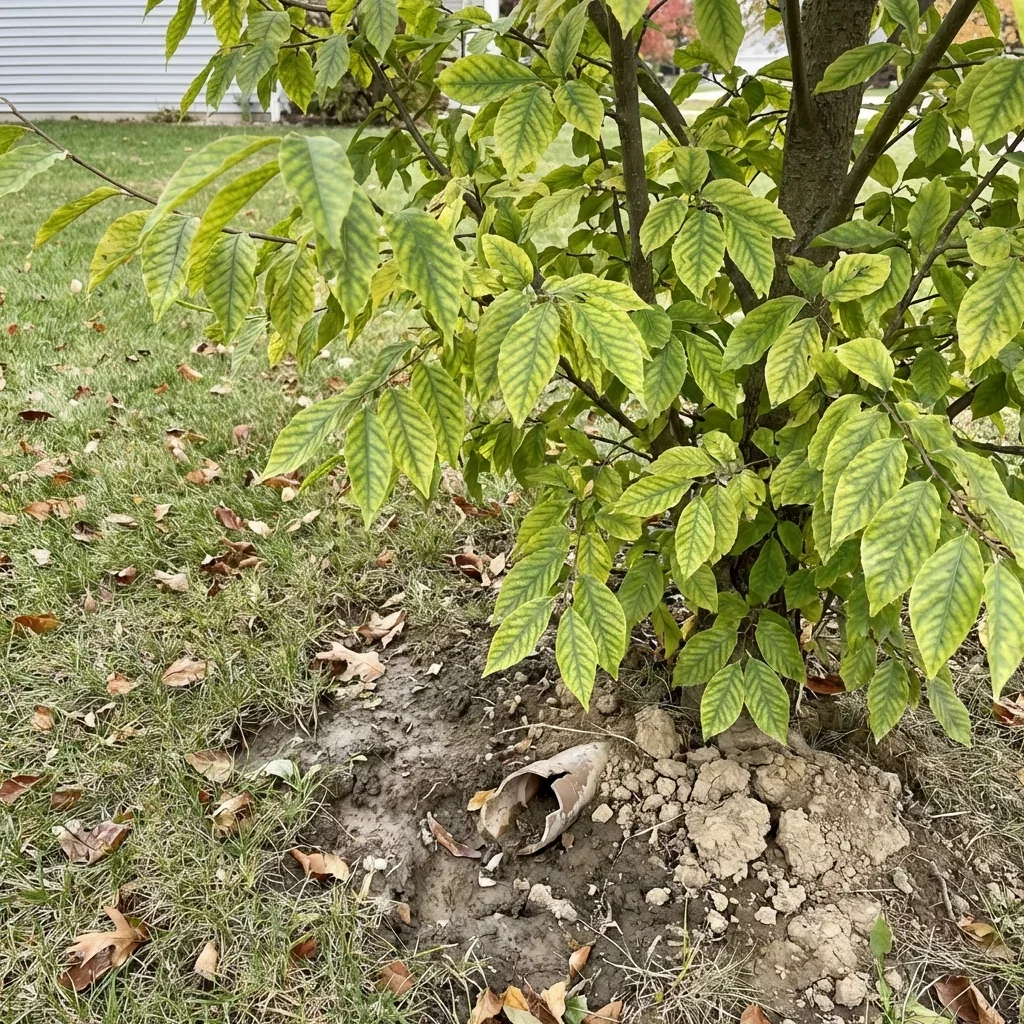
You're seeing the warning signs already. Leaves that yellow between the veins (chlorosis) — especially on newer growth. A canopy that's thinning from the top down, with fewer leaves each spring. Branch dieback that starts small but spreads. Bark that splits during winter freeze-thaw cycles because the tree doesn't have the energy reserves to protect itself.
In Fox Valley's climate, nutrient-stressed trees become winter casualties. They don't harden off properly in fall, and February's brutal cold snaps kill cambium tissue that healthy trees would shrug off. You lose mature trees that should have decades of life left.
The frustration is watching a tree you planted 15 years ago slowly fade. It leafs out later each spring. The leaves are smaller. Branches that were full are now sparse. You water it, you mulch it, you buy the fertilizer spikes from the garden center. Nothing changes.
Sound familiar? Your maple's canopy looked thin last summer. You bought fertilizer stakes and pushed them into the ground. This spring, the tree leafed out even later. Now half the branches barely have leaves.
Best Timing for Wisconsin Trees
Trees in Neenah and Menasha have two ideal windows: April through May before leaf-out, and September through October after the heat stress passes. Spring applications fuel the growing season. Fall applications let trees store reserves before winter dormancy.
You can't treat when the ground is frozen (November through March) or during summer drought stress (July-August). The injection process requires soil moisture to carry nutrients to feeder roots.
Younger trees (under 10 years) respond fastest — you'll see improvement in one season. Mature trees take 2-3 years of consistent treatment to reverse decline, but the transformation is dramatic once their root systems rebuild.
What Does Deep Root Fertilization Cost in the Fox Valley?
Most Fox Valley homeowners pay $150–$450 per treatment session. That typically covers 3–5 mature trees or 8–12 younger specimens. Pricing is based on trunk diameter (DBH), not height.
Pricing by Tree Size
A 16-inch oak in Kaukauna needs 15–18 injection points across a 400 sq ft grid — 20–30 minutes of work. A 6-inch ornamental maple needs 8 points and 10 minutes. Time and material costs scale directly with root zone size.
Treatment Programs
Acute Treatment
One-TimeImmediate deficiency symptoms. Single intervention.
Annual Maintenance
Every SpringUrban trees in compacted soil. Consistent feeding for best results.
Biennial Program
Every Other YearHealthy trees, preventive care. Averages $100–$175/year.
Restoration Program
2–3 YearsSevere decline, mature trees. Spring + fall treatments for full recovery.
Soil testing adds $75–$150 but tells you exactly what your trees need. Clay soil in Fox Valley is often alkaline, locking up iron and manganese.
You can’t DIY this effectively. The equipment costs $3,000–$8,000 and requires PSI calibration to avoid root damage. Homeowner “deep root fertilizer spikes” barely penetrate 4–6 inches in compacted clay.
The Deep Root Fertilization Process
This isn't spray-and-pray. It's precision nutrient delivery using hydraulic pressure to reach roots that surface applications can't touch.
The entire process takes 30-90 minutes depending on property size, and you don't need to do anything except keep pets inside during application.
Site Assessment and Soil Testing
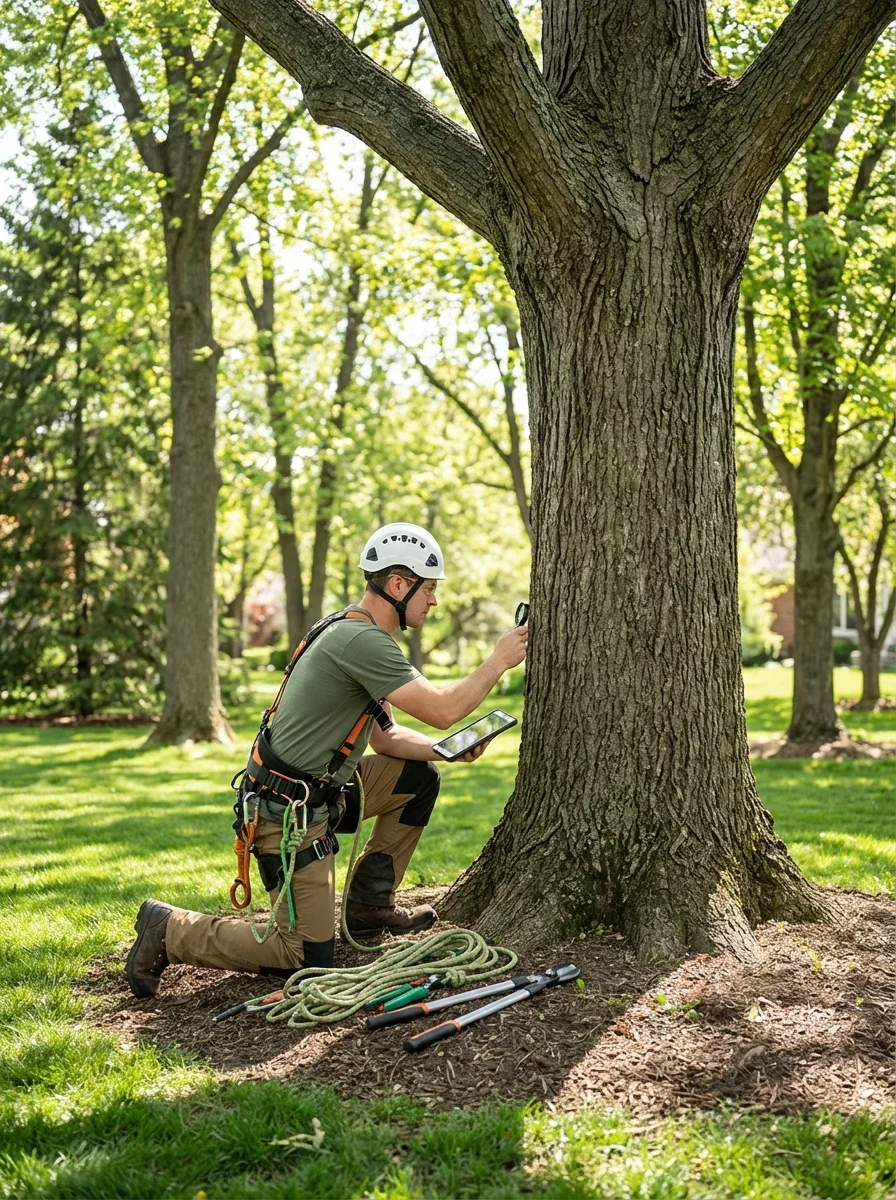
The arborist walks your property identifying trees that need treatment. They're looking at canopy density, leaf color, bark condition, and site factors like nearby construction or sidewalk installation. Trees within 10 feet of pavement or recent grading almost always show nutrient stress in Fox Valley soils.
Soil testing happens next if you haven't had one done in the last 3 years. The technician pulls 6-8 core samples from around the drip line (the outer edge of the canopy where feeder roots concentrate). Those samples go to a lab for pH, nitrogen, phosphorus, potassium, and micronutrient analysis.
Results come back in 5-7 days. Most Appleton properties test alkaline (pH 7.2-8.0), which locks up iron even when it's present in soil. That's why you see chlorosis on oaks and maples — the iron is there, but the tree can't absorb it.
Injection Grid Layout
The arborist maps injection points in a grid pattern covering the critical root zone — typically 1.5x the canopy diameter. For a tree with a 20-foot canopy spread, that's a 30-foot diameter circle with 15-20 injection points spaced 3-4 feet apart.
They flag each point with marking paint. The pattern avoids sidewalks, buried utilities (they call Diggers Hotline first), and areas with heavy surface roots where injection would cause damage. In Neenah and Menasha, frost heaving often pushes roots to the surface — those get worked around.
Application and Cleanup
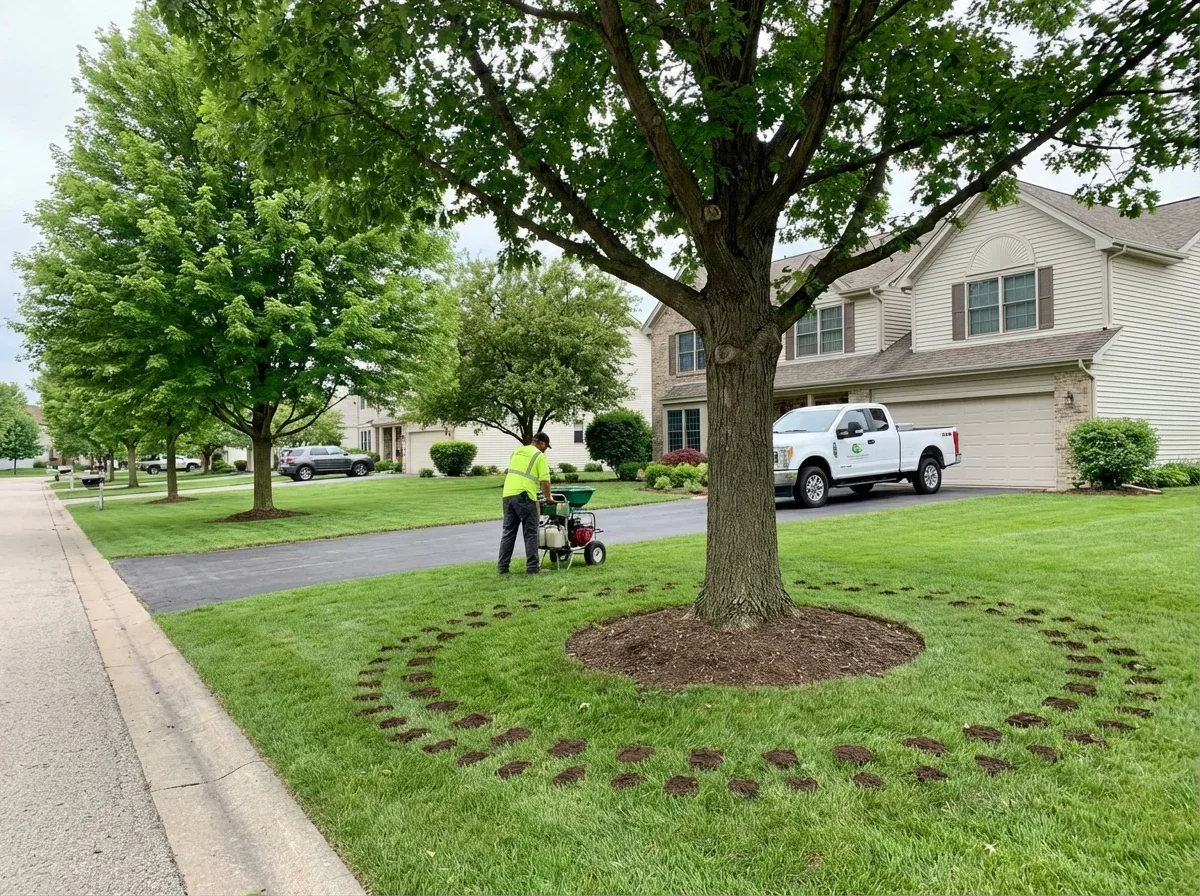
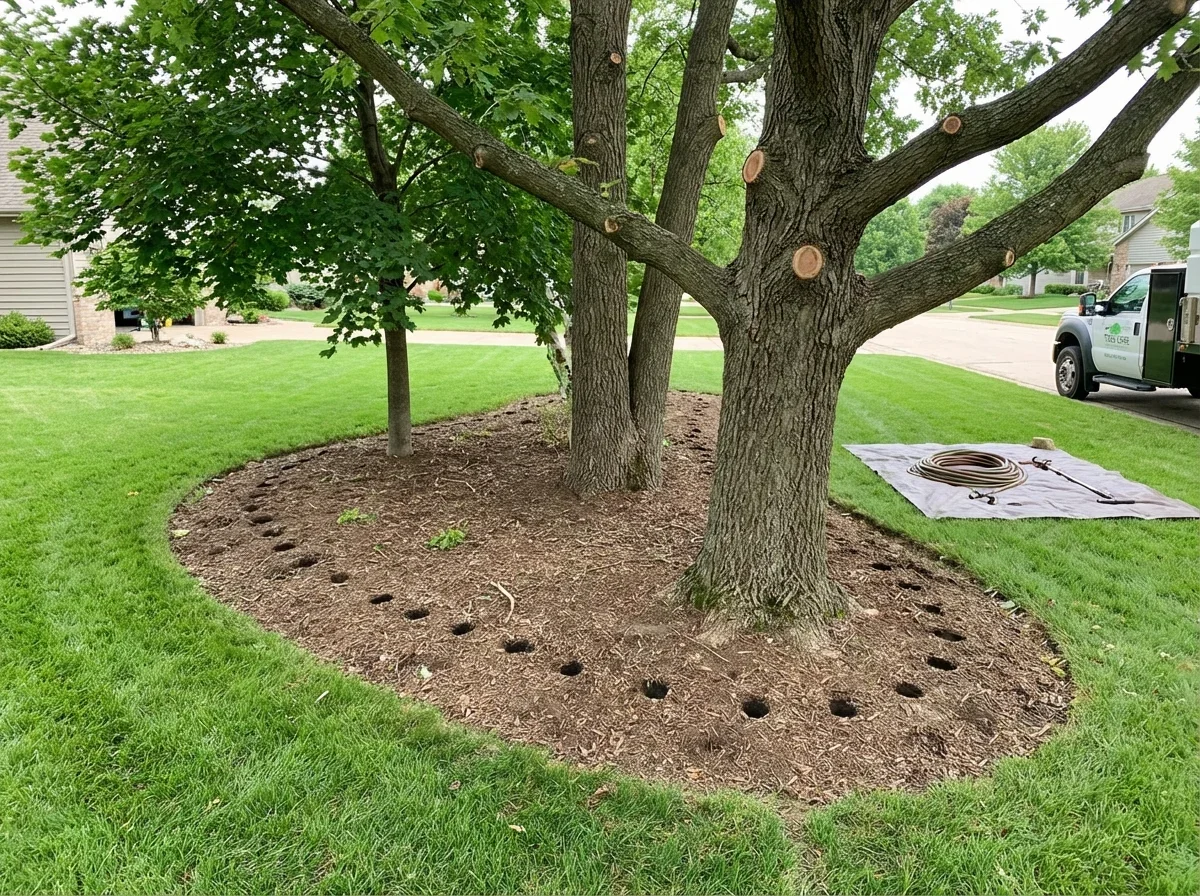
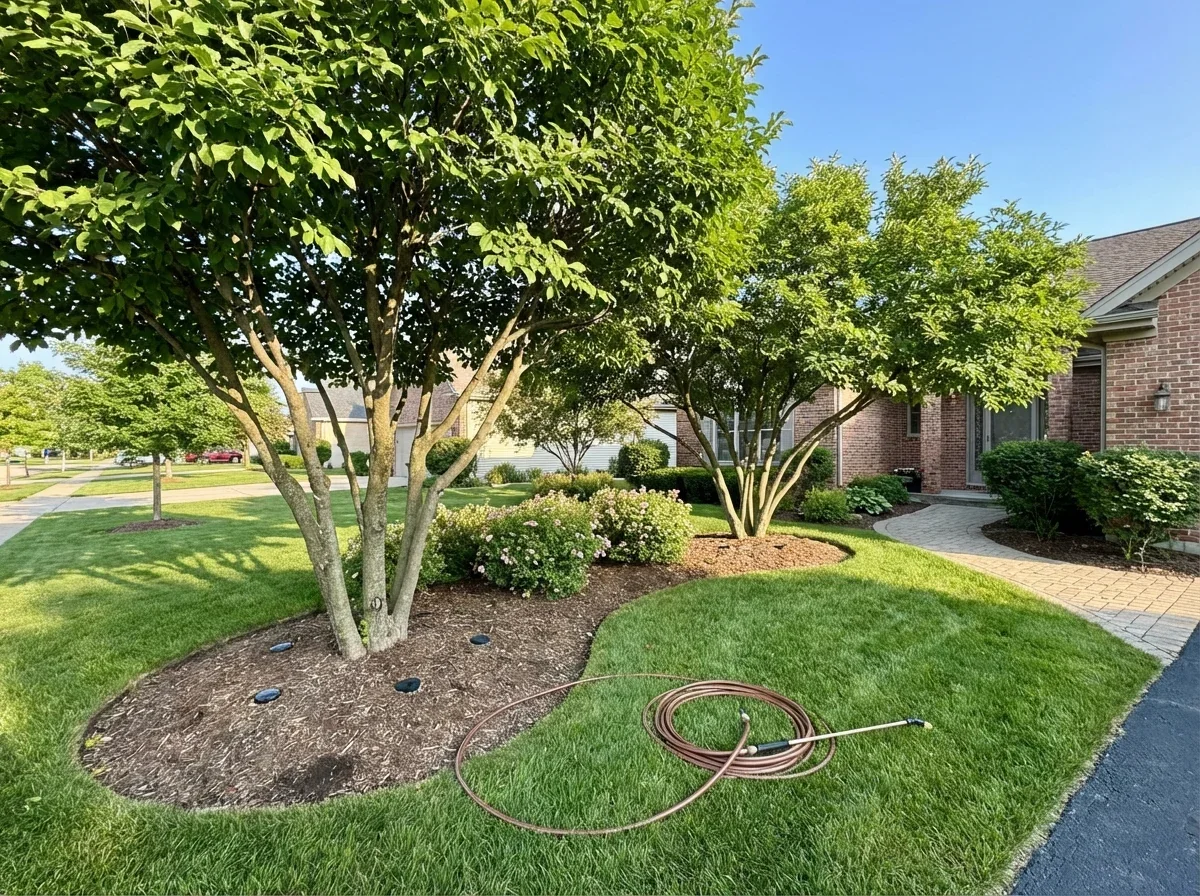
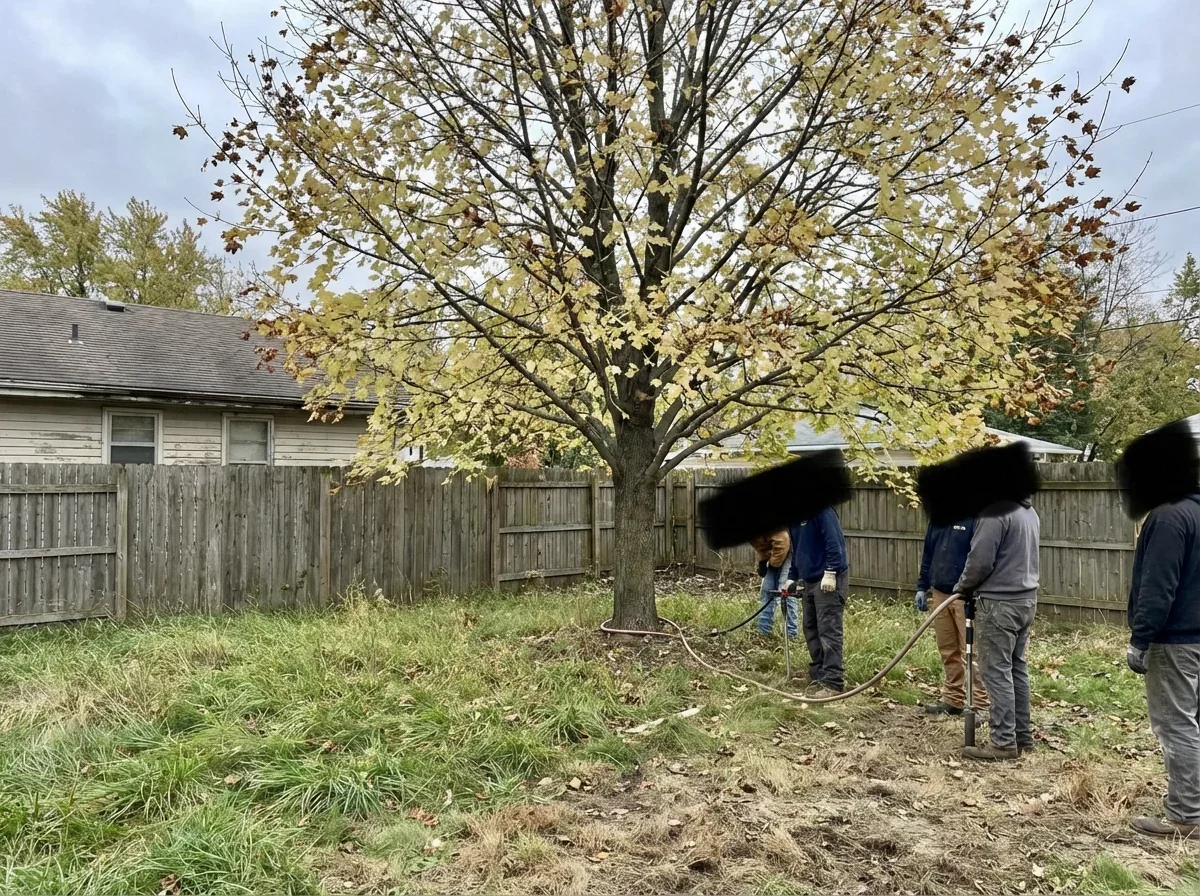
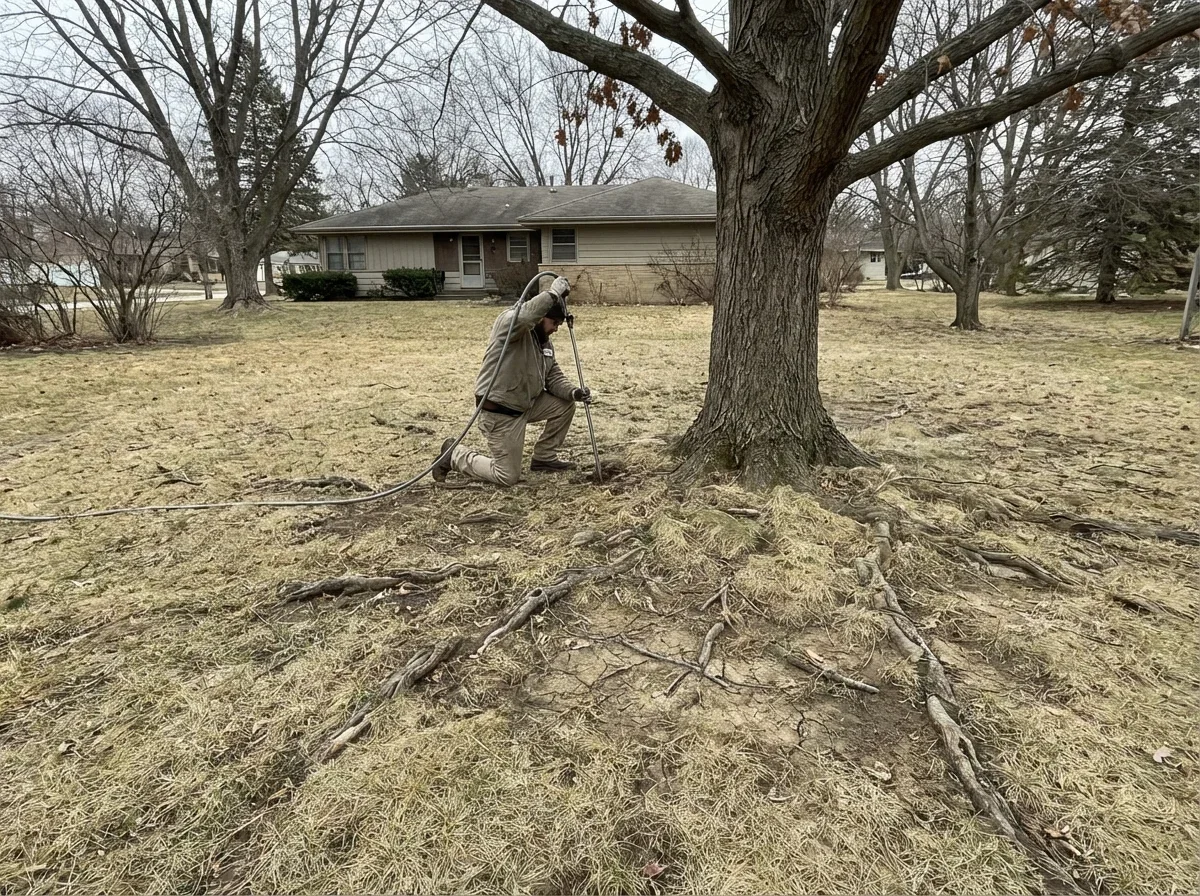
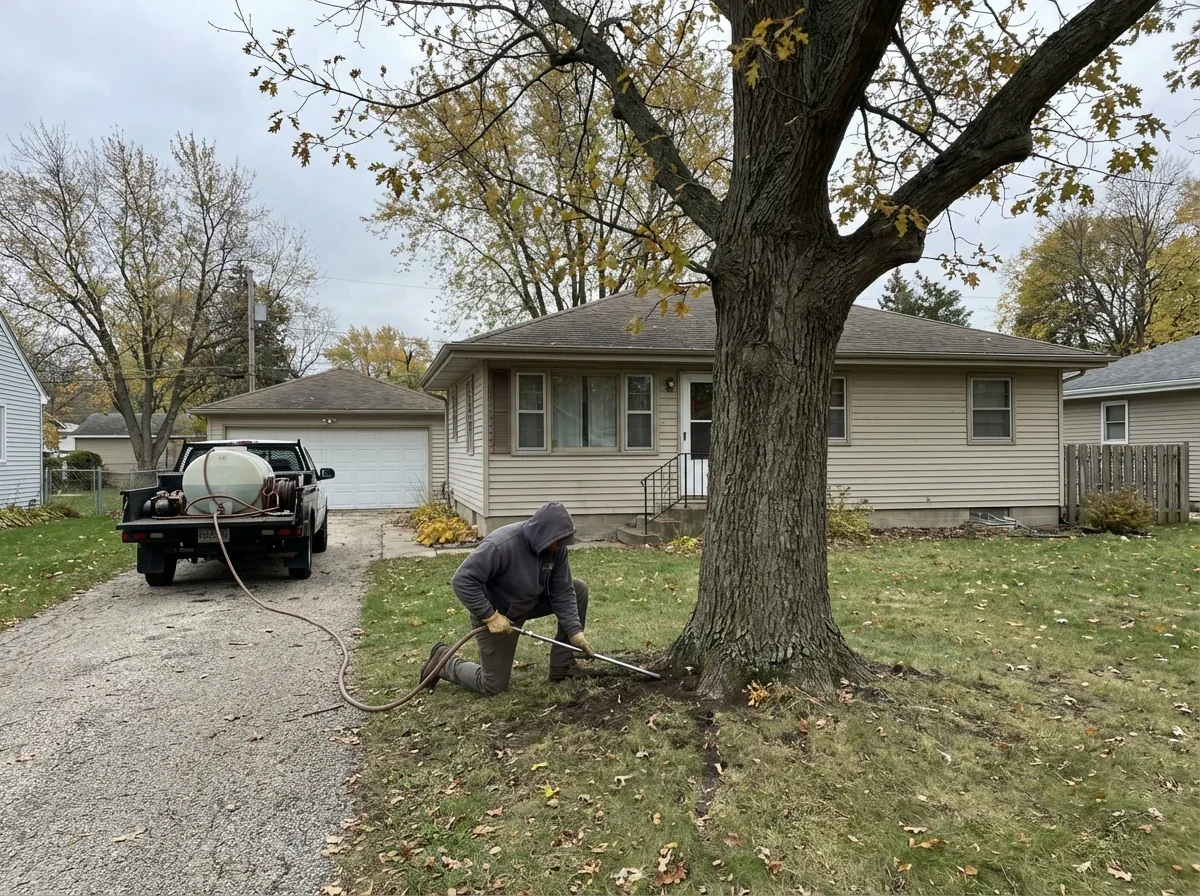
The injection rig runs off a truck-mounted or trailer-mounted pump system pushing 150-300 PSI. The technician inserts a 12-18 inch soil probe at each flagged point, pumps in the liquid fertilizer blend (2-4 gallons per point), then moves to the next location.
The nutrients go exactly where trees feed — 8 to 12 inches deep into the active feeder root zone. Pressure forces the liquid through compacted clay that gravity-fed applications can't penetrate. Each injection takes 30-60 seconds.
You'll see small holes in the lawn afterward, about the diameter of a pencil. Those close naturally within a week. The injected fertilizer doesn't run off, doesn't wash away in rain, and stays in the root zone where trees can access it over the next 6-12 months.
Timing matters in Wisconsin. Spring applications (late April through May) fuel leaf-out and new growth. Fall applications (September through October) build root reserves before dormancy. Summer applications during drought stress don't work — the tree can't take up nutrients when it's in survival mode.
How to Choose a Deep Root Fertilization Service
Not all tree services offer this. The ones that do aren't all using the right equipment or formulations. Here's what separates professionals from landscapers with a rented injector.
Look for ISA Certified Arborists with dedicated deep root injection equipment. That certification means they've studied tree biology, root systems, and soil science. They're not guessing about injection depth or nutrient ratios — they're applying research-based protocols.
Arborist Certification and Equipment
Ask to see their ISA certification number — you can verify it online. Certified arborists in Oshkosh and Green Bay carry liability insurance that covers root damage and tree injury from improper injection technique.
The equipment matters as much as the certification. Professional rigs deliver consistent PSI and flow rate. They use calibrated injection probes that reach 12-15 inches without damaging lateral roots. Rental equipment and DIY systems don't have that precision — they either don't penetrate compacted soil or they inject too aggressively and damage feeder roots.
Questions to ask:
- What PSI does your system operate at? (Answer should be 150-300 PSI)
- How deep do your probes inject? (12-18 inches for mature trees)
- Do you customize formulation based on soil testing? (Yes is the only right answer)
- What's your injection point spacing? (3-4 feet for even distribution)
Treatment Formulation and Soil Analysis
Generic fertilizer blends don't fix specific deficiencies. If your soil test shows low iron and high pH, you need chelated iron in an acidifying carrier. If it shows nitrogen deficiency but adequate phosphorus, you need a high-N low-P blend.
The arborist should explain their formulation based on YOUR soil test results. They should adjust pH, add micronutrients, and account for Fox Valley's clay composition. Formulations designed for sandy Wisconsin soils don't work in our clay-heavy region.
Red flags: They don't mention soil testing. They use the same blend on every property. They can't explain what's in the mix or why.
Service Guarantees and Follow-Up
Legitimate services schedule follow-up inspections 6-12 months after treatment. They're checking canopy density, leaf color, and new growth to verify the treatment worked. If results don't meet expectations, they adjust the formulation or add supplemental feeding.
Ask about their guarantee: What happens if the tree doesn't respond? Most reputable Appleton and Kaukauna arborists offer a satisfaction guarantee for annual program clients — if trees don't show improvement after consistent treatment, they reassess and reformulate at no extra charge.
Compare at least three local services. Ask for recent references from properties with similar soil conditions and tree species. Drive by those properties if possible — you can see treatment results from the street.
The right arborist explains the process, shows you the soil test results, and gives you realistic expectations about timing. If they promise instant transformation or push unnecessary treatments, keep looking.
Frequently Asked Questions
The average cost to remove a large tree (60+ feet tall) in Wisconsin is $2,000 to $5,000+, with most homeowners paying around $3,000–$4,000 for a standard residential removal.
Cost breakdown for a large tree:
| Service | Typical Cost |
|---|---|
| Tree removal (60+ ft) | $2,000–$5,000 |
| Stump grinding | $300–$600 |
| Debris hauling/cleanup | $200–$800 |
| Crane rental (if needed) | $1,000–$3,000 |
| Hazard assessment/rigging | Included or $200–$500 |
| TOTAL (standard) | $2,500–$6,500 |
Factors that increase cost for large trees:
- Proximity to house, power lines, or neighbors' property
- Multiple large limbs over structures
- Steep or muddy terrain limiting equipment access
- Hazardous lean or dead wood
- Emergency/storm damage removal (20–50% premium)
Get 3 written estimates from certified arborists. The estimate should include debris removal, stump grinding options, and timeline.