



What Is Tree Cabling and Bracing?
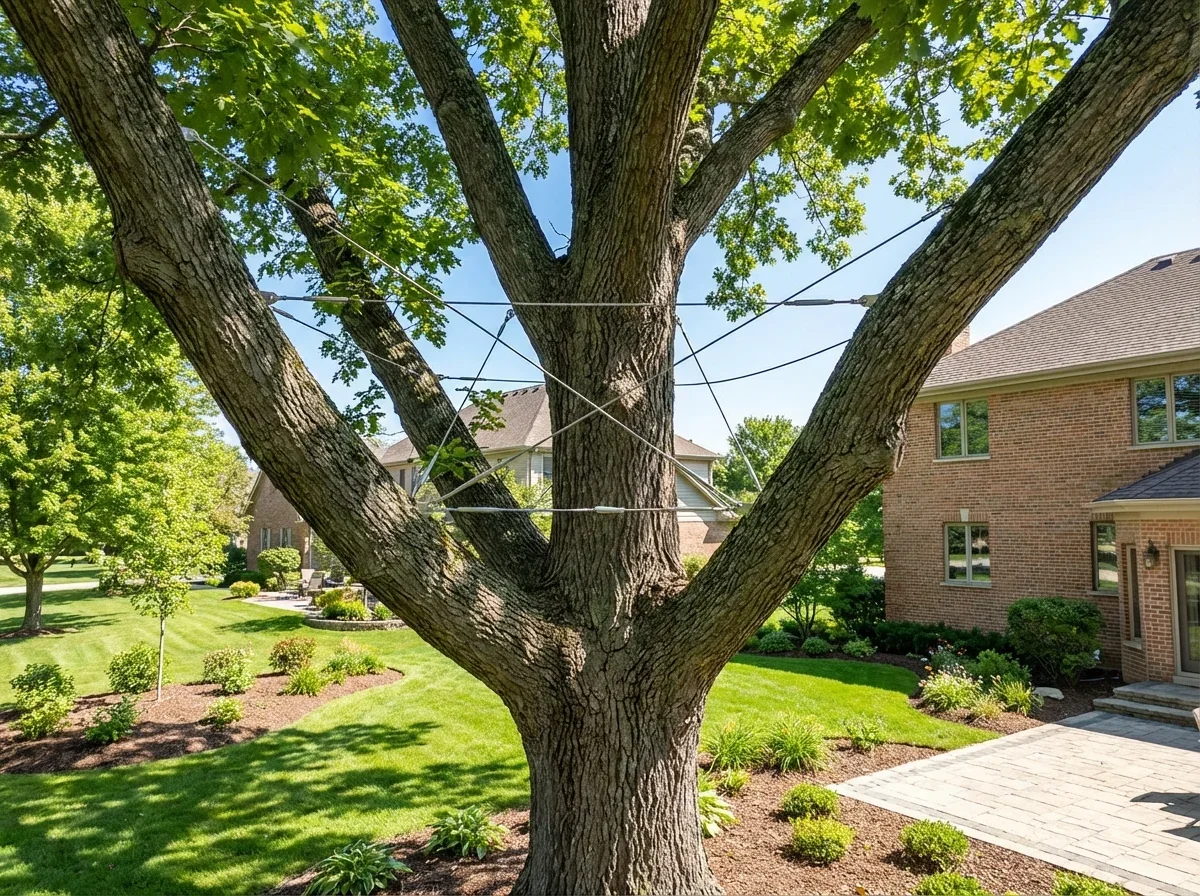
You probably noticed the problem during the last big storm. Maybe it's a split that's widening every winter. Or co-dominant stems — two trunks growing in a tight V — that look like they're ready to peel apart.
Cabling and bracing are structural support systems that prevent tree failure without removing the tree. They work differently, but both address the same core issue: weak attachments that can't handle Wisconsin's ice storms and summer winds.
Cabling: Flexible Support Systems
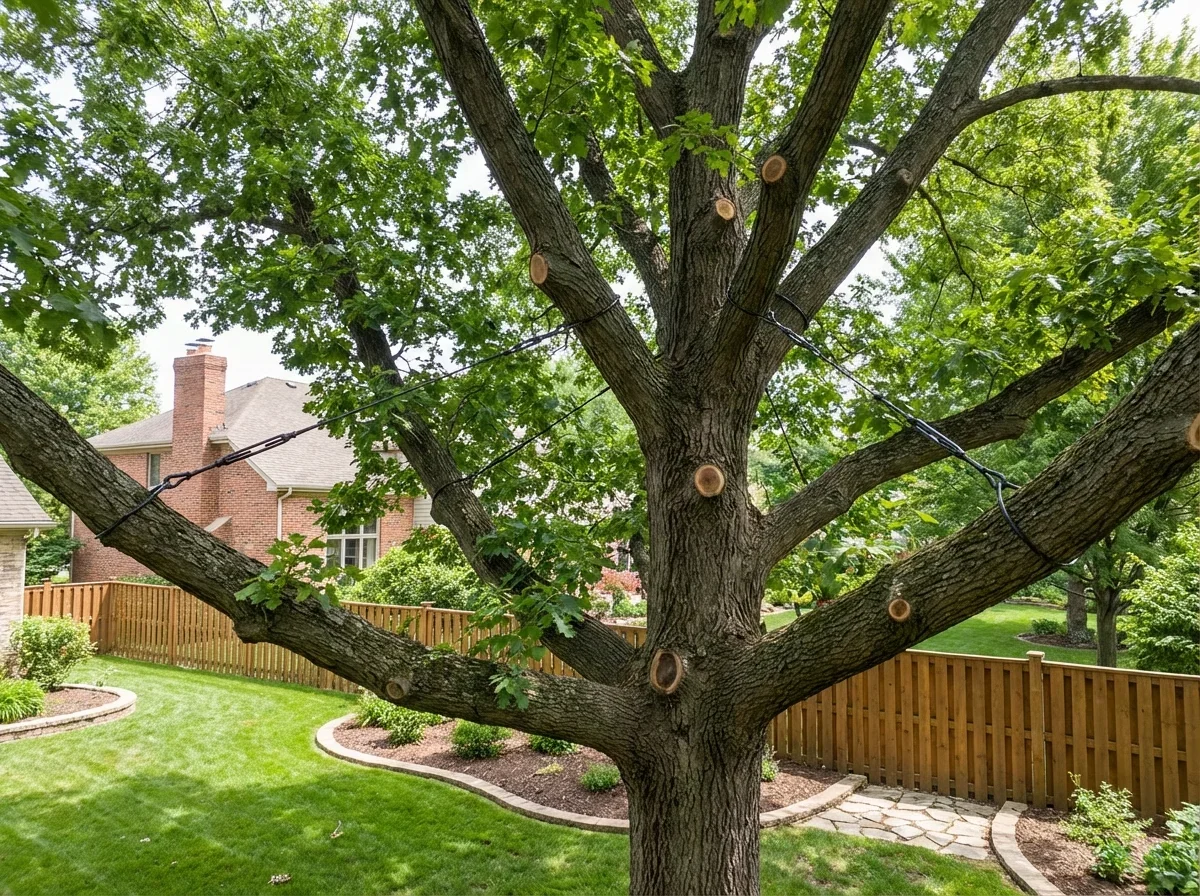
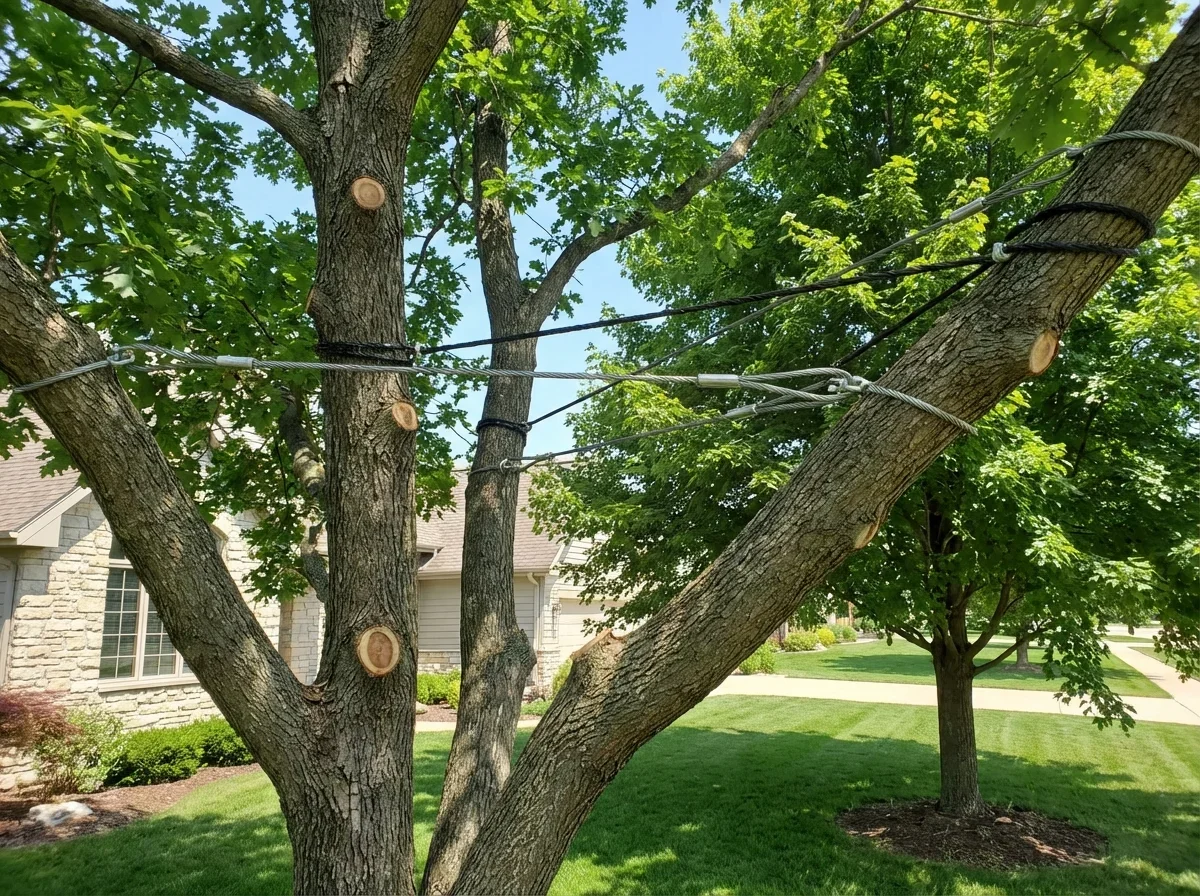
Cables are flexible steel lines installed high in the canopy — about two-thirds up from the weak union to the branch ends.[1] They limit movement, reducing stress on weak attachments. Think of them as insurance: they don't prevent the tree from moving, they prevent it from moving too much and ripping apart.
Common cabling applications in the Fox Valley:
- Co-dominant stems with narrow attachment angles
- Heavy horizontal limbs over structures
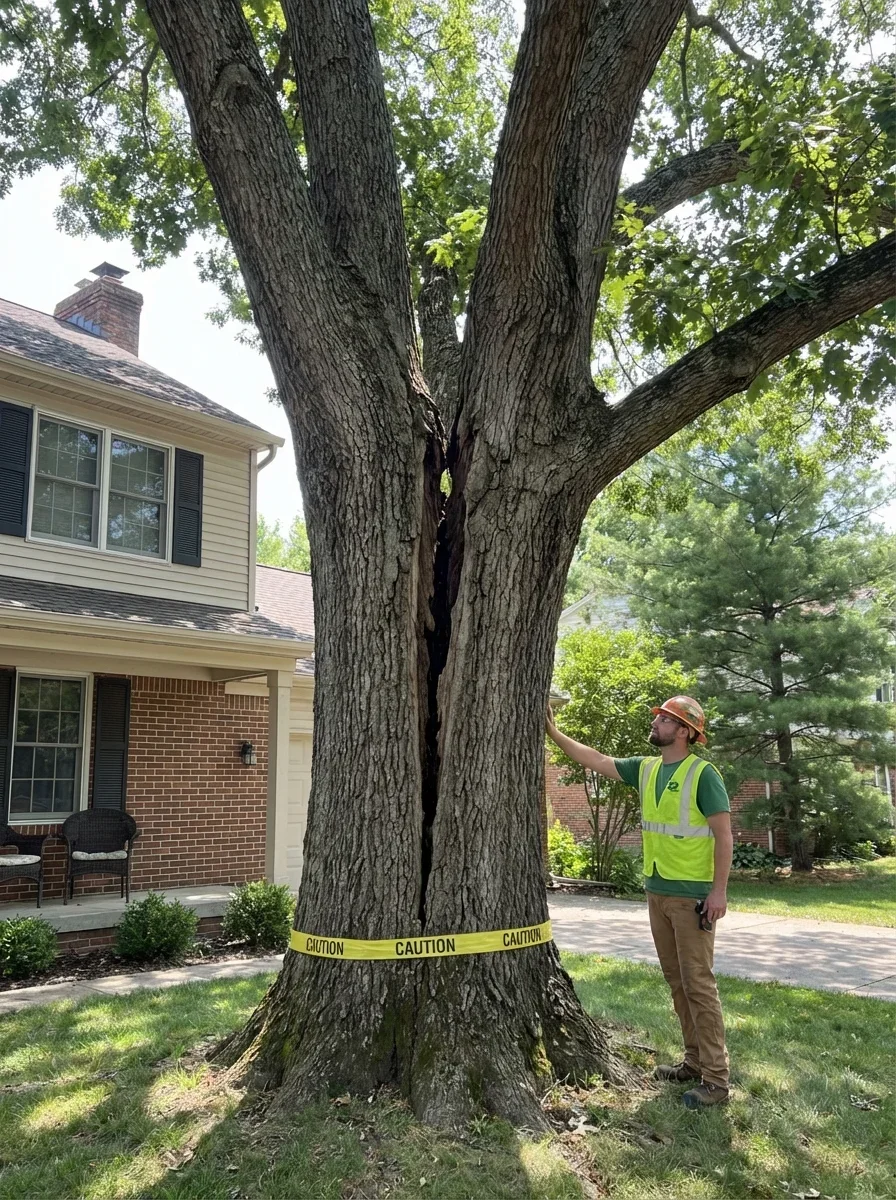
- Split trunks showing bark inclusions
- Historic or high-value trees near homes
Cables are dynamic. The tree still sways, but the system redistributes stress across multiple points. A properly installed cable system doesn't strangle growth — it manages forces the tree can't handle on its own.
Bracing: Rigid Structural Reinforcement
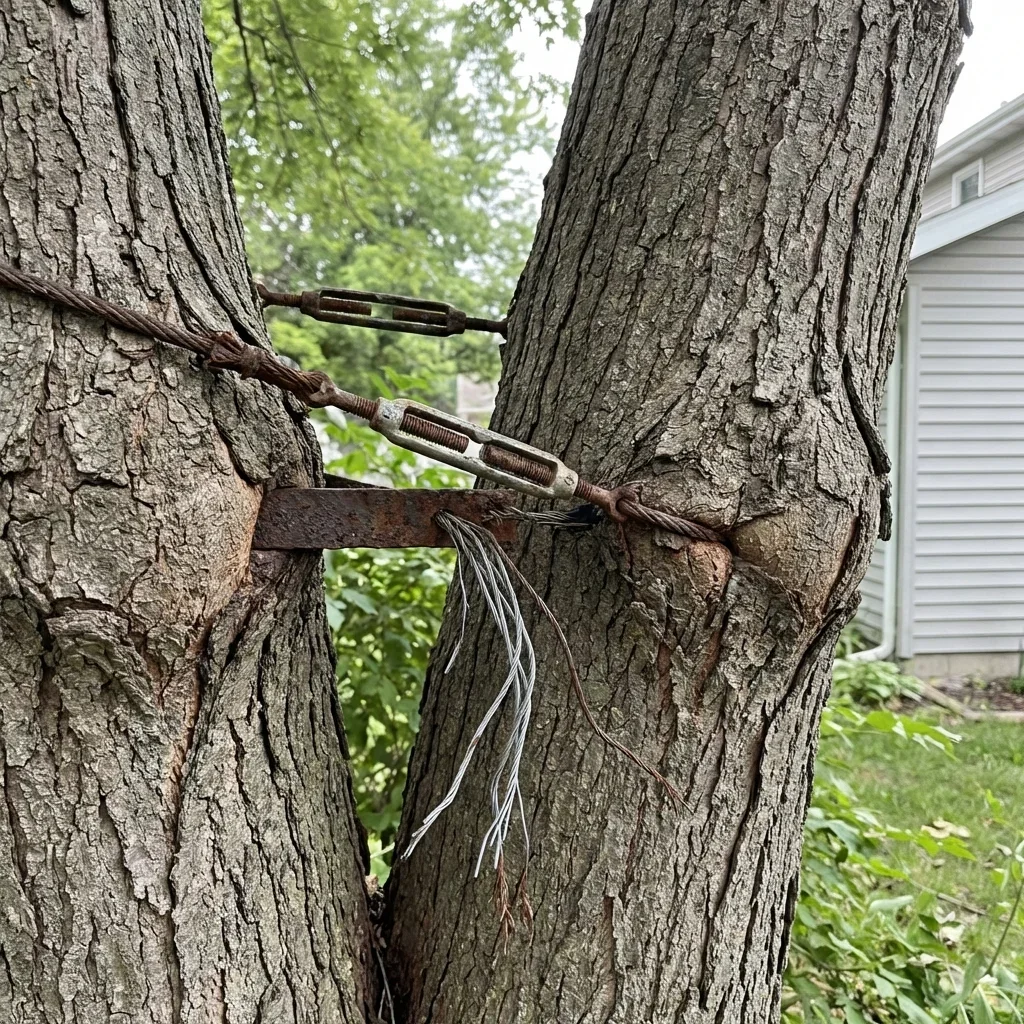
Bracing uses threaded steel rods installed through the trunk or limbs, positioned close to or directly in the weak union.[2] Bolts on both ends clamp the wood together. It's rigid support for splits that have already started or unions under extreme stress.
You'll see bracing on:
- Existing splits that haven't completely failed
- Storm-damaged trees with partial trunk failures
- Large limbs with compression cracks
- Multi-stem trees with advanced decay at the union
Bracing doesn't heal the wood. It holds it together mechanically. If the split is too far gone — more than 40% decay, significant rot, or a crack that extends deep into heartwood — bracing won't save it. At that point, the Appleton or Green Bay arborist will tell you removal is safer.
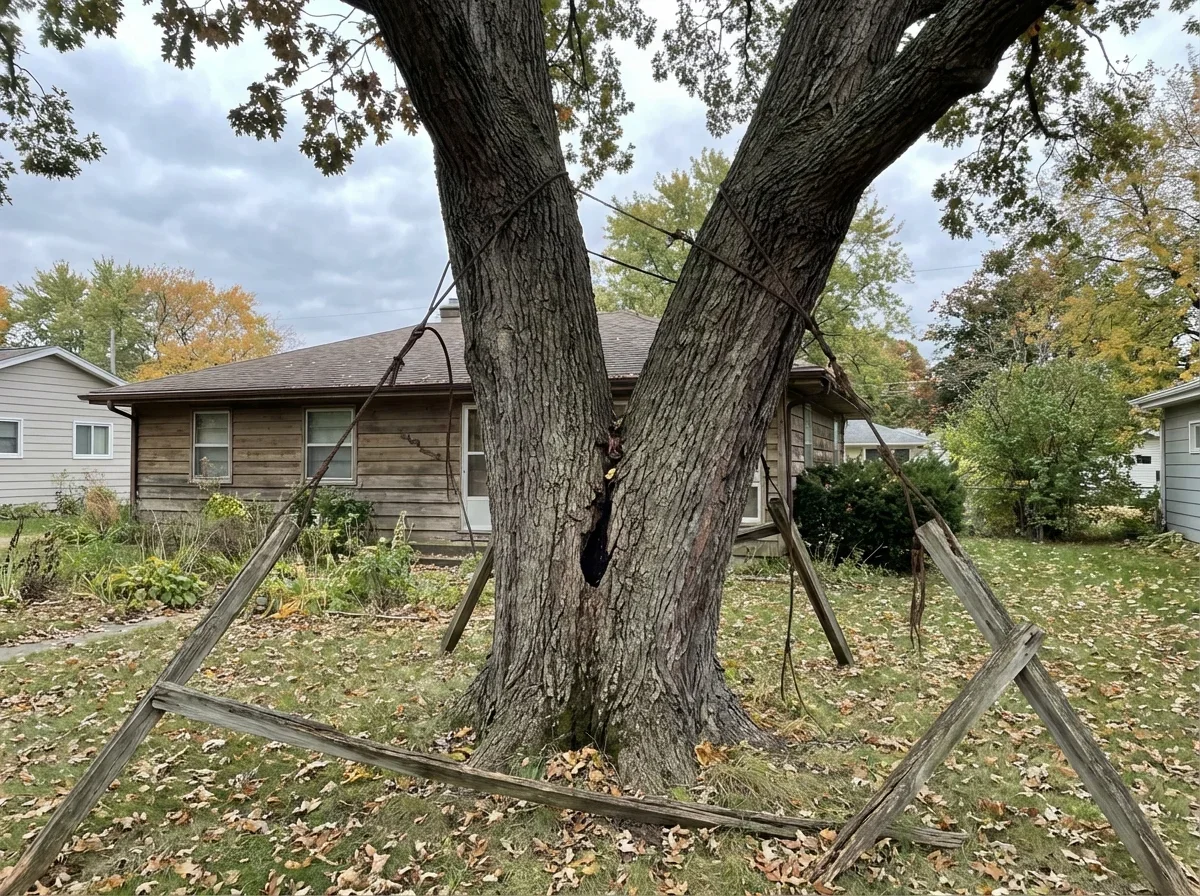
Sound familiar? That oak in your front yard has a split you've been watching for three years. Last winter's ice storm made it worse. You're afraid the next heavy snow will drop half the tree on your driveway.
The question isn't whether the tree will fail. It's when — and whether you'll be ready.
What Does Tree Cabling & Bracing Cost in the Fox Valley?
The average homeowner in Neenah or Oshkosh pays $300 to $1,200 per tree for cabling or bracing. That's not a guess — it's what certified arborists charge based on tree height, number of cables, access difficulty, and structural complexity.
You're not paying for the hardware. A single cable kit costs maybe $60. You're paying for the assessment, the climbing, the engineering judgment, and the liability an arborist carries when they certify a tree as supportable.
Cost Factors by Tree Size and Complexity
Tree height drives cost. A 30-foot maple with one simple cable is a morning job. An 80-foot oak with multiple cables across three unions is a full day with two climbers.
| Tree Height | Single Cable System | Multiple Cables (2-3) | With Bracing Rods |
|---|---|---|---|
| Under 40 ft | $300–$500 | $500–$800 | $600–$900 |
| 40–60 ft | $500–$800 | $800–$1,100 | $900–$1,300 |
| Over 60 ft | $800–$1,200 | $1,200–$1,800 | $1,400–$2,000 |
Additional factors:
- Number of attachment points: Each cable requires drilling, hardware installation, and tensioning. Three cables cost more than one.
- Access difficulty: Trees near power lines, over roofs, or in tight side yards require more rigging and time.
- Tree condition: Decayed wood requires additional assessment and may need multiple support points or supplemental pruning.
- Inspection and maintenance: Annual checks run $100–$200. Cables need re-tensioning after major storms.
Typical Price Ranges
Here's what Fox Valley homeowners actually pay:
Standard single-cable installation (mature tree, one weak union, straightforward access): $400–$700 Multi-cable system (large oak or maple, 2-3 cables, moderate complexity): $900–$1,400 Cabling + bracing (split trunk with partial failure, rods + cables): $1,200–$2,000 High-complexity systems (historic tree, multiple unions, power line proximity): $1,800–$3,000+
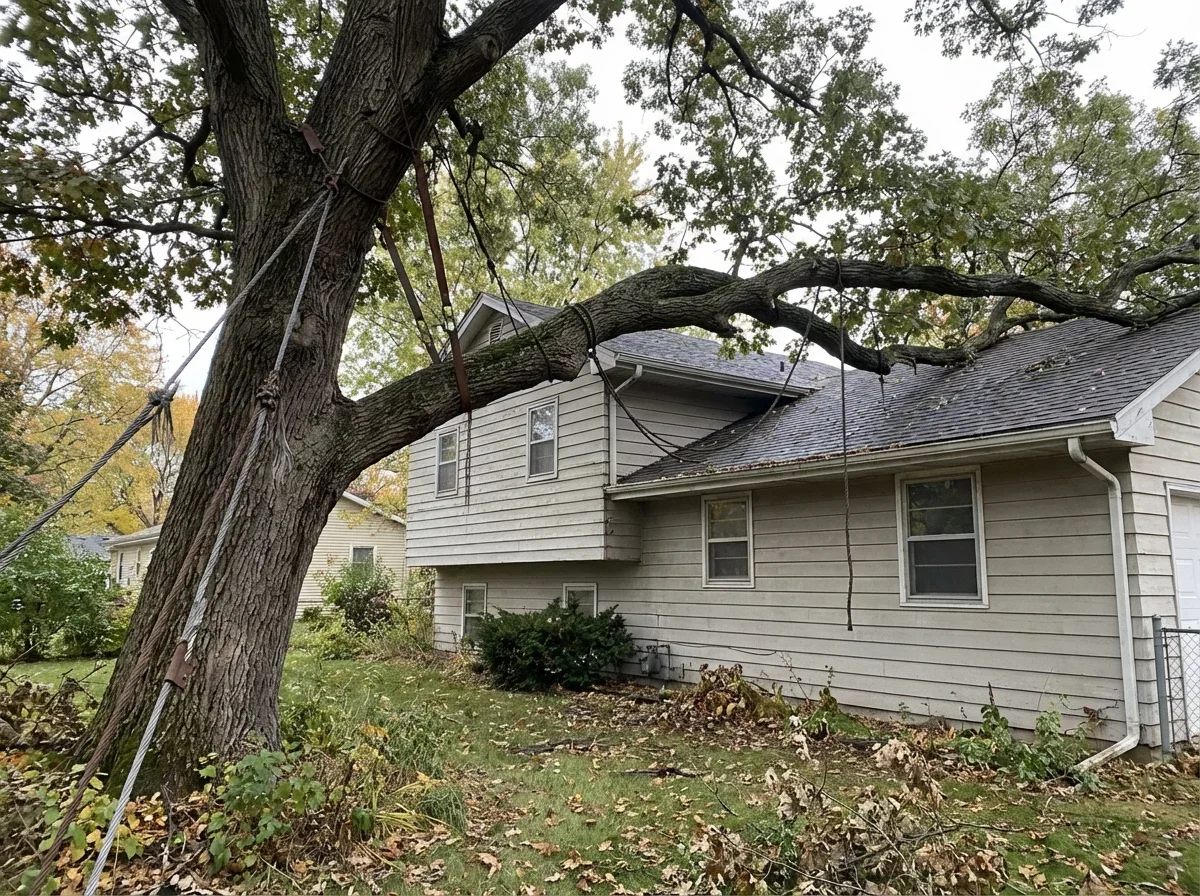
Emergency work costs more. If you wait until half the tree splits in an ice storm, you're paying crisis rates — and possibly dealing with property damage that exceeds the cost of prevention.
Removal and replacement costs make support systems look cheap. Taking down a 60-foot mature oak in Green Bay runs $1,500–$3,500. Replacing it with a 15-foot nursery tree? Another $800–$2,000. And you've lost 40 years of growth, shade value, and curb appeal.
Cabling preserves what you already have — at a fraction of the cost of starting over.
The Cabling & Bracing Installation Process
A legitimate Fox Valley arborist doesn't just drill holes and run cables. They follow ANSI A300 Part 3 standards[1] — the national specifications for tree support systems. That means site assessment, load calculations, proper hardware placement, and documentation.
Here's the process from first call to final inspection:
1. Site Assessment and Structural Evaluation (Week 1)
The arborist climbs the tree and evaluates the defect. They're looking at:
- Angle of attachment (unions under 30° are high-risk)
- Decay extent (probe testing, visual inspection for cavities)
- Bark inclusions (weak tissue trapped in the union)
- Load distribution (where weight sits, how wind moves the canopy)
They'll tell you if the tree is a candidate or if removal is safer. If decay exceeds 40% of the cross-section or the union is already failing, cabling won't help. In Kaukauna and Menasha, arborists see this often with old silver maples — the wood is too compromised to hold hardware.
2. System Design and Hardware Selection (Week 1-2)
For trees that qualify, the arborist designs the system:
- Cable placement: Installed at two-thirds the distance from the weak union to branch ends[2]
- Number of cables: Determined by tree size, load, and number of weak points
- Hardware specs: Extra-high-strength (EHS) steel cable, forged eyebolts, thimbles, cable clamps
- Bracing rods: Threaded steel with washers and nuts, sized to trunk diameter
They'll provide a written quote with scope, timeline, and inspection intervals.
3. Installation (1-2 Days)
The crew climbs and installs the system:
- Drill anchor points at specified heights and angles
- Install eyebolts or lag hooks with proper torque
- Run cables through thimbles (prevents wire chafing)
- Tension cables to manufacturer specs — not too tight (restricts movement) or too loose (allows excessive swing)
- Install bracing rods through trunk, secure with washers and nuts
For bracing, they drill completely through the wood and bolt both ends. The rod sits at or just above the split. It's mechanical clamping — the tree doesn't grow around it.
4. Pruning and Load Reduction (Same Visit)
Often, the arborist removes deadwood and reduces end weight. Lighter branches mean less force on the cables. It's not topping — it's targeted pruning to balance the canopy and reduce leverage on weak points.
5. Documentation and Inspection Schedule
You'll get a completion report with:
- System diagram showing cable locations
- Hardware specifications
- Inspection intervals (typically annual)
- Signs to watch for (cable loosening, hardware corrosion, new cracks)
Wisconsin ice and snow loads are hard on cables. Most Fox Valley arborists recommend annual inspections after winter and re-tensioning as needed. Expect cables to last 5–10 years before replacement.
How to Choose a Tree Cabling Contractor
Not every tree service company does cabling. It requires climbing skills, engineering judgment, and liability insurance most lawn care outfits don't carry. In Appleton and Green Bay, you'll find plenty of companies that cut and haul — fewer that actually install ANSI-compliant support systems.
Look for ISA Certified Arborists. Certification means they've passed technical exams on tree biology, risk assessment, and support systems. A certified arborist knows when cabling will work and when it won't — and they'll tell you if removal is the better call.
Questions to ask before hiring:
- "Do you follow ANSI A300 Part 3 standards?" If they don't know what that is, walk away. Those standards specify cable placement, hardware specs, and inspection intervals.[2]
- "Can you provide a written assessment of the tree's structural defects?" You want documentation of the problem, the proposed solution, and why cabling is appropriate.
- "What's the expected lifespan of the system?" Honest answer: 5–10 years with annual inspections. Anyone promising "permanent" solutions is overselling.
- "Do you carry arborist liability insurance?" Cabling involves drilling into live wood and installing hardware under tension. If something fails, you want coverage.
Red flags that signal an unqualified contractor:
- Suggests cabling for trees with advanced decay or structural failure already in progress
- Uses non-standard hardware (cables from the hardware store, lag screws instead of forged eyebolts)
- Doesn't climb to inspect — quotes from the ground
- Bundles cabling with topping or "shaping" (legitimate arborists prune for load reduction, not aesthetics)
- No mention of inspection intervals or maintenance
The best contractors will walk you through the decision. They'll explain what cabling can and can't do, show you the weak points in the tree, and give you a realistic cost-benefit comparison against removal. If they're pushing removal when cabling is viable — or pushing cabling when the tree is too far gone — that's a problem either way.
Compare at least three certified arborists in the Fox Valley. Ask for references on similar jobs. A $1,200 investment in cabling is worth it if the tree is savable. The contractor who tells you the truth — even if it's not the answer you want — is the one to hire.
Frequently Asked Questions
The average cost to remove a large tree (60+ feet tall) in Wisconsin is $2,000 to $5,000+, with most homeowners paying around $3,000–$4,000 for a standard residential removal.
Cost breakdown for a large tree:
| Service | Typical Cost |
|---|---|
| Tree removal (60+ ft) | $2,000–$5,000 |
| Stump grinding | $300–$600 |
| Debris hauling/cleanup | $200–$800 |
| Crane rental (if needed) | $1,000–$3,000 |
| Hazard assessment/rigging | Included or $200–$500 |
| TOTAL (standard) | $2,500–$6,500 |
Factors that increase cost for large trees:
- Proximity to house, power lines, or neighbors' property
- Multiple large limbs over structures
- Steep or muddy terrain limiting equipment access
- Hazardous lean or dead wood
- Emergency/storm damage removal (20–50% premium)
Get 3 written estimates from certified arborists. The estimate should include debris removal, stump grinding options, and timeline.
- University of Florida IFAS Extension. "Cabling and Bracing Trees." https://hort.ifas.ufl.edu/woody/cabling.shtml. Accessed February 10, 2026.
- University of Tennessee Institute of Agriculture. "Cabling, Bracing and Other Support Systems for Trees." https://utia.tennessee.edu/publications/wp-content/uploads/sites/269/2023/10/SP659.pdf. Accessed February 10, 2026.
Related Articles
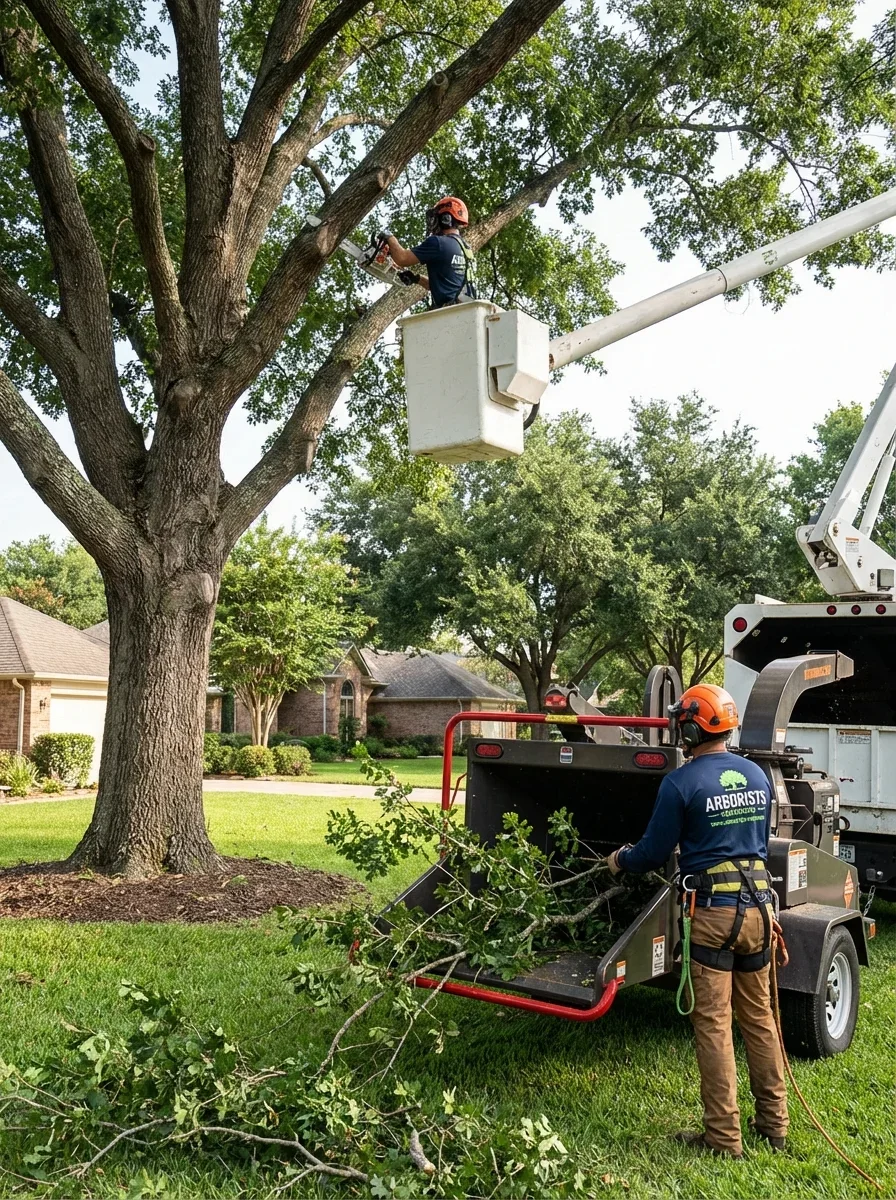
How Much Does an Arborist Cost?
Read Cost Guide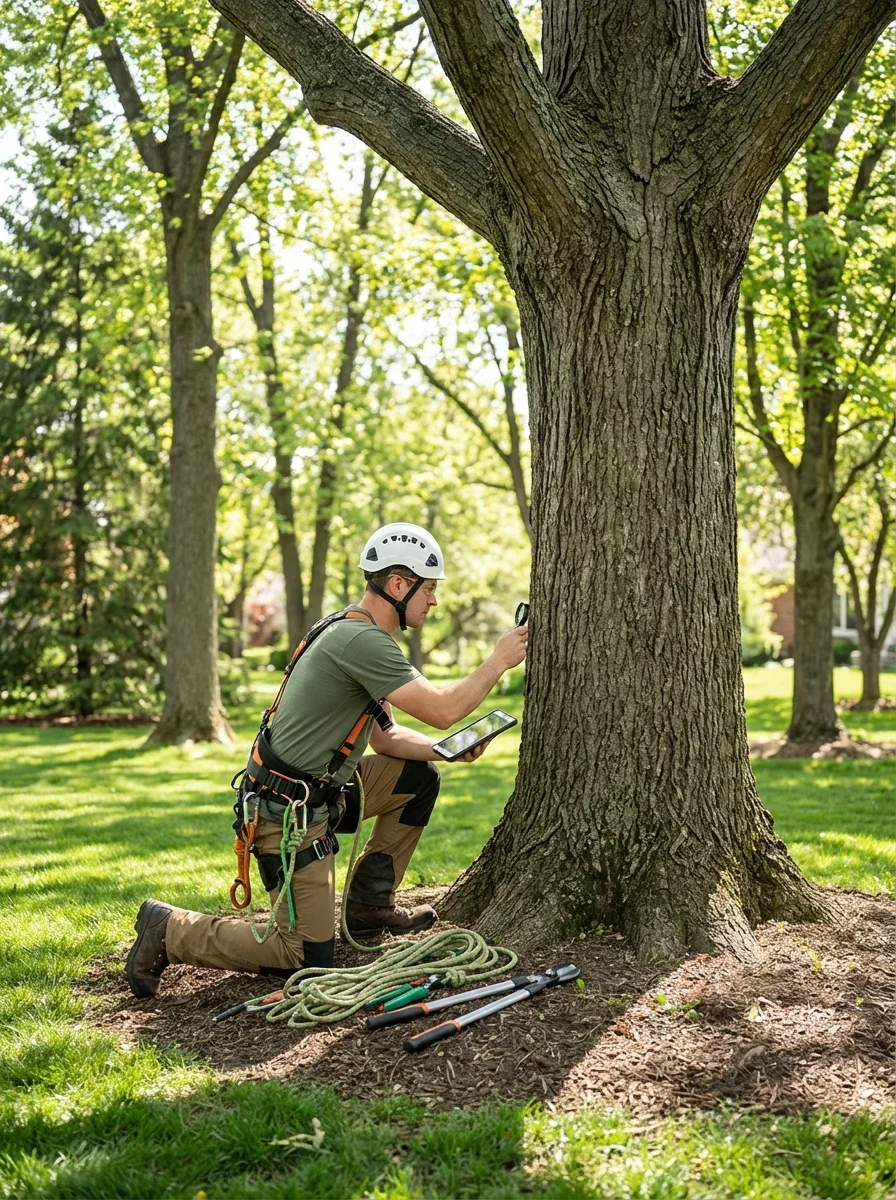
How to Hire an Arborist (Checklist)
Read Guide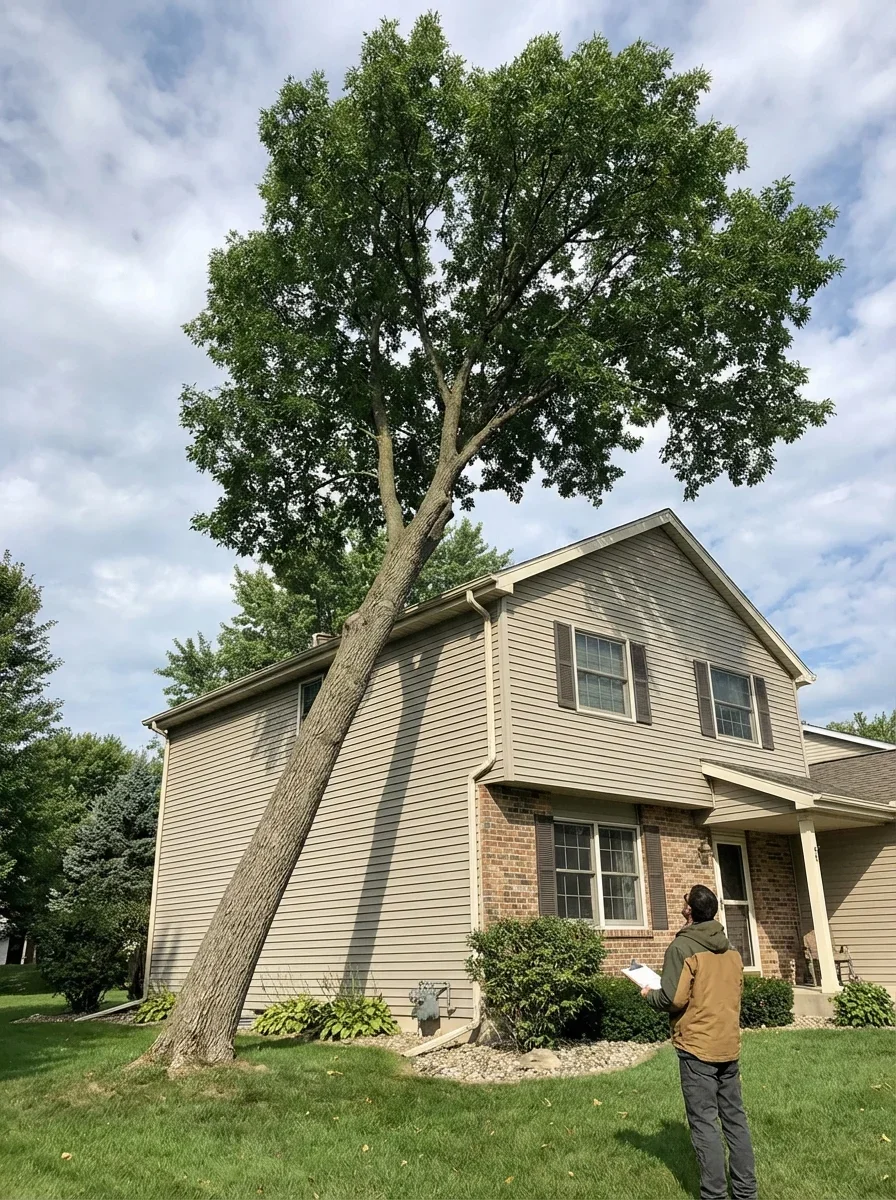
Tree Leaning Toward House
Read ProblemTree Cabling and Bracing Cost: Is Support Worth the Investment?
Read Guide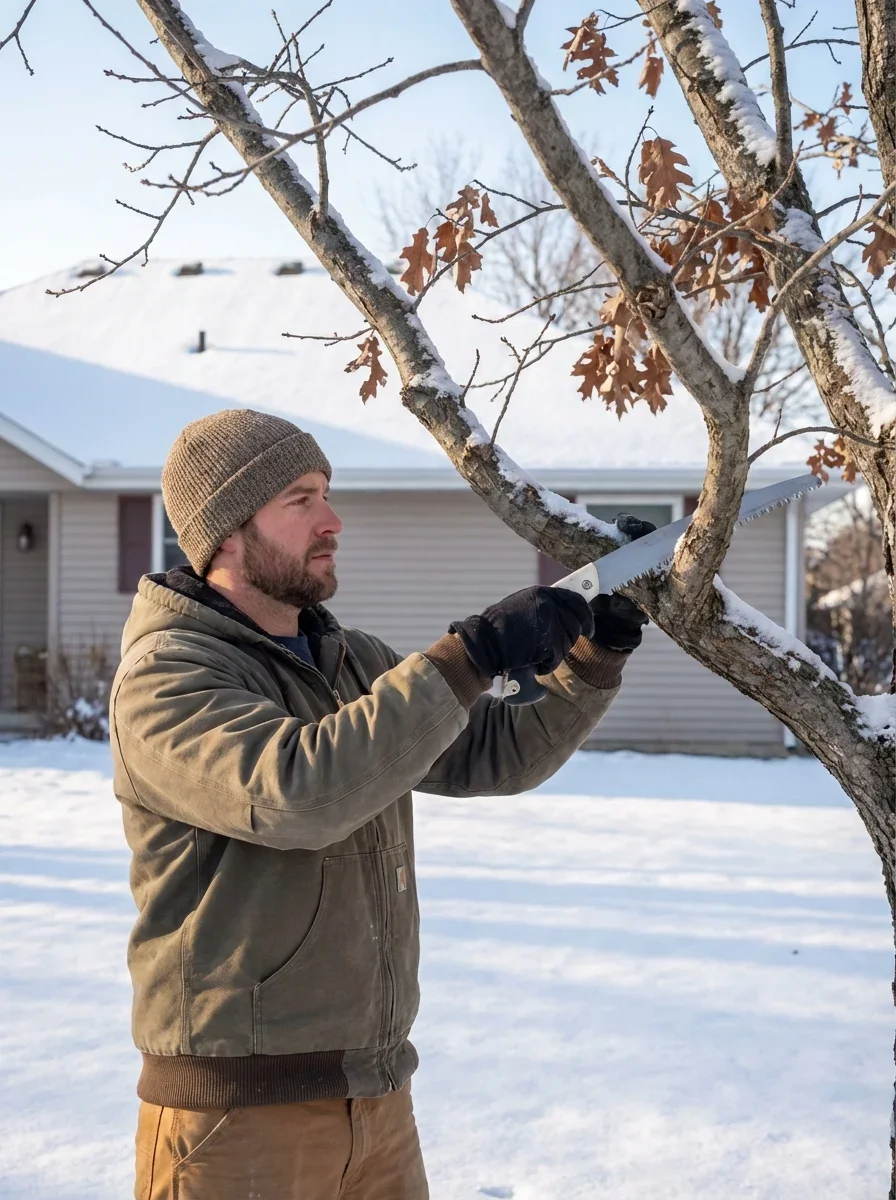
When to Prune Trees in Wisconsin
Read Guide