
Immediate Safety Steps After Impact
Get everyone outside and account for all family members and pets. Do not go back inside for belongings, medication, or anything else.
Homes that appear stable can shift without warning as structural supports settle under the new weight distribution.
Call 911 if anyone is injured or trapped. Even minor injuries need medical documentation for insurance claims. If the tree is touching power lines or you see sparking, stay at least 35 feet away and report it immediately.[1] Assume every downed line is energized — electrocution kills dozens of people during storm cleanup each year because lines remain live even when neighborhood power is out.[2]
Establish a perimeter. Keep neighbors, children, and curious onlookers away from your property. Trees create unpredictable weight loads — secondary collapses happen hours after the initial impact, especially if rain soaks the exposed interior or wind shifts the trunk position.
Critical Safety Warning: Never assume a damaged home is stable enough to re-enter. Trees create concentrated weight loads that stress your entire structure in ways you cannot see. Secondary collapses occur hours after initial impact as structural supports continue settling.
Securing Your Property
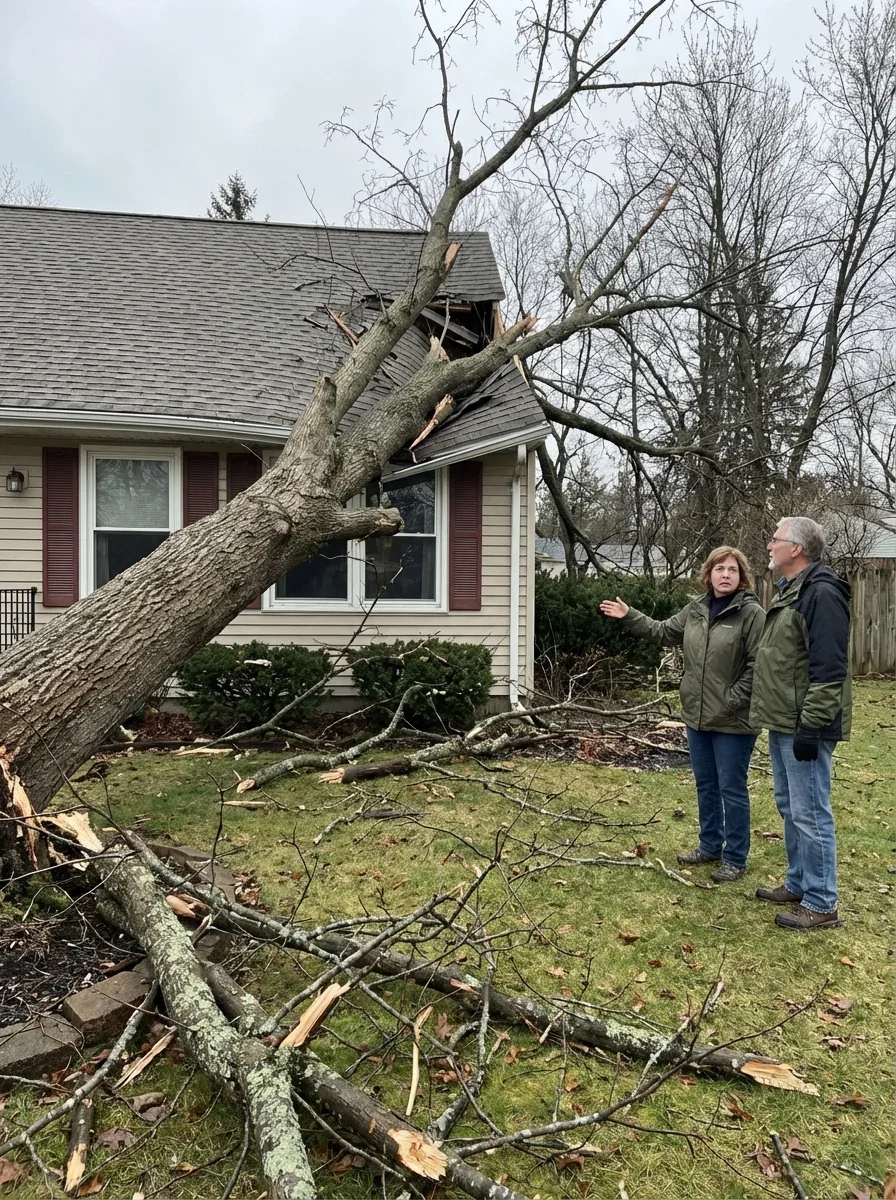
Once everyone is safe and emergency services are notified, your priority shifts to documentation and preventing additional damage. Take photos and video from every angle before touching anything — capture the tree position, entry point, interior damage, and any visible structural issues like cracked walls or sagging ceilings.
Photograph personal property damage too.
Insurance adjusters need proof of what was destroyed and its condition before impact. One homeowner watched a century-old family home become uninhabitable overnight when a massive oak crashed through the living room, jamming every door and trapping irreplaceable childhood memories inside. She documented what she could see through windows before professionals declared it too dangerous to enter.
If weather permits and it's safe to access exterior areas without entering the structure, cover exposed roof openings with tarps secured to undamaged sections. Your homeowners policy typically covers "reasonable steps" to prevent further damage, and insurers may reimburse tarp costs. But don't climb on a compromised roof — wait for emergency contractors who carry proper equipment and liability coverage.
Calling Your Insurance Company
Contact your homeowner's insurance within 24 hours, even if it's the middle of the night. Most carriers have emergency claim lines that dispatch adjusters for catastrophic damage like trees through roofs. The representative will assign a claim number and explain your coverage limits for emergency repairs and temporary housing.
Homeowners insurance typically covers dwelling damage from trees felled by wind or storms, including debris removal up to policy limits — often $500 to $1,000, though some policies cover removal costs up to 5% of the dwelling coverage when the tree damages a covered structure.[3]
If the tree fell on a calm day with no weather event, coverage gets complicated.
Insurers may investigate whether the tree was diseased or dead, potentially denying claims if they determine you neglected "reasonable maintenance."
Ask about Additional Living Expenses (ALE) coverage immediately. If your home is uninhabitable, this pays for hotels, temporary rentals, and meals while repairs happen. One veteran spent weeks living in his truck after a tree made his house too unsafe to enter — he didn't realize his policy would have covered a hotel until community volunteers helped him navigate the claim.
What to Ask Your Insurance Company Immediately:
- What is my claim number and who is my assigned adjuster?
- What are my coverage limits for emergency repairs and tree removal?
- Am I eligible for Additional Living Expenses (ALE) if my home is uninhabitable?
- Do I need pre-approval before hiring emergency contractors?
- What documentation do you require for reimbursement?
- Do you have preferred vendors, and am I required to use them?
Emergency Tree Removal Services
You need a licensed, insured tree removal company today, not next week. Emergency tree services operate 24/7 specifically for these scenarios, but you'll pay premium rates — often 2-3 times normal pricing because crews mobilize immediately with specialized equipment.
Get at least two quotes if time allows, but don't delay removal to save a few hundred dollars. Every hour that tree stays lodged in your roof exposes your home's interior to weather, pests, and progressive structural failure.
Ask each company:
- Are you licensed and insured for this type of emergency work?
- Will you coordinate with utility companies if power lines are involved?
- What's your timeline from contract signing to tree removal?
- Do you provide documentation and photos for insurance claims?
Never hire someone who knocks on your door immediately after the incident offering discount rates. Storm chasers follow weather patterns, take deposits, and disappear. Verify credentials through your state's contractor licensing board before signing anything.
Some insurers maintain preferred vendor lists for emergency services. Using their contractors can expedite approval and payment, though you're not required to use them. Your policy covers reasonable emergency repairs regardless of who performs the work, as long as you get prior approval for costs exceeding your deductible.
What Insurance Actually Covers
Standard homeowners policies cover the dwelling structure, attached structures like garages, and personal property inside — but coverage limits and exclusions vary dramatically by policy type and state. Most policies distinguish between the tree removal itself and repairing the damage it caused.
If the tree damaged your house, insurance typically covers removal costs as part of the debris cleanup, subject to your policy's specific limits.[3] If the tree fell in your yard without hitting anything, most policies either don't cover removal or cap it at $500-$1,000.
The exception: if the fallen tree blocks your driveway or wheelchair ramp, preventing access, many insurers will cover removal even without structure damage.
Your dwelling coverage pays for roof repairs, wall reconstruction, and related structural work minus your deductible. Personal property coverage handles damaged furniture, electronics, and belongings at replacement cost or actual cash value depending on your policy elections. If your century-old china cabinet was crushed, you'll need receipts, photos, or appraisals proving its value — another reason immediate documentation matters.
Water damage from rain entering through the compromised roof is covered if you took reasonable steps to prevent it. That's why tarping exposed areas is critical even before the adjuster arrives. If you wait three days and a rainstorm ruins your hardwood floors, the insurer may deny that secondary damage as preventable.
Documenting Damage for Your Claim
Create a comprehensive damage inventory before cleanup begins. Insurance adjusters need evidence of what was destroyed, where the tree entered, and the full scope of structural impact.
Once contractors start removing debris, that evidence disappears.
Video walkthroughs work better than photos alone because they capture spatial relationships and the extent of damage across multiple rooms. Narrate as you film, noting what each damaged item was and approximately when you purchased it. One homeowner's handcrafted artwork miraculously survived a massive oak impact — she documented both the destroyed items and undamaged pieces to avoid disputes about what was in that room.
Make written lists with as much detail as possible:
- Structural damage: roof penetration size, cracked studs, foundation shifts, damaged electrical systems
- Personal property: furniture, electronics, clothing, kitchen items — everything the tree or subsequent weather exposure destroyed
- Emergency expenses: hotel bills, meals, pet boarding, clothing purchases if yours were inside
Save every receipt related to the incident. Emergency tree removal, tarps, hotel stays, meals above your normal food budget — your policy's Additional Living Expenses coverage reimburses these costs, but only with documentation. Create a dedicated folder (physical and digital) for all claim-related paperwork.
Safety Concerns Nobody Mentions
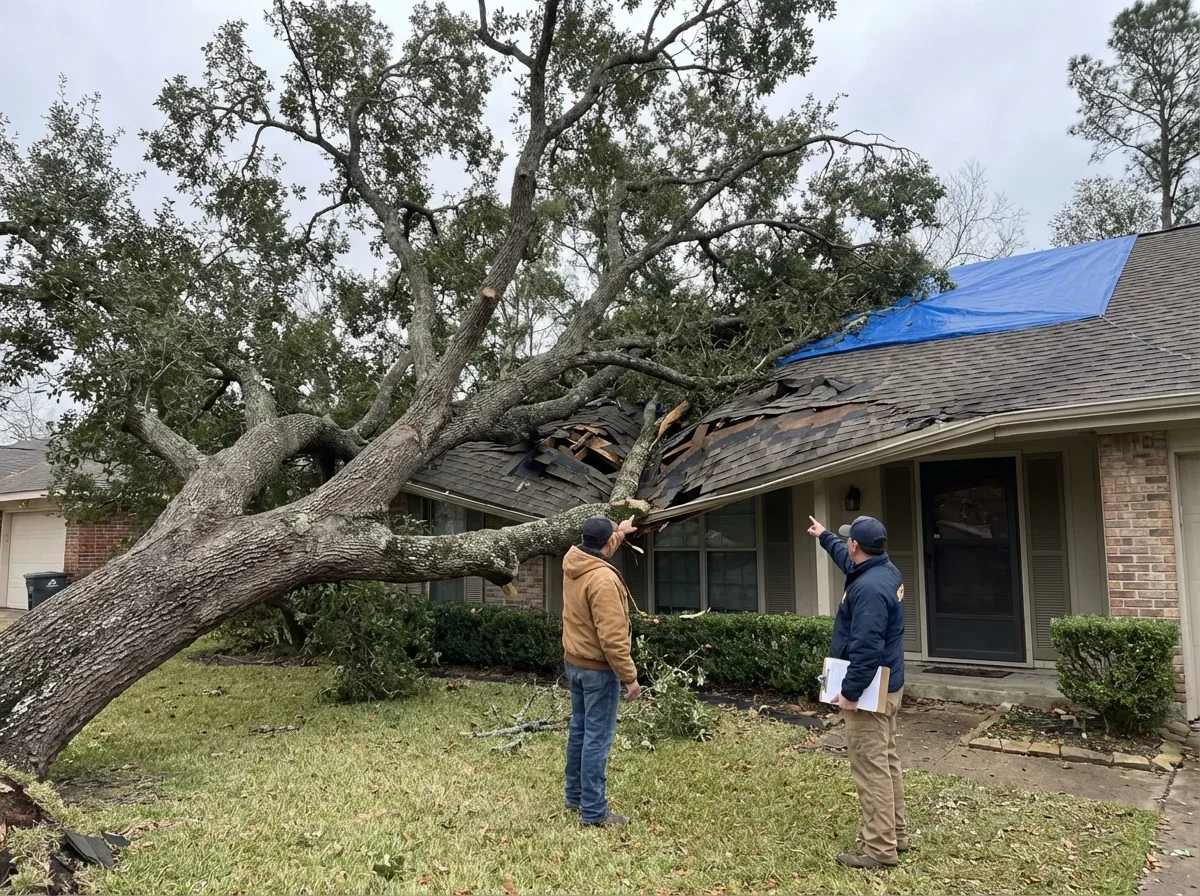
The structural damage you can see is only part of the threat. Trees create point loads — concentrated weight in areas not designed to support it — that stress load-bearing walls throughout your home.
Hairline cracks in interior walls three rooms away from the impact point signal that the entire structure has shifted.
Gas leaks are common but not always immediately obvious. If you smell gas or hear hissing near the damage site, evacuate and call the gas company from a safe distance. Don't assume the smell would be overwhelming — even a small leak in an enclosed space can reach explosive concentrations.
Mold growth starts within 24-48 hours in wet conditions. If rain entered through the roof opening or the tree brought moisture-soaked bark and leaves into your living space, mold spores will colonize drywall, insulation, and wood framing faster than you'd expect. This matters because some policies exclude mold remediation if it results from maintenance failures — another reason emergency tarping and rapid drying are non-negotiable.
The tree itself can remain hazardous for days. Root systems torn from the ground create massive voids and unstable soil that can swallow equipment or cause secondary collapses. Branches under tension from the roof load can spring violently when cut, injuring workers or bystanders.
This is why professional removal costs what it does — they're managing physics you can't see.
Temporary Housing and Living Expenses
If your home is uninhabitable, your insurance policy's Additional Living Expenses coverage maintains your family's standard of living during repairs. This isn't limited to just hotel costs — it covers the full difference between your normal living expenses and what you're forced to spend while displaced.
Eligible expenses include:
- Hotel or short-term rental housing at comparable quality to your home
- Increased meal costs (restaurant bills minus what you'd normally spend on groceries)
- Pet boarding if your temporary housing doesn't allow animals
- Laundry service if your rental doesn't have machines
- Storage for salvageable furniture and belongings
- Increased commuting costs if you had to relocate farther from work
Keep meticulous records because insurers audit these expenses. Save restaurant receipts, get written rental agreements, document everything. Most policies continue ALE coverage until your home is repaired or you reach your policy's time limit (typically 12-24 months) or dollar limit — whichever comes first.
Ask your adjuster about advance payments. Some insurers will provide upfront funds for immediate housing needs rather than making you wait for reimbursement, especially when displacement will clearly extend for months.
| Coverage Scenario | Tree Removal Covered? | Repair Costs Covered? | Typical Limits |
|---|---|---|---|
| Tree damages structure during storm | Yes, as debris cleanup | Yes, minus deductible | Up to 5% of dwelling coverage or $500-$1,000 |
| Tree falls in yard, no damage | Usually no | N/A | $500-$1,000 cap if covered at all |
| Tree blocks driveway/access | Often yes | N/A | Standard debris removal limits |
| Tree falls on calm day (no storm) | Maybe—subject to investigation | Maybe—if not due to neglect | Depends on cause determination |
Contractor Selection for Repairs
Your insurance check doesn't mean the work is done — it means the battle over repair quality is just beginning. General contractors specializing in insurance restoration understand the claims process and documentation requirements, but not all carry the credentials needed for structural repairs involving compromised roof systems and load-bearing walls.
Verify every contractor has current licensing for your state, general liability insurance of at least $1 million, and workers' compensation coverage. Ask for certificates of insurance and call the issuing companies to confirm policies are active.
Contractors have been known to show expired certificates.
Get detailed written estimates from at least three contractors before choosing. The lowest bid often signals cut corners or misunderstanding of scope. Compare their approaches to structural repairs — are they just patching the hole or properly assessing and rebuilding the load path? Will they bring in structural engineers to certify the work?
Your insurance company may recommend contractors, but you're not obligated to use them. Some insurers work with restoration companies that move fast and document well but prioritize speed over craftsmanship. Others genuinely vet their networks. Either way, the contractor works for you, not the insurer, and you're responsible for any cost overruns if actual repairs exceed the estimate.
When Trees Fall Without Warning
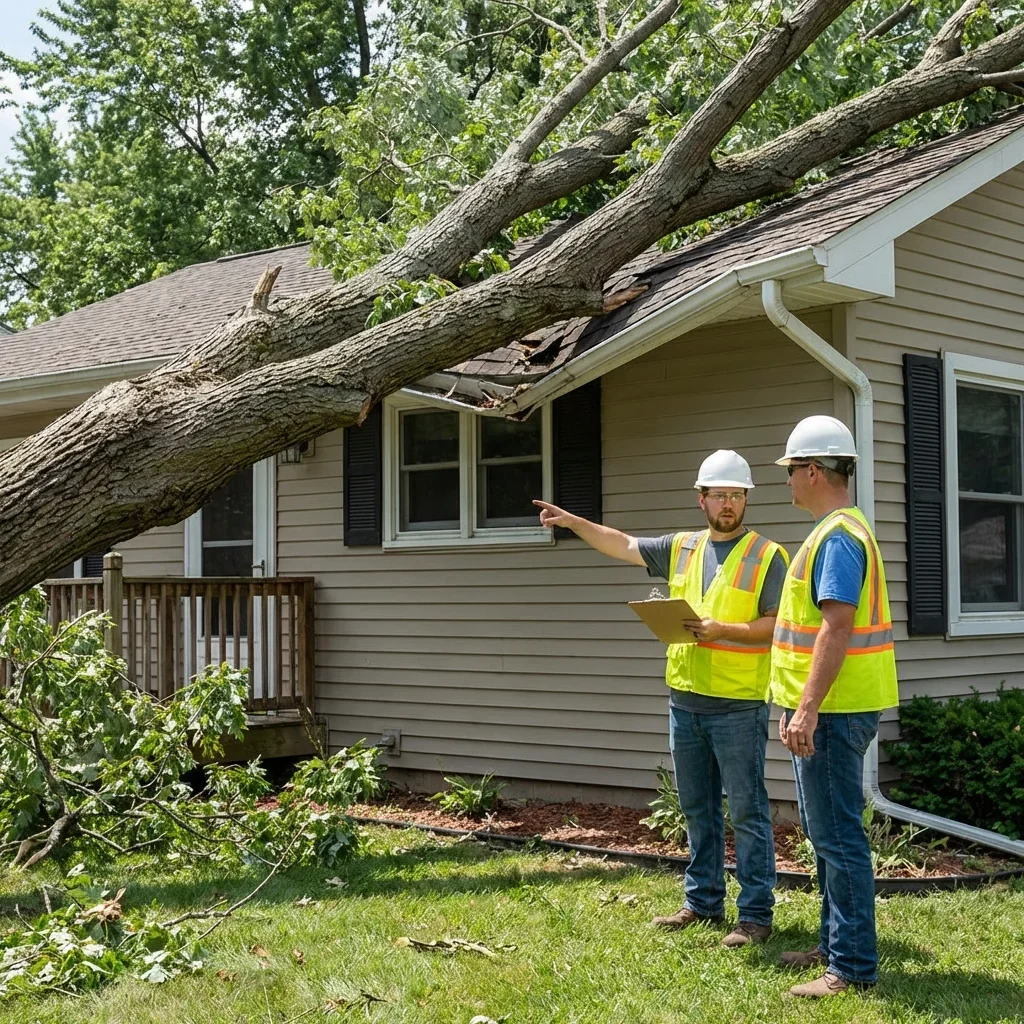
Not every tree collapse happens during storms. Homeowners discover decades-old trees can fail on calm days with no wind — victims of internal rot, root disease, or structural defects invisible from ground level.
One family lost a century-old tree their grandparents planted, watching it crash through their home on a windless afternoon and destroy generations of family history.
These sudden failures complicate insurance claims because policies typically cover "sudden and accidental" damage from external forces like wind, not gradual deterioration. Adjusters investigate whether the tree showed signs of disease or deadwood, looking for reasons to deny coverage based on "lack of maintenance." You'll need evidence the tree appeared healthy and was professionally maintained.
If you have mature trees within falling distance of your house, annual inspections by certified arborists create documentation that you exercised reasonable care. They identify hazard trees before failure, giving you the option to remove them proactively — which your insurance won't cover, but which costs far less than rebuilding your roof.
Document the condition of large trees with annual photos. If a tree fails despite appearing healthy, those images prove you had no warning signs to act upon, strengthening your claim against allegations of negligence.
Power Line Complications
When trees contact electrical service lines, your emergency response changes completely. Do not approach the tree, the house, or anything touching either one.
Electricity travels through wet wood, metal roofing, and even wet ground — creating invisible kill zones that electrocute people standing dozens of feet from the actual contact point.[2]
Call your utility company immediately and clearly state that a tree is touching power lines. They'll dispatch emergency crews to de-energize the lines before anyone can safely approach. This may take hours during widespread storm damage when utilities prioritize main transmission lines over individual services.
Your tree removal contractor cannot begin work until the utility company provides written clearance that lines are safe. Some tree services coordinate directly with utilities and understand the protocols — others will show up, see the power line contact, and refuse the job. Ask about power line experience when calling emergency services.
The utility company is responsible for service lines running from the pole to your house, but you're responsible for damage the tree caused beyond that attachment point. If the tree pulled down the weatherhead or damaged the meter base, you'll pay an electrician to repair those components before the utility reconnects your service.
Budget $500-$2,000 for electrical repairs even if the main structural work is covered by insurance.
Protecting What's Left Inside
If you can't enter your home safely, valuable items remain vulnerable to weather, theft, and additional damage as contractors work. Board up accessible windows and doors from the outside if possible. Install temporary fencing around the property to deter opportunistic theft — damaged homes become targets within hours of incidents as word spreads.
Notify your local police department about the situation. Some departments increase patrols past damaged properties or include them in vacation watch programs. File a report about the incident too — that documentation helps if you later discover theft or vandalism during the displacement period.
Update your insurance company if you can't secure the property adequately. Some policies require reasonable security measures, but if the structure is too unsafe to approach, adjusters understand you can't board up second-story windows in a house with a compromised roof structure.
Ask your contractor about interim security. Restoration companies working multi-week projects sometimes provide overnight security or install temporary door locks and window covers as part of their service, especially for homes in vulnerable neighborhoods.
Frequently Asked Questions
- FEMA (Federal Emergency Management Agency). "After a Storm: Safety First." https://www.ready.gov/storms. Accessed February 09, 2026.
- National Weather Service (NOAA). "Storm Cleanup Safety." https://www.weather.gov/safety/storm-cleanup. Accessed February 09, 2026.
- National Association of Insurance Commissioners (NAIC). "Windstorms and Insurance Coverage." https://www.naic.org/documents/prod_serv_consumer_info_c_ins24-04.pdf. Accessed February 09, 2026.