
Why Timing Matters in Wisconsin's Climate
Wisconsin sits in a climate zone where freeze-thaw cycles dominate winter, humidity spikes in summer, and oak wilt spreads aggressively during warm months. When you prune determines whether wounds heal quickly or become entry points for disease.
Dormant pruning—late winter through early spring before buds break—lets trees heal faster with less stress.[1] You're not interrupting active growth, and pests that spread disease are still inactive. Visibility is better too, since leafless branches reveal structural problems you'd miss in summer.
Fall pruning, by contrast, slows a tree's transition into dormancy and leaves wounds vulnerable to decay over winter.[2] Spring and summer cuts on most species invite sap flow that attracts insects and fungi.
The exceptions are narrow—and species-specific.
Pro Tip: Pruning wounds heal fastest when trees are dormant but temperatures are rising. February in Wisconsin hits this sweet spot—storms have passed, but buds haven't broken yet.
The Critical Oak Wilt Window (April–October)
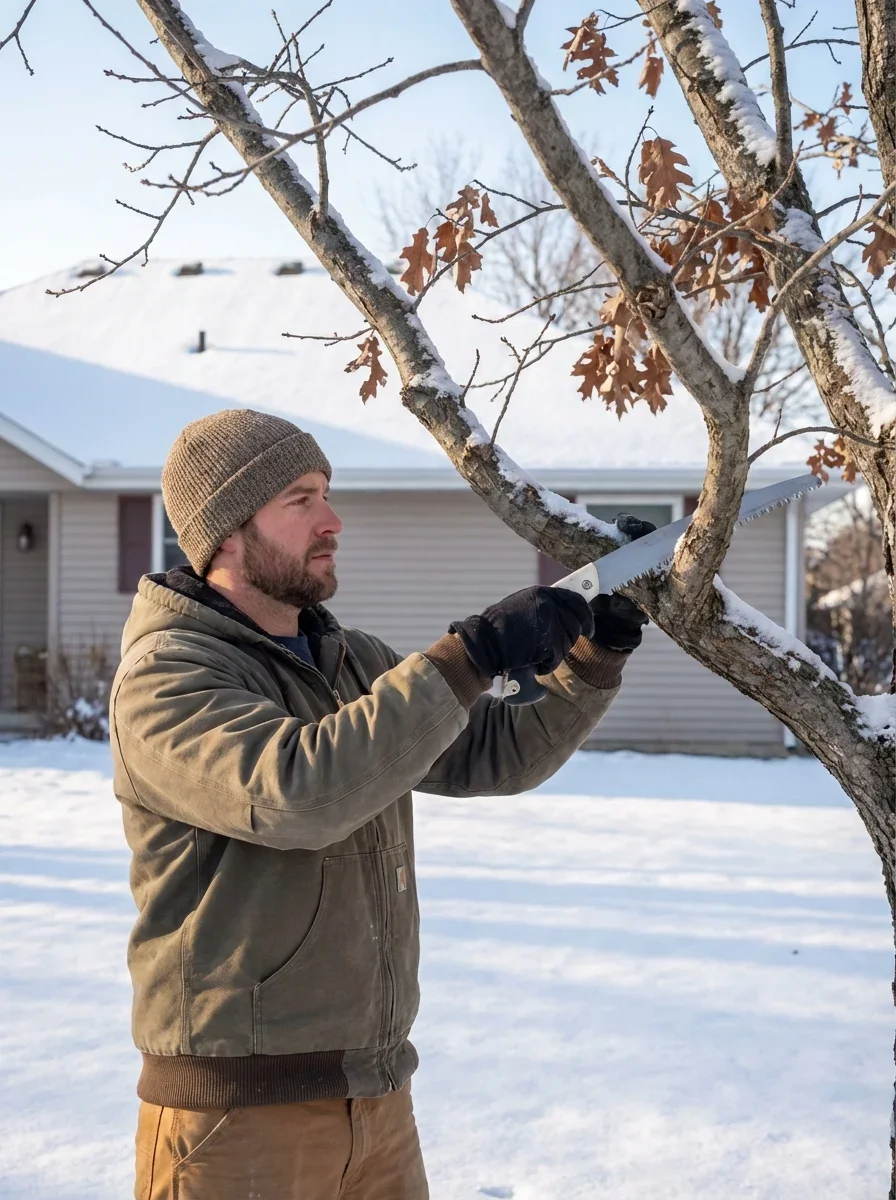
Oak wilt kills tens of thousands of Wisconsin oaks every year. Pruning during the wrong season is a leading cause of new infections.
The fungus spreads through sap beetles attracted to fresh wounds on oak trees between April 1 and October 31, when beetles are active and the pathogen thrives in warm weather. Never prune oaks during this window unless it's an emergency—say, a broken limb threatening your roof. Even then, immediately seal the wound with latex paint or a commercial wound dressing. Many arborists refuse oak work entirely from late spring through early fall because the risk is that high.
If you need to prune oaks, schedule it for late fall (after leaf drop) through winter, or very early spring before April. The cold keeps beetles dormant and slows fungal spread.
Homeowners consistently report that pros emphasize this timing more than any other pruning guideline, because one mistake can cascade through an entire neighborhood as the fungus spreads through root grafts between nearby oaks.
Best Pruning Windows by Season
Late Winter (February–March)
This is your prime window for most deciduous trees—maples, ash, lindens, birches, fruit trees. February is especially ideal in Wisconsin because trees are still fully dormant, but the worst of winter storms have passed.[1]
Start by removing any damaged or broken branches back to a healthy side branch or lateral twig. The cuts heal cleanly once growth resumes in spring.
You'll also spot structural issues more easily without leaves. Dead limbs, crossed branches, weak crotches—they all stand out against bare wood. Maples and birches will "bleed" sap if you prune them in early spring as temperatures rise, but that's cosmetic. It doesn't harm the tree, just looks alarming.
Early Summer (June–Early July)
Evergreens like spruce, fir, and pine do best with early summer pruning, right after their spring growth flush. Cut new shoots (called "candles" on pines) back to a lateral bud to control shape and density.[2] This timing lets the tree set buds for next year without pushing excessive new growth that won't harden off before winter.
For flowering trees that bloom in spring—crabapples, cherries, magnolias—prune right after flowers fade. You're removing spent blooms before the tree sets next year's flower buds, so you won't sacrifice next spring's display.
Late Fall (November–December)
Once oaks drop their leaves and temperatures stay consistently cold, you can prune oaks safely. Many homeowners schedule oak work for late November or December, when the ground might be frozen but conditions are still workable for professionals.
This avoids both the oak wilt season and the deep snow of January.
Other hardwoods can be pruned now too, but you're better off waiting for late winter when healing conditions improve. Late fall is really about oaks and emergency removals—broken branches after storms, hazard limbs over structures.
| Season | Best For | Avoid | Key Reason |
|---|---|---|---|
| Late Winter (Feb–Mar) | Most deciduous trees, fruit trees | Oaks in early April | Trees dormant, wounds heal fast in spring |
| Early Summer (Jun–Jul) | Evergreens, spring-flowering trees | Major cuts on deciduous trees | New growth hardens before winter |
| Late Fall (Nov–Dec) | Oaks (after leaf drop) | Most other species | Oak wilt beetles dormant, but slower healing |
| Spring/Summer (Apr–Oct) | Emergency work only | All oaks | Oak wilt danger zone, high disease risk |
What to Avoid: The Worst Times to Prune
Spring (April–May) is problematic for most species. Trees are channeling energy into leaf production, and fresh wounds disrupt that process. For oaks, it's the start of the oak wilt danger zone.
For maples and birches, heavy sap flow makes a mess without harming the tree, but it signals you're pruning at a metabolically expensive time.
Summer pruning (outside the narrow evergreen window) stresses trees in Wisconsin's heat and humidity. Wounds attract insects, and the tree is already working hard to sustain foliage. You might remove branches shading the crown, forcing remaining leaves to cope with more intense sun.
Fall (September–October) consistently ranks as the worst season.
Cuts made in fall slow the tree's dormancy process, and fungi that cause decay are still active.[2] Wounds sit open through winter without the rapid spring healing response. Homeowners who've pruned in fall report more dieback and slower recovery compared to late-winter cuts.
Species-Specific Guidelines for Wisconsin Trees
Oaks (All Species)
Prune only November through March. Red oaks are most susceptible to oak wilt, but white oaks and bur oaks can also contract it.
If a branch breaks during the April–October window, seal the wound immediately with latex paint—don't wait even a day. Some arborists wrap wounds in plastic as an extra barrier.
Maples (Sugar, Red, Silver)
Late winter is ideal, but expect sap bleeding if you prune after mid-February. It's harmless but messy. Avoid fall pruning, which invites cankers and decay.
Maples are fast healers, so minor cuts in early summer won't cause lasting damage if you need to clear a sightline or remove a dead branch.
Evergreens (Spruce, Fir, Pine, Arborvitae)
Prune in early summer after new growth hardens. For junipers and false cypress, never prune after August—the new growth won't harden off before winter.[2]
Pines tolerate "candling" (pinching new shoots) in June to control size without cutting into old wood, which won't produce new needles.
Fruit Trees (Apple, Cherry, Pear)
Late winter is standard for structure and thinning cuts. For cherries, some growers prefer summer pruning right after harvest to reduce bacterial canker risk, but this is a niche practice.
Most Wisconsin homeowners stick to February or March for fruit trees.
How to Prune Correctly (Not Just When)
Timing is half the equation. The other half is technique.
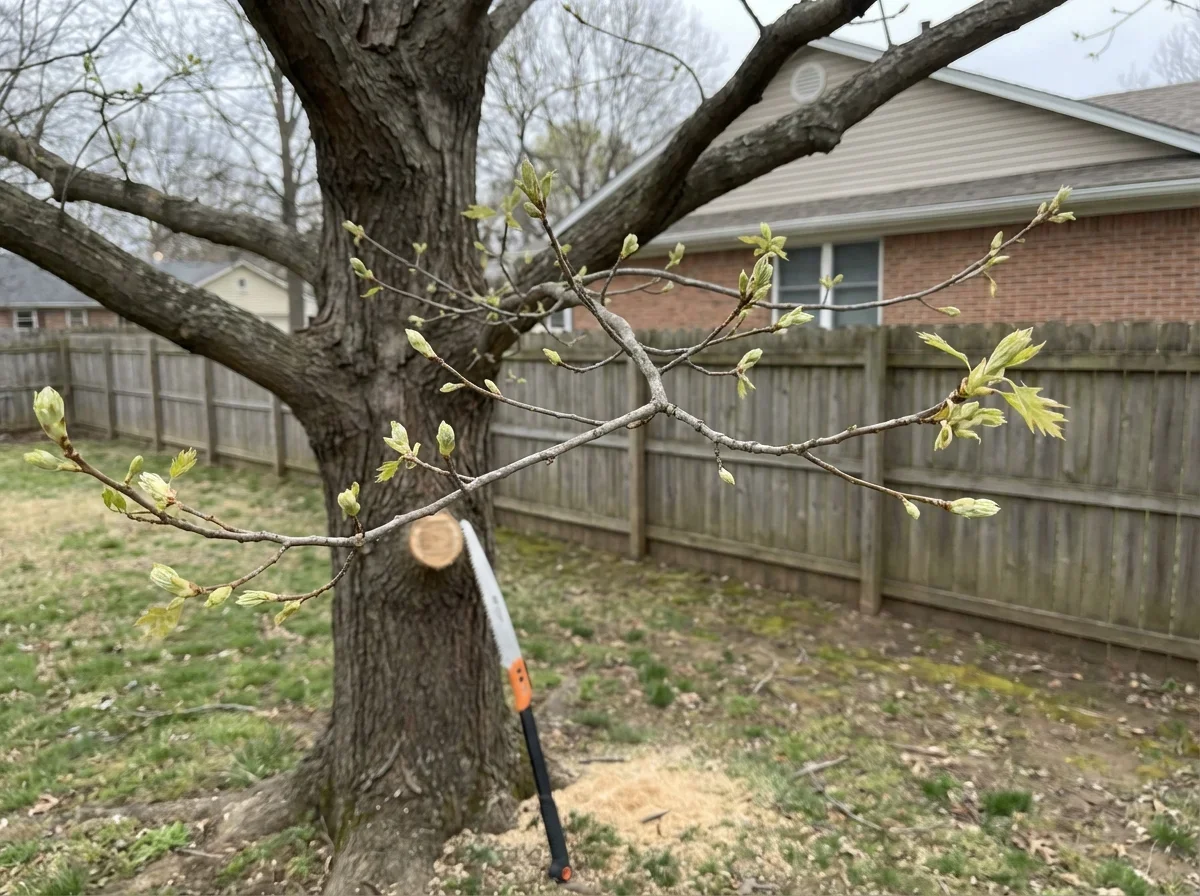
Always cut back to a lateral branch or bud—never leave stubs, which die back and invite decay. Use sharp tools: hand pruners for branches under ¾ inch, loppers for ¾ to 1½ inches, and a pruning saw for anything larger.
Remove dead, damaged, or diseased wood first.[1] Then address structure: crossed branches, narrow crotches, limbs growing toward the center of the canopy. Make cuts just outside the branch collar (the swollen area where the branch meets the trunk), angling slightly away from the trunk. Don't cut flush or leave a long stub.
For heavy limbs, use a three-cut method to prevent bark tearing: undercut the branch a foot from the trunk, then top-cut farther out to remove the limb's weight, then make your final cut at the branch collar.
Homeowners who skip this often end up with long strips of torn bark down the trunk.
Quick Reference: When to Call a Professional
- Branch diameter exceeds 3 inches (thicker than your wrist)
- Work requires ladder use above 8–10 feet
- Any pruning within 10 feet of power lines
- Oak tree work during any season (oak wilt risk)
- Storm damage assessment and hazard removal
- Trees showing signs of disease or structural failure
When to Call a Professional
If the branch is thicker than your wrist, higher than you can reach from the ground with a pole saw, or within ten feet of a power line, hire a certified arborist.
Wisconsin pros consistently mention storm damage as the most common emergency call—broken limbs after ice storms or high winds. A pro can assess whether the tree is salvageable or needs removal, and they'll prune in a way that promotes recovery.
For oaks, many homeowners prefer hiring out even small jobs during the safe window. The consequence of a mistake—oak wilt spreading through your property—outweighs the cost of professional work. Arborists also carry liability insurance, which matters when a miscalculated cut sends a branch through a window or onto a car.
Emergency Pruning Outside the Ideal Window
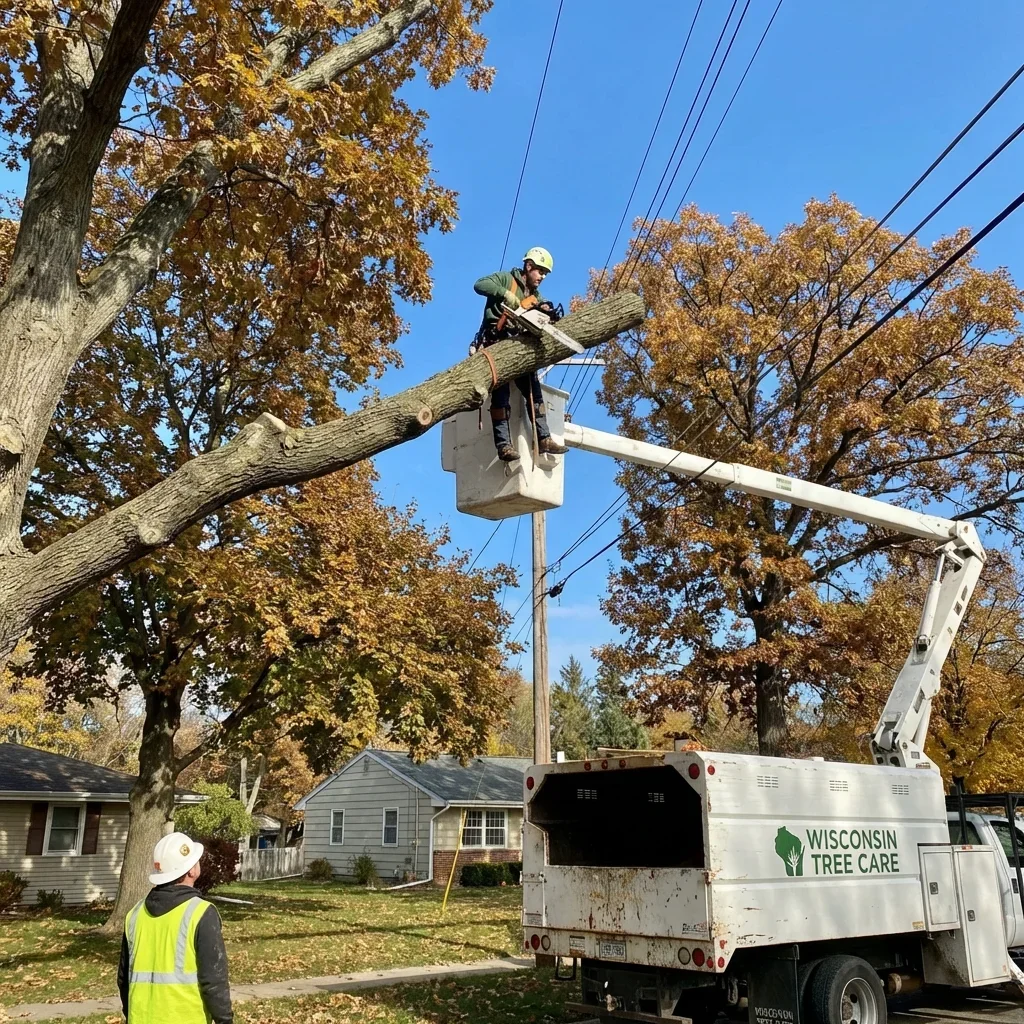
Sometimes you can't wait. A branch cracks in a July storm and hangs over your driveway. A limb breaks under snow in December and blocks your front door.
Emergency pruning is about safety, not optimal timing.
For non-oak species, prune the hazard and accept that the tree will heal more slowly. Clean the cut properly—no stubs—and monitor the wound for signs of infection over the next year.
For oaks, seal the wound immediately with latex paint if you're pruning between April and October. Some homeowners keep a can of paint in the garage specifically for oak emergencies, applying it within minutes of the cut to block beetle access.
Light Maintenance vs. Major Pruning
Light pruning—removing a few dead twigs, trimming back a branch that's scraping the house—is more forgiving on timing. You can do minor work in mid-spring or early summer without stressing the tree, especially on fast-growing species like silver maples or willows.
The key is limiting the total amount of live wood you remove to under 10% of the canopy.
Major pruning—crown thinning, raising the canopy, removing large structural limbs—should only happen during the dormant season for most species. You're removing significant photosynthetic capacity, and the tree needs time to seal wounds and reallocate resources.
Homeowners who've pushed major pruning into summer often see reduced growth the following year and increased susceptibility to drought stress.
Frequently Asked Questions
- University of Wisconsin Horticulture Extension. "Dormant Tree Pruning Guidelines." https://hort.extension.wisc.edu/2026/02/02/dormant-tree-pruning-guidelines/. Accessed February 09, 2026.
- University of Wisconsin Horticulture Extension. "Pruning Evergreens." https://hort.extension.wisc.edu/articles/pruning-evergreens/. Accessed February 09, 2026.
- Wisconsin Department of Natural Resources. "Tree Marking & Retention Guidelines - Wisconsin Silviculture Guide Chapter 24." https://dnr.wisconsin.gov/sites/default/files/topic/ForestManagement/FR805_24.pdf. Accessed February 09, 2026.