
What Is an Arborist (and Why It Matters)
An arborist specializes in the care and management of individual trees, shrubs, and other woody plants. They understand tree biology, recognize diseases, and know how different species respond to pruning, removal, or environmental stress.
This isn't just tree removal work — it's plant healthcare.
The title "arborist" isn't legally protected in most states, which means anyone can print business cards with that label. That's why certification matters. ISA Certified Arborists have passed a comprehensive exam and maintained continuing education requirements[2], demonstrating they've actually studied tree science rather than just learned to operate equipment.
Arborist vs Tree Service: Understanding the Difference
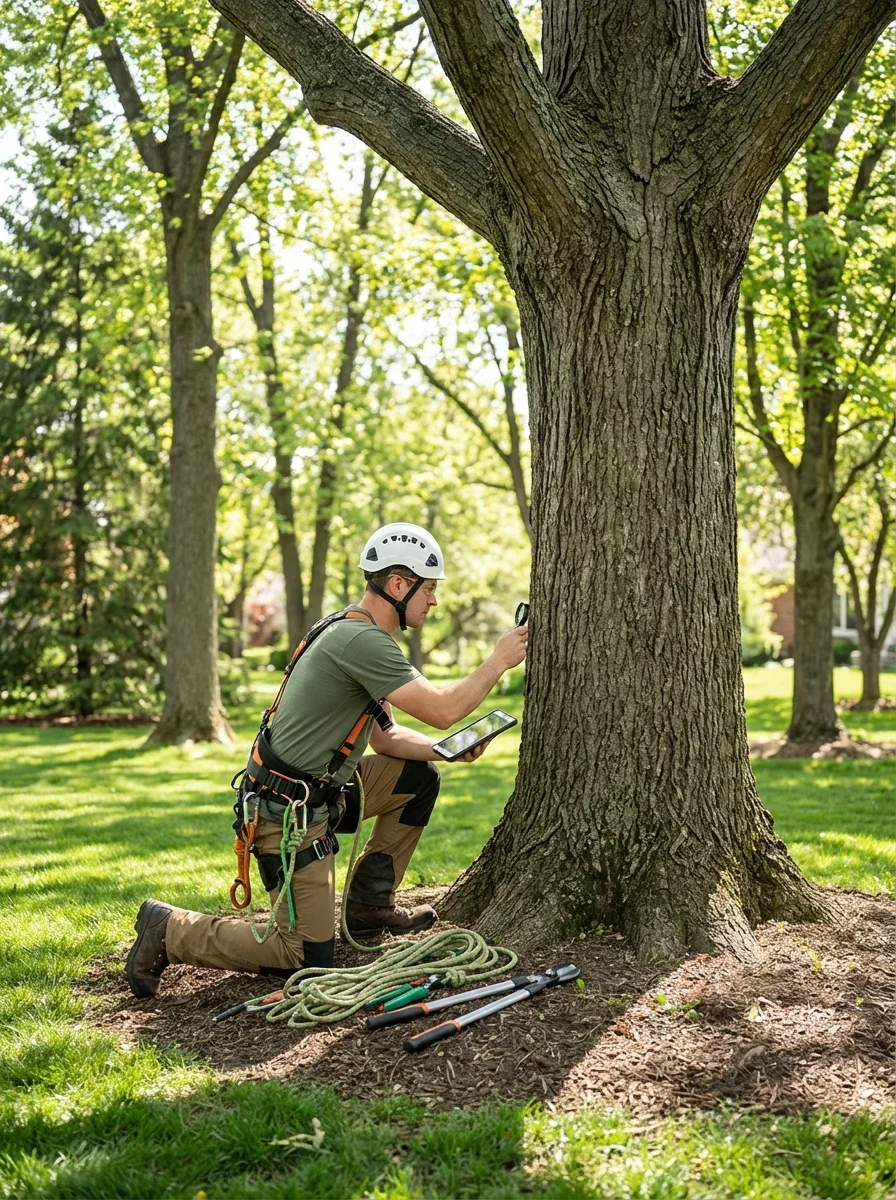
A tree service company focuses primarily on tree removal, pruning, and stump grinding — the physical labor side of tree work. Many are skilled and reputable, but they don't necessarily employ anyone trained in tree health diagnostics or preservation techniques.
An arborist brings specialized knowledge about tree biology and care. They can diagnose diseases, recommend treatments, assess hazard risk, and develop long-term management plans.
Some tree service companies employ certified arborists. Others don't.
| Tree Service | Certified Arborist |
|---|---|
| Focuses on removal and physical labor | Trained in tree biology and health diagnostics |
| May or may not have formal education | ISA certification requires exam and continuing education |
| Best for straightforward removal jobs | Essential for health assessments and preservation |
| Equipment operation expertise | Long-term tree management planning |
For straightforward removal of a dead tree, a reputable tree service may be sufficient. For anything involving tree health, preservation, or complex decisions about whether a tree should stay or go, you want someone with arboricultural training. The best companies combine both — certified arborists who also run professional tree crews.
The ISA Certification Standard
The International Society of Arboriculture (ISA) sets the most widely recognized professional standard in the industry. To earn ISA Certified Arborist credentials, candidates must have at least three years of full-time arboriculture experience (or a combination of education and experience) and pass a comprehensive examination[2].
Certified arborists also agree to follow the ISA Code of Ethics, which includes standards for honest communication, continuing education, and protecting public safety.
It's not a guarantee of perfect work, but it demonstrates baseline competence and ongoing professional development.
You can verify any arborist's certification status through the ISA's online lookup tool. If someone claims certification, take thirty seconds to confirm it. Credentials expire, and some companies stretch the truth about their qualifications.
Essential Questions to Ask Before Hiring
Start with credentials and insurance. Ask if they're ISA certified and request their certification number so you can verify it independently. Then ask for proof of both liability insurance and workers' compensation coverage[1].
If a crew member gets injured on your property and the company lacks workers' comp, you could face liability.
Get details about the specific work planned. How will they access the tree? What equipment will they use? How long will the job take, and what does cleanup include? Homeowners consistently report that the best companies explain options clearly upfront — discussing which limbs to cut, how to minimize impact on surrounding plants, and what to expect at each stage.
Ask for local references you can contact[1]. Companies doing quality work will readily provide them. If someone hesitates or only offers testimonials from their website, that's a yellow flag.
Red Flags That Should Stop You
Walk away from any company that can't provide proof of insurance.
No exceptions. The financial risk isn't worth any discount they might offer.
Be wary of anyone who recommends topping trees (cutting main branches back to stubs). This outdated practice permanently damages tree structure and is considered malpractice by modern arboricultural standards. A qualified arborist will explain why it's harmful.
Door-to-door solicitations after storms often come from fly-by-night operators who disappear once they've collected payment. Reputable companies stay busy through referrals and don't need to cold-call neighborhoods. Similarly, any company demanding full payment upfront should raise concerns — standard practice involves a deposit with the balance due upon completion.
Lack of a physical business address or local references suggests the company may not stick around if problems arise. Companies that have been established in your area for years have reputations to protect.
Warning: Tree topping is considered professional malpractice by modern arboricultural standards. Any company recommending this practice lacks current knowledge of proper tree care techniques. A qualified arborist will explain healthier alternatives that preserve tree structure and longevity.
What to Expect in a Written Estimate
A professional estimate should specify exactly what work will be performed — not just "tree trimming" but which trees, which branches, and what pruning standards will be followed. It should include start and completion dates, total cost, payment schedule, and cleanup procedures.
The estimate should also confirm insurance coverage and list any relevant certifications.
Make sure it addresses who's responsible for hauling debris, whether wood will be left for firewood (if you want it), and how the site will be restored afterward.
Homeowners frequently mention that great companies go beyond basic cleanup — stacking wood separately from brush, replacing landscape elements disturbed during work, and leaving the yard in better condition than they found it. While you can't always predict these extras, discussing cleanup expectations upfront prevents disappointment.
Don't automatically choose the lowest bid. Extreme outliers on either end deserve scrutiny. The cheapest quote may cut corners on insurance, safety equipment, or proper techniques. But the highest quote doesn't guarantee better work — it might just indicate inefficiency or overhead costs.
How to Use the ISA Certified Arborist Lookup
The ISA maintains a searchable online database where you can verify certifications by name, certification number, or location. Go to the ISA website and navigate to their "Find an Arborist" or verification tool.
Enter the arborist's name exactly as they've provided it, along with their certification number if you have it. The system will show their certification status, any additional credentials, and whether they're current on continuing education requirements.
Certifications require renewal and continuing education.
An expired certification means the person hasn't maintained their professional development. If someone claims certification but doesn't appear in the database, ask them to clarify — they may have a different credential, or they may be misrepresenting their qualifications.
Insurance and Liability: Non-Negotiable Requirements
Tree work is inherently dangerous. Equipment fails, branches fall unpredictably, and even experienced crews face risks.
If someone gets hurt or property gets damaged, you need to know the company's insurance will cover it — not your homeowner's policy.
Request certificates of insurance for both general liability (covering property damage) and workers' compensation (covering employee injuries). Call the insurance company directly to verify coverage is current and adequate. Some contractors carry minimal policies with low coverage limits that won't fully protect you in a serious incident.
Workers' compensation is particularly important. In many states, if an uninsured worker gets injured on your property, they can sue you directly. A certificate of insurance is just paper until you verify it's authentic and current.
Checking References and Online Reviews
Ask for three recent references from jobs similar to yours. When you call them, ask specific questions: Did the crew show up on time? Was the work completed as promised? How did they handle unexpected issues? Would you hire them again?
Online reviews offer broader perspective, but read them critically.
Look for patterns rather than isolated complaints. Companies that consistently communicate well, clean up thoroughly, and handle complications professionally earn praise across multiple reviews.
Pay attention to how companies respond to negative reviews. Everyone gets an unhappy customer occasionally. What matters is whether they attempt to resolve issues professionally or get defensive. One homeowner's complaint about access limitations may reveal a company's unwillingness to problem-solve — or it may show they're honest about equipment constraints rather than taking money for jobs they can't complete properly.
Planning for Access and Site Logistics

Before you get quotes, assess how crews will access your trees. Measure gate widths if equipment needs to reach your backyard. Note overhead power lines, nearby structures, and underground utilities.
These factors affect both feasibility and cost.
Companies with smaller equipment can access tighter spaces, but the work may take longer. Larger equipment works faster but needs room to maneuver. Mismatched expectations about access cause frustration — clarify capabilities during the estimate phase, not when the crew arrives.
If your property has unusual constraints, mention them upfront. Companies that have handled similar challenges will suggest solutions. Those that haven't may take the job anyway and struggle, or they may honestly tell you they're not the right fit. Both outcomes are better than discovering incompatibility mid-project.
Timeline Expectations for Quality Work
Popular, well-regarded tree service companies often book weeks or months ahead, especially during peak seasons. If you're planning non-urgent work, contact companies early.
Storm damage and hazard trees can't wait. Routine pruning or removal benefits from advance planning.
That scheduling delay isn't a bad sign — it often indicates the company stays busy through referrals and repeat customers. Companies with immediate availability during busy seasons may be new, may have crew capacity others lack, or may have trouble keeping their schedule full for a reason.
Once scheduled, weather and unforeseen complications can shift timelines. Professional companies communicate proactively when delays occur and work with you to find alternative dates. They don't just fail to show up without explanation.
The Hiring Checklist: Your Decision Framework
Before you sign a contract, confirm you can answer "yes" to these points:
Essential Pre-Hiring Verification:
- ISA certification verified through official lookup
- Current insurance certificates received and independently confirmed
- Written estimate details specific work, timeline, and cleanup
- Local references contacted with positive feedback
- Company has established presence in your area
- Communication has been clear and professional throughout
- Pricing is competitive with other qualified bids
- Contract includes start date, scope, cost, and payment terms
One homeowner's perfect arborist might not match your needs.
Some excel at large removals but lack finesse for ornamental pruning. Others specialize in tree health but contract out removals to partners. Understanding what you need helps you evaluate whether a particular company's strengths align with your project.
After You've Hired: Setting Up for Success
Once you've selected a company, put everything in writing. Confirm the work scope, schedule, and any property access arrangements. Discuss where crews can park, whether you need to move vehicles, and how to contact you if questions arise.
If you're keeping wood for firewood, specify how you want it cut and stacked. If you want complete removal, confirm hauling is included in the price.
These details seem minor until there's a misunderstanding.
Be available during at least part of the work, especially for complex jobs. The best crews consult with homeowners about decisions that arise — which way to drop a leaning trunk, whether to take an additional borderline limb, how to handle unexpected decay. Your input helps them deliver results you're happy with.
After completion, inspect the work before making final payment. Check that cleanup meets your expectations, trees were pruned as discussed, and any landscape disturbance was repaired. Professional companies want you satisfied and will address legitimate concerns before you close out the contract.
Frequently Asked Questions
- City of Portland Bureau of Environmental Services. "Tips for Hiring an Arborist." https://www.portland.gov/trees/tree-care-and-resources/tips-hiring-arborist. Accessed February 09, 2026.
- Michigan Arboriculture Society (ISA Chapter). "ISA Certified Arborist® Application Guide." https://www.mac-isa.org/images/pdfs/cert-Application-Certified-Arborist.pdf. Accessed February 09, 2026.