
Why Fox Valley Homeowners Choose Certified Arborists
A certified arborist brings ISA credentials and field experience that general tree crews can't match. They diagnose problems like oak wilt or emerald ash borer damage before recommending solutions, which often saves you from unnecessary removals.
Wisconsin communities increasingly require this certification for commercial tree work,[2] and homeowners benefit from the same standards.
You'll notice the difference during your consultation. Certified professionals explain your options clearly—whether your tree needs cabling support, selective pruning, or complete removal—without pressuring you toward the most expensive choice. Homeowners consistently mention how this honest assessment helped them make confident decisions about trees they'd worried over for months.
The expertise extends to understanding local regulations. Wisconsin prohibits oak pruning from April 15 through July 1 to prevent oak wilt spread,[1] and certified arborists schedule work accordingly. They also know proper pruning techniques that promote healing rather than creating entry points for disease.
| Service Type | Certified Arborist | General Tree Crew |
|---|---|---|
| Credentials | ISA certification + continuing education | Variable experience, often no formal certification |
| Disease Diagnosis | Trained to identify oak wilt, EAB, and other threats | May miss early warning signs |
| Pruning Standards | Follows ANSI A300 standards for cuts and timing | Inconsistent techniques, risk of improper cuts |
| Regulatory Knowledge | Understands seasonal restrictions and local requirements | May schedule work during restricted periods |
Complete Tree Services for Appleton and Surrounding Areas
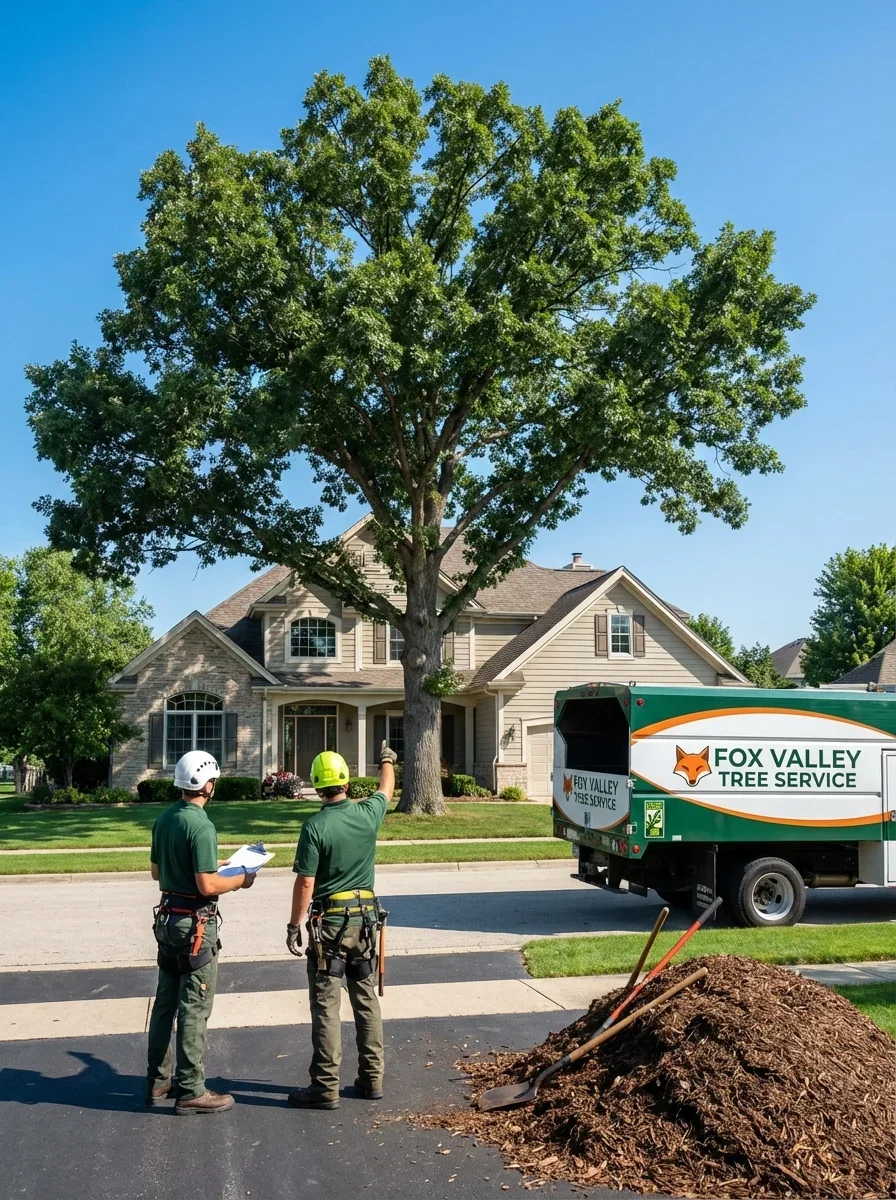
Emergency Storm Damage Response
Storm damage doesn't wait for business hours. When a branch crashes through your roof or a tree blocks your driveway, you need crews who respond quickly and work safely under pressure.
Emergency services prioritize making your property secure, removing immediate hazards, and protecting what's salvageable.
The best crews arrive equipped for complex scenarios—trees leaning against power lines, massive trunks split but still standing, or limbs tangled in your gutters. They coordinate with utility companies when needed and document damage for insurance claims.
Tree Removal in Tight Residential Spaces
Removing a large tree wedged between your house and your neighbor's fence takes planning, not just power equipment. Professional crews use rigging systems to lower sections in controlled drops, protecting everything from your air conditioning unit to your wife's perennial beds.
Homeowners frequently praise this careful approach, especially when crews navigate tight yards without damaging fences, garden borders, or decorative elements.
The process starts with a site assessment. Arborists identify obstacles, plan the drop zones, and explain how they'll protect your property. You'll see them lay down plywood to protect grass, set up ropes for precision lowering, and work methodically through each cut.
Cleanup matters as much as the removal itself.
Expect crews to chip brush on-site, cut logs into manageable pieces (or firewood lengths if you want them), and rake the area clean. Many homeowners mention being surprised by how thoroughly professionals clean up—no stray branches in the bushes, no sawdust on the driveway.
Tree Trimming and Pruning for Health and Safety
Proper pruning does more than improve appearance. It removes diseased wood, reduces wind resistance in storm-prone areas, and eliminates branches threatening your roof or power lines.
Wisconsin DOT standards require trimming branches overhanging roadways to at least 20 feet clearance using accepted horticultural practices,[3] and those same principles protect your home.
Certified arborists make strategic cuts that encourage healthy growth. They remove crossing branches that rub and create wounds, thin dense canopies to improve air circulation, and shape trees to withstand wind stress. Poor pruning—like topping or leaving stubs—weakens trees and invites decay.
Timing matters for certain species. Beyond the oak wilt restriction period, arborists consider seasonal factors like sap flow and healing rates. Spring pruning before leaf-out works well for most deciduous trees, while late winter suits many conifers.
Stump Grinding and Complete Site Cleanup
That stump left from your old maple isn't just an eyesore. It takes up valuable yard space, sprouts new shoots every spring, and attracts insects as it decays.
Professional grinding eliminates the stump below grade, allowing you to plant grass, extend your garden bed, or finally build that patio you've planned.
Grinding equipment varies based on stump size and location. Large commercial grinders handle massive stumps quickly, while smaller machines access tight spots like fenced backyards or areas near foundations. Crews grind 6-12 inches below ground level, then fill the depression with the resulting wood chips or haul them away per your preference.
Root systems decay naturally once the stump is gone, though large surface roots may need separate grinding. Discuss your plans for the area—whether you're replanting immediately or just want a clean lawn—so crews can prepare the site appropriately.
Understanding Tree Health in Wisconsin's Climate
Recognizing Common Tree Diseases and Pests
Oak wilt kills thousands of Wisconsin oaks annually, spreading through root grafts between nearby trees or via sap beetles attracted to fresh wounds. You'll notice wilting leaves starting at branch tips, often with a distinct browning pattern.
Early detection and proper pruning timing are your best defenses, which is why the state enforces seasonal pruning restrictions.[1]
Emerald ash borer remains a critical threat to Fox Valley ash trees. Look for D-shaped exit holes in bark, excessive woodpecker activity, and thinning canopy in upper branches. Once an infestation advances, removal becomes necessary, but early treatment with systemic insecticides can save valuable specimens.
Dutch elm disease, bronze birch borer, and various fungal infections also affect local trees. Certified arborists recognize these problems during routine inspections and recommend treatments or removals based on the tree's condition and treatment success rates.
Common Warning Signs Your Tree Needs Professional Assessment:
- Wilting or browning leaves starting at branch tips (possible oak wilt)
- D-shaped exit holes in bark with increased woodpecker activity (emerald ash borer)
- Mushrooms or conks growing on trunk or major roots (internal decay)
- Cracks or splits in trunk or major limbs
- Dead branches in upper canopy ("flagging")
- Leaning more than 15 degrees, especially with exposed roots
- Co-dominant stems forming narrow V-shaped crotches
- Extensive bark damage or missing bark sections
When to Remove vs. When to Treat
Not every struggling tree needs removal. Young, otherwise healthy trees often respond well to treatments for insects or disease. Trees with strong root systems and good structure can recover from storm damage through proper pruning and support systems.
Consider removal when decay affects more than 50% of the trunk, when major roots are damaged or severed, or when the tree leans dangerously toward structures.
Dead trees pose obvious hazards, but dying trees with extensive dieback also warrant removal before they become brittle and unpredictable.
Arborists factor in the tree's location, species, age, and sentimental value. That mature oak shading your deck might justify treatment even if a similar tree in the back corner wouldn't. Get an honest assessment rather than deciding based on fear or guesswork.
What to Expect from Professional Tree Service
The Consultation and Estimate Process
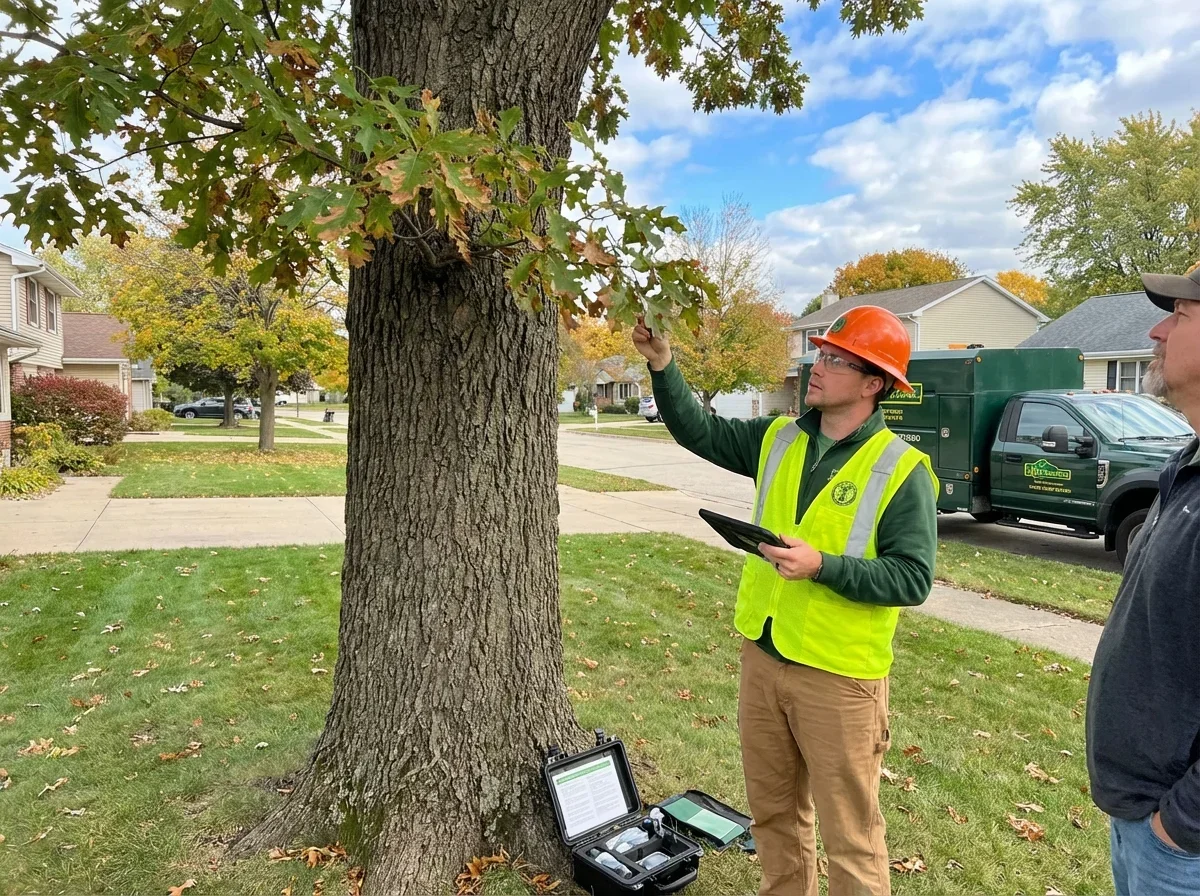
A thorough consultation involves more than glancing at your tree and naming a price. Arborists walk your property, examine tree health indicators, discuss your concerns, and explain what they observe.
They'll point out issues you might have missed—co-dominant stems that could split, roots heaving your sidewalk, or branches rubbing your roof shingles.
Expect questions about your goals. Are you addressing immediate hazards or planning long-term tree health? Do you want firewood from removals? Should they preserve certain sight lines or shade patterns? This conversation shapes the work plan and final pricing.
Written estimates detail the scope clearly: which trees receive what services, how crews will access the site, disposal methods, and total costs. Reputable services include insurance information and certifications without you having to ask.
Safety Standards and Property Protection
Professional crews arrive with commercial insurance, proper safety equipment, and a clear work plan. You'll see helmets, eye protection, chainsaw chaps, and often climbing harnesses for aerial work.
These aren't optional—they're industry standards that protect workers and your property.
Before cutting starts, crews establish safety zones and communicate with everyone on-site. They use spotters when lowering large sections, secure work areas to keep bystanders clear, and follow manufacturer guidelines for all equipment. Wisconsin regulations emphasize protecting trees and property left in place,[3] and professionals extend this care to every element of your landscape.
Property protection goes beyond avoiding obvious damage. Crews lay protective barriers over vulnerable areas, use plywood under heavy equipment to prevent soil compaction, and plan removal sequences to minimize impact.
Homeowners consistently mention this attention to detail—how crews navigated tight spaces without disturbing gardens, fences, or decorative elements.
Cleanup and Final Walkthrough
Complete cleanup separates professional services from budget operations. After removal or trimming, expect crews to chip all brush, remove or stack wood per your instructions, rake and blow the work area, and haul away debris.
The best services leave your property cleaner than they found it, picking up stray twigs and clearing sawdust from hardscaping.
The final walkthrough gives you a chance to inspect the work and ask questions. Arborists explain what they did, why they made specific cuts, and what to watch for as wounds heal. If you kept wood for firewood, they'll stack it neatly in your preferred location.
Choosing the Right Tree Service in Fox Valley
Credentials and Certifications That Matter
ISA (International Society of Arboriculture) certification demonstrates that an arborist has passed comprehensive exams covering tree biology, diagnosis, pruning, and safety. This credential requires ongoing education, keeping certified professionals current on best practices and emerging threats like new invasive species.
Wisconsin communities increasingly require ISA certification for commercial tree work,[2] recognizing that proper training prevents damage to community forests.
When hiring for your property, the same standards apply—certified arborists bring knowledge that protects your investment and your trees' long-term health.
Insurance coverage matters as much as credentials. Verify that your tree service carries both liability insurance and workers' compensation. Without these protections, you could face liability if a worker is injured on your property or if falling debris damages your neighbor's car.
Questions to Ask Before Hiring
Start with licensing and insurance—ask for proof, not just verbal assurances. Then move to specifics about your project: How will they access the trees? What techniques will they use for pruning cuts? How do they handle stump disposal?
Ask about timing, especially for oak work given Wisconsin's seasonal restrictions.[1] Knowledgeable arborists will explain why they schedule certain work during specific periods.
If someone offers to prune your oak in May without mentioning oak wilt risks, consider that a red flag.
Request references from recent projects similar to yours. A crew experienced in large removals might not excel at delicate ornamental pruning, and vice versa. Look for experience that matches your needs.
Warning: Be extremely cautious of door-to-door tree services, especially after storms. Legitimate companies build reputations through quality work and word-of-mouth referrals, not cold-calling neighborhoods. These "storm chasers" often collect deposits and disappear, or deliver rushed work that creates more problems than it solves.
Red Flags and Warning Signs
Be cautious of services that pressure you toward removal when pruning might suffice, or that quote prices without examining the trees in person. Lowball estimates often hide costs that emerge mid-project, or they indicate inexperienced crews who'll rush through work.
Door-to-door solicitors, especially after storms, frequently deliver poor work or collect deposits and disappear.
Legitimate services don't need to cold-call neighborhoods. They build reputations through quality work and word-of-mouth referrals.
Watch for crews that can't explain their methods or provide clear timelines. Professional arborists answer questions confidently and adjust plans based on your input. Vague responses or dismissive attitudes suggest they're either inexperienced or uninterested in doing the job properly.
Seasonal Tree Care Considerations
Spring: Assessment and Storm Preparation
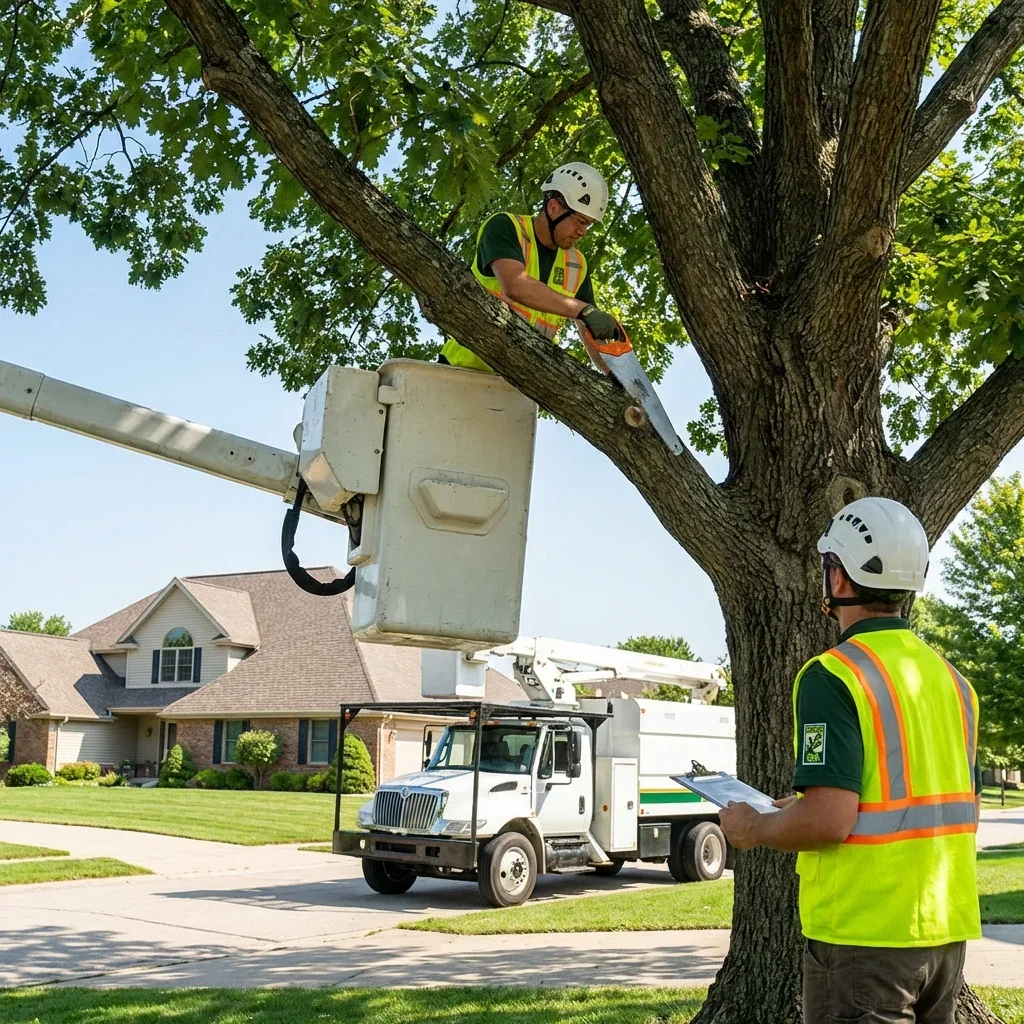
Spring offers ideal conditions for assessing winter damage and planning the growing season. Before leaves fully emerge, arborists can clearly see branch structure, identify deadwood, and spot problems like frost cracks or broken limbs.
This is the time to schedule fertilization, address structural issues with cables or bracing, and treat for emerging pest problems.
However, oak pruning restrictions take effect April 15,[1] limiting work on these trees until July. Plan oak trimming for late winter if possible, or wait until mid-summer. Other species face fewer restrictions, though arborists consider factors like sap flow and optimal healing conditions.
Spring storms can arrive suddenly in the Fox Valley. Proactive pruning reduces wind resistance and removes weak branches before they fail. Securing hazardous trees now prevents emergency calls later when half your oak is leaning against the garage.
Summer and Fall: Growth Management
Summer growth reveals problems invisible during dormancy. You'll notice whether spring pruning achieved the desired shape, if pest treatments are working, and whether irrigation reaches all sections of the root zone.
Mid-summer, once oak wilt restrictions lift, catch up on necessary oak maintenance.
Fall preparation focuses on structural integrity before winter. Remove dead branches that could break under snow load, thin dense canopies to reduce ice accumulation, and address any trees showing signs of instability. Many homeowners schedule fall work because crews can access yards without damaging gardens, and cooler temperatures make labor-intensive projects more manageable.
Winter: Dormant Pruning Benefits
Dormant pruning minimizes stress on trees and allows arborists to see branch architecture clearly. Without leaves obscuring their view, they make precise cuts that shape growth for the coming season.
Most deciduous trees tolerate winter pruning well, and wounds seal effectively once spring growth begins.
Winter access is simpler in some ways—frozen ground supports heavy equipment without rutting lawns, and there's no worry about damaging flower beds or vegetable gardens. Scheduling can be more flexible too, as this is typically a slower season for tree services.
However, extremely cold days can make wood brittle and dangerous to work. Quality services monitor temperatures and avoid pruning during severe cold snaps when tools and tree limbs become unpredictable.
- Wisconsin Public Service Commission. "Wis. Admin. Code Public Service Commission PSC 113.0511 - Oak tree cutting and pruning." https://www.law.cornell.edu/regulations/wisconsin/Wis-Admin-Code-SS-PSC-113-0511. Accessed February 09, 2026.
- Wisconsin Department of Natural Resources. "Tree Ordinance Guidance for Wisconsin Communities." https://dnr.wisconsin.gov/sites/default/files/topic/UrbanForests/WITreeOrdinanceGuidance.pdf. Accessed February 09, 2026.
- Wisconsin Department of Transportation. "201 Clearing and Grubbing - Wisconsin Department of Transportation." https://wisconsindot.gov/rdwy/stndspec/ss-02-01.pdf. Accessed February 09, 2026.