
Emergency Storm Damage Response
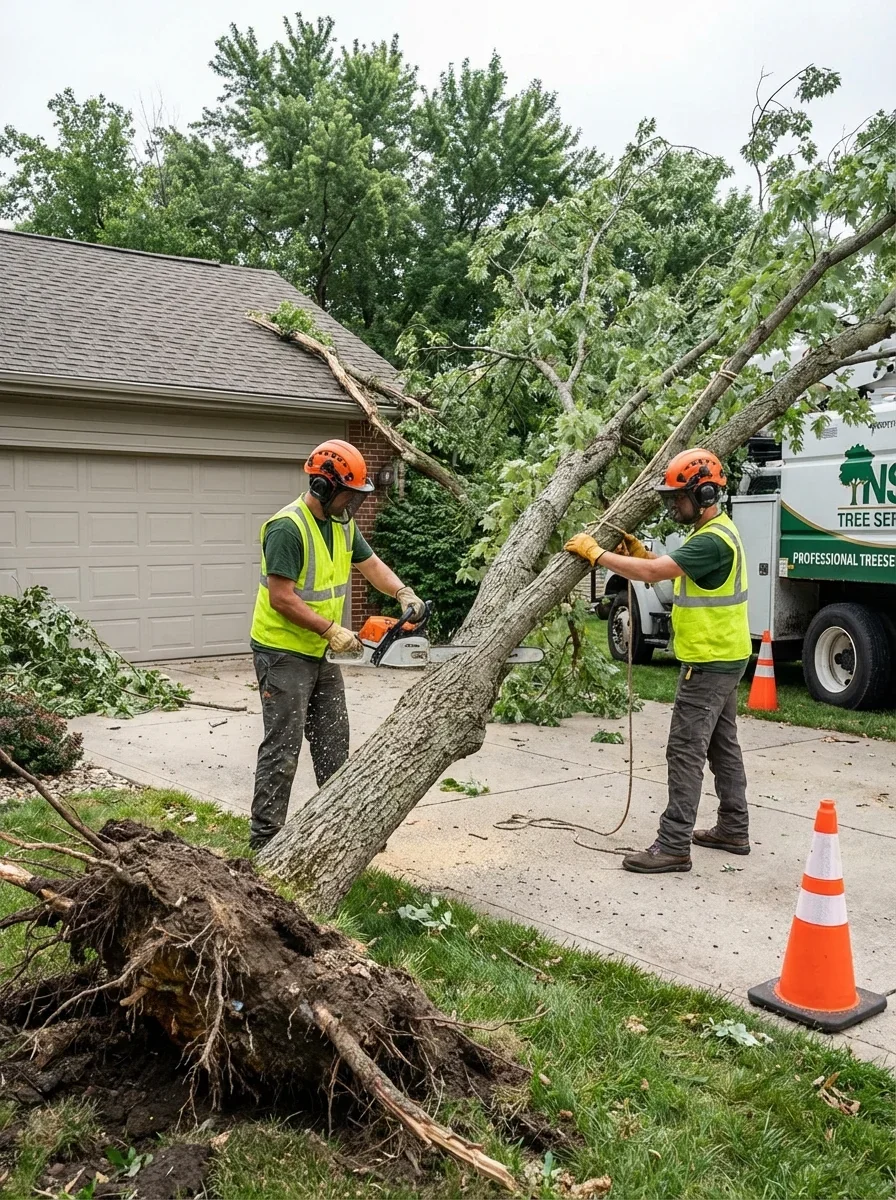
Storm damage doesn't wait for business hours. These projects show trees that came down overnight — some split at the trunk, others uprooted entirely, all requiring immediate removal before more damage occurred.
The pattern you'll notice: crews assess the full tree before cutting, looking for tension points, widow-makers, and structural instability that might not be obvious from the ground. That pre-work inspection isn't just protocol — it's an ANSI A300 standard requirement that every arborist perform a visual check before beginning work and report any conditions beyond the original scope.[2]
When a tree's already compromised, that assessment becomes critical.
You'll also see how crews coordinate access. One homeowner noted their team worked with neighbors to route equipment through adjacent yards, then scheduled the noisiest work during midday hours to minimize disruption.[1] Storm response means moving fast, but the good crews still communicate each step.
Pro Tip: Document storm damage with photos from multiple angles before calling a tree service. Insurance adjusters often require visual proof of the damage's extent, and having timestamped images can expedite claims processing significantly.
Large Tree Removals in Tight Spaces
These removals required more than chainsaws and trucks. You're looking at crane work over houses, rigging systems through narrow side yards, and piece-by-piece dismantling where a tree couldn't drop in one cut.
The cleanup matters as much as the cut. Homeowners consistently mention yard condition after removal — driveways swept clean, wood chips hauled away, grass damage minimized. One crew ground a stump, backfilled the hole, and raked the area smooth enough that you couldn't tell a tree had been there.[2]
That's the standard to expect, not the exception.
Some jobs uncover surprises. Wasp nests in hollow trunks. Rot deeper than the initial assessment suggested. Branches tangled in power lines that weren't visible from street level. The difference between a good crew and a great one shows up when those issues arise — whether they halt work for additional charges or handle it as part of the original scope.
Crown Thinning and Structural Pruning
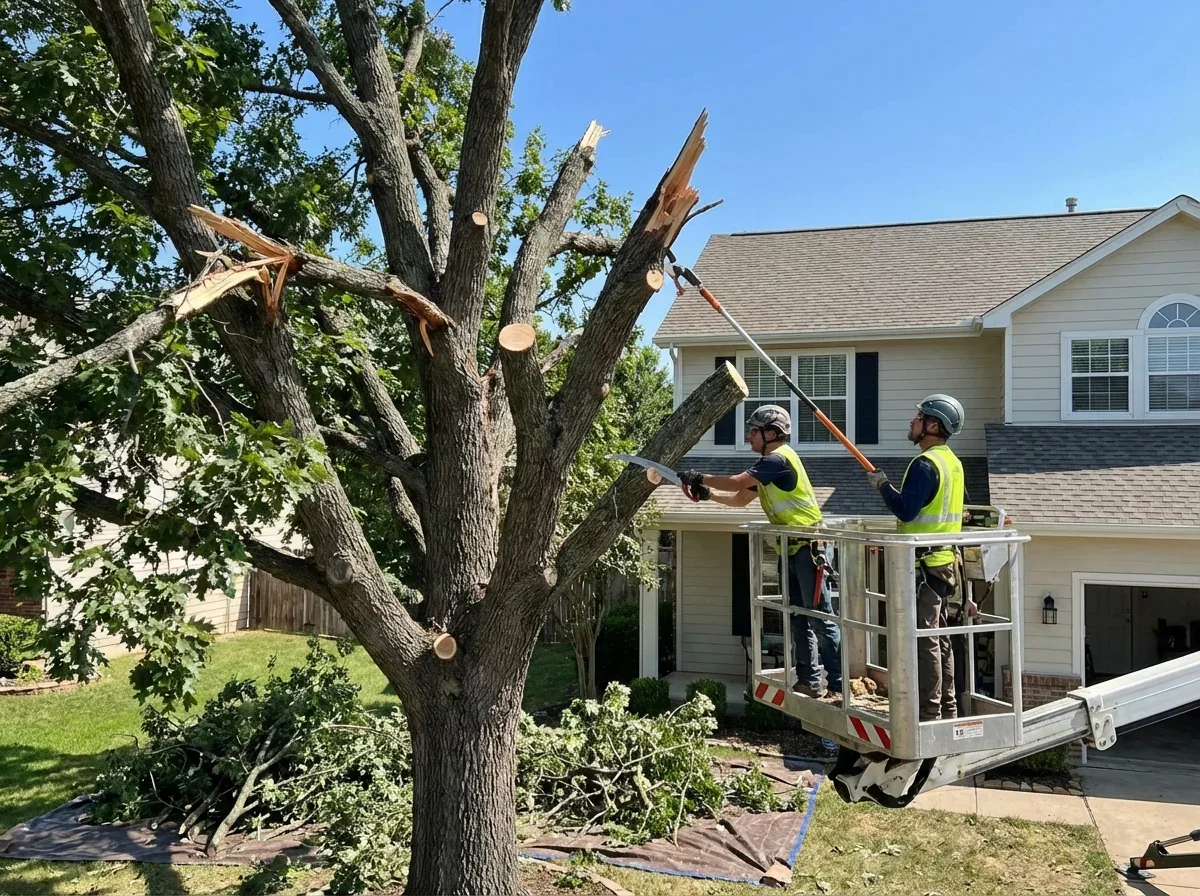
These photos show trees that stayed but needed shaping. Crown thinning removes select branches to reduce weight and wind resistance while maintaining the tree's natural form.
There's a health limit to pruning. USDA Forest Service guidelines specify that no more than one-fourth of living branches should be removed at one time to avoid stressing the tree.[1] You'll see that principle in these projects — the crown looks lighter and better balanced, but the overall canopy structure remains intact.
Professional crews explain their cuts beforehand. They'll walk you through which branches they're targeting and why — crossing limbs that rub and create wounds, deadwood that could drop in the next storm, growth patterns that unbalance the tree's weight distribution. That consultation happens before the first cut, giving you a chance to ask questions or adjust the plan.
| Service Type | Timeline | Tree Health Impact | Best For |
|---|---|---|---|
| Crown Thinning | 2-4 hours | Minimal stress, improves airflow | Healthy trees needing wind resistance reduction |
| Structural Pruning | 3-6 hours | Low stress if done properly | Young to mid-age trees with growth issues |
| Crown Restoration | Multiple visits over 1-2 years | Moderate stress, requires recovery time | Storm-damaged trees worth saving |
Storm Damage Crown Restoration
These trees survived the storm but lost major limbs. Crown restoration rebuilds structure and appearance after severe damage — what ANSI standards describe as improving trees that have been "severely headed, vandalized, or storm damaged."[3]
The goal isn't just cosmetic. A tree with torn branches and jagged cuts becomes vulnerable to disease and further breakage. Restoration pruning creates clean cuts that heal properly and redirects growth to fill out the canopy over time.
You'll notice the difference between restoration and simple cleanup. Cleanup hauls away the obvious damage. Restoration shapes what's left so the tree can recover with balanced growth and structural integrity.
It's a longer process, often requiring follow-up work in subsequent seasons.
Stump Grinding and Site Restoration
The stump photos show before and after — from protruding root balls to level ground. Grinding depth varies by project, but most services go 6-12 inches below grade so you can lay sod or plant immediately.
Homeowners report two consistent expectations: crews should grind the stump completely (no visible remnants poking through), and they should handle the wood chips.[2] Some spread chips as mulch if you want them. Others haul everything away and backfill the hole with soil.
If you're planning to keep the wood for firewood or landscaping projects, specify that when you book. One homeowner mentioned their crew stacked cut logs neatly by the garage without being asked, while another had to request it after the job started.[2]
Clear communication upfront prevents those small frustrations.
Stump Removal Quick Facts:
- Average grinding depth: 6-12 inches below grade
- Wood chips produced: 2-3 cubic feet per foot of stump diameter
- Time to grind: 15-45 minutes depending on size and root system
- Typical backfill options: Native soil, topsoil mix, or wood chips as mulch
- Replanting wait time: Immediate for sod, 4-6 weeks for trees in same location
Multi-Tree Projects and Lot Clearing
These projects involved removing multiple trees in one visit — lot clearing for new construction, eliminating several damaged trees after a storm, or thinning overcrowded areas to give remaining trees room to thrive.
Scale changes the logistics. Single-tree removal might take half a day. Five trees could require multiple trucks, a larger crew, and phased work over several days.
The estimator should walk the entire site and account for every tree in the quote — not just provide a per-tree price that assumes ideal conditions for each one.
One common complaint involves scope confusion. A homeowner requested full removal of a large tree but received an estimate that only covered partial work.[3] When dealing with multiple trees, insist on a detailed breakdown: which trees, what work for each, and whether the quote includes all stumps, haul-away, and cleanup.
What Professional Cleanup Actually Looks Like
Every project here ends the same way — the crew leaves your property in better condition than they found it.
That means more than just removing the tree.
Professional cleanup includes raking scattered debris, sweeping driveways and walkways, and checking gutters if branches landed on the roof. Some crews go further, testing sprinkler heads in the work area to confirm nothing got damaged and walking the property line with you to verify all material is cleared.
You shouldn't need to ask for this. A crew that takes pride in their work treats cleanup as part of the job, not an add-on service. The photos show what "pristine condition" means in practice — grass raked, mulch beds refreshed, not a wood chip left on the driveway.[1]
- USDA Forest Service. "HOW to Prune Trees." https://www.fs.usda.gov/nrs/pubs/na/NA-FR-01-95-Rev-2012.pdf. Accessed February 09, 2026.
- American National Standards Institute (ANSI) via Town of Sullivan's Island. "ANSI A300 (Part 1) Tree, Shrub, and Other Woody Plant Management – Standard Practices (Pruning)." https://sullivansisland.sc.gov/sites/default/files/Documents/Tree%20Preservation/ANSI%20300-%20Pruning%20Standards.pdf. Accessed February 09, 2026.
- American National Standards Institute (ANSI) via Wellsboro Borough. "ANSI A300 1995 Tree Pruning Standards." https://www.wellsboroborough.com/images/pdf/ansi_a300_1995_Tree_Pruning_Standards.pdf. Accessed February 09, 2026.