
Enhanced Article with Engagement Widgets
Average Tree Trimming Cost
Expect to pay $460 for a typical trimming job, with most homeowners spending between $250 and $720 depending on tree size and complexity. A 30-foot oak with minimal overhang might cost $350, while a 60-foot maple tangled in power lines could push $1,200.
Small trees under 25 feet cost $200–$400. Medium trees (25–50 feet) run $400–$800. Large trees over 50 feet start at $800 and climb past $1,500 if they're near structures or require specialized rigging.
The tree's condition matters as much as its height. Dead branches, dense canopy growth, and awkward lean all increase labor time.
Geography shifts these ranges by 20–30%. Arborists in metro areas charge more for permits, insurance, and overhead. Rural properties might see lower base rates but higher travel fees if you're outside the service radius.
Quick Reference: Tree Trimming Cost by Size
- Small trees (under 25 feet): $200–$400
- Medium trees (25–50 feet): $400–$800
- Large trees (50+ feet): $800–$1,500+
- National average job: $460
- Typical range: $250–$720
- Complex jobs (near power lines/structures): $1,200+
Per-Tree vs. Hourly Pricing
Per-tree pricing is standard for routine maintenance and makes budgeting straightforward. Your arborist assesses the tree, quotes a flat rate, and you know exactly what you'll pay before work starts. This works well when the scope is clear—trimming dead branches, thinning a canopy, or shaping for clearance.
Hourly billing ($200–$500 per hour) suits smaller jobs where the work evolves as it progresses. Light pruning on multiple small trees, storm damage assessment, or consultation-heavy projects often fall into this category. You'll pay for the crew's time plus equipment, and costs can creep if the job takes longer than estimated.
Some companies blend both models—a base fee per tree plus hourly charges for complications like rot removal or unexpected hazards.
Get clarity on which model applies to your job, whether travel time counts toward hourly rates, and what triggers additional charges.
Tree Size Cost Factors
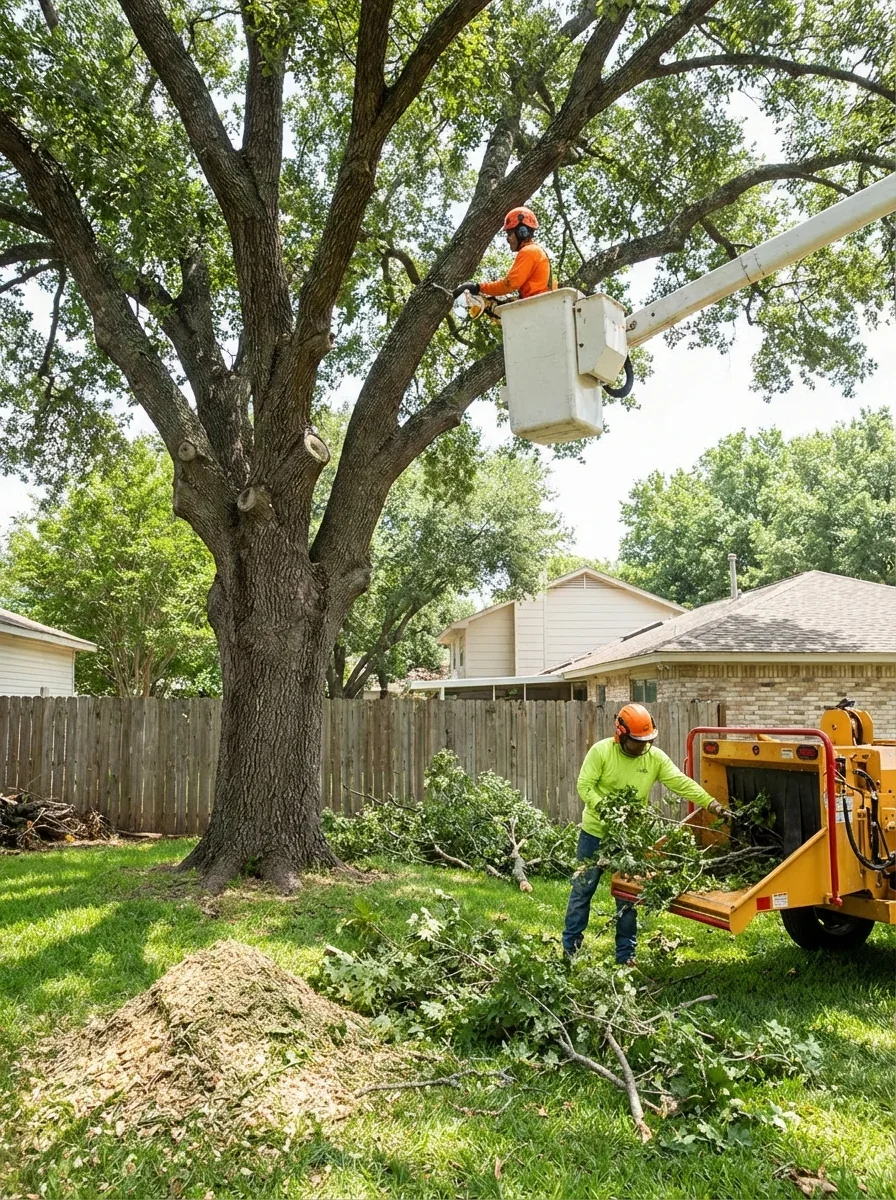
Height determines how your arborist accesses the canopy. Trees under 25 feet can often be trimmed from the ground with pole saws, keeping labor minimal.
Once you cross 30 feet, climbers or bucket trucks enter the equation. The price doubles.
Canopy density adds time regardless of height. A 40-foot maple with thick, interwoven branches takes three times longer to trim than a 40-foot pine with open structure. Your arborist is making hundreds of cuts, evaluating each branch's weight and balance, and rigging sections safely to the ground.
Trunk diameter and branch thickness affect equipment needs. Branches over 6 inches require chainsaws instead of hand tools, and anything over 12 inches might need sectional dismantling. Each step up in tool complexity adds to the hourly crew cost—even on per-tree quotes, these factors are baked into the price.
Location and Access Charges
Proximity to structures can double your cost. Trees overhanging roofs, fences, or pools require controlled rigging—each branch is lowered by rope rather than dropped. That precision work adds 30–90 minutes per large limb and often requires a second ground crew member.
Tight access means smaller equipment and longer setup time. If a bucket truck can't reach the tree, climbers move slower and tire faster.
Backyard trees with no side-yard access might add $200–$400 to the quote for the extra labor.
Power lines trigger mandatory utility coordination in most jurisdictions. Your arborist may need to schedule the job around the utility company's availability, and some won't work near live lines at all without a licensed line clearance crew. That specialization costs $100–$300 more per tree.
Regional and Seasonal Pricing
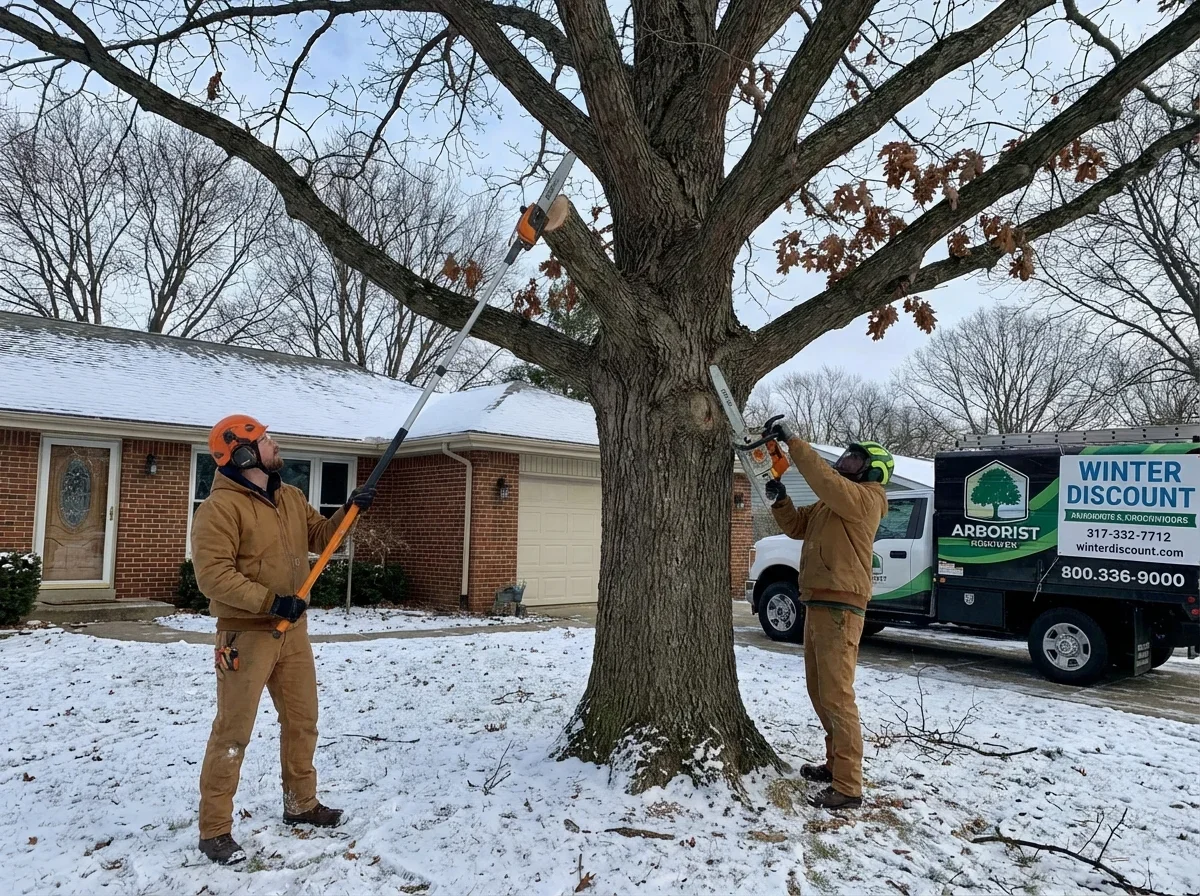
Winter trimming costs 10–20% less in most regions. Dormant trees are easier to assess, sap flow is minimal, and arborists have lighter schedules. You'll see the steepest discounts in January and February when demand bottoms out.
One homeowner watched a crew of four drop six large trees with full cleanup in under five hours on a January day—the kind of efficiency that's tougher to match in peak season.
Spring and summer command premium rates. Trees are actively growing, companies are booked weeks out, and heat slows crew productivity. Emergency storm work during these months can cost 50% more than the same job quoted in November.
Geographic cost variations are stark. Coastal and metro markets run 25–35% above rural areas due to permitting complexity, higher insurance minimums, and tighter scheduling windows.
A $600 trim job in rural Georgia might cost $850 in Atlanta for the same tree.
Pro Tip: Schedule tree trimming in January or February to save 10–20% on labor costs. Dormant trees are easier to assess, crews work more efficiently in cooler weather, and you'll avoid the spring/summer booking rush when prices peak.
Additional Service Costs
Stump grinding adds $100–$400 depending on diameter and root spread. Most trimming quotes exclude stumps—you're paying only for aboveground work. Grinding to 6–12 inches below grade costs extra, and if the stump sits in a tight space or near utility lines, expect the higher end of that range.
Debris removal is usually included in full-service quotes, but confirm what "removal" means. Some crews chip branches and leave mulch onsite. Others haul everything away.
One homeowner noted their service removed 15 large pines, ground stumps, filled holes, and hauled debris for a very reasonable price. That level of cleanup should be spelled out before work starts.
Emergency callouts carry surcharges of $150–$500. Storm damage, fallen limbs blocking access, or hazard trees threatening structures all trigger priority pricing. If you're calling after hours or need same-day service, the premium reflects the crew reshuffling their schedule.
Arborist vs. Tree Service Rates
Certified arborists charge $75–$150 per hour for consultation and $400–$600 for trimming work that requires diagnostic expertise. You're paying for ISA certification, species-specific pruning knowledge, and the ability to spot disease or structural issues before they become hazards.
General tree services run $50–$100 per hour for labor and $250–$500 per tree for straightforward trimming. They handle routine maintenance efficiently but may lack the training to assess complex health issues or make surgical cuts that promote long-term growth.
The gap narrows on simple jobs. Clearing deadwood from a healthy tree doesn't require arborist-level assessment.
But if you're trimming to save a declining tree, improve structure after storm damage, or work around disease, the arborist's diagnostic skill pays for itself in fewer return visits.
| Factor | Certified Arborist | General Tree Service |
|---|---|---|
| Hourly Rate | $75–$150 (consultation) | $50–$100 (labor) |
| Per-Tree Trimming | $400–$600 | $250–$500 |
| Credentials | ISA certified | May lack formal certification |
| Best For | Disease diagnosis, structural issues, complex pruning | Routine maintenance, deadwood removal |
| Diagnostic Expertise | Species-specific knowledge, long-term health planning | Basic safety and clearance work |
How to Get Accurate Quotes
Schedule onsite estimates with at least three companies. Phone quotes based on your description miss critical details—access constraints, proximity hazards, and actual tree health.
In-person assessments let the arborist measure, inspect, and price the real scope.
Ask for itemized breakdowns showing per-tree costs, hourly rates, and add-on charges separately. A single lump-sum number doesn't tell you what you're paying for or where you have negotiation room. Request clarity on whether cleanup, hauling, and stump grinding are included or priced separately.
Verify insurance and credentials before accepting any bid. Request certificates of liability and workers' comp, and check ISA certification status if the company advertises arborist services.
An underinsured crew might quote 30% less, but you're liable if someone gets hurt on your property.
What Affects Your Final Bill
Unexpected rot or hollowing discovered mid-job changes the plan. What looked like a standard trim becomes a partial removal if the arborist finds structural instability. Reputable companies will stop, explain the issue, and get approval before proceeding—but the revised price will reflect the added risk.
Weather delays can extend hourly jobs. Rain, wind above 20 mph, or ice all pause tree work for safety reasons.
If you're billed hourly and the crew returns for a second day, you'll pay for both sessions even though progress was interrupted.
Permit requirements vary by municipality and add $50–$200 to your total. Some cities require permits for trimming trees over a certain diameter or height, especially if they're on the tree preservation registry. Your arborist should know local rules, but confirm who's handling permit applications and whether that cost is in the quote.