
Average Tree Removal Cost in Wisconsin
Expect to pay $800 to $1,500 for a mid-sized tree removal in Wisconsin, including felling, hauling, and basic cleanup. Small trees under 30 feet often cost $300 to $700, while large specimens over 60 feet can push $2,000 to $4,000 depending on complexity and risk factors.
Emergency removals after storms or ice damage typically add 25–50% to standard pricing.
If you need stump grinding, budget an extra $150 to $400 per stump based on diameter and root spread.
| Tree Height | Typical Cost Range |
|---|---|
| Small (under 30 ft) | $300 – $700 |
| Medium (30–60 ft) | $800 – $1,500 |
| Large (60–80 ft) | $1,500 – $2,500 |
| Very Large (80+ ft) | $2,500 – $4,000+ |
These figures assume normal access and moderate difficulty. Trees near structures, entangled in power lines, or requiring crane work shift into higher brackets.
What Affects Tree Removal Cost in Wisconsin
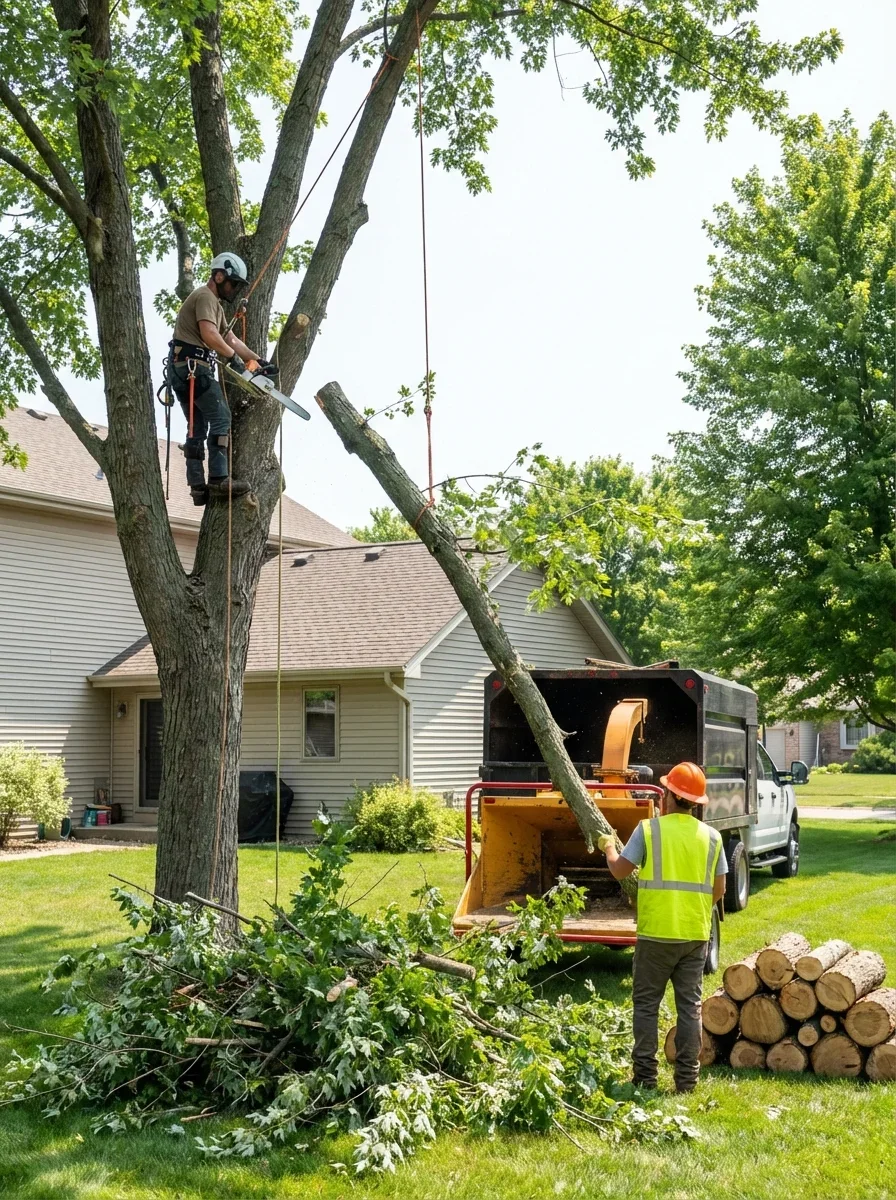
Tree size and species are the first drivers. A 20-foot ornamental crab apple takes an hour to drop and haul. An 80-foot maple with a 40-inch trunk can occupy a crew of three or four for half a day.[1] Hardwoods like oak and ash cost more to cut and chip than softer pines or birches.
Location and access come next.
If a crane or bucket truck can roll up to the base, the job moves fast. Backyard trees behind narrow gates or fences often require hand-carrying equipment and limb-by-limb rigging, which doubles labor time. One homeowner had to remove fence panels just to allow equipment in — without that access, the company couldn't proceed and issued a refund.[2] Measure your gate width and confirm equipment needs before scheduling.
Proximity to structures raises both difficulty and liability. Trees overhanging roofs, decks, or neighboring properties need climbers who piece the tree down in sections with ropes and pulleys. A 35-foot pine leaning over a fence line gets treated like a surgical extraction, not a straightforward drop.[1]
Expect higher quotes when the margin for error shrinks.
Condition and hazards also factor in. Dead or diseased trees with brittle limbs are unpredictable and dangerous to climb. Leaning trees under tension, split trunks, or root rot add time and risk, which shows up in the estimate.
Pro Tip: Trees leaning more than 15 degrees, showing visible cracks, or with hollow sections often require specialized rigging equipment. These hazard indicators can increase removal costs by 30-60% compared to healthy trees of the same size.
Tree Removal Cost by Size
Small Trees (Under 30 Feet)
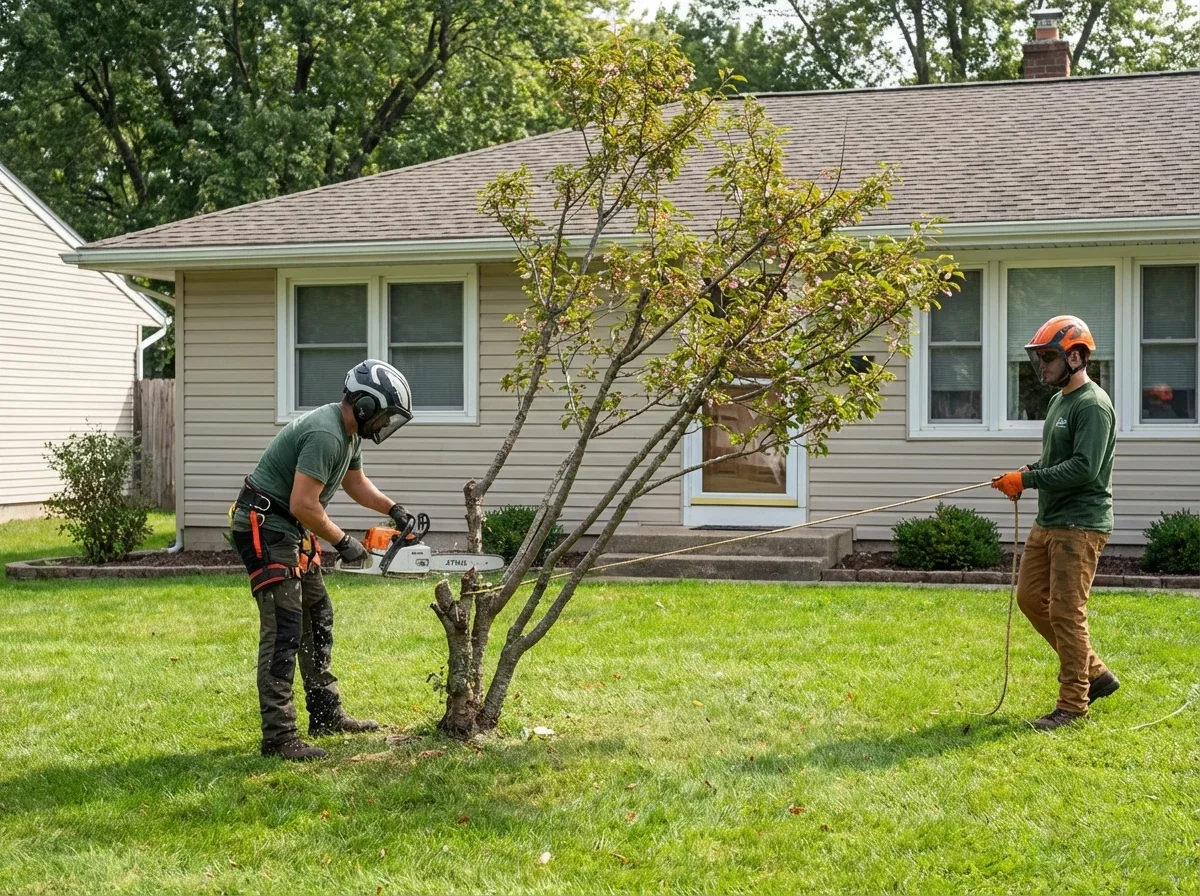
Small trees — ornamental cherries, young maples, or Bradford pears — generally cost $300 to $700 to remove. A crew can drop and haul one in under two hours if access is clear.
You'll pay toward the higher end if the tree sits close to a fence, flower bed, or utility line that requires careful sectioning.
Medium Trees (30–60 Feet)
This is where most residential removals fall. A mature ash, mid-sized oak, or tall spruce in the 30- to 60-foot range runs $800 to $1,500. Crews of three to four often finish in half a day, sometimes faster — one homeowner watched a huge maple disappear in four hours flat.[1]
If the tree stands in open lawn with no obstacles, you'll hit the lower end. Add nearby structures, overhead wires, or backyard access issues, and the price climbs.
Large Trees (60–80 Feet)
Large hardwoods and conifers in this range cost $1,500 to $2,500. Removal takes most of a day and involves climbing gear, rigging systems, and possibly a bucket truck. ISA-certified crews use ropes to lower limbs in controlled drops, especially when working near property lines or gardens.[3]
Cleanup at this scale generates multiple truckloads of wood and brush.
Some companies stack logs separately if you want firewood — clarify that preference upfront.[1]
Very Large Trees (80+ Feet)
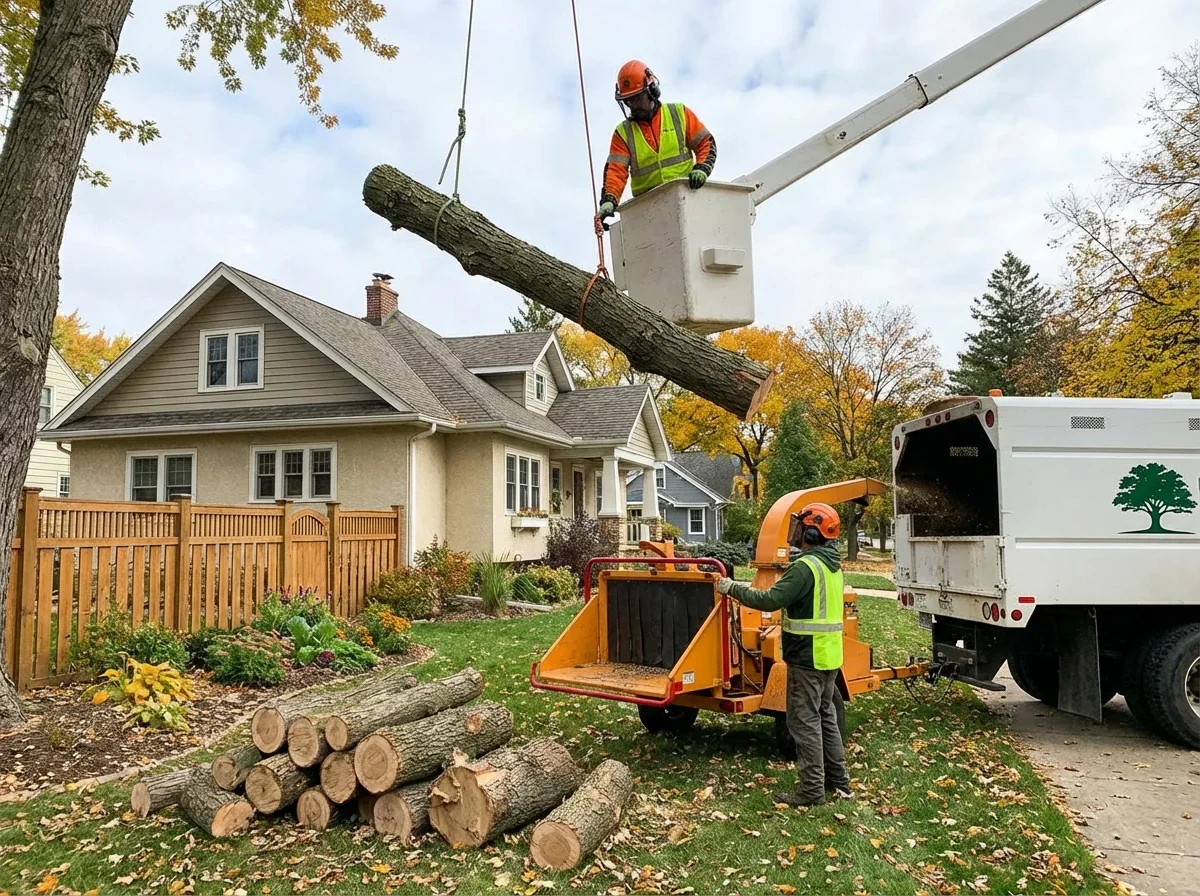
Towering oaks, maples, and pines over 80 feet enter the $2,500 to $4,000+ zone. Not every company will quote these jobs due to the complexity and equipment demands.[1] Crane-assisted removals, which lift entire sections over houses or power lines, add $500 to $1,500 to the base cost but speed the job and reduce risk.
Plan for a full day or more of work, and expect heavy equipment on your property. Ask how the crew will protect your lawn, driveway, and landscaping during the operation.
Additional Tree Removal Services and Costs
Stump grinding runs $150 to $400 per stump depending on diameter and root complexity. Most companies grind 6 to 12 inches below grade, leaving wood chips you can rake into mulch or have hauled away for an extra fee.
Wood hauling and disposal typically costs $100 to $300 if you don't want the logs. If you do keep the wood, crews often stack it neatly for firewood — some even separate limbs from trunk sections without being asked.[2]
Limb chipping and brush removal are usually included in the base quote, but confirm before the crew arrives.
A few companies offer light raking and cleanup that goes beyond the contracted scope, replacing landscape bricks after stump grinding or tidying mulch beds.[2]
Emergency removal after storm damage carries a premium. Expect to pay 25–50% more for same-day or next-day service, especially during peak storm season when crews are stretched thin.
What's Typically Included in Your Quote:
- Tree felling and sectioning
- Limb chipping and brush removal
- Wood hauling (unless you keep it)
- Basic site cleanup and debris removal
- Rope and rigging equipment
- Safety equipment and crew insurance
Usually NOT Included (Ask About These):
- Stump grinding ($150-$400 extra)
- Wood chip hauling ($50-$150)
- Landscape repair or sod replacement
- Permit fees (if required by your city)
- Same-day emergency service premium
How to Save Money on Tree Removal in Wisconsin
Get multiple quotes from ISA-certified, fully insured companies. Prices vary significantly — one homeowner found a $1,000 difference between competitors for the same three-story tree.[1] Comparing estimates also reveals what's included: hauling, cleanup, stump grinding, and site protection.
Schedule in the off-season if the tree isn't an immediate hazard.
Late fall through early winter sees less demand, and crews may move faster — six trees removed in under five hours even in January, well ahead of the estimated timeline.[2]
Keep the wood if you have use for it. Skipping hauling and disposal can shave $100 to $300 off the total. You'll need to split and stack it yourself, but mature hardwoods make excellent firewood once seasoned.
Combine jobs when possible. Removing multiple trees in one visit spreads mobilization costs across several removals, lowering the per-tree price. If you're clearing several hazardous or dead trees, bundle them into a single contract.
Choosing a Tree Removal Company in Wisconsin
Look for ISA-certified arborists with full liability and workers' compensation insurance. Certification means the crew understands tree biology, rigging techniques, and safe dismantling methods — critical when working near fences, gardens, or neighboring properties.[3]
Verify insurance coverage before any crew steps on your property.
An uninsured contractor who damages your roof, fence, or power lines leaves you holding the bill. Ask for proof of both general liability and workers' comp, and confirm the policy is current.
Check references and reviews for comments on cleanup quality, punctuality, and how the crew handled obstacles. Homeowners consistently highlight fast, professional work with excellent attention to property protection and finishing ahead of schedule.[1][2] Look for patterns — companies that exceed expectations on cleanup, communicate clearly, and handle tricky access or hazardous removals without drama.
Confirm equipment access and site prep during the initial quote. Measure gate widths, identify underground utilities, and ask what you need to move or protect.
Miscommunication about access can derail the entire project and lead to frustration on both sides.[2]
| Removal Method | Best For | Typical Cost | Time Required |
|---|---|---|---|
| Standard Felling | Trees in open areas, no obstacles | Base rate | 2-4 hours |
| Sectional Climbing | Trees near structures, tight spaces | +30-50% | 4-8 hours |
| Crane-Assisted | Very large trees, limited access | +$500-$1,500 | 3-6 hours |
| Emergency Service | Storm damage, immediate hazards | +25-50% | Same/next day |
What to Expect During Tree Removal
A typical removal starts with a crew of three to four arriving with chainsaws, climbing gear, ropes, and a chipper. If the tree can be felled in one piece, they'll notch the trunk, make a back cut, and guide it down with ropes. For trees near structures, climbers ascend with harnesses and section the tree from the top down, lowering limbs with rigging systems to avoid damage.
Most jobs finish faster than homeowners expect.
A massive maple can be on the ground and hauled in four hours. Multiple trees cleared in a day and a half even when access is tight.[1][2] Crews chip branches on-site, cut logs into manageable sections, and rake debris. Many go beyond the contracted scope — stacking firewood separately, replacing landscape stones, or doing a final cleanup sweep without being asked.[1][2]
If you're keeping the wood, tell the crew before they start so they don't load it into the truck. If you want stump grinding, it usually happens the same day or within a few days once equipment is available.
Tree Removal Permits and Regulations in Wisconsin
Most residential tree removals on private property don't require permits, but check with your municipality before cutting anything over a certain diameter or height. Some Wisconsin cities protect heritage trees, require permits for removals in historic districts, or restrict work during nesting season.
If the tree sits on a property line, you'll need your neighbor's consent before removal.
Trees leaning over shared fences or driveways are common sources of disputes, so document the tree's condition and get written agreement if ownership is unclear.
Never attempt removal near power lines yourself. Call your utility company to de-energize or relocate lines before any crew works within 10 feet. Electrocution is the leading cause of death in tree work, and even insulated tools won't protect you from contact with live wires.