
Average Cost to Grind a Stump
National averages hover around $150–$350 per stump for residential jobs, though outliers exist on both ends. A small 10-inch stump in an accessible front yard might cost $75–$100, while a sprawling 48-inch maple root ball near utilities or structures can push $600 or more.
Geography plays a role—urban markets with higher labor costs and tighter access often charge 15–25% above rural or suburban rates.
Per-diameter pricing is the industry standard: $2–$5 per inch measured at ground level. A 24-inch stump at $3.50 per inch totals $84 for the grind itself, but most companies layer on service fees, travel charges, or minimum job rates ($100–$150) to cover equipment transport and setup.
If you're grinding one stump, expect to hit that minimum. If you're clearing five, the per-stump cost drops as the crew amortizes setup time across the visit.
Depth matters, too. Standard grinds go 6–8 inches below grade—enough to lay sod or replant. Grinding 12–18 inches deep for a patio or driveway base adds $50–$150 per stump, since it requires more passes and dulls teeth faster.
Root flaring—those wide surface roots spreading 3–5 feet from the trunk—can tack on another $1–$2 per inch of diameter if you want them fully removed rather than just the central stump.
Quick Cost Reference:
- Small stump (10–15 inches): $75–$150
- Medium stump (16–24 inches): $150–$250
- Large stump (25–36 inches): $250–$400
- Extra-large stump (37+ inches): $400–$600+
- Deep grinding (12–18 inches): Add $50–$150 per stump
- Service call minimum: $100–$150
- Bulk discount (5+ stumps): Save 15–30% per stump
Cost Factors That Move the Price
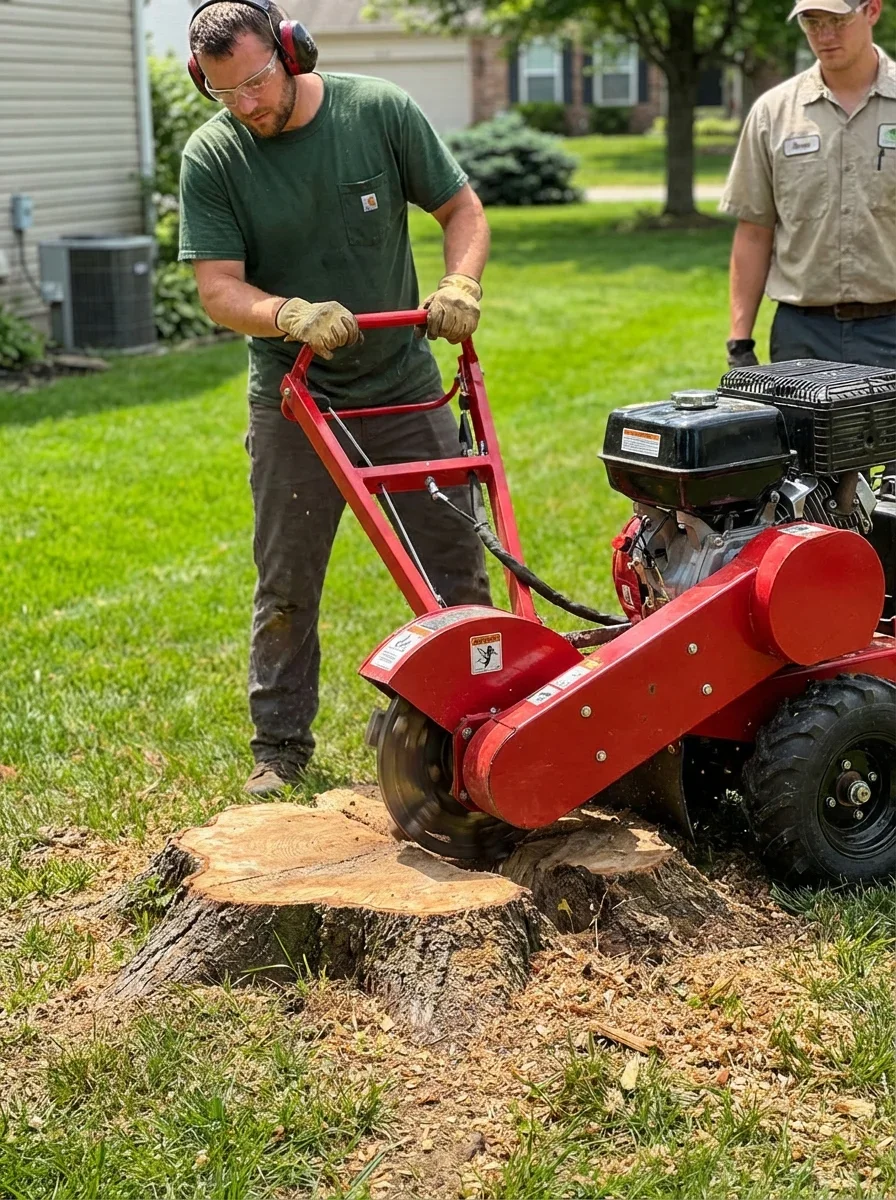
Stump diameter and species drive the base cost. Hardwoods like oak, hickory, and maple wear down grinder teeth faster than softwoods like pine or cedar, so some crews charge a 10–20% premium for dense species. A 30-inch oak stump might cost $120 where a 30-inch pine runs $90, purely due to equipment wear and grinding time.
Accessibility is the silent budget killer.
If your stump sits 10 feet from the driveway with clear overhead clearance, you're golden. If it's tucked behind a 36-inch gate, nestled under low-hanging branches, or perched on a steep slope, the crew either brings a smaller (slower) grinder or hand-clears obstacles first—both of which inflate labor hours. One homeowner found their job couldn't proceed until they removed a section of fence to fit the equipment through, though the company refunded the deposit and offered a goodwill credit.[2]
Root complexity and soil conditions add variability. Stumps with extensive surface roots—common in silver maples and willows—take longer to grind flush. Rocky or clay-heavy soil dulls teeth quickly, prompting some contractors to charge extra or require a site visit before quoting.
Stumps near sidewalks, retaining walls, or underground utilities demand careful maneuvering, which slows the work and raises the price.
Number of stumps unlocks bulk discounts. Grinding one stump might cost $200, but five stumps often run $150 each as the crew spreads mobilization costs across the job. Homeowners report getting "very reasonable" rates when bundling 15 large pine stumps with tree removal, including hole filling, seeding, and debris haul-away—all priced lower than à la carte services.[1]
Per-Inch Pricing vs. Flat Rates
Per-inch pricing gives you transparency: measure the stump diameter at ground level, multiply by the contractor's rate ($2–$5/inch), and you know the grind cost. A 20-inch stump at $3/inch = $60 for grinding.
Simple math, but watch for add-ons—travel fees ($50–$75), disposal surcharges for hauling grindings ($25–$50), or root-flare charges if you want lateral roots ground flush.
Flat-rate quotes bundle everything into one price: grinding, cleanup, grindings disposal, and travel. You might pay $250 for a 28-inch stump with roots, no surprise fees. Flat rates work well when you're comparing multiple bids, but verify what's included. Does the crew fill the hole with soil and seed? Do they haul grindings, or leave them for you to spread as mulch?
One crew left a yard so immaculate—no debris, shavings, or mess, even replacing landscape bricks and raking surrounding areas—that the homeowner noted it "exceeded basic expectations."[1]
That level of service usually shows up in flat-rate pricing, not rock-bottom per-inch bids.
Minimum job charges ($100–$150) override per-inch math on small stumps. A 10-inch stump at $3/inch = $30, but you'll pay the $125 minimum to cover the crew's time and fuel. If you're grinding just one small stump, flat rates or minimums might match or beat per-inch pricing. If you're clearing a half-dozen stumps, per-inch pricing with a bulk discount often wins.
| Pricing Method | Best For | Typical Cost | Watch Out For |
|---|---|---|---|
| Per-Inch | Multiple stumps, transparent quotes | $2–$5 per inch diameter | Add-ons (travel, disposal, root flares) |
| Flat Rate | Single stumps, all-inclusive service | $150–$350 per stump | What's excluded (soil fill, seeding) |
| Minimum Charge | Small stumps under 15 inches | $100–$150 flat | Pays same as larger stumps |
| Bulk Discount | 5+ stumps at once | 15–30% off per stump | Must schedule together |
DIY Stump Grinding: Rental Costs and Realities
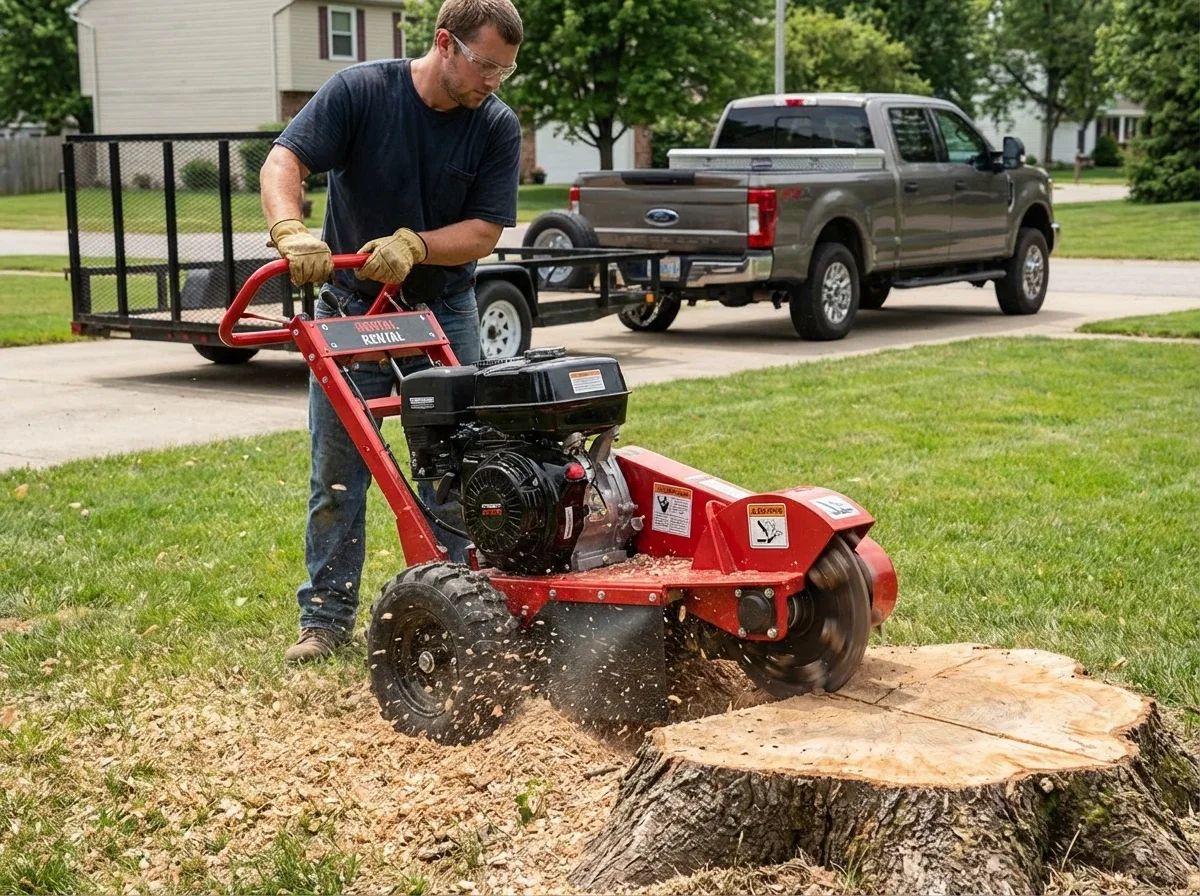
Renting a stump grinder costs $100–$200 for four hours or $150–$300 for a full day at most equipment yards. You'll need a truck or trailer rated for 500–1,000 pounds, since grinders don't fit in a sedan.
Add another $20–$40 for fuel, blade sharpening (if the rental doesn't include it), and safety gear—steel-toed boots, gloves, eye protection, and hearing protection.
Stump grinders are loud, vibrating, and unforgiving. The cutting wheel spins at 1,000+ RPM, spitting wood chips and debris 10–15 feet. You'll grind in slow, side-to-side sweeps, lowering the wheel 1–2 inches per pass until you're 6–8 inches below grade.
A 24-inch stump takes 45–90 minutes for an experienced operator, longer if you're learning as you go.
Rocks, buried metal, or root flares double the time and dull teeth fast—$10–$15 per tooth to replace, and a wheel holds 16–20 teeth.
The risk calculus: pros handle difficult stumps year-round, using proper technique and commercial-grade equipment. They navigate tight yards, avoid underground lines, and finish in a fraction of the time. DIY makes sense if you're grinding three or four stumps, you're comfortable with power equipment, and access is straightforward.
For a single stump or stumps near structures, hiring a pro often costs less than a rental plus your weekend, with zero chance of hitting a gas line or flinging a rock through your window.
Stump Grinding vs. Full Stump Removal
Stump grinding shaves the stump 6–12 inches below grade, leaving roots to decompose over 5–10 years. It's faster, cheaper ($150–$350 per stump), and less disruptive—no heavy machinery tearing up your lawn.
The trade-off: roots remain underground, so you can't excavate a footer or install a deep post without encountering wood. Grindings pile up, giving you 1–3 cubic yards of mulch per stump to spread or haul.
Full stump removal extracts the stump and major roots using an excavator or backhoe, creating a crater 3–5 feet wide and 2–3 feet deep. It costs $300–$800 per stump, requires heavy equipment access, and leaves your yard torn up for a day or more. The upside: no roots remain, so you can build, plant, or lay hardscape immediately.
Contractors backfill the hole with soil, but settling takes months—plan to top-dress twice before final grading.
Choose grinding if you're replanting grass, laying sod, or spreading mulch. Choose removal if you're pouring a foundation, installing a deck footing, or clearing land for construction.
One homeowner praised a crew that ground six stumps, filled holes with soil, seeded, and cleaned so thoroughly the yard looked untouched—all in under five hours.[1] That's the grinding advantage: minimal disruption, fast turnaround, and a lawn ready for use within weeks.
Bundling Stump Grinding with Tree Removal
Scheduling stump grinding immediately after tree removal unlocks discounts of 15–30% per stump, since the crew and equipment are already on-site. A tree service charging $800 to remove a 40-foot oak might add stump grinding for $100–$150, whereas grinding alone weeks later costs $200–$250.
The math favors bundling, especially when you're clearing multiple trees.
Bundled quotes often include cleanup and site restoration—hauling logs, chipping branches, grinding stumps, filling holes, and seeding bare spots. Homeowners report that pros who bundle deliver seamless service, handling "tree removal plus stump grinding for 15 large pines at a very reasonable price," including soil fill and debris haul-away.[1]
That's harder to coordinate if you hire separate contractors weeks apart.
Ask whether the tree removal crew handles grinding in-house or subcontracts it. In-house crews keep costs lower and scheduling simpler. Subcontractors introduce a middleman, which can delay grinding by days or weeks and fragment communication.
One case saw a subcontractor's equipment fail to fit through a gate, forcing a cancellation and refund despite the company's goodwill offer—a hassle avoided when one crew owns the job start to finish.[2]
Pro Tip: Always verify that your tree removal company handles stump grinding in-house rather than subcontracting. In-house crews eliminate scheduling headaches, keep costs 15–30% lower, and take full responsibility if access issues arise. Ask directly: "Will your crew grind the stumps, or do you hire another company?"
Cleanup, Debris Disposal, and Grindings
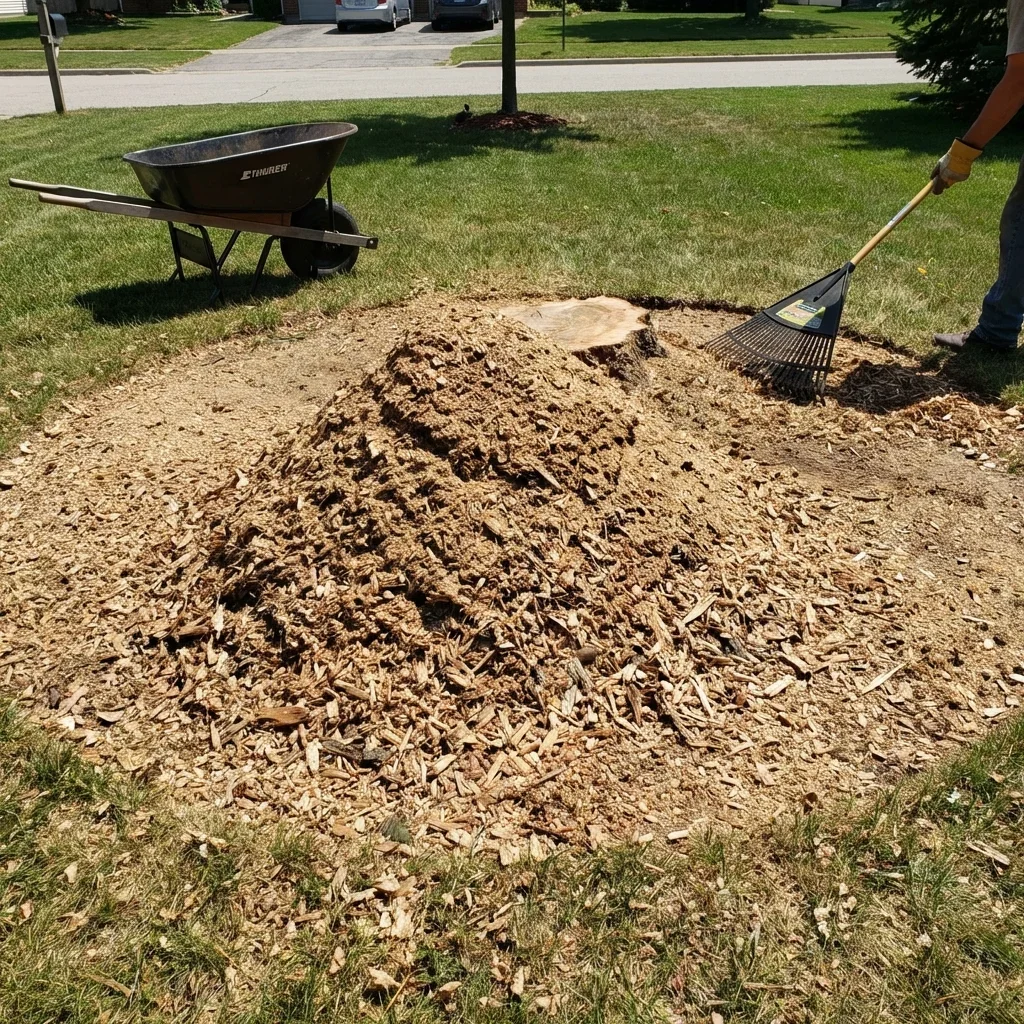
Standard stump grinding leaves you with a mound of wood chips—roughly 1.5–2 times the stump's above-ground volume. A 24-inch stump yields 2–4 cubic yards of grindings, enough to mulch several garden beds or fill the hole left behind.
Some contractors include grindings in the base price, spreading them as mulch or backfilling the depression. Others charge $25–$75 to haul grindings away, especially if local dump fees apply.
Backfilling the stump hole with grindings is common but imperfect. Wood chips settle 30–50% over 6–12 months, creating a divot that collects water. For a level lawn, request that the crew mix grindings with topsoil (50/50 blend) or remove grindings and backfill entirely with soil.
Expect to pay $40–$100 for soil delivery and filling, depending on hole size and soil quality.
Cleanup quality varies by contractor. Basic service grinds the stump and rakes grindings into a pile; premium service grinds, backfills, seeds, and leaves the area spotless. Homeowners rave about crews that "left no debris, shavings, branches, or mess," even restoring landscape edging and raking neighbors' yards—service that turns a disruptive job into a non-event.[1][4]
That level of care shows up in reviews and flat-rate pricing, so read testimonials and ask about post-grind cleanup before signing.
How to Get Accurate Stump Grinding Quotes
Measure each stump's diameter at ground level—the widest point where the trunk meets the soil. Use a tape measure or estimate by eye (most adults' arm span equals their height, giving you a rough yardstick).
Note how many stumps you're grinding, their species if known, and any access constraints—narrow gates, overhead wires, slopes steeper than 15 degrees.
Call three contractors for free on-site quotes. Walk the property together, pointing out obstacles and asking how they'll navigate them. Confirm what's included: grinding depth (6, 8, or 12 inches), root-flare removal, cleanup level, grindings disposal, and any warranties or follow-up service.
One pro might quote $250 for grinding and cleanup; another $180 for grinding only, leaving you to rake and seed. The lower bid isn't cheaper if you're hiring a landscaper later to finish the job.
Ask about credentials—ISA certification, liability insurance, workers' comp. Certified arborists charge slightly more but bring expertise and accountability. Insured crews protect you from property damage or injury claims, a non-negotiable when heavy machinery enters your yard.
Homeowners consistently recommend pros who are "insured ISA arborists" and deliver "on-time, reliable service" even in tight spots near fences or plantings.[1][3]
Verify equipment access before booking. Measure gates, fence openings, and overhead clearances (low branches, power lines). Standard walk-behind grinders need 36–40 inches of width and 7–8 feet of vertical clearance. If your gate is 34 inches, the crew brings a smaller grinder (slower, more expensive) or you remove a fence section.
Catching access issues during the quote saves cancellations and delays—one homeowner learned this the hard way when equipment wouldn't fit and the job stalled.[2]
When to Hire a Pro vs. DIY
Hire a pro if you're grinding more than two stumps, stumps exceed 24 inches in diameter, or access is tight. Pros finish in hours what takes you a full day or weekend, with commercial equipment that grinds faster and deeper.
They handle rock, root flares, and slopes safely, and they leave the site clean—no grindings piled in your driveway, no teeth to replace, no liability if something goes wrong.
Consider DIY if you're grinding one or two small stumps (under 18 inches), access is wide open, and you're comfortable operating heavy machinery. Rental costs ($150–$300) undercut pro pricing ($200–$350 per stump) only if your time has no dollar value and the job goes smoothly.
Factor in truck rental, fuel, safety gear, and the risk of hitting buried utilities or damaging property.
If the DIY budget creeps past $250 and you're spending eight hours grinding, the pro becomes the value play.
Homeowners who've hired pros often highlight the speed and quality: "6 trees plus stumps in under 5 hours, yard left spotless, stumps ground and holes filled."[1] That's the pro advantage—expertise, efficiency, and execution. DIY offers control and potential savings, but only if you're realistic about the time, effort, and risk involved.