
What Arborists Charge (and Why)
Most arborists don't bill purely by the hour. They assess your property, consider the scope of work, factor in equipment and crew needs, then quote a flat fee.
That said, hourly rates still matter — especially for consultations, ongoing maintenance contracts, or smaller jobs where the time commitment is clear.
Expect to pay $50 to $150 per hour for a certified arborist's time. Non-certified tree service professionals typically charge $35 to $75 per hour. The difference isn't arbitrary — certified arborists carry credentials from organizations like the International Society of Arboriculture, meaning they've passed exams on tree biology, risk assessment, and proper care techniques. You're paying for knowledge that prevents costly mistakes, like improper pruning that weakens a tree or misdiagnosing a pest infestation.
That expertise shows up in unexpected ways.
Homeowners consistently report that certified professionals explain problems clearly during estimates — like how to spot emerald ash borer damage or why a particular tree poses a hazard — which builds trust before a single branch gets cut[1].
| Service Provider | Hourly Rate | What You Get |
|---|---|---|
| Certified Arborist | $50–$150 | ISA credentials, tree biology expertise, proper diagnosis, continuing education requirements |
| Non-Certified Tree Service | $35–$75 | Basic tree work, equipment operation, standard trimming and removal |
| Tree Service Laborer | $20–$40 | Ground support, debris cleanup, equipment assistance |
Consultation and Assessment Fees
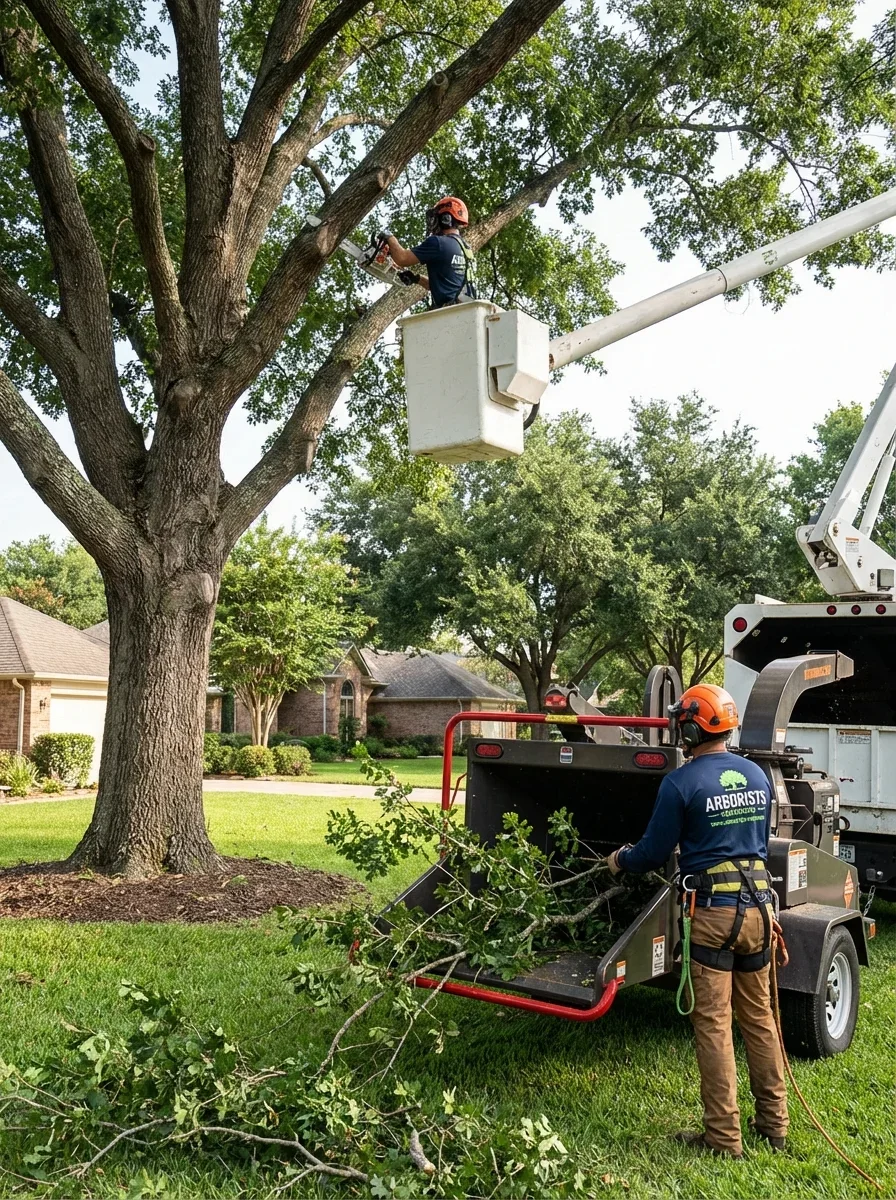
A standalone consultation runs $75 to $150 for a basic visit where an arborist walks your property, answers questions, and provides verbal recommendations. Written reports cost more — usually $150 to $300 — and include detailed findings, treatment plans, and risk assessments you can share with insurance companies or use for permitting.
Full tree risk assessments, especially for properties with multiple large trees or documented hazards, can climb to $500 or more. These involve systematic evaluations of structural integrity, root health, and proximity to structures.
If you're buying a home with mature trees or dealing with storm damage, this upfront cost often prevents five-figure surprises down the road.
Some arborists waive consultation fees if you hire them for the recommended work. Others build the assessment into their project quote. Always ask upfront how the consultation fee applies — it's one of those details homeowners wish they'd clarified during initial estimates[1].
When You're Quoted a Project Price Instead
Most tree work gets quoted as a flat project fee, not an hourly rate. Arborists calculate this by estimating labor hours, equipment rental, disposal costs, and complexity factors like proximity to power lines or limited access. A straightforward pruning job might cost $300 to $800, while hazardous tree removal near a house can easily hit $2,000 to $5,000.
Project pricing protects you from scope creep. You know the total cost before work starts, even if the job takes longer than expected. It also accounts for efficiency: an experienced crew with proper equipment might complete in three hours what takes a cheaper service all day, but you're paying for competence, not clock-watching.
In regions like Fox Valley, tree inspection averages around $207 and pruning runs about $466[5]. Those numbers provide a baseline, but your actual quote depends heavily on tree size, species, and site conditions.
Getting multiple quotes helps, but prioritize arborists who explain their pricing logic rather than just handing you a number.
Typical Tree Service Costs:
- Simple pruning — $300–$800 per tree
- Standard tree removal — $500–$1,500 per tree
- Hazardous removal (near structures) — $2,000–$5,000+ per tree
- Stump grinding — $100–$300 per stump
- Tree inspection — $75–$150 (verbal) or $150–$300 (written report)
- Full risk assessment — $500+ for multiple trees
Why Certified Arborists Cost More (and When It Matters)
Certification isn't just a piece of paper — it represents ongoing education, adherence to industry standards, and accountability. Certified arborists must maintain their credentials through continuing education, which means they're current on disease identification, treatment protocols, and safety regulations.
This matters most when you're dealing with diagnosis and treatment rather than straightforward removal.
A certified arborist can identify oak wilt before it spreads to neighboring trees, recommend soil amendments that address nutrient deficiencies, or determine whether a leaning tree needs cabling or removal. Non-certified services might spot the obvious problems but miss early warning signs that save you thousands later.
Local labor markets also influence costs. In some areas, arborists earn around $20 to $21 per hour — about 11% below the national average[3][4]. Lower wages might translate to lower service rates, but they can also reflect less experience or fewer certified professionals on the crew.
You're not always getting a bargain when you pay bottom-dollar rates.
What's Included (and What Costs Extra)
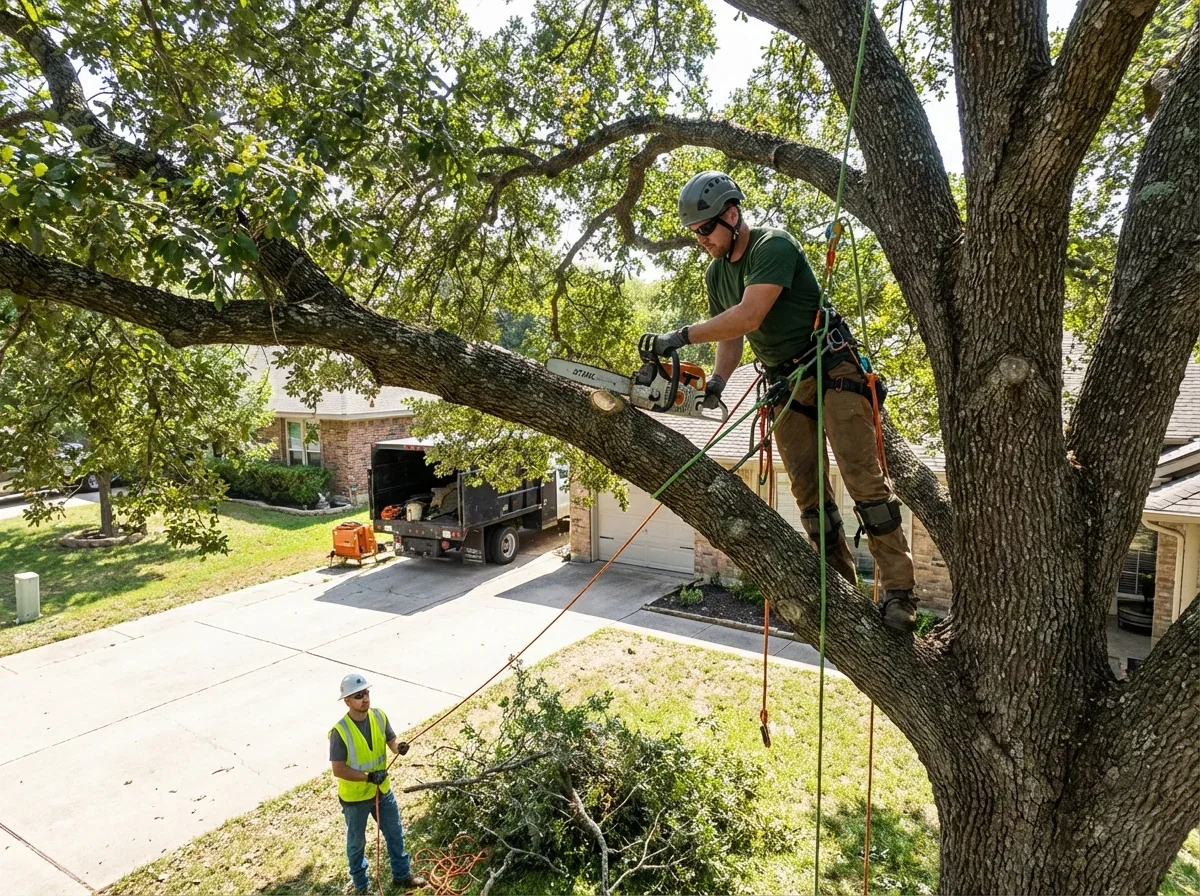
Standard arborist fees typically cover the work itself and basic cleanup — cutting, hauling debris to the curb, and sweeping up sawdust. What surprises many homeowners is how thorough professional crews are. Expect branches stacked separately from trunk sections, light raking to restore your lawn, and often zero trace that heavy equipment was ever there[1][2]. Some crews even replace displaced landscape bricks or mulch disturbed during work.
But clarify cleanup expectations upfront.
Full debris removal (hauling away chips and logs rather than leaving them for you) sometimes costs extra, especially if you're far from a disposal site. Stump grinding is almost always a separate charge — usually $100 to $300 per stump depending on diameter. Wood splitting for firewood, returning soil to grade, and replanting grass seed may also add to your invoice.
Equipment access matters too. If your trees sit behind a fence with a narrow gate, mention it during the estimate. Some companies use smaller equipment that fits tight spaces, while others need gate panels removed to bring in their machinery. One homeowner learned this the hard way when access issues left a job incomplete despite paying upfront[2].
A five-minute conversation about site access prevents those headaches.
Pro Tip: Before signing any contract, photograph your property from multiple angles. Document existing landscaping, hardscaping, and lawn condition. This creates a baseline if disputes arise about damage during tree work — and it helps reputable companies prove they left your property in excellent condition.
How to Get the Best Value
Fair pricing doesn't mean cheap — it means you're getting what you pay for without unnecessary upcharges. Look for arborists who explain what they found during their assessment, why they're recommending specific treatments, and how their pricing breaks down.
Knowledgeable professionals who arrive on time, communicate clearly, and follow through on their proposals consistently deliver better outcomes than low-bidders who ghost you after depositing your check[1][2].
Ask about credentials directly: "Are you ISA certified?" "How long have you been practicing?" "Do you carry liability insurance and workers' comp?" Certified arborists will answer without hesitation. If someone deflects or claims "certification doesn't matter for this type of work," that's your cue to keep shopping.
Complexity often costs more than size. A 40-foot tree in an open backyard is simpler — and cheaper — than a 25-foot tree tangled in power lines above your garage. Emergency services (storm damage, fallen trees blocking access) command premium rates, sometimes 50% to 100% above standard pricing.
If the situation isn't urgent, schedule work during the off-season (late winter in most regions) when arborists have lighter calendars and more flexible pricing.
Reading the Estimate
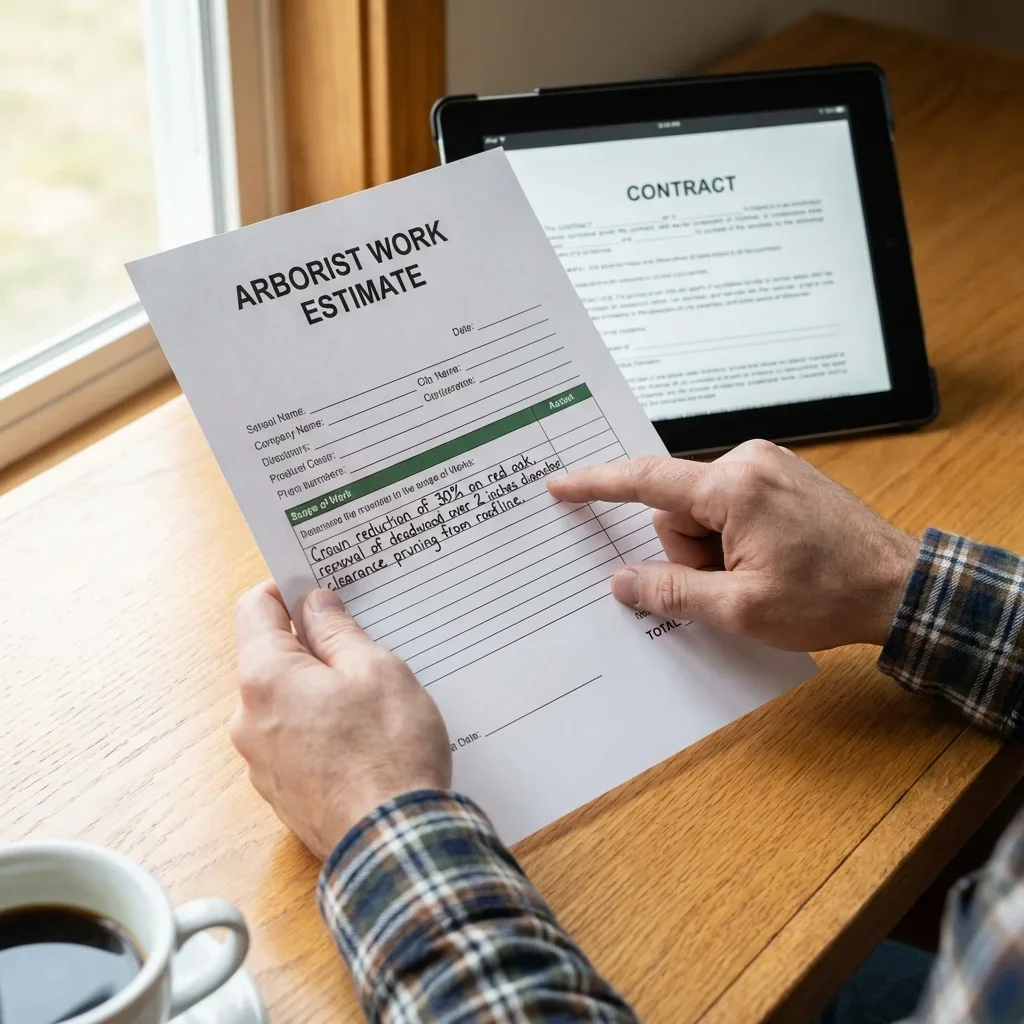
A quality estimate lists specific work: "Crown reduction of 30% on red oak, removal of deadwood over 2 inches diameter, clearance pruning from roofline." Vague language like "trim trees as needed" leaves room for disputes about what was promised versus what was delivered.
Check for itemization of major costs: labor, equipment rental, disposal, stump grinding. Bundled "all-in" quotes are fine, but you should be able to ask "What does the disposal fee cover?" and get a clear answer.
Some estimates include a timeline — "Work to be completed within 10 business days of contract signing" — which helps if you're coordinating with other contractors or preparing for an event.
Warranty terms matter for planting and treatment work. Many arborists guarantee newly planted trees for one growing season, assuming you follow their watering instructions. Disease treatments might include follow-up visits to assess effectiveness.
Get these terms in writing before you sign.
When to Pay More (and When to Walk Away)
Premium pricing makes sense for complex diagnostics, hazardous removals near structures, and preservation work on valuable specimen trees. If an 80-year-old oak anchors your landscape, spending $800 on a detailed health assessment and treatment plan protects a tree worth tens of thousands in replacement value and property appeal.
Pay more for credentials when you're dealing with disease, pest infestations, or declining tree health.
A certified arborist can distinguish between treatable problems and terminal conditions, saving you from investing in doomed trees or prematurely removing salvageable ones.
Walk away from quotes that seem too good to be true — they usually are. Rock-bottom pricing often means unlicensed crews, no insurance, improper techniques that damage trees, or surprise charges once work begins.
Likewise, avoid arborists who pressure you to decide immediately or claim "this price is only good today." Reputable professionals give you time to compare options and ask questions.
Speed, Efficiency, and Your Bill
An experienced crew with the right equipment works fast without cutting corners. Homeowners regularly report jobs completed in half the time they expected — like six large trees removed in under five hours — because skilled climbers and efficient rigging systems make quick work of complex tasks[2].
That speed doesn't mean you're being overcharged; it reflects competence you're already paying for.
Slower doesn't mean more thorough. Inexperienced crews take longer because they're figuring things out as they go, making multiple cuts where one would suffice, or repositioning equipment unnecessarily. You still pay for those extra hours, whether through hourly billing or because the company built inefficiency into their flat-rate quote.
The cleanest, fastest jobs come from companies that communicate well, show up when they promise, and follow your specific requests without needing constant supervision. That reliability carries value beyond the line items on your invoice.
When an arborist treats your property like it matters — protecting landscaping, minimizing lawn damage, and leaving your yard better than they found it — you're seeing professionalism that justifies premium rates.