
What Tree Services Cost in Oshkosh
Pricing varies widely based on tree size, location, and complexity. A straightforward removal of a 30-foot ash tree with open yard access might run $500 to $900, while a 60-foot oak leaning over your house could easily hit $2,000 to $4,000.
Crane work adds cost but often reduces risk and property damage when trees are near structures or power lines.
Trimming costs less than removal but depends on canopy size and accessibility. Expect $250 to $600 for routine pruning of medium trees, more for large specimens or crown thinning that requires climbing. Stump grinding typically runs $75 to $150 per stump, though diameter affects the price — larger stumps take more time and wear down equipment faster.
| Service Type | Small Tree (< 30 ft) | Medium Tree (30-60 ft) | Large Tree (> 60 ft) |
|---|---|---|---|
| Tree Removal | $500 - $900 | $1,000 - $2,000 | $2,000 - $4,000+ |
| Tree Trimming | $200 - $400 | $250 - $600 | $600 - $1,200+ |
| Stump Grinding | $75 - $100 | $100 - $150 | $150 - $250+ |
| Emergency Service | Add 50-100% | Add 50-100% | Add 50-100% |
Get detailed written estimates that break out each service. Some homeowners have paid deposits only to face month-long delays and refusal to refund when they cancel, so clarify scheduling timelines upfront and avoid paying large deposits to companies without established reputations.
Ask what the estimate includes — does it cover hauling debris, stump grinding, and cleanup, or are those separate charges?
Hiring a Certified Arborist vs. a Tree Service Company
Not every tree company employs certified arborists, and the distinction matters for complicated jobs. Certified arborists have passed exams covering tree biology, disease identification, pruning standards, and safety protocols. They can diagnose why your birch is losing bark, recommend treatment for oak wilt, or determine if that leaning maple actually needs removal or just cabling.
General tree services focus on removal and trimming, which works fine for straightforward jobs like clearing deadwood or taking down a healthy tree in an open area.
But if you're dealing with disease, structural issues, or valuable specimen trees, an arborist's expertise prevents costly mistakes. Poor pruning cuts leave trees vulnerable to decay, and removing too much canopy at once stresses the tree and triggers excessive sucker growth.
The University of Wisconsin Extension for Winnebago County recommends using the ISA's "Find an Arborist" tool to locate certified professionals in the area.[3] Verify credentials — some companies claim arborist expertise without holding current certification.
A certified arborist should willingly provide their certification number and explain their recommendations in terms of tree health, not just convenience.
Common Tree Issues in Oshkosh
Emerald ash borer has devastated ash populations across Wisconsin, and Oshkosh isn't exempt. If you have ash trees showing canopy thinning, D-shaped exit holes in the bark, or woodpecker damage (they feed on the larvae), get an arborist evaluation quickly. Untreated infestations weaken trees to the point of collapse, creating hazards over driveways, homes, and power lines.
Storm damage ranks high among local concerns. Ice storms snap branches and split trunks, while heavy snow loads bend and crack limbs already weakened by disease or age.
After major weather events, priority goes to hazardous trees and branches that threaten structures or block roads — routine trimming may wait weeks or months during busy seasons.
Overgrown trees scraping roofs or rubbing siding cause real damage over time. Constant friction wears through shingles and fascia, and overhanging branches create highways for squirrels and raccoons to access your attic. One homeowner noted they wished they'd addressed overhanging limbs sooner after discovering rodent entry points near damaged soffits.
Regular pruning keeps trees clear of structures and reduces pest access.
Pro Tip: Emerald ash borer signs require immediate professional attention. D-shaped exit holes, canopy thinning in the upper third of the tree, and increased woodpecker activity all indicate active infestation. Waiting even one season can mean the difference between treatment and removal.
What to Expect During Tree Removal
Professional removal starts with an assessment of the tree, surrounding structures, and access for equipment. Crews evaluate lean, root stability, and nearby obstacles like fences, gardens, and utility lines.
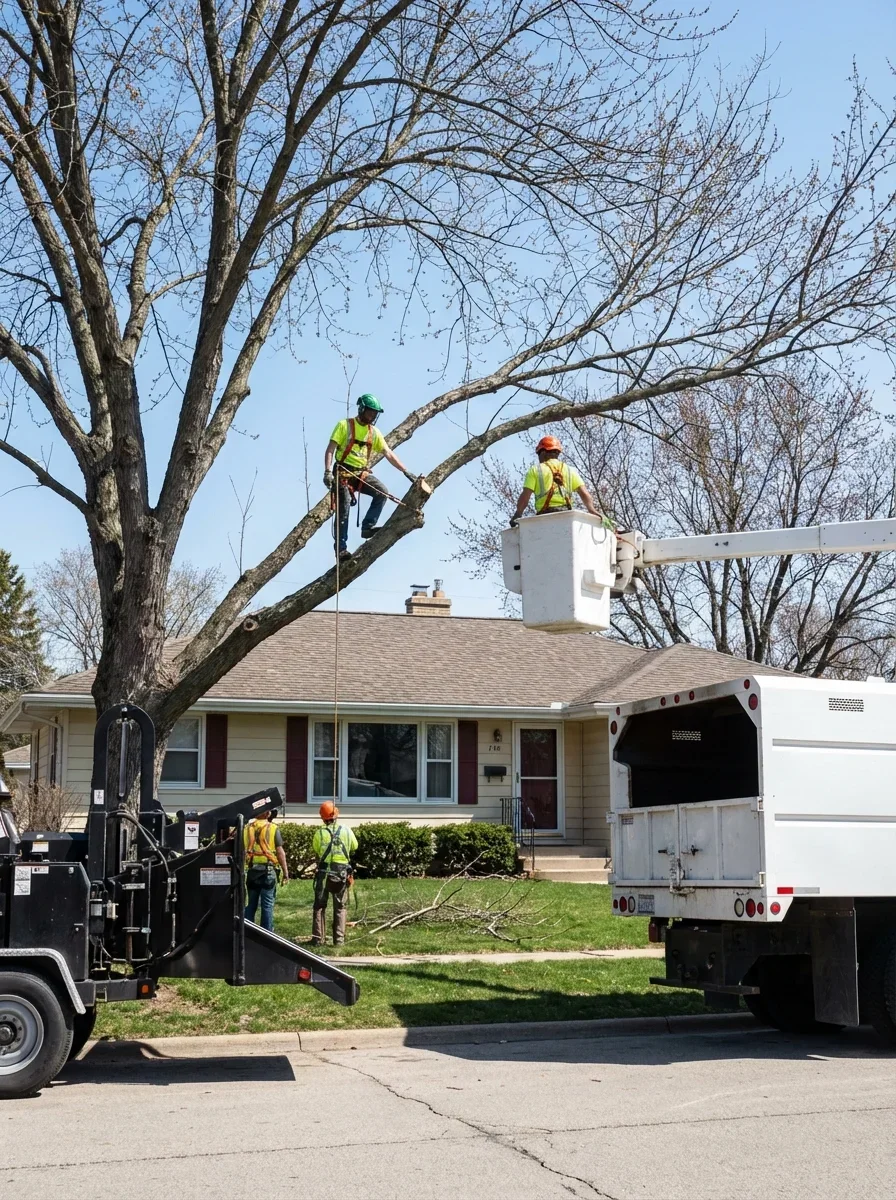
For difficult removals near homes or power lines, crane work allows precise sectional removal without dropping large pieces and risking damage.
Oshkosh homeowners have praised companies that use advanced equipment to handle complex jobs — one crew removed a massive tree with crane precision, leaving no debris on the street or neighbors' properties even after navigating tight clearances. That level of care isn't universal. Ask upfront about equipment: Does the company own appropriate cranes or lifts for your specific tree, or will they improvise with climbing and rigging alone?
Cleanup should leave your property cleaner than they found it.
Expect the crew to haul all wood and debris, rake the area, and check neighboring yards for stray branches. Some companies excel at this — others leave a mess and consider the job done when the tree's on the ground. Specify cleanup expectations in your contract, including whether you want wood chips for mulch or complete removal of all material.
Tree Trimming and Pruning Best Practices
Timing matters for pruning. Late winter or early spring — while trees are dormant — is ideal for most species. Wounds close faster when growth resumes in spring, and you avoid attracting insects to fresh cuts during active seasons.
Oak wilt spreads through open wounds April through July, so oaks should only be pruned during dormancy unless you're removing dead or hazardous branches.
Proper pruning removes dead, diseased, or crossing branches while maintaining the tree's natural form. Avoid "topping" — the practice of cutting main branches back to stubs — which destroys tree structure, triggers weak sucker growth, and leaves large wounds vulnerable to decay. Legitimate arborists refuse to top trees.
If a company suggests it, find someone else.
Homeowners who've worked with knowledgeable crews emphasize the value of consultation during the job. One resident described their arborist explaining which limbs to cut and why, educating them on tree health while the work progressed. That kind of interaction helps you make informed decisions about future care and understand what you're paying for.
Permits and Local Regulations
Oshkosh requires permits for planting, removing, or maintaining any public tree or shrub. The City Forester reviews applications based on public safety, conflicts with utilities, aesthetic impact, and the tree's condition.[1] "Public tree" includes any tree in a street right-of-way, park, or city-owned property.
If you're unsure whether a tree falls under city jurisdiction, contact the Parks Department before scheduling work.
Even on private property, construction projects trigger tree protection requirements. The city mandates a five-foot root protection zone around tree centerlines, and any excavation or placement of construction equipment and materials within that zone requires a permit.[2] Ignoring this during additions, driveway installations, or landscaping projects damages root systems and can kill mature trees months or years later when they slowly decline from root loss.
Penalties for unpermitted tree work can include fines and required replacement plantings.
Beyond legal issues, improper work near protected trees reduces property value and eliminates shade and aesthetics that took decades to establish. Get clarity on permit requirements before signing contracts — a reputable tree service will know local regulations and help you navigate the process.
Emergency Tree Service
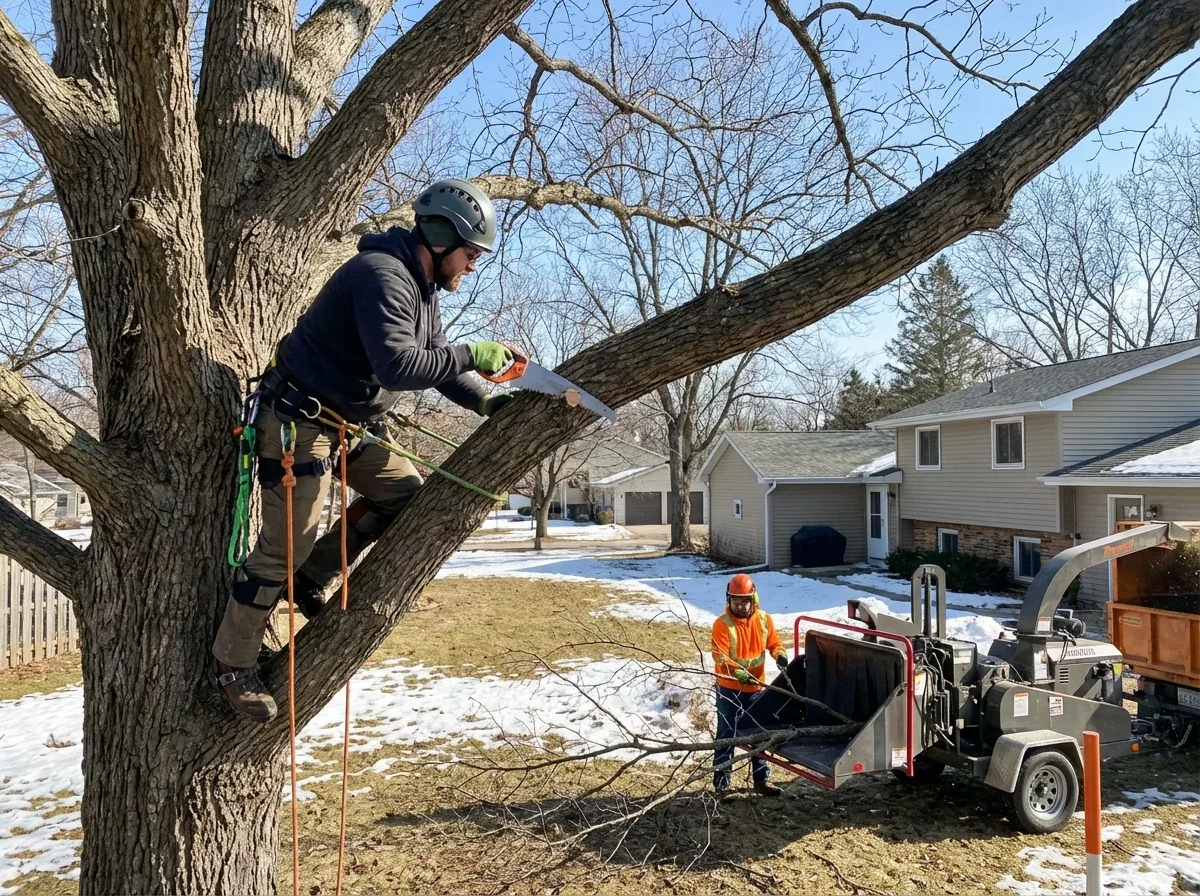
When a tree or major branch falls on your house, car, or blocks access, you need immediate response. Emergency services prioritize safety — stabilizing or removing the tree to prevent further damage and restore access.
Expect higher rates for after-hours or weekend emergency calls, typically 50% to 100% above standard pricing.
Document damage thoroughly before anyone starts cutting. Take photos and video showing the tree's position, structural damage, and any property impacts. Contact your homeowner's insurance immediately — most policies cover tree removal if the tree damaged a covered structure, though they typically won't pay for removal of a fallen tree that didn't hit anything.
Not every downed tree constitutes an emergency requiring immediate service.
If a tree fell in your back corner lot away from structures and utilities, it's a cleanup job, not an emergency. Save yourself premium pricing by scheduling regular service during business hours unless there's genuine risk of injury or additional property damage.
Questions to Ask Before Hiring
Start with credentials and insurance. Ask for proof of current liability insurance and workers' compensation coverage. Tree work involves significant risk, and you're liable if an uninsured worker gets hurt on your property.
Verify the company's physical address and how long they've operated locally — fly-by-night operators disappear after deposits are paid.
Request references and check recent reviews across multiple platforms. One homeowner wished they'd asked for referrals upfront and inquired specifically about equipment capabilities before hiring. Some companies accept jobs beyond their equipment's capacity, then struggle to complete them safely or efficiently.
If your job requires crane work or aerial lifts, confirm the company owns or regularly rents appropriate equipment.
Get detailed written contracts covering scope, timeline, payment terms, and cleanup. The contract should specify which trees or branches will be removed, stump grinding if included, debris disposal, and property restoration.
Pin down start dates — vague "we'll get to you soon" promises have left Oshkosh homeowners waiting months after paying deposits, with no recourse for refunds when they cancel.
Essential Questions to Ask Tree Service Companies:
- Do you carry current liability insurance and workers' compensation? (Request proof)
- How long have you been operating in Oshkosh?
- Can you provide 3-5 local references from recent jobs?
- Do you own the equipment needed for my specific job, or will you rent/subcontract?
- What exactly does your estimate include? (debris removal, stump grinding, cleanup)
- What is your guaranteed start date and estimated completion timeline?
- Will you provide a detailed written contract before work begins?
- Are you familiar with Oshkosh's tree permit requirements?
Stump Grinding and Removal
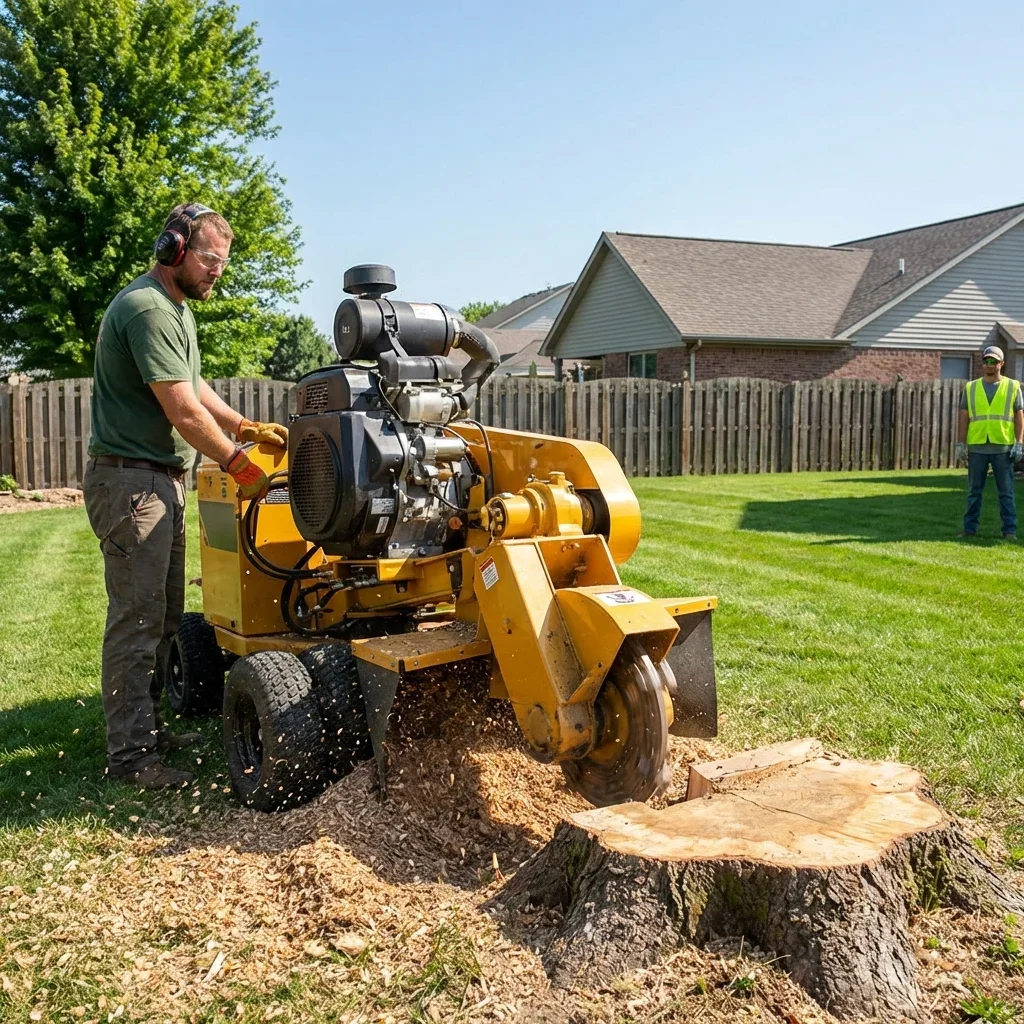
Stumps left after tree removal create obstacles for mowing, attract pests, and sprout new growth. Grinding grinds the stump 6 to 12 inches below ground level, turning it into wood chips that can be removed or used as mulch. Full stump removal — extracting the entire root ball — is more expensive and disruptive, typically only necessary when replanting in the same spot or installing structures.
Grinding produces a substantial pile of wood chips.
Discuss disposal options before work begins. Some homeowners keep chips for mulch in garden beds; others want complete removal. If you're replanting grass, you'll need to fill the depression left after grinding with topsoil and compact it before seeding, since wood chips don't provide a stable base for turf.
Timing stump grinding with removal saves mobilization costs. Many companies offer package pricing for same-day grinding when they're already onsite with equipment.
Waiting and scheduling grinding separately means paying another trip charge and potentially dealing with stump sprouts in the meantime, especially with species like elm and poplar that aggressively resprout from cut stumps.
Seasonal Considerations for Tree Work
Winter is prime time for tree work in Oshkosh. Frozen ground protects lawns from equipment damage, trees are dormant and less prone to stress, and companies typically have more availability. Snow can complicate access, but experienced crews work around it.
If you're planning major removals or pruning, booking winter service often means better pricing and faster scheduling than waiting for spring rush.
Spring brings high demand as storm damage emerges and homeowners tackle outdoor projects. Expect longer wait times from March through June, especially after severe weather. If you need spring work done, book early — ideally late winter.
Companies booking months out aren't being difficult; they're legitimately slammed with emergency calls and previously scheduled jobs.
Fall offers a second window for pruning before dormancy, though it's less ideal than late winter for most species. Avoid pruning in late summer and early fall when trees are storing energy for winter — large cuts during this period stress trees more than dormant-season work.
Fall is fine for removals and clearing deadwood, just not aggressive pruning of healthy branches.
Protecting Trees During Construction
Construction equipment compacts soil, crushing fine feeder roots that trees depend on for water and nutrients. Root damage may not kill a tree immediately — decline happens gradually over several years as the tree struggles with reduced root capacity.
That's why Oshkosh's five-foot root protection zone exists.[2]
Physical barriers like snow fencing or wooden posts define the protection zone and prevent accidental encroachment. Mark the zone before construction begins and instruct contractors that nothing — equipment, material storage, soil piles, or foot traffic — enters that space. Even seemingly minor activity like parking a pickup on roots repeatedly can compact soil enough to harm trees.
Trenching for utilities poses severe risk.
Cutting major roots destabilizes trees and creates entry points for disease. If utility work must occur within the root zone, hire an arborist to supervise. They can identify critical roots, recommend tunneling under them rather than cutting through, and advise on root pruning techniques that minimize damage. A permit from the city is required for this work,[2] and the documentation protects you if a tree declines later and questions arise about construction impacts.
Working With Tree Care Companies
Communication sets expectations and prevents disputes. Clarify exactly what you want removed or trimmed before work starts — walk the property with the crew lead and point out specific trees and branches.
Misunderstandings about which tree gets removed aren't uncommon, especially when multiple trees are involved.
Noise and disruption are unavoidable during tree work, but considerate companies minimize impacts. One Oshkosh homeowner mentioned choosing a crew partly based on their mindfulness about noise affecting neighbors — they worked efficiently and wrapped up by early afternoon rather than grinding stumps at 7 PM. If you live in a dense neighborhood, discuss scheduling with your tree service to avoid unnecessarily annoying your neighbors.
Stay available during the job for questions but don't micromanage.
Crews work more efficiently without constant oversight. Check in periodically to confirm they're following the plan, but let professionals do their work. Save detailed inspection for when they're finished — walk the property, verify cleanup, and confirm stumps are ground to the agreed depth before final payment.
- City of Oshkosh, Wisconsin. "Chapter 26 - Trees and Vegetation - City of Oshkosh." https://www.oshkoshwi.gov/WebLink/DocView.aspx?id=818537&dbid=0&repo=laserfiche. Accessed February 09, 2026.
- City of Oshkosh, Wisconsin. "Tree Protection Zone During Construction - City of Oshkosh." https://www.oshkoshwi.gov/SustainableOshkosh/Documents/Tree_Protection_Zones.pdf. Accessed February 09, 2026.
- University of Wisconsin Extension Winnebago County. "Local Certified Arborists - Extension Winnebago County." https://winnebago.extension.wisc.edu/horticulture/local-certified-arborists/. Accessed February 09, 2026.