
Tree Removal Services in Menasha
Removing a tree isn't just about cutting it down. Menasha's proximity to homes, power lines, and the Fox River means most removals require rigging, crane work, or piece-by-piece dismantling. Professional crews assess access routes, overhead clearances, and drop zones before making the first cut.
Homeowners report projects wrapping up faster than expected — multiple large trees removed in under five hours with full cleanup included. That speed comes from experience, not rushing.
Crews stage equipment efficiently, work in coordinated teams, and handle debris removal as they go rather than leaving cleanup until the end.
Equipment access matters more than most homeowners realize. If your backyard gate is narrower than 36 inches or your driveway has tight turns, mention it when requesting quotes. Some companies can't accommodate restricted access and will refund deposits, but you'll lose time while the tree keeps threatening your roof.
Ask upfront about equipment dimensions and whether they bring smaller machinery for tight spots.
Expect thorough cleanup as standard. Most companies rake debris, haul branches, and sweep hardscapes without prompting. Some go further — stacking firewood separately, replacing landscape bricks disturbed during stump grinding, and cleaning the street in front of your property.
If you have specific expectations about what "cleaned up" means, spell them out before the crew arrives.
Typical Tree Removal Project Timeline:
- Initial assessment and quote: 30-60 minutes onsite
- Single large tree removal: 2-5 hours including cleanup
- Multiple tree projects: 4-8 hours depending on size and access
- Stump grinding (if included): Add 1-2 hours per stump
- Final inspection and payment: 15-30 minutes
Certified Arborists and Tree Health Services
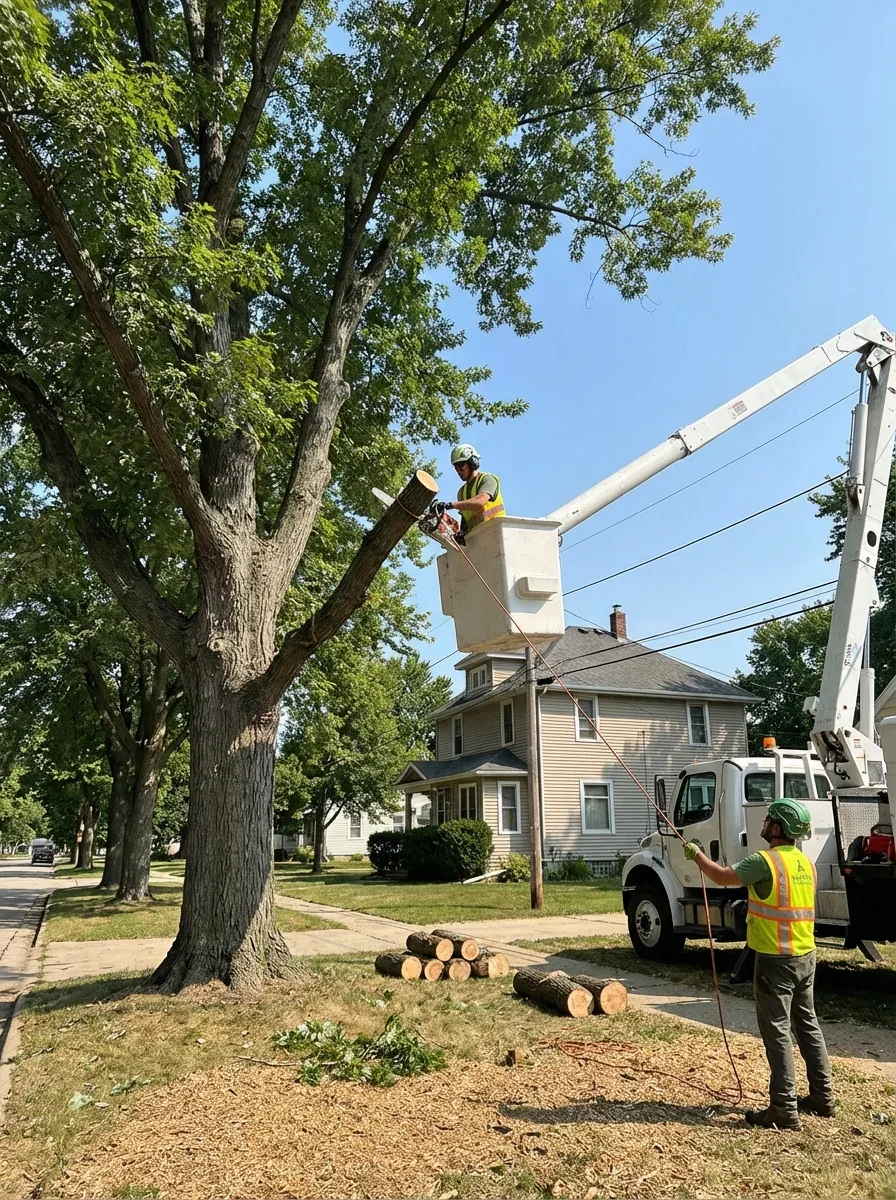
An ISA Certified Arborist brings diagnostic skills that standard tree crews don't have. They identify disease before it spreads, recommend treatments that preserve valuable trees, and advise when removal is the only safe option.
That expertise matters in Menasha. Emerald ash borer has forced thousands of removals and oak wilt threatens heritage trees across residential neighborhoods.
Wisconsin's guidance on tree ordinances emphasizes training and supervision requirements for forestry operations including pruning and planting.[1] Hiring certified professionals aligns with those standards and protects you from liability if something goes wrong. Arborists carry proper insurance, follow industry safety protocols, and document their work — all critical if a neighbor disputes where a branch fell or a storm reveals earlier pruning mistakes.
Homeowners value detailed explanations during consultations. The best arborists walk your property, point out specific concerns, and lay out multiple options with transparent pricing.
If you're unsure whether a leaning oak needs removal or just cabling, ask for repair options alongside removal quotes. Making an informed decision beats regretting a tree you didn't need to lose.
Pro Tip: Schedule arborist consultations in late winter or early spring before the busy season hits. You'll get more time with the arborist, faster scheduling for recommended work, and often better pricing before demand peaks in summer storm season.
Tree Trimming and Pruning
Proper pruning strengthens trees and prevents future damage. Poor pruning — topping, lion's tailing, or removing too much canopy at once — creates weak growth and invites disease.
Menasha's mature tree canopy depends on homeowners choosing knowledgeable crews over the lowest bidder with a chainsaw.
Timing matters. Oaks should be pruned during dormancy (November through March) to minimize oak wilt risk. Maples and other deciduous trees tolerate pruning year-round, but late winter cuts heal fastest.
Storm-damaged limbs require immediate attention regardless of season. A hanging branch over your roof won't wait for the ideal pruning window.
Communication keeps projects on track. The companies homeowners praise most explain each step before starting, check in during the work, and confirm you're satisfied before leaving. If a crew shows up and starts cutting without walking the property with you first, that's a red flag.
Professional arborists discuss which limbs they'll remove, why, and what the tree will look like when they're finished.
Stump Grinding and Removal
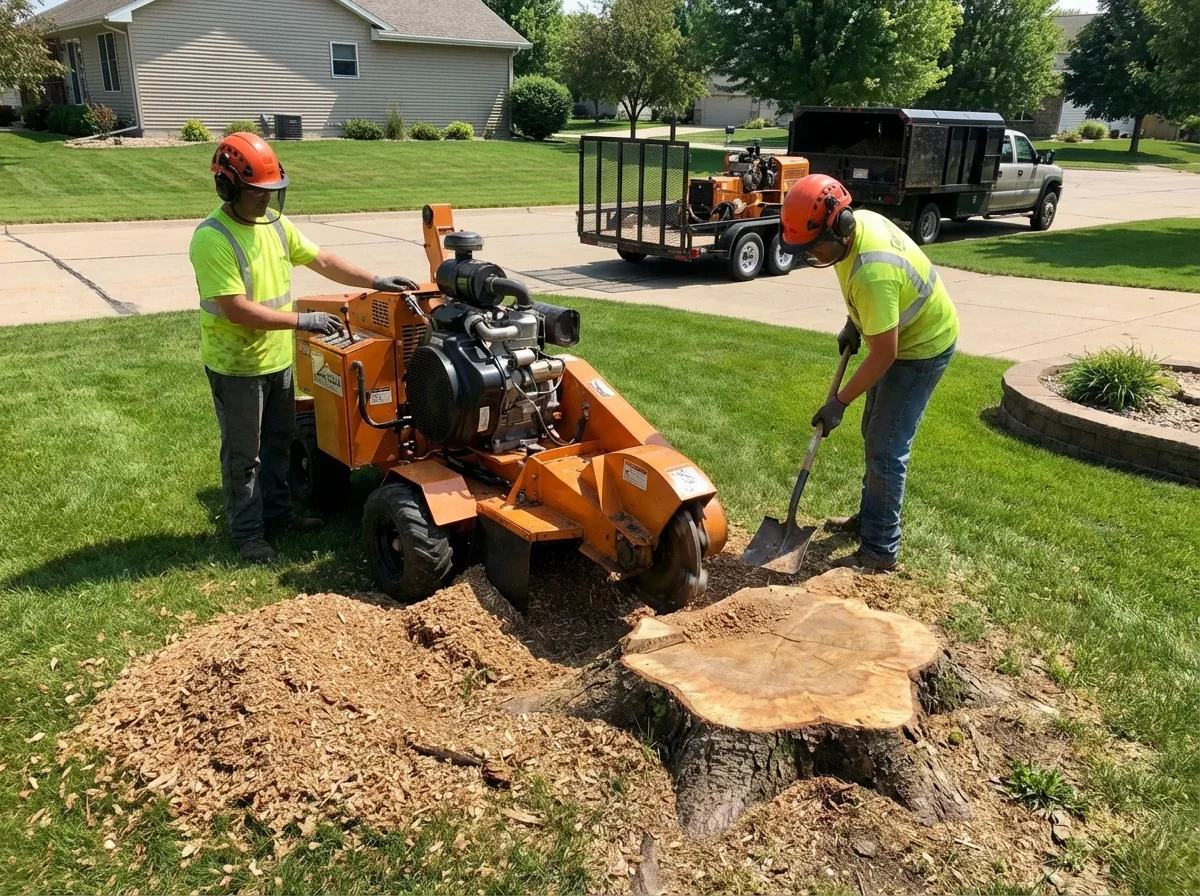
Stumps left behind after tree removal become tripping hazards, pest habitats, and lawn care obstacles. Grinding eliminates the visible stump and top roots, leaving wood chips that decompose over time. Full removal extracts the entire root ball — necessary if you're building over the site or planting a replacement tree immediately.
Grinder size determines what's possible. Large machines handle 30-inch stumps quickly but tear up narrow gates and compact soil. Smaller grinders fit tighter spaces but take longer on big jobs.
If your stump sits close to a fence, foundation, or utility line, ask whether the company uses guards to protect surrounding structures.
Professional crews grind 6-12 inches below grade, enough that grass grows over the site without settling issues. They haul away excess chips or pile them neatly for mulch, depending on your preference.
Some replace disturbed landscape materials without being asked. That's what separates thorough contractors from those who consider the job done when the grinding stops.
| Method | Best For | Timeline | Yard Impact | Cost Range |
|---|---|---|---|---|
| Stump Grinding | Lawn restoration, landscape beds | Same day | Minimal—wood chips remain | $150-$400 |
| Full Removal | New construction, replanting same spot | 2-4 hours | Significant—large hole to fill | $300-$800 |
| Chemical Decomposition | Non-urgent situations, budget projects | 6-12 months | None initially | $15-$50 DIY |
Understanding Menasha's Tree Regulations
Menasha's municipal code establishes development standards including minimum tree planting requirements for commercial projects — one tree per three units in development plans.[3] While these rules focus on new construction, they reflect the community's commitment to maintaining urban forest cover. Residential property owners don't face the same mandates, but local nuisance ordinances may address hazardous trees that threaten public safety or neighboring properties.
Wisconsin communities use tree ordinances and nuisance ordinances together to enforce management standards.[2]
If your tree drops limbs on a neighbor's car or roots buckle a sidewalk, local code enforcement can require action. Staying ahead of obvious hazards protects you from liability and keeps relationships with neighbors intact.
Public tree work along streets and in parks falls under different oversight. Menasha participates in regional emerald ash borer planning, coordinating removals and replacements to prevent sudden canopy loss.
If a parkway tree in front of your home needs work, contact city forestry services before hiring a private contractor. They may handle the removal at no cost to you.
Emergency Tree Services
Storms don't wait for business hours. When a tree falls across your driveway at 2 a.m. or a broken limb punctures your roof during a thunderstorm, you need a crew that responds immediately with the right equipment and insurance coverage.
Emergency services cost more than scheduled work. You're paying for 24/7 availability, rapid response, and the risk crews take working in dangerous conditions.
But that premium is worthwhile when a tree is actively damaging your home or blocking the only exit from your property. Most companies triage the immediate threat first, then return during daylight to complete cleanup and assess other damage.
Document everything before crews arrive. Take photos of the tree's position, property damage, and any utility lines involved.
If you're filing an insurance claim, this documentation establishes the pre-cleanup condition. Don't let anyone start work until you've contacted your insurer — some policies require approval before authorizing emergency tree removal.
What to Ask Before Hiring a Tree Service
Get specifics on insurance coverage. General liability protects your property if equipment damages your fence or a falling branch hits your house. Workers' compensation covers crew injuries so you're not liable if someone falls from your tree.
Ask for certificates proving both policies are current, and verify coverage amounts match the value of structures near the work site.
Clarify what "cleanup" includes. Does the crew haul away all debris, or do they chip branches and leave the chips? Will they rake the work area, or just remove large pieces? Do they clean the street if branches scatter during rigging?
These details prevent surprises when the crew packs up and your yard still looks like a war zone.
Understand equipment limitations upfront. Measure gate widths, driveway clearances, and overhead lines before scheduling. If you have a fence panel that needs temporary removal for access, discuss who handles that work.
Scope-of-work disagreements waste everyone's time and create friction that's easily avoided with clear communication from the start.
Request multiple options with pricing. If an arborist says your oak needs removal, ask whether cabling, pruning, or treatment might extend its life.
Get costs for each approach so you're making an informed decision, not just accepting the most expensive option because you didn't know alternatives existed.
- Wisconsin Department of Natural Resources. "Tree Ordinance Guidance for Wisconsin Communities." https://dnr.wisconsin.gov/sites/default/files/topic/UrbanForests/WITreeOrdinanceGuidance.pdf. Accessed February 09, 2026.
- Wisconsin Department of Natural Resources. "Local Authority and Management Responsibility - Wisconsin DNR Emerald Ash Borer Community Toolbox." https://dnr.wisconsin.gov/topic/UrbanForests/eabtoolbox/localResponsibility. Accessed February 09, 2026.
- University of Wisconsin Extension / Town of Menasha. "Table of Contents Town of Menasha Municipal Code - Section 29.10." https://fyi.extension.wisc.edu/winnebagopcn/files/2012/08/Local-example-Town-of-Menasha-Code-Section-29.10.pdf. Accessed February 09, 2026.