
What Green Bay Tree Services Actually Do
Tree companies in Green Bay handle more than cutting down dead wood. They assess hazard trees near power lines, prune crowns to improve structure, grind stumps below grade, and remove debris so thoroughly you'd never know a 60-foot oak stood there yesterday.
Homeowners consistently mention meticulous cleanup as a standout — crews rake, blow, and haul every twig, even around gardens and fences.
Certified arborists diagnose disease, recommend treatment for emerald ash borer, and advise whether a declining tree can be saved or needs removal. You'll also see crews handle utility line clearance, especially where branches threaten transformers or service drops. Wisconsin Public Service manages some trimming near power lines on a scheduled basis[3], but anything touching your home or interrupting personal service lines is your responsibility.
Stump grinding, cabling, and seasonal pruning round out the services. Some companies stack cut wood into firewood piles instead of chipping everything, turning waste into a winter heating supply if you ask upfront.
Core Tree Services in Green Bay:
- Hazard assessment — evaluating trees near structures and power lines
- Crown pruning — shaping for health, clearance, and storm resistance
- Stump grinding — removing stumps 6–12 inches below grade
- Disease diagnosis — identifying emerald ash borer, oak wilt, and rot
- Complete cleanup — raking, blowing, and hauling all debris
- Emergency response — storm damage and fallen tree removal
Tree Removal in Green Bay: What Homeowners Should Expect
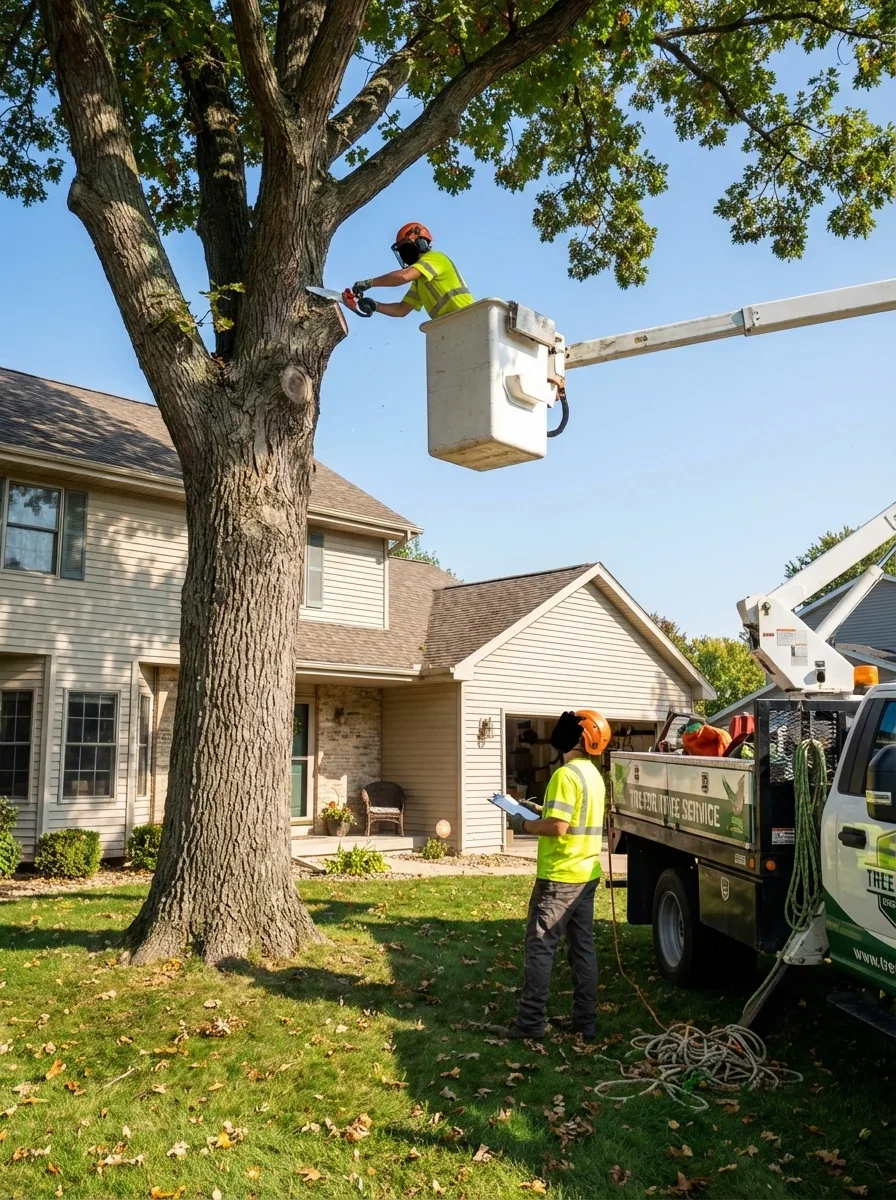
Removal jobs range from straightforward backyard cuts to crane-assisted lifts over rooflines. Green Bay's mature neighborhoods — especially near Astor Park and around the East River — feature tall maples, oaks, and dying ash trees wedged between homes and power lines.
Crews rig sections down piece by piece, using ropes and pulleys to avoid collateral damage.
Homeowners appreciate when companies consult mid-job, explaining which limbs to cut and why. That collaboration builds trust, especially if you're unsure whether to keep a tree or take it down. You'll also want a crew experienced with obstacles like wasp nests, heavy sap, or sharp spruce needles — pros handle these without complaint or damage to your yard.
Crane work costs more but speeds up removal and protects surrounding property. If your tree sits on a tight city lot with fences on three sides, a crane may be the safest option.
Verify the full scope in your quote: some estimates cover only part of a tree rather than the whole thing, which catches homeowners off guard when the final bill doesn't match expectations.
Choosing a Certified Arborist in Green Bay
Certification from the International Society of Arboriculture (ISA) signals that an arborist passed an exam covering tree biology, pruning standards, and safety. It doesn't guarantee flawless work, but it shows a baseline of knowledge.
Not every tree service employs a certified arborist, but if you're diagnosing disease or deciding whether to treat a valuable tree, certification matters.
Ask whether the arborist will visit your property or if you're getting a quote sight-unseen. Quick estimates over the phone might lowball the work, especially if the crew discovers rot, wasp nests, or utility line conflicts once they arrive.
Responsive communication — prompt callbacks, text updates, willingness to walk you through options — separates reliable pros from flakes.
Look for crews that explain their process. Will they stack wood or chip everything? Do they handle stump grinding as part of the package or charge separately? Can they reseed bare spots afterward? These details matter when you're comparing quotes.
Tree Trimming and Pruning: Timing and Technique
Pruning should happen when trees are dormant — late fall through early spring in Green Bay — to minimize stress and disease transmission.
Oaks get special treatment: trim only in winter to avoid oak wilt, a fungal infection spread by beetles attracted to fresh cuts during warm months.
Crown thinning opens up dense canopies, reducing wind resistance and letting more light reach your lawn. Crown raising lifts lower branches away from roofs, driveways, and walkways. Structural pruning corrects weak crotches and co-dominant stems before they split during ice storms.
You want a crew that understands these distinctions and doesn't just hack off whatever looks overgrown.
Utility companies manage line clearance on a multi-year rotation, but they prioritize reliability over aesthetics[3]. If you want your tree shaped properly, hire your own arborist. They'll prune to industry standards and won't leave the asymmetrical hack job that utility crews sometimes create.
| Pruning Type | Purpose | Best Timing | Typical Cost |
|---|---|---|---|
| Crown Thinning | Reduce density, improve airflow, let light through | Late fall–early spring | $300–$500 |
| Crown Raising | Clear branches from roofs, driveways, walkways | Late fall–early spring | $250–$450 |
| Structural Pruning | Correct weak branches, prevent storm damage | Dormant season | $400–$700 |
| Oak Pruning | Shape while avoiding oak wilt transmission | Winter only (Nov–Mar) | $350–$600 |
Emergency Tree Service: Storm Damage and Hazard Removal
Green Bay's lakefront location brings heavy snow, ice, and summer thunderstorms that snap limbs and topple shallow-rooted trees. Emergency services respond when a tree falls on your house, blocks your driveway, or dangles over power lines.
Expect premium pricing for after-hours or weekend calls, but reputable companies won't price-gouge during a crisis.
If a tree is leaning but hasn't fallen, don't wait. Assess whether it threatens structures or utilities, then call for removal before the next storm finishes the job. Crews skilled in crane work can stabilize and remove hazard trees without letting them fall freely, protecting your home and your neighbor's fence in the process.
Some companies offer 24/7 emergency response. Others operate normal business hours and prioritize jobs by severity. Clarify response times when you call, and ask if they handle insurance claims or provide documentation for your adjuster.
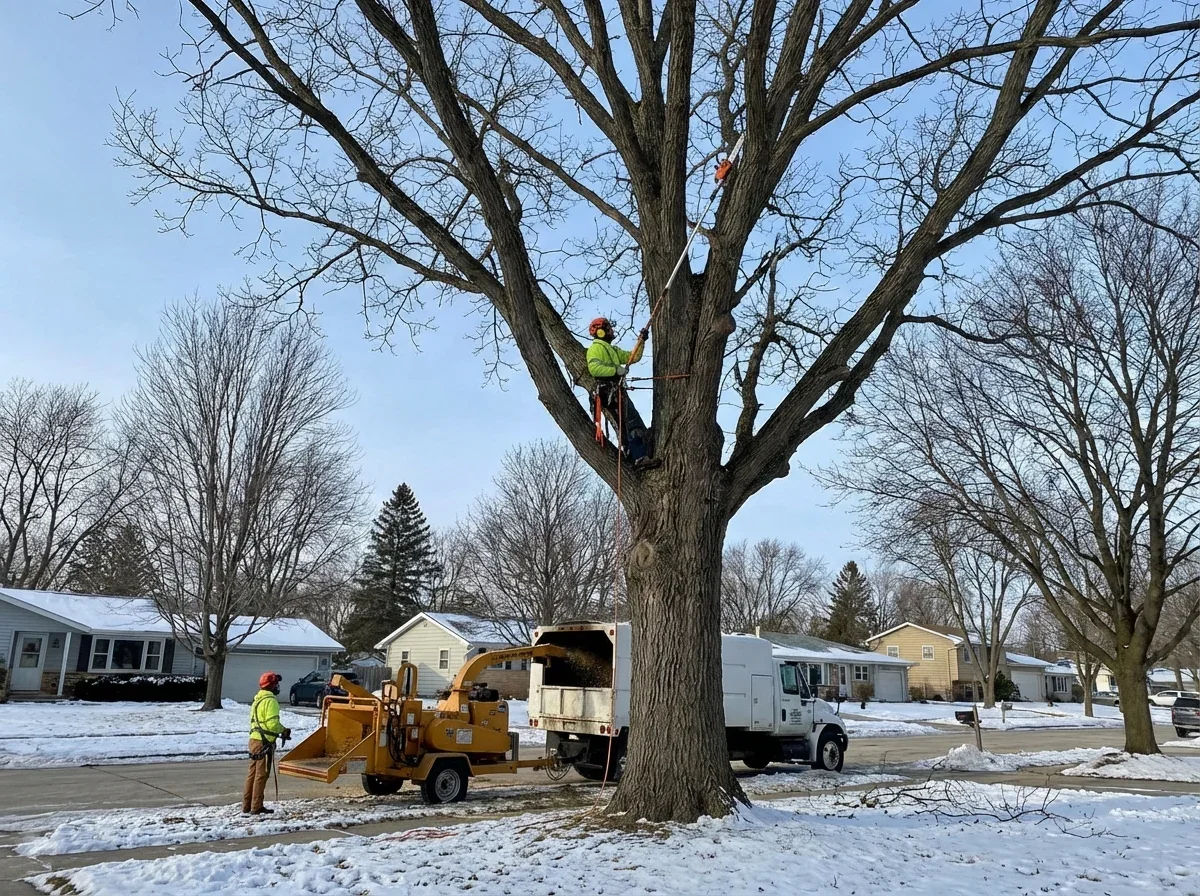
Stump Grinding and Removal Options
Stumps left behind rot slowly, attract termites, and complicate mowing.
Grinding chews the stump 6–12 inches below grade, leaving mulch you can rake into beds or haul away. Roots decompose underground over several years, so you might see settling if you plant grass immediately. Let the ground settle for a few weeks, then add topsoil and seed.
Full stump removal — digging out the root ball — costs more and tears up your yard, but it's necessary if you're building a patio, driveway, or foundation where the tree stood. Green Bay's clay-heavy soil makes root balls tough to extract without heavy equipment.
Some tree services include stump grinding in removal quotes; others charge separately. Get clarity upfront so you're not stuck with a three-foot stump and a second round of estimates.
The city grinds stumps from its own forestry work starting in mid-May, alternating between east and west sides each year[1], but residential stumps are on you.
What Tree Work Costs in Green Bay
Pricing depends on tree height, access, and complexity. A straightforward 30-foot maple in an open backyard might run $500–$800 for removal and grinding. A 70-foot ash tree wedged between two houses, requiring a crane and bucket truck, could hit $2,500–$4,000.
Trimming generally costs less — $300–$700 for routine crown thinning on a mature oak.
Tree trimmers and pruners in the Services to Buildings and Dwellings sector earn an average hourly wage of $25.13[2], which gives you a sense of labor costs before equipment, insurance, and disposal fees are added. Crane rentals, chipper trucks, and liability coverage push totals higher for difficult jobs.
Get at least three quotes and compare scope, not just price. The cheapest bid might skip stump grinding, haul-away, or reseeding. Verify what's included, ask about cleanup standards, and check references before you commit.
How to Verify Licensing, Insurance, and Credentials
Wisconsin doesn't require a state license for tree services, but municipalities may have local permitting rules.
What you must verify: general liability insurance (protects your property if something breaks) and workers' compensation (covers injuries on your land).
Ask for certificates and call the insurer to confirm active coverage. Unlicensed, uninsured crews might quote low, but you'll pay dearly if a tree crushes your garage or a worker gets hurt.
ISA certification is voluntary but valuable. You can verify credentials on the ISA website by searching the arborist's name. Membership in the Tree Care Industry Association (TCIA) signals adherence to safety and ethical standards, though it's not a substitute for insurance.
Check online reviews, but read critically. A company with sparse feedback might be new or small, not necessarily bad. Look for patterns: consistent praise for communication, cleanup, and handling challenges like narrow access or neighbor coordination. One-off complaints about partial estimates or scope mismatches should raise questions, but don't disqualify a company over a single dispute.
Pro Tip: Always call the insurance company directly to verify coverage is active. Certificates can be outdated or fraudulent. A two-minute phone call protects you from liability if a worker is injured or your property is damaged during tree work.
Green Bay's Tree Health Challenges: Emerald Ash Borer and Beyond
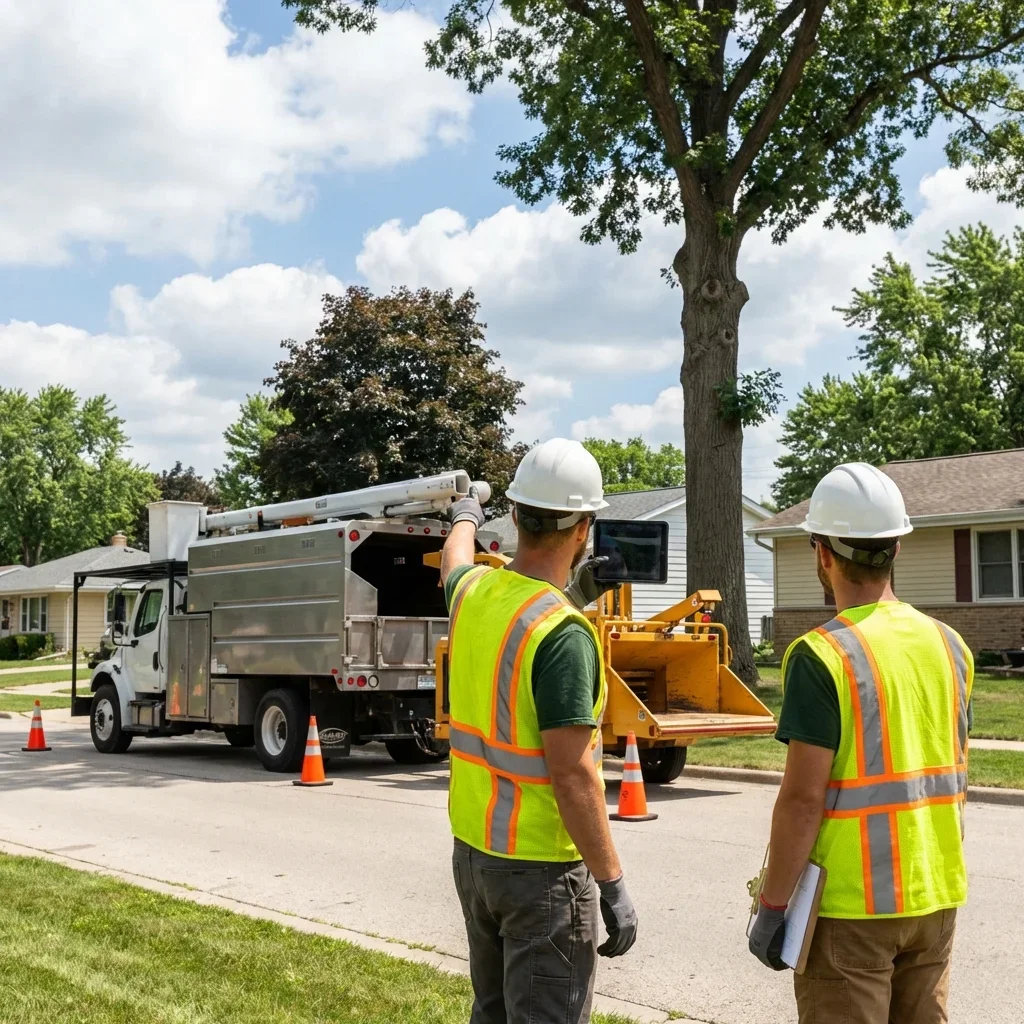
Emerald ash borer has devastated Green Bay's ash population.
If you have an ash tree, inspect for D-shaped exit holes, canopy thinning, and woodpecker damage. Treatment with systemic insecticides can protect healthy trees, but infected trees often need removal before they become hazards. An arborist can assess whether treatment is worth the cost or if removal is the safer bet.
Oak wilt spreads through root grafts and beetle transmission. Don't prune oaks from April through July when beetles are active. If a neighbor's oak dies from wilt and your trees share roots, consider trenching to sever underground connections.
Dutch elm disease, winter storm damage, and root rot from poorly drained clay soil also plague Green Bay trees. Regular inspections by a certified arborist catch problems early, when treatment is still possible.
What Good Cleanup Looks Like After Tree Work
Homeowners rave about crews that rake, blow, and haul debris so thoroughly you'd think they were never there.
That level of cleanup isn't universal.
Some companies chip branches, pile wood, and leave sawdust scattered across your lawn. Others stack firewood, remove every twig, and reseed bare spots where equipment tore up grass.
Specify cleanup expectations in your contract. Will they haul wood chips or leave them for mulch? Do they rake pine needles from flower beds? Will they fix ruts from heavy equipment? These details matter, especially if you're hosting an event or selling your home soon.
Noise management also counts. Chippers run loud, and some crews communicate with neighbors beforehand to minimize disruption. A considerate crew parks equipment thoughtfully, warns neighbors about chipper noise, and finishes before dinner time.
Questions to Ask Before Hiring a Tree Service
Start with the basics: Are you insured? Who's doing the work — employees or subcontractors? How long will the job take? What's included in the quote?
Then dig deeper.
How do you handle unexpected issues like rot, wasp nests, or underground utilities? Will you protect my lawn, fence, and garden? What happens to the wood — chipped, stacked, or hauled? Do you grind stumps below grade or just flush with the ground?
Ask for references from jobs similar to yours. A crew that excels at open-lot removals might struggle with tight urban spaces. If you need crane work, confirm they've done it before and ask about setup logistics — where the crane parks, how they protect driveways, what happens if weather delays the job.
Clarify communication. Will you get updates if the job runs long? Can you text questions? Who do you call if something goes wrong?
Responsive, communicative pros stand out because they keep you informed instead of leaving you guessing.
- City of Green Bay, WI. "Forestry." https://www.greenbaywi.gov/326/Forestry. Accessed February 09, 2026.
- U.S. Bureau of Labor Statistics. "Tree Trimmers and Pruners - Bureau of Labor Statistics." https://www.bls.gov/oes/2023/may/oes373013.htm. Accessed February 09, 2026.
- Wisconsin Public Service. "Line Clearance Pruning For Reliability - Wisconsin Public Service." https://www.wisconsinpublicservice.com/services/tree-vegetation. Accessed February 09, 2026.