
Why Certification Matters for Appleton Tree Work
ISA Certified Arborists base pruning decisions on tree biology, not convenience. When a crew suggests removing your mature maple, certification means they've evaluated structural integrity, disease progression, and treatment alternatives using science-backed methods rather than guesswork.[3]
Uncertified operators often "mutilate" trees through topping or lion's tailing — cuts that look neat initially but trigger rapid decay and hazardous regrowth within two seasons.[6] Certified arborists prune to the branch collar, maintain proper weight distribution, and preserve the tree's natural defense systems.
For ash and elm trees battling pests and disease across Appleton, this expertise determines whether a tree survives another decade or becomes a $3,000 emergency removal.
You'll get honest assessments about which trees warrant treatment versus removal, complete with multiple repair options and transparent pricing before work begins.[3] Response times run quick — many certified services provide quotes within two days and schedule work the same week.
Pro Tip: Always verify ISA certification before hiring. Certified arborists undergo rigorous testing on tree biology, safety standards, and proper pruning techniques — credentials that directly protect your property investment and tree health.
Tree Removal in Appleton's Residential Neighborhoods
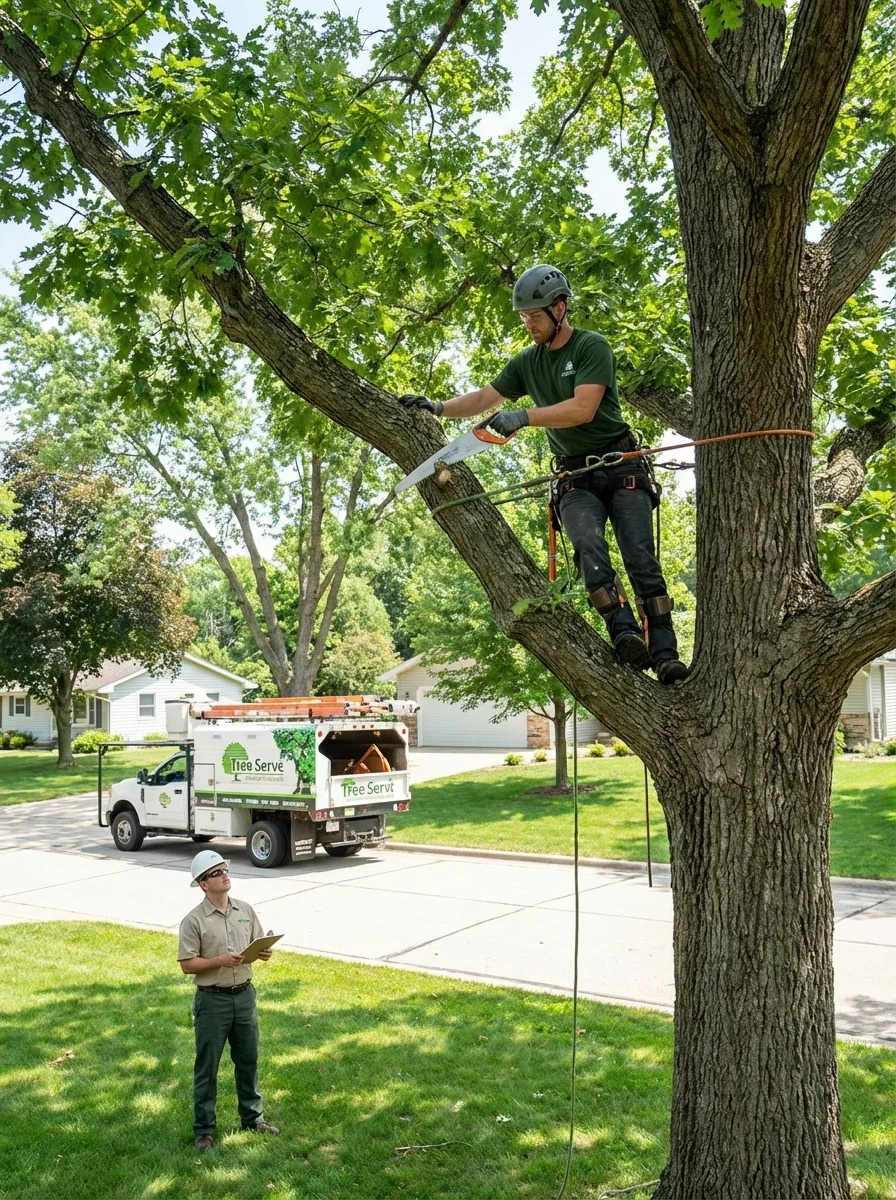
Removing a tree between structures in Darboy or along the tight lots near Erb Park requires more than cutting skills. Crews deal with overhead utility lines, underground irrigation systems, and access routes that barely fit a chipper.
Appleton's established neighborhoods present constant challenges: branches extending over neighbors' new plantings, mature trees with root systems under driveways, specimens positioned six feet from vinyl siding.
Professional removal crews handle these constraints without drama. They rig complex removals piece by piece, coordinate with neighbors about minimizing chipper noise during school hours, and clean so thoroughly you'd never know a 60-foot tree stood there yesterday.[1][2]
Some go further — stacking firewood, cutting rounds to specific lengths for neighbors, or carefully lowering branches to avoid damaging perennial beds.
Expect crews to arrive on time, communicate about each phase of the work, and consult with you before making cuts that affect the tree's appearance or your property's layout.[3] The best services bring ISA-certified specialists who can explain why they're rigging from a specific anchor point or choosing a particular fell direction.
Tree Trimming and Pruning Throughout the Fox Valley
Proper pruning maintains tree health while reducing storm damage risk — critical for Appleton's frequent summer severe weather. Certified arborists evaluate branch structure, identify weak unions, and remove deadwood before it becomes a projectile during a July derecho.
They understand species-specific timing: pruning oaks during their dormant period to prevent oak wilt, or trimming maples before spring sap flow.
Fox Valley providers offer structural pruning for young trees, crown reduction for specimens too large for their space, and clearance pruning for branches threatening rooflines or power lines. These aren't aesthetic haircuts — each cut follows ANSI A300 standards to promote proper wound closure and long-term vigor.
You'll notice the difference in how trimmed trees respond. Proper cuts encourage strong new growth in the right directions. Bad cuts create stub decay, watersprouts, and exactly the hazards you paid to eliminate.
Certified crews also handle complex situations like cabling and bracing for trees with structural defects worth preserving, particularly heritage specimens in Appleton's older neighborhoods.
| Pruning Method | Result | Long-Term Impact |
|---|---|---|
| Proper Branch Collar Cut | Clean wound closure, maintained tree structure | Healthy regrowth, reduced decay risk |
| Topping/Heading Cuts | Rapid weak sprout growth, open wounds | Structural failure, pest invasion, shortened lifespan |
| Lion's Tailing | End-heavy branches, stripped interior | Branch breakage, sunscald damage, storm vulnerability |
Stump Grinding and Complete Site Cleanup
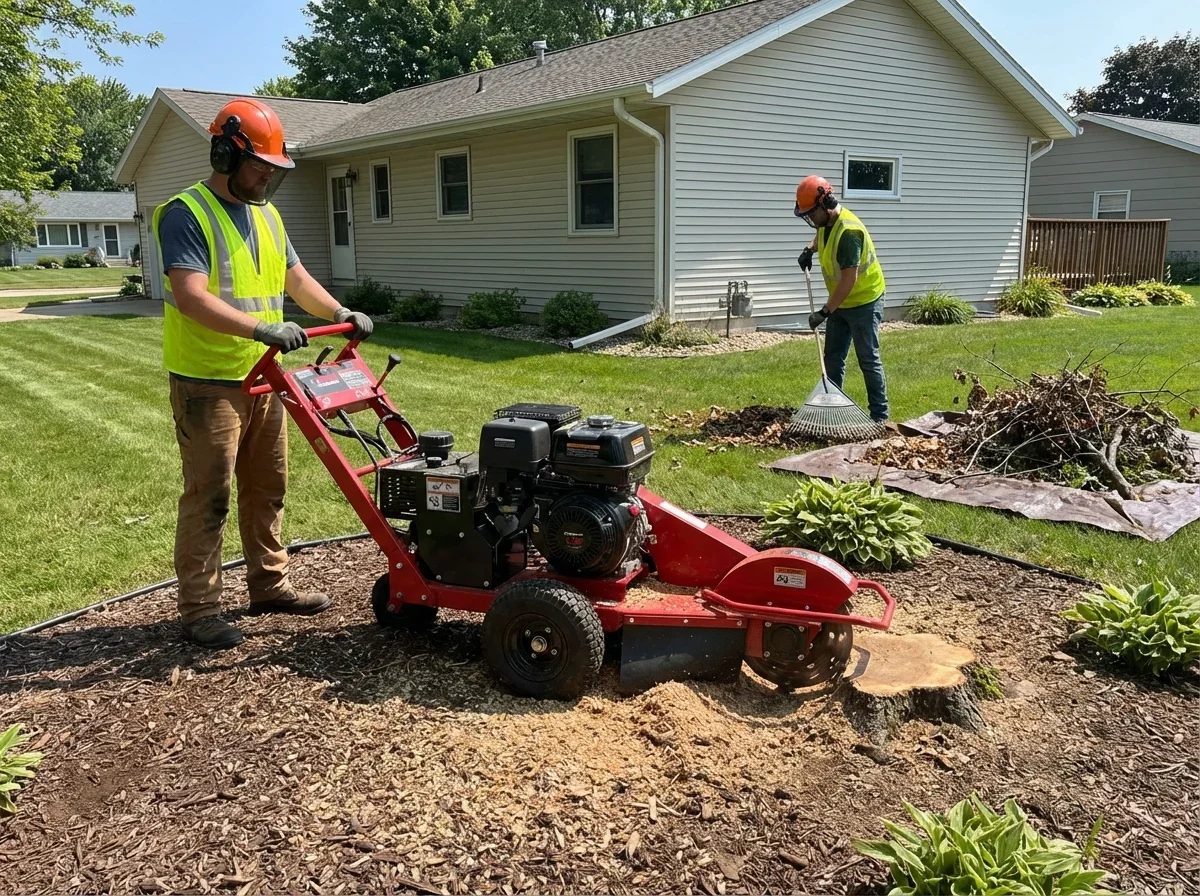
Stump grinding eliminates tripping hazards, prevents pest infestations, and reclaims usable yard space. Professional services grind 8-12 inches below grade — deep enough that you can plant grass or install new landscaping without hitting wood chips three years later.
Cleanup separates professional operations from marginal services.
The best crews remove all wood debris, rake scattered wood chips, blow off driveways and sidewalks, and haul away grindings unless you want them for mulch. They protect existing landscaping during equipment operation and repair any incidental turf damage before leaving.[1][2]
Some Appleton homeowners report emotional difficulty losing mature trees that shaded their yards for decades. Responsive crews acknowledge this — they're removing a landscape feature that defined your property, not just clearing an obstacle. Professionalism includes handling that transition with respect while executing technical work safely.
Plant Health Care and Ongoing Tree Maintenance
Beyond removal and pruning, comprehensive tree services provide plant health care: fertilization programs that address Wisconsin's alkaline soils, pest monitoring for emerald ash borer and bronze birch borer, and disease treatment for apple scab or fire blight.
These preventive programs cost far less than replacing dead trees.
ISA Certified Arborists conduct detailed assessments of your trees' condition, identifying stress factors before they become fatal. They'll test soil composition, evaluate root health, and recommend treatment schedules based on species requirements and site conditions. For ash trees, this might include trunk injections on a two-year cycle. For stressed maples, it could mean soil amendment and careful irrigation management.
Fox Valley providers like Arbor Care (920-734-2950, arborcareofthefoxvalley.com) and Fox Valley Tree Care (foxvalleytreecare.com) offer full consulting services for property owners planning new construction, dealing with construction damage to existing trees, or managing mature landscapes.[1][5][6]
They'll assess how grading changes affect root zones or recommend species for replacement plantings that suit Appleton's climate and your property's conditions.
Key Tree Health Services in Appleton:
- Soil testing and pH adjustment for Wisconsin's alkaline conditions
- Emerald ash borer monitoring and trunk injection treatments (2-year cycles)
- Deep root fertilization to address nutrient deficiencies
- Disease diagnosis and treatment (oak wilt, fire blight, apple scab)
- Construction damage assessment and root zone protection
- Species-specific care plans based on site conditions
Service Areas Across Appleton and Fox Cities
Professional tree services cover Appleton's diverse neighborhoods — from historic homes near Lawrence University to newer developments around Scheuring Road. Crews regularly work in Menasha, Neenah, Kaukauna, Little Chute, and surrounding Fox Valley communities, managing everything from parkway tree maintenance to large-scale residential removals.[1]
Most established providers maintain full insurance coverage, own specialized equipment for confined-space work, and employ climbers experienced with Wisconsin tree species.
They handle projects ranging from single-tree removals to multi-tree property clearance for construction.
When evaluating services, check for ISA certification, ask about their approach to complex removals, and request references from projects similar to yours. The providers Appleton homeowners recommend most consistently demonstrate expertise, fair pricing, and workmanship that protects both property and remaining landscape.[4]
They communicate clearly about scheduling, show up when promised, and treat your property like it matters — because for professional arborists, reputation depends on every job done right.